
In This Article
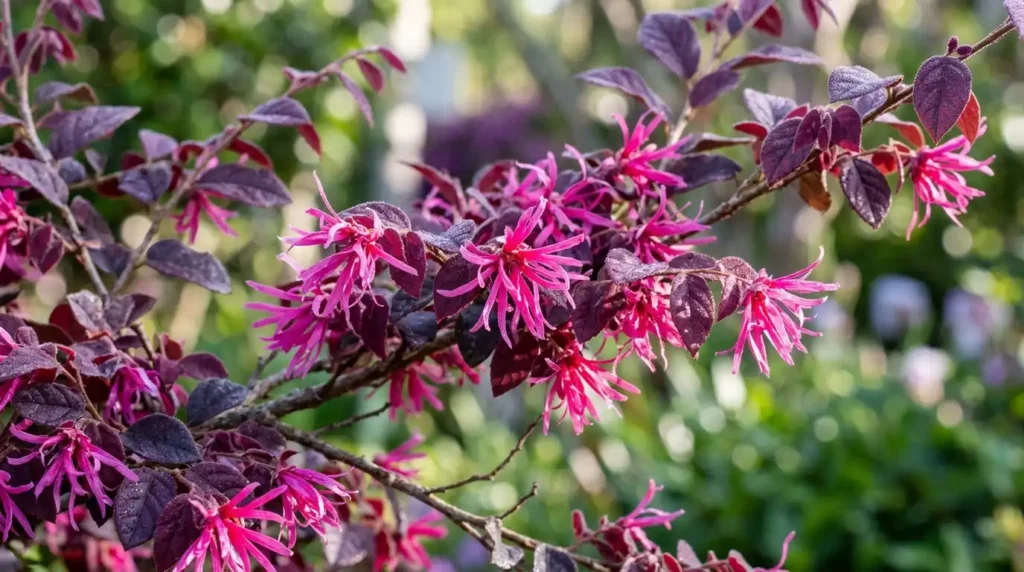
Loropetalum, or Chinese fringe flower, is a striking evergreen shrub prized for its deep burgundy foliage and delicate ribbon-shaped pink or white blooms. Originating from China, Japan, and the Himalayas, it offers year-round color and texture. Hardy in USDA Zones 7–10 (sometimes Zone 6 with protection), it’s forgiving and easy to grow for any skill level.
Plant Care Card
| Detail | Info |
|---|---|
| Common Name | Chinese fringe flower, loropetalum |
| Botanical Name | Loropetalum chinense |
| Family | Hamamelidaceae |
| Plant Type | Broadleaf evergreen shrub |
| Mature Size | 3–10 ft tall x 3–10 ft wide (varies by cultivar) |
| Sun Exposure | Full sun to partial shade |
| Soil Type | Well-draining, loamy or slightly sandy |
| Soil pH | 4.5–6.5 (acidic) |
| Hardiness Zones | 7–10 (USDA) |
| Native Area | China, Japan, Himalayan region |
| Bloom Time | Late winter to spring; sporadic rebloom possible |
| Toxicity | Non-toxic to humans and pets |
Loropetalum Care
Loropetalum thrives with minimal attention once established in the right spot. Here’s what you need to know about sun, soil, water, and seasonal maintenance. With proper placement and a little routine care, this shrub practically runs itself.
Light
Loropetalum thrives in full sun to partial shade, ideally 4–6 hours of direct sunlight, which deepens its foliage color, especially in purple varieties. Shade can fade leaves and reduce blooms. In hot regions, morning sun with afternoon protection works best. University of Florida IFAS Extension confirms light is essential for vibrant coloration.
Soil
Loropetalum needs acidic, well-draining soil (pH 4.5–6.5), ideally loamy or sandy; it won’t tolerate soggy roots or heavy clay. For alkaline soil, blend in sand and compost, and top-dress with pine bark mulch to lower pH gradually. Pairs well with acid-lovers like blue hibiscus or gardenia.
Water
Water young loropetalum once or twice weekly to establish roots, checking that the top inch of soil is dry first. Once established, it’s drought-tolerant, needing water only every 10–14 days in summer, like gaura plant. Watch for yellowing (overwatering) or crispy edges (underwatering).
Temperature and Humidity
Loropetalum tolerates 10°F to 95°F, performing best between 50–85°F; most cultivars handle light frost, but hard freezes below 10°F risk dieback in younger plants. Mulch and wrap plants in severe cold. Humidity isn’t a concern. Check the USDA Plant Hardiness Zone Map before planting.
Fertilizer
Feed loropetalum with a slow-release, acid-forming fertilizer formulated for acid-loving shrubs (like azalea or camellia fertilizer). Apply once in early spring and again in midsummer if growth looks sluggish. Avoid fertilizing in late summer or fall, as it can push tender new growth right before frost.
Types of Loropetalum
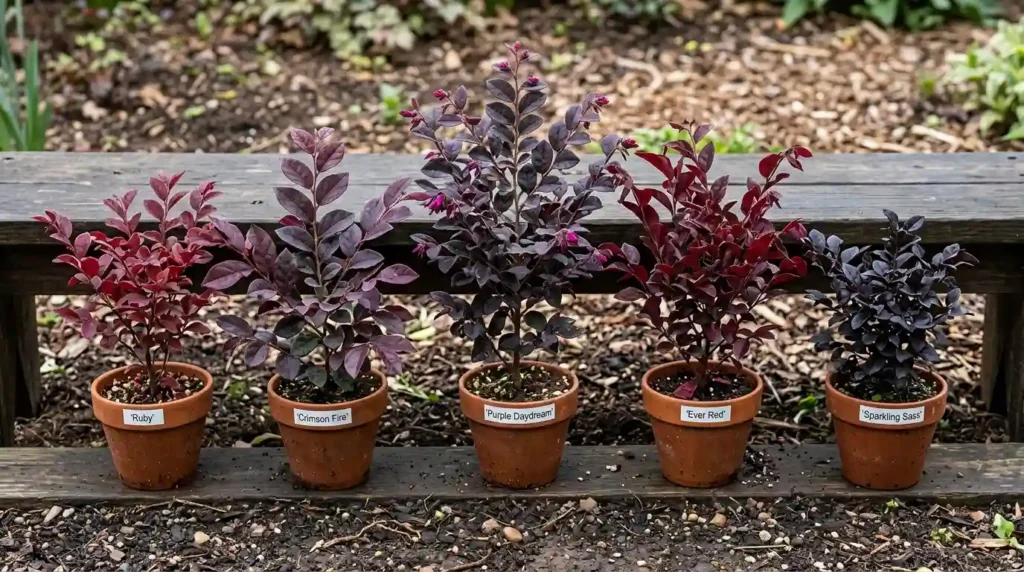
There are dozens of loropetalum cultivars out there, from groundcovers to towering screens. Here are the standouts:
- ‘Plum Delight’: Mid-size, 6–8 ft, with rich burgundy foliage and hot-pink blooms. One of the most widely planted varieties in the U.S.
- ‘Crimson Fire’: A compact dwarf reaching just 2–3 ft tall ideal for small gardens or containers, with deep red-purple leaves.
- ‘Purple Pixie’: A weeping dwarf spreading up to 5 ft wide at just 1–2 ft tall. Beautiful as a groundcover or spilling over a wall.
- ‘Zhuzhou Fuchsia’: Fast-growing and large (up to 15 ft), with bold dark foliage perfect for privacy screens.
- ‘Ever Red’: Compact and consistently ruby-colored through summer heat great for borders and foundation plantings.
Pruning
The best time to prune loropetalum is right after the main spring bloom, typically late spring. This timing lets the shrub set new buds for the following year without interrupting the current bloom cycle. Avoid heavy pruning in fall, which can stimulate tender growth that gets nipped by frost. Light shaping throughout the season is fine.
To prune, use clean, sharp hand pruners or loppers. Remove any dead, crossing, or overly long branches first. Then shape the outer canopy to your desired form. Avoid shearing loropetalum into a tight ball it looks unnatural and reduces blooming. Instead, follow the plant’s natural arching habit, cutting just above a leaf node or branch junction. Regular pruning encourages fresh foliage growth and keeps the plant looking full and tidy.
Propagating Loropetalum
The best time to propagate loropetalum is in late spring or early summer, when the plant is actively growing and stems are semi-mature. The two most reliable methods are stem cuttings and layering.
Propagating by Stem Cuttings
Stem cuttings are the most common and effective way to propagate loropetalum. This method produces true-to-type plants and works reliably with semi-hardwood cuttings taken in early summer.
Materials needed:
- Sharp, clean pruning shears or a knife
- Rooting hormone powder or gel
- Small pots filled with a mix of perlite and peat moss (or a well-draining propagation mix)
- Clear plastic bag or humidity dome
Steps:
Step 1: Select a healthy, non-blooming stem about 4–6 inches long. Cut just below a leaf node at a slight angle using clean, sterilized shears.
Step 2: Strip the lower leaves from the bottom 2 inches of the cutting, leaving 2–3 leaves at the top. Dip the cut end into rooting hormone and tap off any excess.
Step 3: Insert the cutting about 2 inches deep into your moistened propagation mix. Firm the mix gently around the stem to hold it upright.
Step 4: Cover the pot loosely with a plastic bag or dome to maintain humidity. Place in a bright, indirect light location avoid direct sun, which will dry out the cutting. Keep the mix consistently moist but never waterlogged.
Roots typically form in 4–8 weeks. Gently tug the cutting after a month if there’s resistance, rooting has begun. Transplant to a larger pot or garden once roots are well established.
Propagating by Layering
Layering is a low-effort method that works well for loropetalum because of its naturally arching branches. According to NC State Extension, ground layering is highly effective for this genus.
Step 1: Choose a long, flexible stem close to the ground. Bend it down to touch the soil about 12 inches from the tip.
Step 2: At the contact point, make a small 1-inch wound on the underside and dust with rooting hormone. Bury the wounded section 3–4 inches deep, securing with a U-pin or stone.
Step 3: Keep the soil moist. Roots form in 2–3 months. Once rooted, sever from the parent plant and transplant to its permanent spot.
Planting and Transplanting Loropetalum

The ideal time to plant loropetalum is in early spring or fall, when temperatures are mild and root establishment is easier. Space plants according to their mature size dwarf varieties need 3–4 feet of spacing, while larger cultivars may need 6–10 feet or more. Proper spacing prevents overcrowding and improves air circulation.
Dig a hole twice as wide and just as deep as the root ball. Set the plant so the top of the root ball is slightly above the surrounding soil grade this prevents water from pooling around the crown. Backfill with native soil amended with compost, water thoroughly, and mulch with 2–3 inches of pine bark.
Transplant established shrubs in early spring before new growth begins. Dig as much of the root ball as possible and replant promptly. Water deeply for the first few weeks to reduce transplant stress.
Common Pests and Diseases
Like most garden shrubs, loropetalum can occasionally run into pest or disease problems though it’s generally quite resistant. Here’s what to watch for:
Aphids
Look for clusters of tiny soft-bodied insects on new growth tips. Treat with a strong blast of water or apply insecticidal soap every 5–7 days until resolved.
Spider Mites
Tiny webbing and stippled, pale foliage are telltale signs. Treat with neem oil or miticide; increase humidity around the plant during dry spells.
Powdery Mildew
White powdery coating on leaves, usually in humid or shady conditions. Improve air circulation and treat with a baking soda spray or fungicide labeled for ornamental shrubs.
Root Rot
Yellowing, wilting foliage despite moist soil suggests root rot. This is almost always caused by poor drainage. Improve soil drainage and avoid overhead watering. Remove and destroy heavily affected plants to prevent spread.
Lace Bugs
Tiny, lacy-winged insects that feed on leaf undersides, causing silvery or bronzed foliage. Treat with horticultural oil or consult your local university IPM guide for region-specific recommendations.
Common Problems with Loropetalum
Here’s how to troubleshoot common loropetalum issues:
Poor or No Blooms
Poor flowering is one of the most common complaints with loropetalum, and it usually comes down to one of three culprits. Insufficient sunlight is the top cause move the plant to a spot with at least 4–6 hours of direct sun. Over-pruning or pruning at the wrong time can also remove flower buds before they open; stick to pruning right after bloom. Finally, excess nitrogen fertilizer pushes leafy growth at the expense of flowers switch to a low-nitrogen, bloom-boosting formula. With the right adjustments, loropetalum should bloom reliably each spring.
Yellow or Browning Leaves
Yellowing leaves are frustrating, but the cause is usually identifiable. Overwatering or poor drainage is the most likely culprit check that your soil drains freely and reduce watering frequency. Iron or magnesium deficiency in alkaline soils can also cause yellowing between leaf veins (chlorosis); treat with chelated iron or lower the soil pH. Natural seasonal shedding of a few older inner leaves is normal in late fall. Similar symptoms appear in elephant ears when drainage is poor the fix is the same.
Wilting or Drooping
Wilting loropetalum usually signals underwatering or heat stress, especially in newly planted specimens. Water deeply and add a layer of mulch to retain soil moisture. If watering is adequate, check for root rot or severe lace bug damage, both of which can cause drooping despite normal care.
Leggy or Sparse Growth
Leggy, open growth almost always points to insufficient light. Move the plant to a sunnier location if possible. A loropetalum that’s too shaded will stretch toward light and lose its dense, full appearance. Prune back leggy stems by about one-third to encourage branching, and pair the move with a fertilizer boost in early spring.
Frost Damage
If your loropetalum suffers frost damage, don’t panic and don’t prune immediately. Wait until late spring to assess which stems are truly dead. Scratch the bark lightly; green tissue means the stem is alive. Remove only the dead wood, and the plant often recovers surprisingly well once warm weather returns.
FAQ
Does loropetalum like sun or shade?
Loropetalum grows best in full sun to partial shade, ideally receiving at least four to six hours of direct sunlight daily for the best foliage color and blooms.
What are the cons of loropetalum?
This shrub can outgrow its space quickly without regular pruning. It also dislikes alkaline soil and may develop leaf chlorosis if pH is not kept acidic.
Do loropetalums lose their leaves in winter?
No. Loropetalum is a broadleaf evergreen and holds its foliage year-round, though some inner leaves may shed naturally in fall. It remains attractive all winter.
How big do loropetalums get?
Size varies by cultivar. Dwarf varieties stay under three feet, while standard types can reach six to ten feet tall and equally wide at full maturity.
1 thought on “How to Grow and Care for Loropetalum”
Comments are closed.