
In This Article
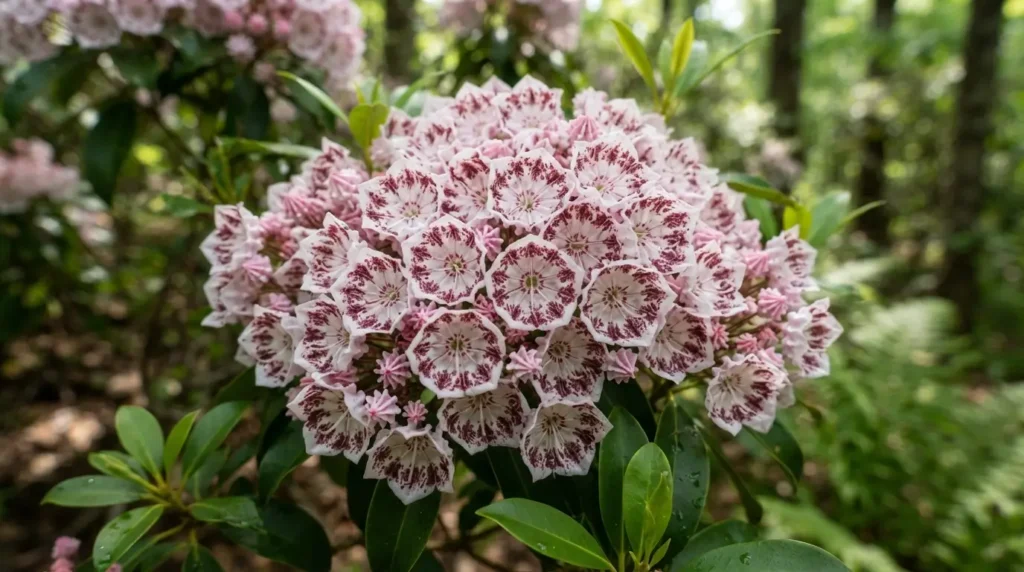
Kalmia plants, or mountain laurel (Kalmia latifolia), are broadleaf evergreen shrubs known for pleated, candy-shaped flowers in soft pink to deep red, with glossy foliage year-round. Native to eastern US woodlands from Maine to Florida, they thrive in zones 4-9. Care is moderate: nail soil and light, and they’re fuss-free.
Kalmia Plant Care Card
| Feature | Details |
|---|---|
| Common Name | Kalmia, mountain laurel, calico bush |
| Botanical Name | Kalmia latifolia |
| Family | Ericaceae |
| Plant Type | Broadleaf evergreen shrub |
| Mature Size | 7–15 ft tall x 7–15 ft wide |
| Sun Exposure | Partial shade to full sun |
| Soil Type | Moist, well-draining, humus-rich |
| Soil pH | Acidic (4.5–5.5) |
| Hardiness Zones | 4–9 (USDA) |
| Native Area | Eastern United States |
| Bloom Time | Late spring to early summer |
| Toxicity | Toxic to pets and humans |
Kalmia Plant Care
Kalmia plants aren’t fussy once they’re settled into the right acidic, shaded spot. Here’s what you need to know about sun, soil, water, and general upkeep. Get the basics right, and this shrub practically takes care of itself for decades.
Light
Mountain laurel does best in partial shade, especially dappled morning sun with afternoon protection. Aim for 3-4 hours of light daily, per NC State Extension. Too much shade weakens blooms; too much sun scorches leaves. A shaded woodland edge works well, much like Eagleston holly prefers in a mixed border.
Soil
This plant needs consistently moist, humus-rich, well-draining soil to thrive. Kalmia plants share acidic soil preferences with azaleas and rhododendrons, so companion planting works well. Aim for soil pH of 4.5-5.5. Amend with pine bark, peat moss, and compost; avoid heavy clay. For similar prep, see our loropetalum care guide.
Water
Water new kalmia plants weekly to keep soil evenly moist while roots establish, usually for the first year or two. Check moisture by pushing a finger 2 inches into the soil; if it’s dry, it’s time to water. Established shrubs are more drought-tolerant and need less frequent attention.
In summer, water more often during dry spells, especially for plants in sun. Reduce watering in fall and winter as growth slows down.
Yellowing leaves and soggy soil usually signal overwatering, while crispy, browning edges point to underwatering. A 2-3 inch mulch layer helps regulate moisture either way.
Temperature and Humidity
Kalmia plants prefer cool, moist conditions and handle winter cold well within their hardiness zones. They tolerate temperatures well below freezing once established, though young plants benefit from some winter wind protection.
Extreme summer heat combined with dry air can stress this shrub, particularly in southern gardens. Mulching around the root zone helps keep roots cool and retains humidity during hot stretches, much like the mulch routine recommended for French lavender in hot climates.
Fertilizer
Feed kalmia plants once in early spring with an acid-loving plant fertilizer, similar to what you’d use for azaleas or rhododendrons. Apply again lightly after flowering if growth looks weak. Stop fertilizing by midsummer so new growth has time to harden off before winter arrives.
Types of Kalmia Plants
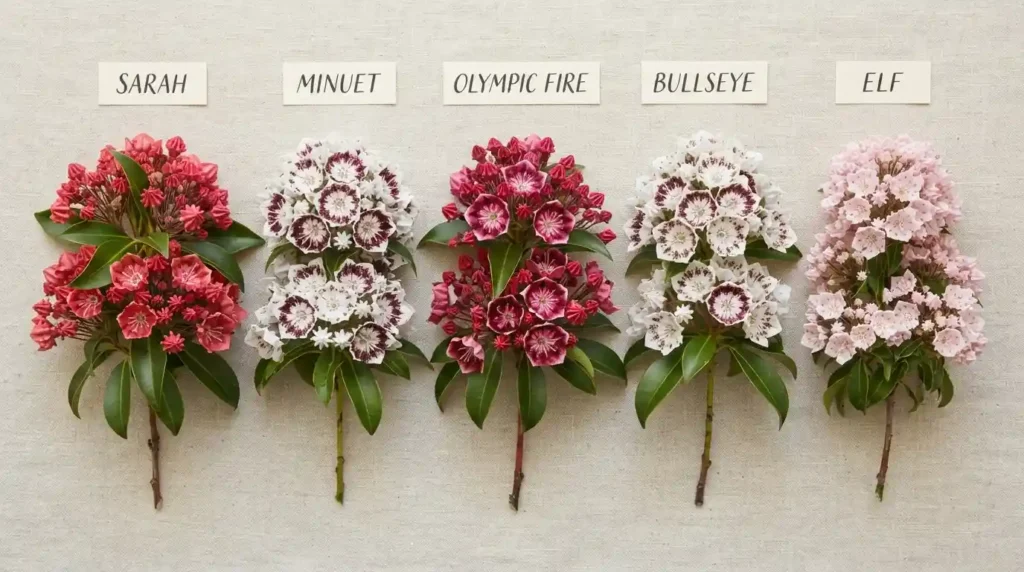
Mountain laurel has been bred into dozens of garden-friendly cultivars over the years. Here are a few standout varieties worth seeking out for your kalmia collection.
- ‘Sarah’: Compact and slow-growing, with red buds that open into rich pink-to-coral blooms. It handles more sun than most cultivars.
- ‘Minuet’: A dwarf variety reaching just 3 feet tall, featuring white flowers banded with deep maroon rings.
- ‘Olympic Fire’: Known for deep red buds that open to lighter pink flowers, giving a striking two-tone effect.
- ‘Bullseye’: White blooms marked with a bold cinnamon-purple band circling each flower’s center.
- ‘Elf’: Another dwarf option, growing to around 3 feet with abundant pale pink flowers, great for smaller gardens.
Pruning
Prune kalmia plants right after flowering ends in early summer, since next year’s buds form on the current season’s growth. Remove spent flower clusters, dead or damaged wood, and any crossing branches to keep air moving through the shrub.
Use sharp, clean bypass pruners and cut just above a leaf node. Light, regular pruning encourages denser growth and more blooms next season, while heavy pruning is best spread over two or three years to avoid shocking an older, overgrown plant.
Propagating Kalmia Plants
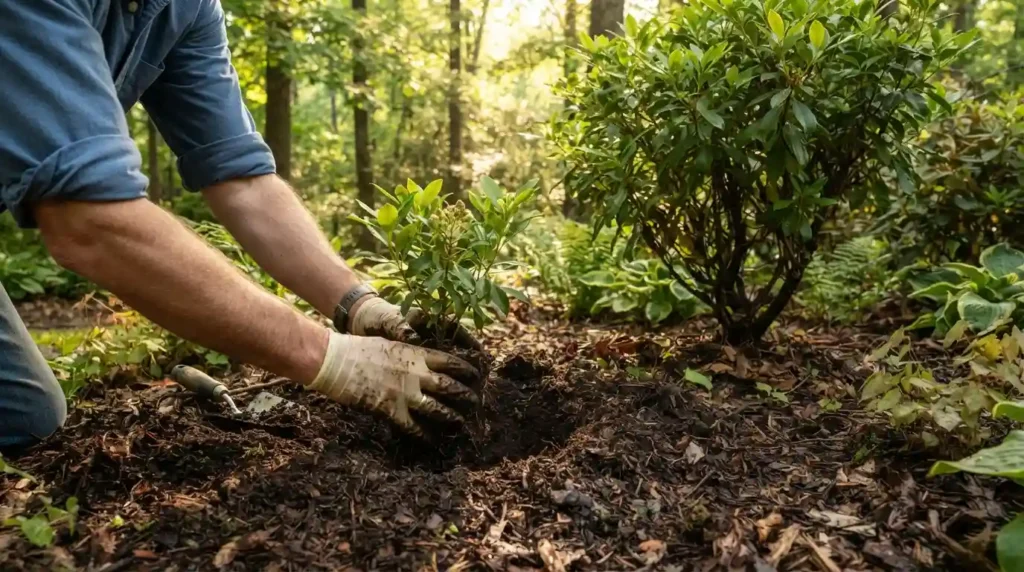
Spring and early summer are the best times to propagate kalmia plants, when the shrub is actively producing new growth. Stem cuttings and layering are the two most reliable methods for home gardeners, and both work well with a bit of patience.
Propagating by Stem Cuttings
This is the most common method for cloning your favorite kalmia cultivar. Gather your materials before you start:
- Sharp, sterilized pruning shears
- 4-6 inch semi-hardwood cuttings
- Rooting hormone powder
- A pot with moist, acidic potting mix
Here’s how to do it:
Step 1: Cut a 4-6 inch piece of semi-hardwood growth from a healthy stem in early summer. Step 2: Strip leaves from the bottom half and dip the cut end in rooting hormone. Step 3: Insert the cutting into moist, acidic potting mix, burying about 2 inches. Step 4: Cover with a plastic bag to hold humidity and place in bright, indirect light.
Roots typically form within 8-12 weeks, though kalmia plants can be slow and stubborn compared to faster-rooting shrubs like emerald green arborvitae. The USDA Forest Service notes mountain laurel also sprouts readily from root crowns after disturbance in the wild, which explains its patience underground.
Propagating by Layering
Layering works well for gardeners who’d rather skip cuttings altogether. Choose a low, flexible branch and bend it down to touch the soil. Wound the underside slightly where it contacts the ground, then pin it in place with a stake and cover with soil. Keep that spot consistently moist through the growing season. Roots usually develop within one to two years, after which you can sever the new plant from its parent and transplant it.
Planting and Transplanting
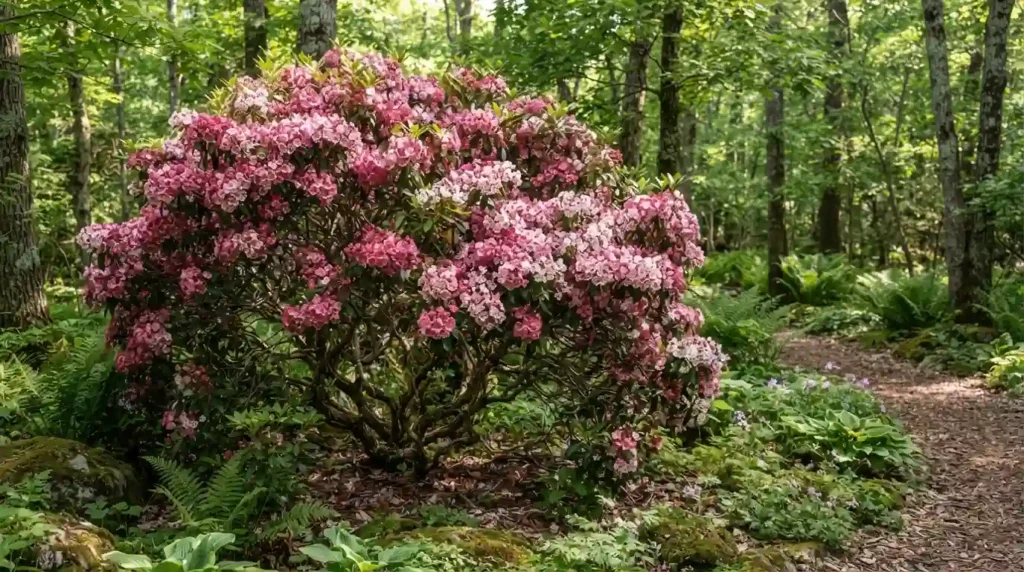
Plant kalmia plants in spring or early fall when temperatures are mild. Space shrubs 5-8 feet apart depending on the mature size of your chosen variety, since good air circulation helps prevent fungal issues.
Dig a hole as deep as the root ball but twice as wide, then set the plant so the top of the root ball sits slightly above grade. Backfill with amended, acidic soil and water thoroughly. If you’d like more inspiration for pairing acid-loving shrubs, check out our guide to blue point juniper, another low-fuss companion for shaded beds.
Established kalmia plants rarely need dividing or moving, since they resent root disturbance once settled.
Common Pests and Diseases
Like most garden plants, kalmia can occasionally face pest or disease issues, though healthy, well-sited shrubs usually shrug most problems off without much trouble.
Lace Bugs
Look for stippled, silvery leaves and tiny black droppings on the undersides. Treat with insecticidal soap or horticultural oil applied thoroughly to leaf undersides.
Spider Mites
Fine webbing and speckled, dull-looking foliage are the giveaways here. A strong water spray or insecticidal soap usually clears up light infestations.
Leaf Spot
Purple to reddish spots that eventually drop out and leave holes are typical signs, and according to Clemson HGIC, mild, wet summer weather tends to promote this kind of leaf spot. Improve air circulation and avoid overhead watering to prevent spread.
Root Rot
Wilting despite moist soil and blackened, mushy roots point to root rot. Improve drainage immediately and avoid overwatering going forward; there’s often no cure once roots are badly affected.
Flower Blight
Petals develop watery, spotted patches that quickly rot the whole bloom cluster. Remove and destroy infected flowers promptly to slow the spread to healthy buds.
Common Problems
Here’s how to troubleshoot common kalmia issues:
Poor or No Blooms
Insufficient sunlight is the most common culprit behind sparse flowering, since kalmia plants need at least a few hours of light daily. Over-fertilizing with high-nitrogen products also pushes leafy growth instead of flowers. Improper pruning timing removes next year’s buds entirely. Move the plant to a brighter spot, switch to a bloom-boosting formula, and always prune right after flowering ends the same rule that keeps annabelle hydrangea blooming reliably too.
Yellow or Browning Leaves
Overwatering and poor drainage are frequent causes, since soggy roots can’t absorb nutrients properly. Nutrient deficiency, especially iron, shows up as yellowing between leaf veins. Check soil pH and drainage first, then consider an acid-loving fertilizer if yellowing persists after correcting water habits.
Wilting or Drooping
Underwatering is the most obvious cause, particularly during hot, dry stretches. Transplant shock also triggers temporary wilting after moving a shrub. Heat stress compounds both issues in exposed, sunny spots. Water deeply and consistently, and add mulch to buffer soil temperature swings.
Leggy or Sparse Growth
Insufficient light is usually behind thin, stretched-out stems reaching toward a light source. Over-fertilizing can also push weak, floppy new growth. Relocate to a brighter spot and prune lightly after bloom to encourage denser branching.
FAQ
Does kalmia like sun or shade?
Kalmia plants prefer partial shade with some direct morning sun. They tolerate more sun in cooler climates but need afternoon shade protection in hot regions.
Can kalmia grow in pots?
Yes, dwarf cultivars like ‘Minuet’ or ‘Elf’ grow well in large containers filled with acidic, well-draining potting mix, provided drainage stays consistent.
Is kalmia a rhododendron?
No, kalmia is a separate genus, though both belong to the Ericaceae family and share similar acidic soil and shade preferences in garden settings.
Is kalmia poisonous?
Yes, all parts of kalmia plants are toxic to pets, livestock, and humans if ingested. Keep plants away from grazing animals and curious children.