
In This Article
Bleeding Heart Plant
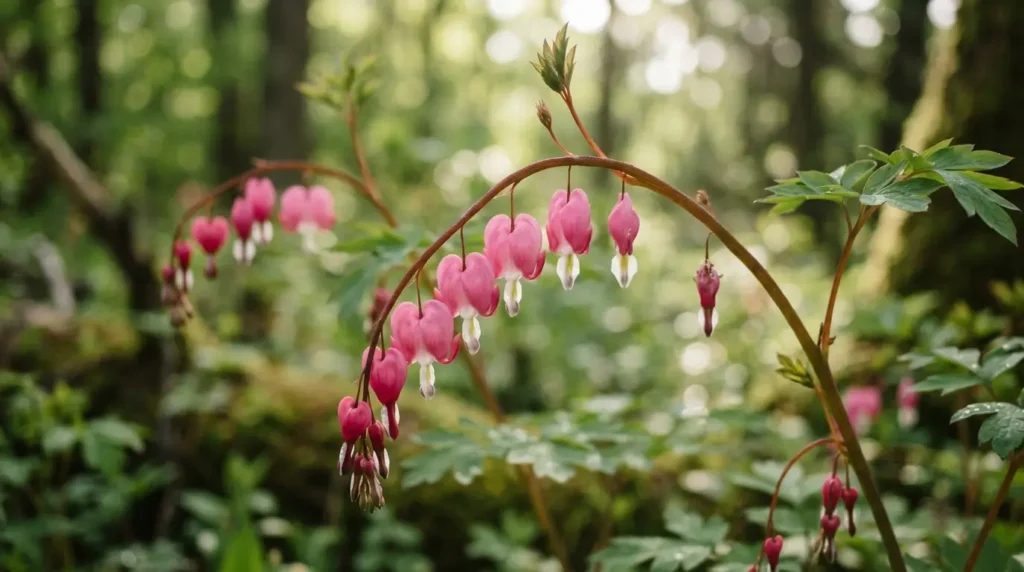
The bleeding heart plant (Lamprocapnos spectabilis, formerly Dicentra spectabilis) is one of the most distinctive perennials you’ll ever grow. Heart-shaped pink or white flowers hang in graceful arching rows truly unforgettable in spring. Native to Asian woodlands, it thrives in zones 3–9 and rewards minimal care with breathtaking blooms.
Plant Care Card
| Field | Details |
|---|---|
| Common Name | Bleeding heart, Asian bleeding heart |
| Botanical Name | Lamprocapnos spectabilis |
| Family | Papaveraceae |
| Plant Type | Herbaceous perennial |
| Mature Size | 2–3 ft. tall × 1.5–2 ft. wide |
| Sun Exposure | Partial shade to full shade |
| Soil Type | Moist, humus-rich, well-draining |
| Soil pH | 6.0–7.0 (slightly acidic to neutral) |
| Hardiness Zones | 3–9 (USDA) |
| Native Area | Siberia, northern China, Korea, Japan |
| Bloom Time | Spring (April–June) |
| Toxicity | Toxic to humans, dogs, and cats |
Bleeding Heart Plant Care
The bleeding heart plant is moderately easy to grow when placed in the right spot. Here’s what you need to know about light, soil, water, and seasonal maintenance. With the correct conditions, this plant rewards you with weeks of stunning blooms each spring.
Light
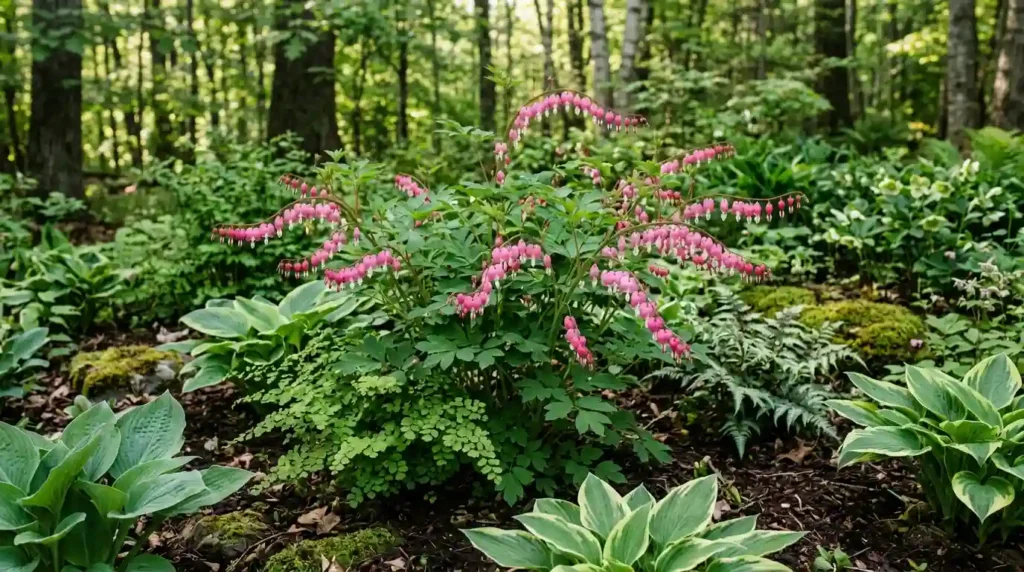
The bleeding heart plant prefers partial to full shade, needing 3–4 hours of indirect light daily. In warmer zones (7–9), direct sun causes early dormancy and scorched leaves. Place it in morning light with afternoon shade. According to the University of Maryland Extension, pairing it with hostas or ferns confirms ideal conditions.
Soil
The bleeding heart plant loves moist, humus-rich soil with a pH of 6.0–7.0. Good drainage is non-negotiable standing water causes root rot fast. According to the University of Minnesota Extension, amending clay soil with compost is essential. Like crocus plants, it absolutely needs a well-draining foundation to thrive.
Water
Water your bleeding heart plant regularly in spring, keeping soil moist but never waterlogged once or twice weekly is enough. As summer heat arrives and dormancy begins, reduce watering significantly. Overwatering a dormant plant causes root rot. Yellowing leaves in spring signal overwatering; wilting before dormancy means it needs more water.
Temperature and Humidity
The bleeding heart plant thrives between 45°F and 75°F, hardy in zones 3–9 with no winter protection needed. Prolonged heat above 80°F triggers early dormancy. Humidity isn’t a major concern consistent soil moisture is enough. In zones 8–9, mulching heavily and planting near a north-facing wall protects roots from afternoon heat.
Fertilizer
Feed your bleeding heart plant once in early spring as new growth emerges. Use a balanced, slow-release granular fertilizer (like 10-10-10) or a layer of compost worked gently into the soil surface. Avoid high-nitrogen fertilizers they push leafy growth at the expense of blooms. Once dormant in summer, stop feeding entirely until the following spring.
Types of Bleeding Heart
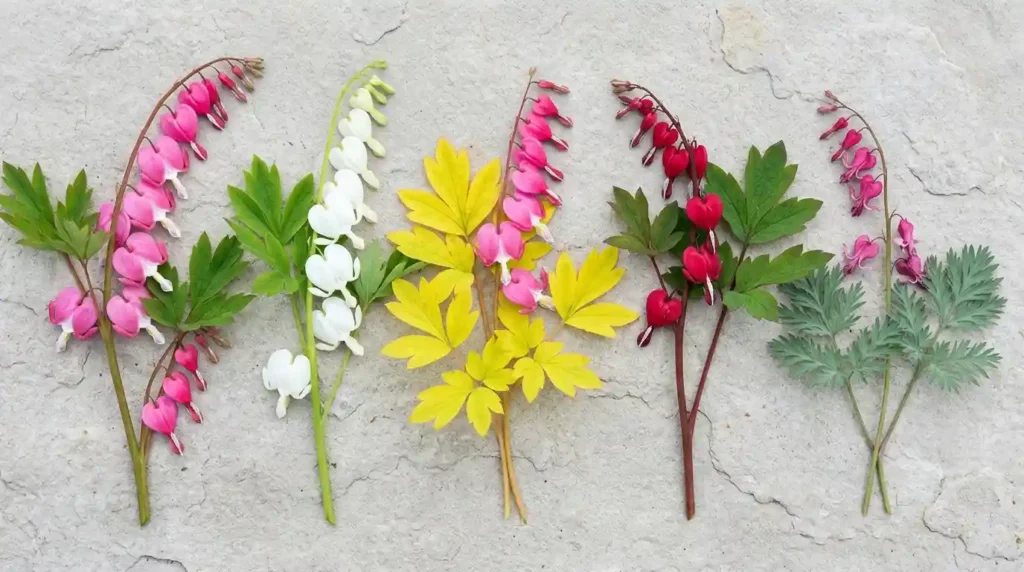
The bleeding heart plant comes in several wonderful varieties worth knowing. Here are the most popular options:
- Old-fashioned bleeding heart (Lamprocapnos spectabilis): The classic species, with deep rose-pink and white flowers on 2–3 ft. arching stems. Goes dormant in summer.
- ‘Alba’: A pure white variety of the classic species. Slightly more tolerant of bright conditions than the pink forms.
- ‘Gold Heart’: Stunning golden-yellow foliage with pink flowers. One of the most eye-catching cultivars in any shade garden.
- ‘Valentine’: Deep crimson-red flowers with white tips on dark stems. Blooms slightly later than the species.
- Fringed bleeding heart (Lamprocapnos eximia): A compact native American relative with finely cut foliage. Blooms longer and doesn’t go fully dormant.
- ‘King of Hearts’: A hybrid with rosy-pink flowers and blue-green foliage. More heat-tolerant and blooms into early summer.
Pruning
Prune your bleeding heart plant right after spring blooms fade, cutting spent stems to the base. As foliage yellows in summer, trim the whole plant to ground level it’s simply going dormant. Always wear gloves; all parts are toxic. Like Oriental poppies, companion plants fill the gap beautifully afterward.
Propagating Bleeding Heart Plant
The best time to propagate a bleeding heart plant is in early spring when plants are just emerging, or in fall after dormancy. Division is the most reliable method for home gardeners, though stem cuttings also work well.
Propagating by Division
Division is the easiest and most successful way to multiply your bleeding heart plant. It’s best done in early spring before significant foliage appears, or in early fall when temperatures cool back down.
What you’ll need:
- Sharp garden spade or fork
- Clean, sharp knife
- Compost or organic matter
- Gloves (the plant is toxic always wear them)
Step 1: Dig around the outside of the clump, going about 6 inches deep to avoid cutting roots. Lift the entire root ball gently from the ground.
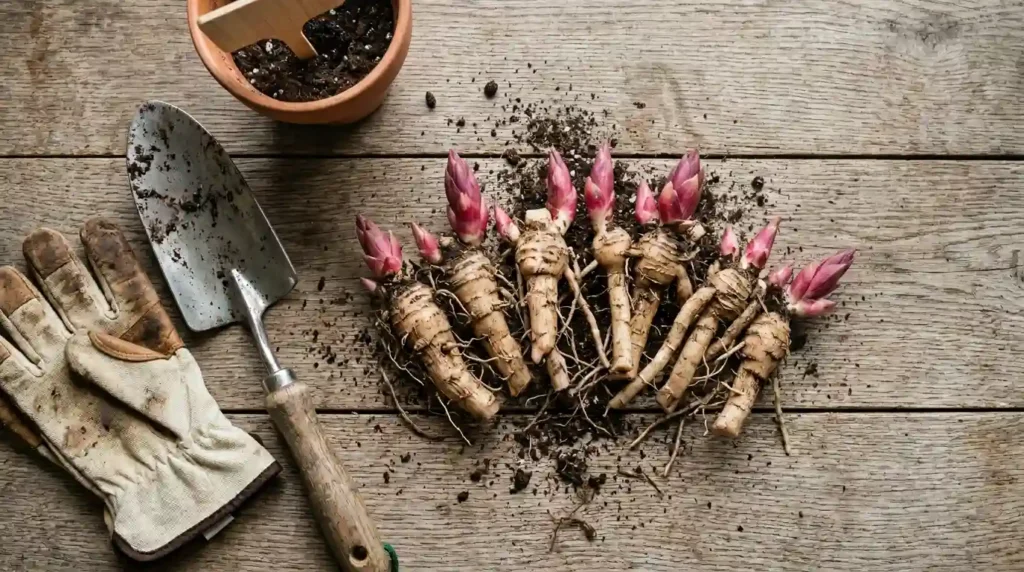
Step 2: Use a sharp knife or spade to divide the root ball into 2–3 sections. Make sure each division has at least 2–3 healthy growth buds the pink or red nubs visible on the roots.
Step 3: Replant each division immediately at the same depth it was growing before. Space divisions 18–24 inches apart in prepared, compost-amended soil.
Step 4: Water each division well and mulch around it to retain moisture. Keep the soil consistently moist for the first 4–6 weeks while roots establish.
Expect new growth within 2–4 weeks in spring. According to the USDA Plant Guide, dividing established perennial clumps every 3–5 years maintains plant vigor and improves bloom production significantly.
Propagating by Stem Cuttings
Stem cuttings work well in late spring when your bleeding heart plant is actively growing. Take 3–4 inch cuttings from the tips of healthy stems, remove lower leaves, and dip the cut end in rooting hormone. Plant in moist perlite or seed-starting mix, cover loosely with a plastic bag to hold humidity, and place in bright indirect light. Roots typically form in 3–5 weeks. This method takes more patience than division but is great when you want many new plants from a single specimen.
Planting and Transplanting
Plant your bleeding heart plant in spring after the last frost or in early fall, at least 6 weeks before hard freezes. Space plants 18–24 inches apart they spread gently over time and need room to show off their arching stems. Proper spacing also improves air circulation and reduces fungal disease risk.
Dig a hole twice as wide as the root ball and the same depth. Set the crown at or just slightly below soil level planting too deep causes rot. Backfill with a mix of native soil and compost, firm gently, and water deeply. Much like pink peonies, the bleeding heart plant benefits enormously from that extra compost worked into the planting hole.
Transplant established plants in early fall if you need to move them. Dig wide and deep to capture as much root system as possible. Transplanted plants may skip a blooming season while reestablishing, but bounce back reliably the following spring.
Common Pests and Diseases
Like most garden plants, the bleeding heart plant can occasionally face pest or disease challenges though it’s generally quite trouble-free when sited correctly.
Aphids
Look for clusters of small soft insects on new stems and flower buds in spring. Treat with a strong spray of water or insecticidal soap applied weekly until the infestation clears.
Slugs
Slugs love cool, moist conditions exactly what the bleeding heart plant enjoys. Look for irregular holes in leaves and a silvery slime trail nearby. Apply iron phosphate slug bait around the plant base.
Powdery Mildew
A white powdery coating on leaves signals this fungal problem, usually appearing in humid, crowded conditions. Treat with neem oil spray and improve air circulation by thinning surrounding plants promptly.
Root Rot
Yellowing, wilting foliage combined with soft, mushy roots indicates root rot. Remove and discard affected roots, improve drainage immediately, and avoid overwatering going forward.
Common Problems
Here’s how to troubleshoot the most common bleeding heart plant issues:
Poor or No Blooms
Lack of flowers is the most frustrating problem with the bleeding heart plant. Insufficient light is the top cause but too much dense, lightless shade can be equally problematic; aim for dappled brightness. Over-fertilizing with high-nitrogen products pushes leafy growth instead of flowers switch to a bloom-boosting fertilizer or plain compost. Improper pruning timing also plays a role: cutting stems too early in spring before buds formed removes this year’s flower potential entirely. Be patient with newly divided plants they often skip one season before blooming again.
Yellow or Browning Leaves
Yellowing leaves in spring usually signal overwatering or poor drainage let the soil dry slightly between waterings and check that water isn’t pooling at the base. Nutrient deficiency, particularly iron or nitrogen, can also cause yellowing; a light top-dressing of balanced compost usually corrects this within weeks. Summer yellowing is completely normal the bleeding heart plant naturally goes dormant in heat and foliage dies back on its own. Similar seasonal changes occur with calla lily care in hot conditions.
Wilting or Drooping
Wilting on a hot day is usually heat stress, especially in zones 7–9. Add a 3-inch mulch layer to cool the roots. Underwatering causes a similar limp look water deeply and the plant usually recovers within hours. If wilting appears early in spring alongside yellowing, suspect transplant shock; keep soil moist and avoid fertilizing until new growth firmly resumes.
Leggy or Sparse Growth
Long, floppy stems with few flowers usually mean insufficient indirect light. Even though the bleeding heart plant prefers shade, it still needs 3–4 hours of dappled brightness to grow compactly. Moving it to a brighter shaded location in fall fixes the issue for the following season. Over-fertilizing with nitrogen also causes loose, stretchy growth cut back on feeding and let the plant settle naturally.
Frost Damage
Late spring frosts occasionally catch emerging foliage. Frost-damaged leaves look dark, mushy, and collapsed. The roots are frost-hardy in zones 3–9 and the plant almost always pushes fresh growth within 1–2 weeks. Cover emerging plants with frost cloth when a late freeze is forecast. Much like iris flower care, a little late-season protection goes a long way for the bleeding heart plant.
FAQ
Does bleeding heart plant come back every year?
Yes, it’s a hardy perennial in zones 3–9. It dies back in summer but reliably returns each spring from established roots.
Is the bleeding heart plant toxic to touch?
Yes, all parts are toxic. Wear gloves when handling skin contact can cause irritation and rash in sensitive people.
Where is the best place to plant a bleeding heart plant?
Plant in partial shade with moist, well-draining soil. A north-facing bed or under deciduous trees works perfectly for spring blooms.
Does the bleeding heart plant spread on its own?
It spreads slowly by self-seeding and root expansion. Established clumps benefit from division every 3–4 years to stay vigorous.
2 thoughts on “How to Grow and Care for Bleeding Heart Plant”
Comments are closed.