
In This Article
Meet the American hornbeam (Carpinus caroliniana), a small native tree with serious personality. Once you spot its smooth, muscled bark, you’ll never mistake it for anything else.
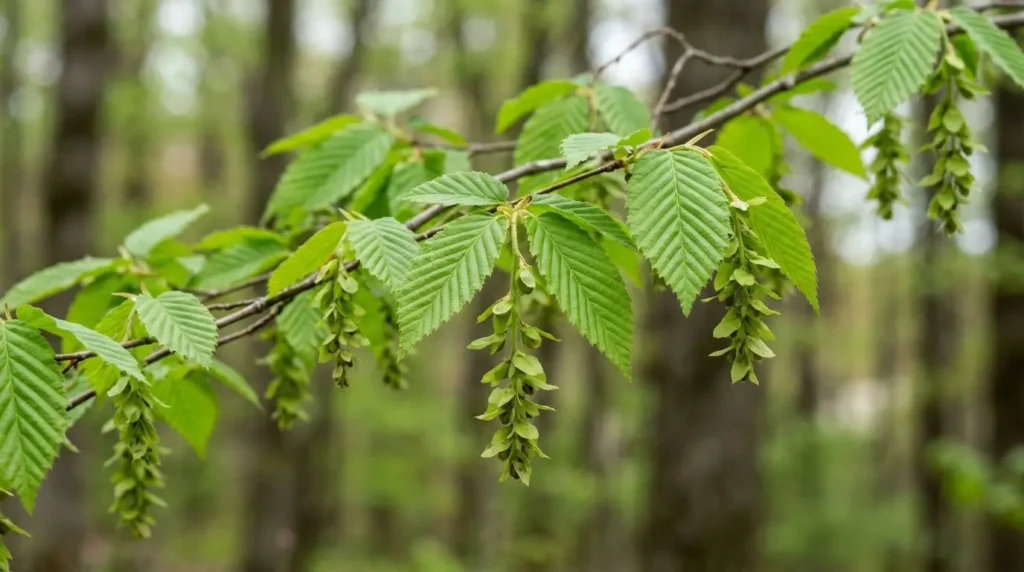
This hornbeam tree shows off doubly serrated, oval leaves that turn yellow to orange-red in fall. It stays compact too, usually topping out around 20 to 30 feet with a rounded, spreading crown.
Native to the eastern United States, this hornbeam tree grows naturally as an understory species along streams and in bottomlands. Here’s the thing: it’s wonderfully low-maintenance once it’s settled into the right spot.
Hornbeam Tree Care Card
| Feature | Details |
|---|---|
| Common Name | American hornbeam, blue beech, musclewood, ironwood |
| Botanical Name | Carpinus caroliniana |
| Family | Betulaceae |
| Plant Type | Deciduous tree |
| Mature Size | 20–30 ft. tall x 20–30 ft. wide |
| Sun Exposure | Full sun to full shade |
| Soil Type | Moist, well-draining, tolerates clay |
| Soil pH | Acidic to neutral (4.0–7.4) |
| Hardiness Zones | USDA 3–9 |
| Native Area | Eastern North America |
| Bloom Time | Spring (April–May) |
| Toxicity | Non-toxic to humans and pets |
Hornbeam Tree Care
This hornbeam tree is genuinely easy-going once established in a spot with consistent moisture. Here’s what you need to know about sun, soil, water, and basic upkeep. With the right placement, it practically takes care of itself.
Light
A hornbeam tree is refreshingly flexible, growing happily anywhere from full sun to full shade. That said, it tends to develop a denser, fuller crown in sunnier spots and a more open, airy shape in deep shade.
In hot southern climates, afternoon shade helps protect leaves from scorching. An understory spot beneath taller trees mimics its natural woodland habitat and usually gives the best results. If you need a denser screen instead, our roundup of best privacy trees explores other shade-tolerant options for boundary plantings.
Soil
This tree prefers rich, moist soil but isn’t terribly fussy about texture. It tolerates clay, loam, and sandy soils as long as drainage is reasonable, and it even handles occasional flooding near streambanks.
Aim for a slightly acidic to neutral pH between 4.0 and 7.4. Avoid bone-dry, compacted sites unless you’re prepared to water regularly, since prolonged drought stresses this species.
According to the University of Florida IFAS Extension, this tree tolerates well-drained sites to occasionally wet soils. For similarly tough landscape trees, see our Arizona ash tree guide.
Water
Newly planted hornbeam trees need consistent watering about once or twice weekly to help roots establish. Check soil moisture by pushing a finger a couple inches down; water if it feels dry.
Established trees tolerate brief dry spells but prefer evenly moist soil. Reduce watering in fall and winter as growth slows.
Yellowing leaves with soggy soil signal overwatering. Drooping foliage in summer heat often just means it’s time for a deep drink.
Temperature and Humidity
Hardy across USDA zones 3 through 9, this hornbeam tree shrugs off harsh northern winters without trouble. It also handles summer heat reasonably well, though it appreciates afternoon shade in the hottest zones.
Average humidity suits it fine, and no special winter protection is needed once established. Mulching around the base helps regulate soil temperature and retain moisture year-round. For a comparison of cold-hardy evergreens, see our emerald green arborvitae guide.
Fertilizer
This tree rarely needs fertilizer in decent soil. If growth seems slow, apply a balanced, slow-release fertilizer once in early spring before new growth emerges. Skip fertilizing in fall, since it can encourage tender growth that won’t harden off before frost.
Types of Hornbeam Tree
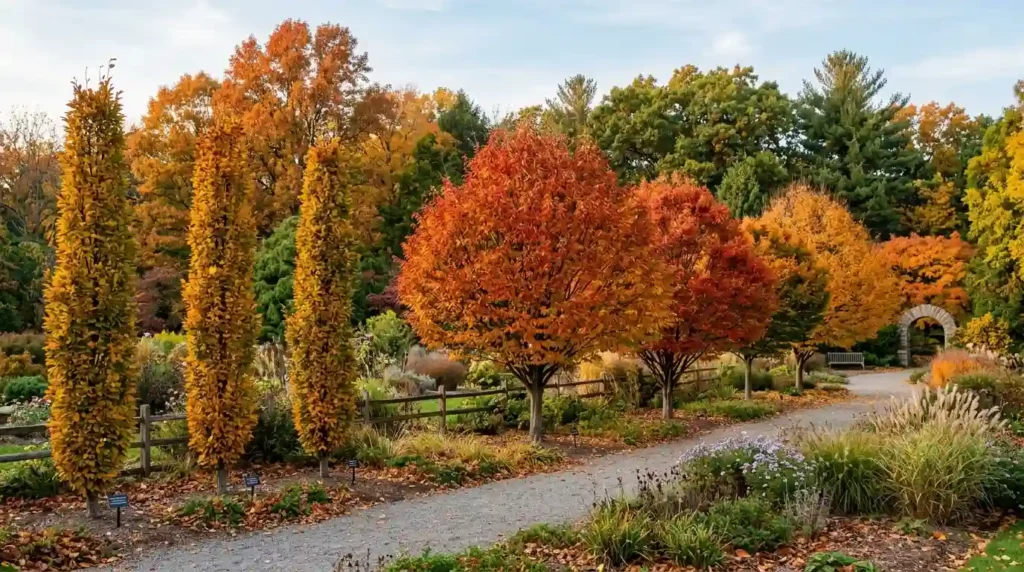
Several hornbeam cultivars offer improved fall color or more compact, manageable forms for smaller landscapes.
- Firespire™ (Carpinus caroliniana ‘J.N. Upright’): A narrow, upright grower reaching just 20 feet tall by 10 feet wide, prized for vivid red-orange fall color in tight spaces.
- J.N. Strain: A vigorous selection with reliably bold orange-red autumn foliage and strong overall vigor.
- Native Flame®: An upright form growing to about 30 feet, known for especially bright red fall color that stands out in the landscape.
- Palisade®: A neat, oval-shaped cultivar reaching 20 to 30 feet, valued for its tidy habit and yellow-orange fall display.
Pruning
Prune your hornbeam tree in late winter while it’s still dormant, before new spring growth begins. Focus on removing dead, damaged, or crossing branches to keep the canopy open and healthy.
Use sharp bypass pruners or loppers, cutting just outside the branch collar. This species tolerates pruning well, which is why it’s often shaped into hedges or trained as a single-leader street tree.
Propagating Hornbeam Tree
Spring is the best time to start propagating, when the parent tree is actively growing and most responsive to new growth.
Propagating by Seed
Growing a hornbeam tree from seed takes patience, but it’s the most common method gardeners use. You’ll need a few basic supplies:
- Fresh hornbeam nutlets (collected in fall)
- A plastic bag with moist sand or peat
- A refrigerator for cold stratification
- Seed-starting trays and potting mix
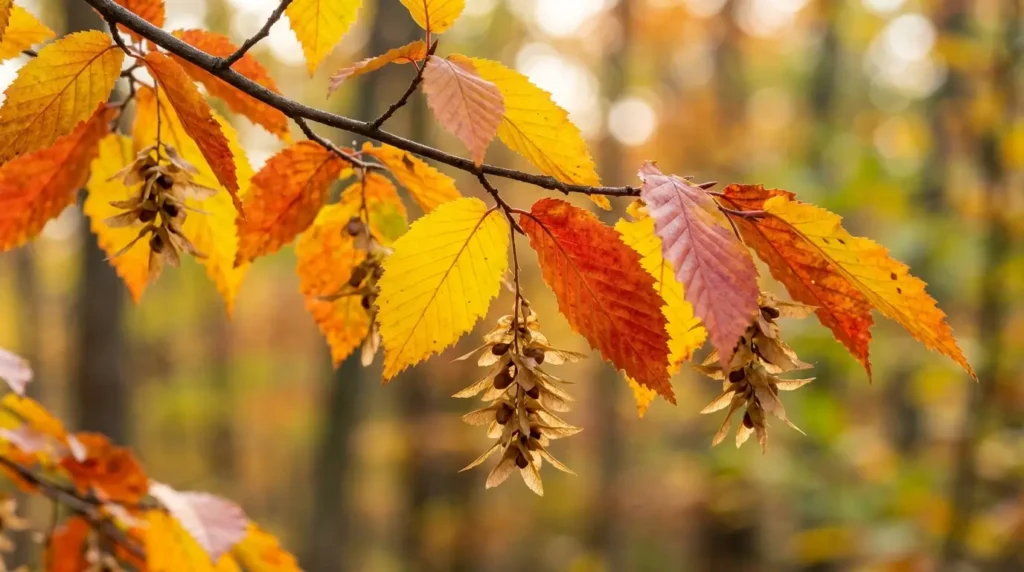
Start by collecting ripe nutlets in autumn once they’ve dropped from the tree. Place seeds in a bag with moist sand and refrigerate for 60 to 90 days to break dormancy. After stratification, sow seeds in trays filled with moist potting mix and keep them in a bright spot.
Germination is slow and can take several weeks to months. Be patient hornbeam seedlings grow gradually, matching the tree’s naturally slow growth rate, a pattern confirmed by Michigan State University Extension research on the species.
Propagating by Layering
Layering offers a faster, more reliable alternative for home gardeners. Choose a low, flexible branch and bend it down to touch the soil, then wound the bark slightly where it contacts the ground. Cover that section with soil, leaving the tip exposed, and weigh it down with a rock.
Roots typically form within one growing season. Once rooted, sever the new plant from the parent tree and transplant it to its permanent location.
Planting and Transplanting
Plant your hornbeam tree in early spring, spacing multiple trees 20 to 30 feet apart to accommodate their mature spread. This species has deep, spreading lateral roots, so it transplants best while still young and container-grown.
Dig a hole as deep as the root ball and twice as wide, positioning the root collar level with the surrounding soil. Backfill gently and water thoroughly to settle the roots. The USDA Plants Database confirms this species’ native range across the eastern United States, which is a helpful reference when matching planting conditions to its natural habitat.
Avoid transplanting established trees from open ground, since deep roots make this difficult. Container-grown trees handle the move far more easily.
Common Pests and Diseases
Like most garden trees, a hornbeam tree can occasionally face pest or disease issues, though it’s generally considered remarkably trouble-free.
Two-Lined Chestnut Borer
Look for thinning canopy and D-shaped exit holes in bark. Treat by keeping trees well-watered, since borers target stressed specimens, similar to issues seen in Eagleston holly trees under drought stress.
Aphids
Look for sticky residue and curled new leaves on tender growth. Treat with insecticidal soap or a strong water spray.
Leaf Spot
Look for small brown or tan spots scattered across foliage. Treat by removing fallen leaves and improving air circulation.
Scale Insects
Look for small bumps clustered along stems and branches. Treat with horticultural oil during the dormant season.
Common Problems
Here’s how to troubleshoot common issues:
Poor or No Blooms
Sparse spring catkins usually trace back to too much shade, since flowering improves with more sun exposure. Over-fertilizing with high-nitrogen products can also push leafy growth at the expense of flowers. Late winter pruning timed wrong may remove flower buds. Improve sun exposure where possible and skip fertilizer if blooms are lacking.
Yellow or Browning Leaves
Yellowing often points to overwatering or poor drainage, which suffocates roots and limits nutrient uptake. Compacted clay soil without adequate drainage makes this worse. Nutrient deficiency in poor soil can also cause pale, yellowish foliage. Improve drainage and test soil before fertilizing.
Wilting or Drooping
Drooping leaves during hot, dry stretches usually mean underwatering, especially in young trees. Transplant shock causes temporary wilting after planting. Deep, consistent watering for several weeks typically resolves both issues.
Leggy or Sparse Growth
An open, thin canopy often results from too much shade, since hornbeam trees fill out more densely in brighter light. Light pruning encourages fuller branching over time, much like the shaping techniques used for Princeton elm trees in formal landscapes.
FAQ
Is hornbeam a good tree?
Yes, it’s an excellent low-maintenance choice for shady yards. It offers attractive bark, fall color, and wildlife value with minimal upkeep required.
How big do hornbeam trees grow?
Most American hornbeam trees reach 20 to 30 feet tall with a similar spread. Growth is slow, so reaching mature size takes many years.
What is another name for a hornbeam tree?
This hornbeam tree also goes by blue beech, musclewood, and ironwood. The name “musclewood” references its distinctive fluted, muscle-like bark.
How do you identify a hornbeam tree?
Look for smooth, gray, fluted bark resembling flexed muscles. Doubly serrated oval leaves and hanging seed clusters confirm identification.