
In This Article
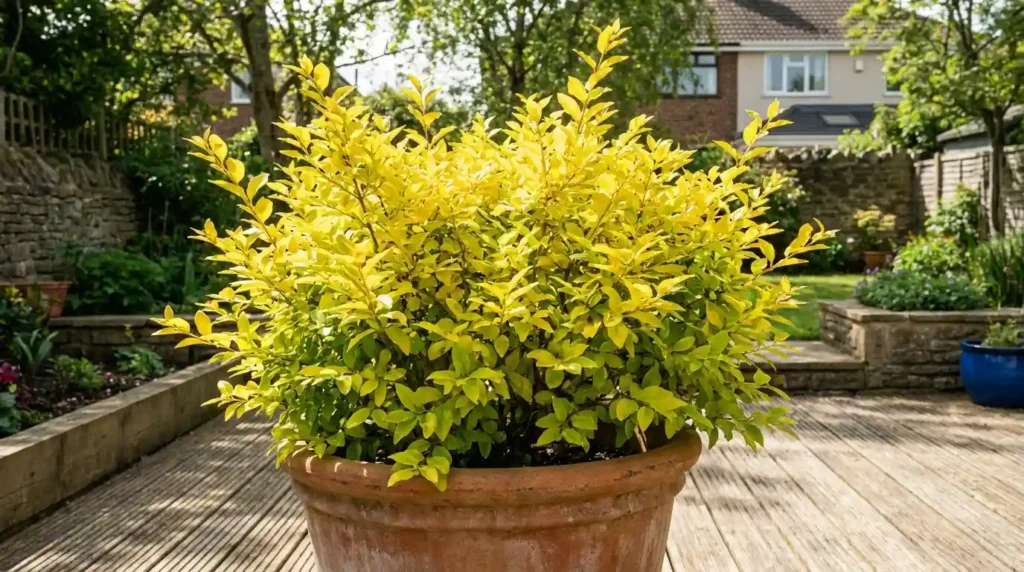
Sunshine Ligustrum (Ligustrum sinense ‘Sunshine’) is a compact, golden-leaved evergreen shrub that brightens any garden year-round. Its vivid chartreuse-to-yellow foliage is eye-catching and low-maintenance. Native to China, it thrives in USDA zones 6–10 and suits beginners and experienced gardeners alike.
Plant Care Card
| Detail | Info |
|---|---|
| Common Name | Sunshine Ligustrum |
| Botanical Name | Ligustrum sinense ‘Sunshine’ |
| Family | Oleaceae |
| Plant Type | Evergreen shrub |
| Mature Size | 3–6 ft. tall, 3–4 ft. wide |
| Sun Exposure | Full sun to partial shade |
| Soil Type | Well-draining, loamy or sandy |
| Soil pH | 6.0–7.5 (slightly acidic to neutral) |
| Hardiness Zones | 6–10 (USDA) |
| Native Area | China |
| Bloom Time | Late spring to early summer |
| Toxicity | Toxic to dogs, cats, and horses |
Sunshine Ligustrum Care
Sunshine ligustrum is one of the most low-maintenance shrubs you’ll find for a sunny garden. Here’s what you need to know about light, soil, water, and ongoing maintenance. With the right placement, this plant practically takes care of itself.
Light
Sunshine ligustrum needs at least 6–8 hours of full sun daily to keep its golden-yellow foliage vivid. Without enough light, leaves fade to dull green. Plant in a south- or west-facing spot for best color. According to the University of Florida IFAS Extension, full sun is the biggest factor in maintaining vibrant foliage color.
Soil
This shrub tolerates loamy, sandy, or rocky soils with pH 6.0–7.5, but drainage is essential avoid heavy clay. For dense soil, blend in coarse sand or perlite at a 1:3 ratio before planting. Per Texas A&M AgriLife Extension, proper soil prep is crucial for establishment. The same applies to nearby agave plants, which also dislike soggy roots.
Water
Water sunshine ligustrum once or twice weekly during its first season, then it becomes drought-tolerant. Check moisture by pressing a finger 2 inches deep. Water more in summer heat, less in fall/winter. Yellowing leaves signal overwatering; wilting or crispy edges signal underwatering. Adjusting watering rhythm usually resolves both quickly.
Temperature and Humidity
Sunshine ligustrum thrives in temperatures from 10°F to 110°F, tolerating brief cold snaps in zone 6, though severe winters may cause leaf dieback. Humidity rarely matters it adapts to both humid and dry climates. In colder zones, apply 2–3 inches of mulch each fall to insulate roots and speed spring recovery.
Fertilizer
Feed sunshine ligustrum with a balanced, slow-release fertilizer (such as 10-10-10) once in early spring and once in early summer. Avoid fertilizing after midsummer, as late feeding encourages tender new growth that’s vulnerable to frost damage. A light annual feeding is all it needs.
Types of Sunshine Ligustrum
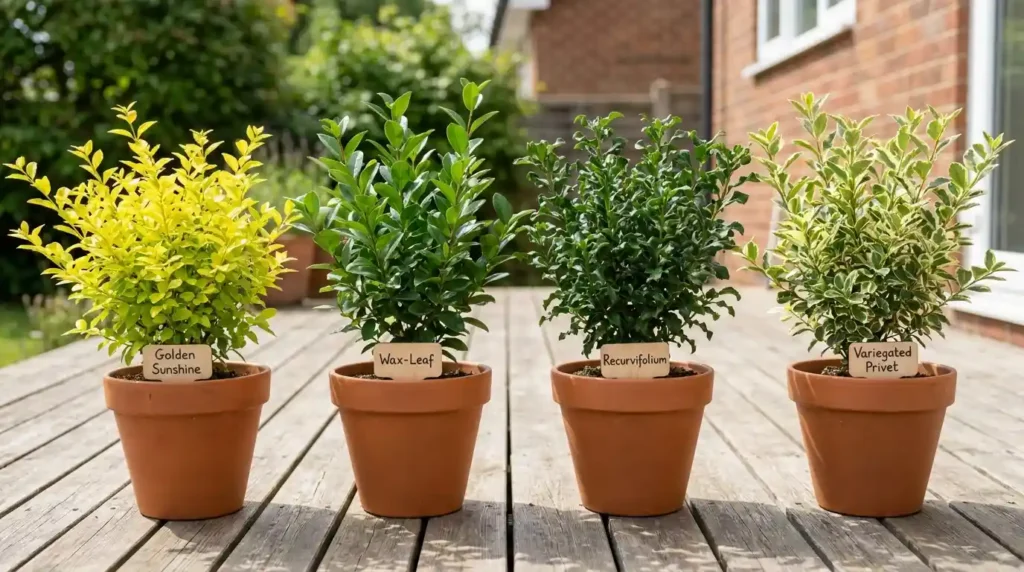
Sunshine ligustrum is a specific cultivar, but the broader Ligustrum genus offers several notable varieties worth knowing:
- ‘Sunshine’ (L. sinense ‘Sunshine’): The classic golden form with bright chartreuse-yellow foliage. Stays compact at 3–6 feet, perfect for hedges or borders.
- Wax-leaf Ligustrum (L. japonicum): A larger, dark-green evergreen variety that grows up to 10–12 feet. Often used as a privacy screen or small tree.
- Recurvifolium (L. japonicum ‘Recurvifolium’): Features wavy, curved leaf edges. More open branching habit than the classic wax-leaf form.
- Variegated Privet (L. sinense ‘Variegatum’): Green leaves edged in creamy white. A lovely choice if you want softer color contrast in mixed plantings.
Pruning
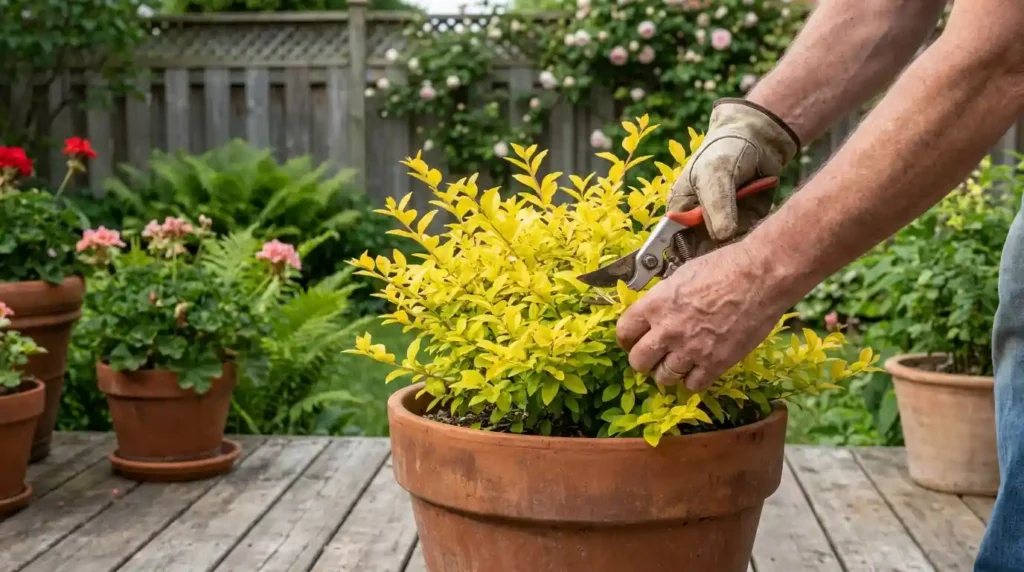
Prune sunshine ligustrum in late winter or early spring, just before new growth emerges. You can also do light shaping after the brief summer bloom period. Remove any dead or crossing branches first, then step back and shape the outer canopy into your desired form. This shrub naturally grows into a tidy mound, so heavy pruning isn’t usually necessary.
Use sharp, clean hedge shears or hand pruners for best results. Regular pruning keeps sunshine ligustrum dense, compact, and visually appealing. It also helps with air circulation, which reduces the risk of fungal issues. Pruning once or twice a year is typically all it takes to keep this shrub looking its best.
Propagating Sunshine Ligustrum
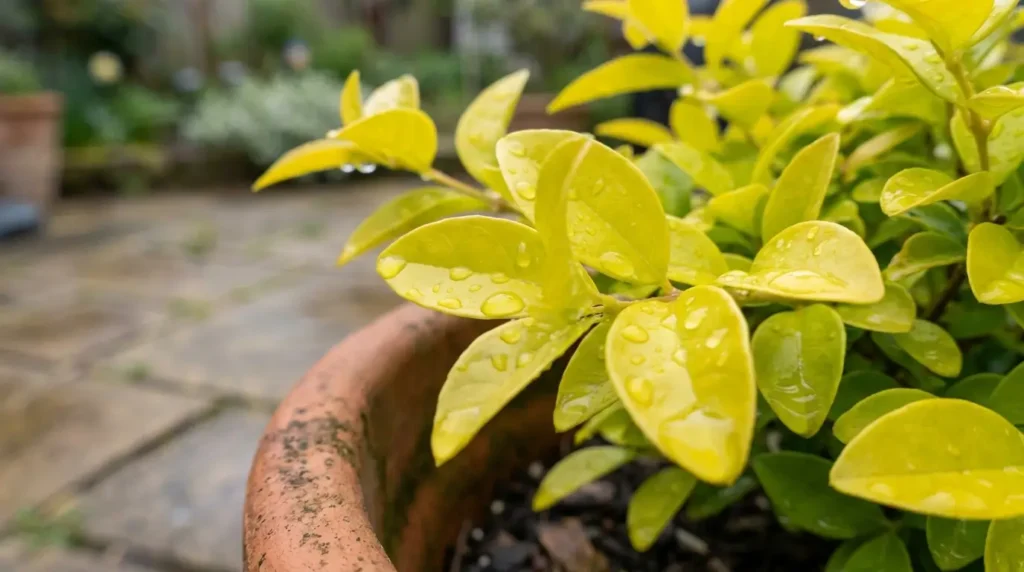
The best time to propagate sunshine ligustrum is in late spring or early summer when the plant is actively growing and cuttings root most readily.
Propagating by Stem Cuttings
Stem cuttings are the most reliable and widely used method for propagating sunshine ligustrum. This approach gives you a genetically identical plant with the same golden color.
Materials needed:
- Sharp, sterilized pruning shears
- 4-inch nursery pots
- Well-draining potting mix or perlite blend
- Rooting hormone powder or gel
- Clear plastic bag or humidity dome
Steps:
Step 1: Cut a 4–6 inch stem tip from healthy, non-flowering growth. Make your cut just below a leaf node at a 45-degree angle for maximum surface area.
Step 2: Remove all leaves from the bottom half of the cutting, leaving only 2–3 leaves at the top. Dip the cut end in rooting hormone and tap off any excess.
Step 3: Insert the cutting about 2 inches deep into a pot filled with moist perlite or a 50/50 perlite-potting mix blend. Firm the soil gently around the base.
Step 4: Cover the pot with a clear plastic bag to hold humidity. Place it in a warm, bright spot out of direct sun. Check moisture every few days and mist lightly if needed.
Roots typically form within 4–6 weeks. Once you see new leaf growth, the sunshine ligustrum cutting is ready to transplant into a larger pot or directly into the garden. The USDA Plant Database notes that Ligustrum sinense establishes readily from cuttings across a wide range of soil conditions, which makes home propagation very approachable.
Propagating by Division
Division works well for established shrubs that have developed multiple stems from the base. In early spring, dig up the outer edge of the plant and separate rooted sections with a sharp spade. Replant divisions immediately at the same depth and water thoroughly. This method gives you larger, more established starts than cuttings. You can use the same division technique with liatris and other clumping garden plants to expand your borders quickly.
Planting and Transplanting Sunshine Ligustrum
Plant sunshine ligustrum in spring or fall when temperatures are mild and roots have time to establish before extreme heat or cold. Space plants 3–4 feet apart for hedges or mass plantings, or give them 4–5 feet of space if you want each shrub to develop its natural mounded form.
Dig a hole twice as wide as the root ball and the same depth. Set the plant so the root flare sits at or slightly above ground level. Backfill with native soil, tamp gently, and water deeply right after planting.
If transplanting an established shrub, do it in early spring. Water the plant deeply the day before moving it to reduce transplant stress. Pairing sunshine ligustrum with low-growing companions like red creeping thyme creates a striking color contrast at the base of your border.
Common Pests and Diseases
Like most garden shrubs, sunshine ligustrum can occasionally face pest or disease pressure. Catching issues early makes treatment much easier.
Aphids
Look for clusters of small, soft-bodied insects on new growth tips. Spray with a strong stream of water or treat with insecticidal soap.
Spider Mites
Look for fine webbing and speckled, dull foliage, especially during hot, dry spells. Treat with neem oil or miticide spray and improve air circulation.
Powdery Mildew
Look for white, powdery coating on leaves, usually in humid conditions with poor airflow. Apply a fungicide labeled for powdery mildew and prune for better circulation.
Root Rot
Look for wilting despite moist soil, yellowing, and mushy roots at the base. Improve drainage immediately and cut away affected roots before replanting.
Whiteflies
Look for tiny white insects that flutter up when foliage is disturbed. Treat with yellow sticky traps or insecticidal soap applied to leaf undersides.
Common Problems with Sunshine Ligustrum
Here’s how to troubleshoot common issues with sunshine ligustrum:
Poor or No Blooms
Poor bloom production is usually tied to insufficient sunlight sunshine ligustrum needs at least 6 hours of direct sun to flower well. Over-fertilizing with high-nitrogen feeds pushes leafy growth at the expense of flowers. Improper pruning timing is another culprit: if you prune in late spring, you may be cutting off developing flower buds. Move the plant to a sunnier spot, switch to a low-nitrogen fertilizer, and prune only in late winter or immediately after blooming.
Yellow or Browning Leaves
Yellow leaves most often point to overwatering or poor drainage. If soil stays soggy, roots suffocate and leaves turn yellow fast. A nutrient deficiency especially iron or nitrogen—can also cause yellowing, particularly in alkaline soils. Brown leaf edges, on the other hand, usually signal underwatering or heat stress. Adjust your watering schedule, check drainage, and consider a soil test if yellowing persists. Similar symptoms can also affect gaura plants in poorly drained beds.
Wilting or Drooping
Wilting sunshine ligustrum usually means underwatering, especially during summer heat. However, transplant shock causes the same drooping appearance, even when soil is moist new transplants simply haven’t developed enough roots to take up water efficiently yet. Water deeply and consistently, and add a layer of mulch to conserve moisture. If drooping follows a recent planting, give it 2–3 weeks to settle in.
Leggy or Sparse Growth
Leggy, open growth almost always comes from too little sunlight. Sunshine ligustrum stretches toward any available light when it doesn’t get enough, resulting in weak, sparse stems. Over-fertilizing with nitrogen can also push fast, floppy growth rather than compact, dense foliage. Move the shrub to a sunnier location and prune back leggy stems in early spring to encourage fuller, bushier regrowth. This problem is common in shrubs planted under larger trees.
Frost Damage
Frost damage shows up as blackened, mushy stems or brown, crispy foliage after a hard freeze. Light frost damage is cosmetic wait until spring to prune off damaged growth. In severe cases, cut stems back to healthy wood and apply fresh mulch around the base. Most plants in zones 7–10 recover fully. In zone 6, plant in a sheltered spot near a south-facing wall for added winter protection, similar to strategies used for French lavender.
FAQ
Does sunshine ligustrum stay yellow all year?
Yes, sunshine ligustrum holds its golden-yellow color year-round in mild climates. Color may slightly fade in deep shade or very cold winters.
How big does sunshine ligustrum get?
It typically reaches 3–6 feet tall and 3–4 feet wide. Regular pruning keeps it compact and tidy if needed.
What are the cons of sunshine ligustrum?
It’s toxic to pets and horses. It also spreads aggressively if flowers go to seed, so deadhead spent blooms promptly.
When should I prune sunshine ligustrum?
Prune in late winter before new growth starts. You can also do light shaping immediately after the spring bloom period ends.