
In This Article
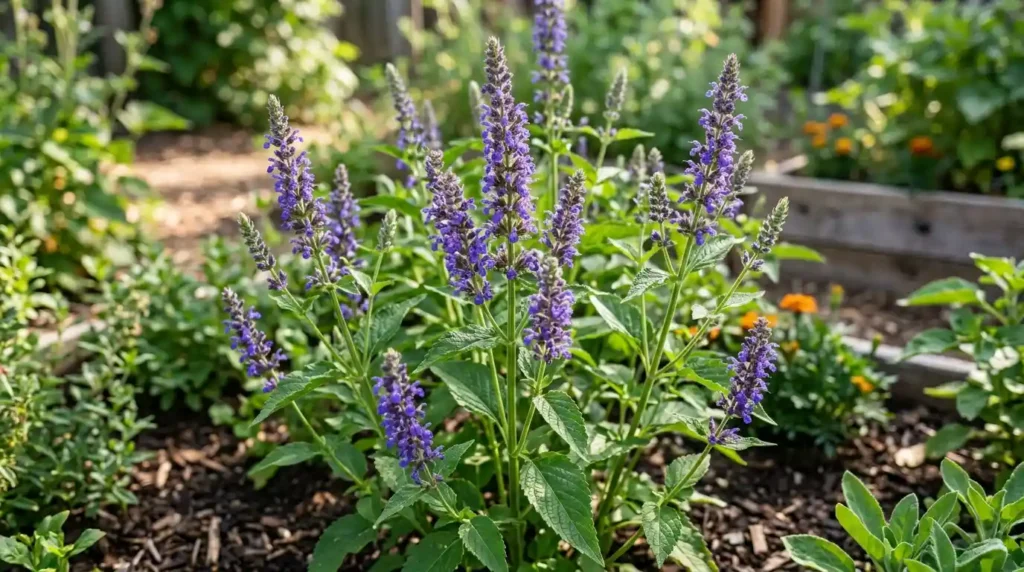
The chia plant (Salvia hispanica) is a bushy annual herb known for tiny blue-purple flower spikes and its famous edible seeds. Native to central Mexico and Guatemala, it thrives in USDA zones 8-11. Honestly, it’s an easy, low-fuss pick for sunny gardens.
Chia Plant Care Card
| Category | Details |
|---|---|
| Common Name | Chia |
| Botanical Name | Salvia hispanica |
| Family | Lamiaceae (mint family) |
| Plant Type | Annual herb |
| Mature Size | 2-4 ft. tall x 1-2 ft. wide |
| Sun Exposure | Full sun |
| Soil Type | Sandy, well-draining loam |
| Soil pH | 6.0-7.0 (slightly acidic to neutral) |
| Hardiness Zones | 8-11 (USDA) |
| Native Area | Central Mexico, Guatemala |
| Bloom Time | Mid to late summer |
| Toxicity | Non-toxic to pets and humans |
Chia Plant Care
Honestly, the chia plant is one of the easier annual herbs you can grow in a sunny bed. Here’s what you need to know about sun, soil, water, temperature, and feeding this fast grower. With the right spot, this herb basically takes care of itself all season.
Light
Give your chia plant full sun, at least 6-8 hours of direct light every day. Too little light causes leggy stems and weak, sparse flowering. A south-facing bed or an open, sheltered container spot works great. More sun means a bushier, sturdier plant by midsummer.
Soil
This herb likes loose, sandy loam that drains fast, since soggy roots invite trouble quickly. Aim for a slightly acidic to neutral pH, somewhere around 6.0 to 7.0. If your soil is heavy, work in some compost and coarse sand first. For more on building healthy garden beds, this soil preparation guide from Penn State Extension is a solid starting point.
Water
Water once or twice a week, letting the top inch of soil dry out between drinks. Check moisture by pushing a finger into the soil before watering again. Cut back in cooler months. If you’re growing a similarly thirsty herb, Texas sage handles the same feast-or-famine watering style well.
Temperature and Humidity
This heat-lover prefers warm days between 70-90°F and struggles once frost hits. It has zero cold tolerance, so treat it as an annual outside zone 8. Humidity isn’t a big concern, but a light mulch layer helps keep roots cool during heat waves.
Fertilizer
Feed lightly with a balanced liquid fertilizer every 4-6 weeks during the growing season. Skip fertilizer once flowering slows in fall. Too much feeding actually reduces seed production, so less is more here.
Types of Chia Plant
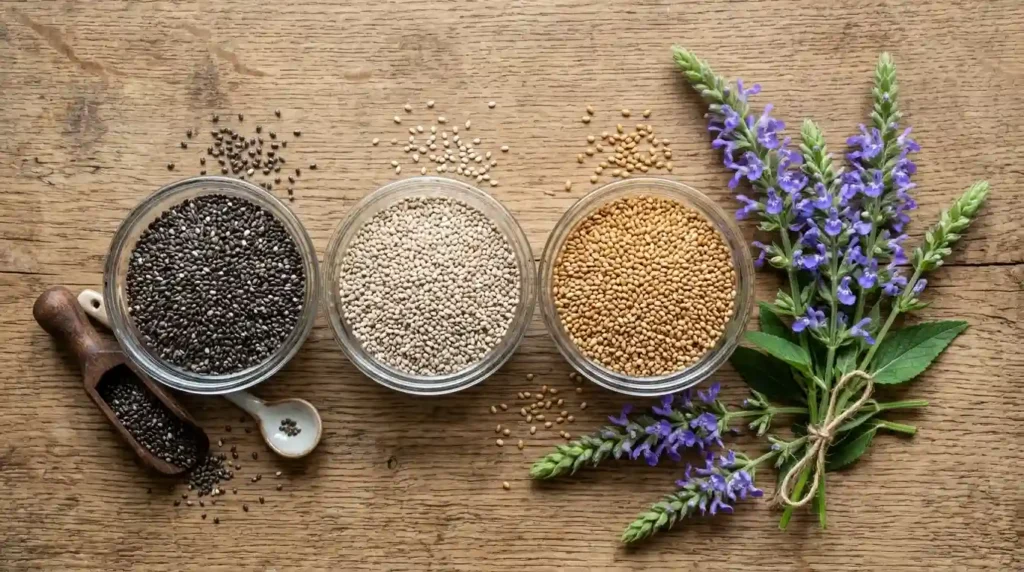
Most gardeners just grow standard Salvia hispanica, but a few notable variations exist worth knowing about. Each brings something a little different to the garden or the harvest basket.
- Black Chia: The classic commercial variety, grown for its small, glossy black seeds and reliable yields. It’s the type you’ll find in most grocery store seed packets.
- White Chia: A lighter-seeded strain with a milder flavor, often marketed as a premium variety. It grows almost identically to black chia in the garden.
- Golden Chia (Salvia columbariae): A drought-hardy North American relative with smaller flower spikes. Desert gardeners love it for its toughness.
- Ornamental Chia: Selected more for its violet-blue flower spikes than seed yield. Great for pollinator borders and cottage-style beds.
- ‘Sahara’ Chia: A newer commercial strain bred for heat tolerance and earlier flowering. Worth trying in hotter, longer growing seasons.
Pruning
Pinch back young chia plant stems once they reach about 6 inches tall to encourage a bushier, fuller shape. This early pruning step matters more than people expect, since unpinched plants tend to grow tall and floppy.
Once flower spikes fade, snip them off just above a leaf node with clean garden snips. Deadheading like this pushes the plant to produce more blooms instead of going to seed too early, which keeps foliage looking fresh through summer.
You really only need a basic pair of pruning shears for this job. Regular trims also improve airflow, which helps keep fungal issues away.
Propagating Chia Plant
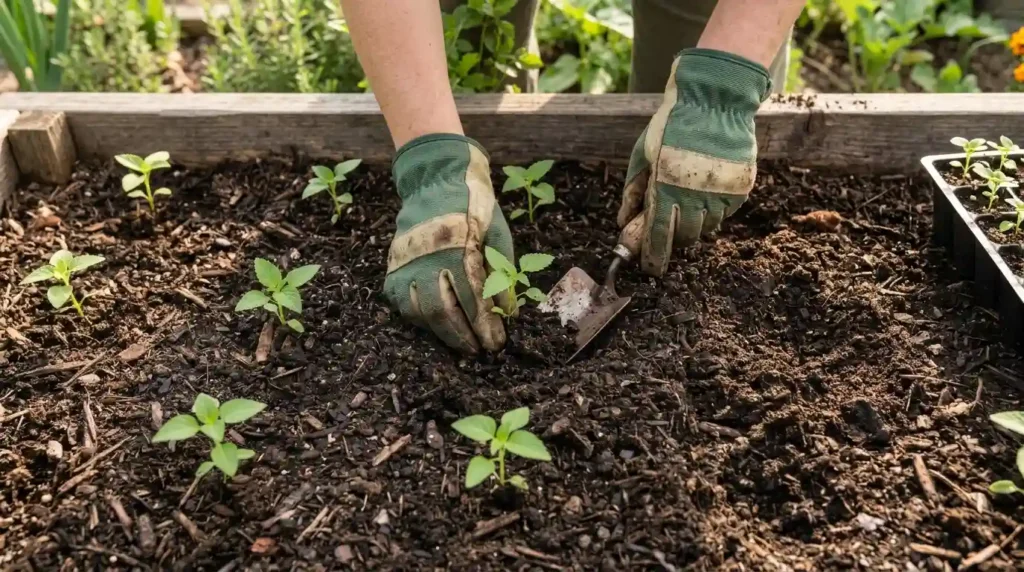
Spring is the best time to start new chia plants, once nights stay reliably above 50°F. Seeds are the easiest and most common method, though stem cuttings work as a solid backup.
Propagating from Seeds
Starting a chia plant from seed is simple and doesn’t need any special equipment.
Materials needed:
- Chia seeds
- Seed-starting mix
- Small pots or trays
- Spray bottle
Steps:
- Fill trays with moist, well-draining seed-starting mix.
- Scatter seeds on top and press gently, without covering them, since they need light to sprout.
- Mist daily to keep the surface consistently damp.
- Move trays to a warm, bright windowsill or under grow lights.
- Thin seedlings once they reach 2 inches tall, spacing them out.
Expect germination within 7-10 days, with seedlings ready to transplant outdoors after about four weeks.
Propagating by Stem Cuttings
Cuttings are a faster way to clone an existing chia plant you already love.
Materials needed:
- Clean scissors
- A glass of water or small pot with moist soil
- Rooting hormone (optional)
Snip a 4-inch stem below a leaf node from a healthy, non-flowering shoot. Strip the lower leaves so nothing sits below the waterline or soil surface. Dip the cut end in rooting hormone if you have it, then place it in water or moist soil. Keep it in bright, indirect light and change the water every few days. Roots typically appear within 10-14 days, and the young chia plant can be moved to soil once roots reach an inch long.
Planting and Transplanting Chia Plant
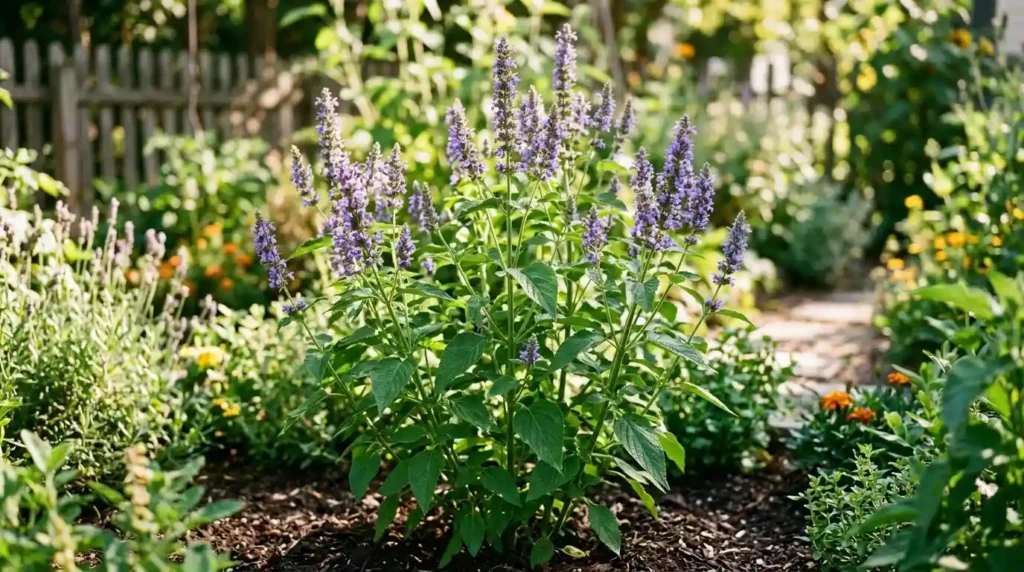
Plant chia outdoors in spring after all danger of frost has passed and soil has warmed. Space seedlings 12-18 inches apart to give each chia plant room to bush out and get good airflow.
Set seedlings at the same depth they were growing in their nursery pot, then water thoroughly. Choose a full-sun bed with loose, well-draining soil for the best results.
Since chia is grown as an annual, transplanting once established is usually unnecessary. Just move seedlings outdoors once, and let the plant finish its cycle in place.
Common Pests and Diseases
Like most garden herbs, the chia plant can occasionally run into a few pest or disease issues during the growing season, though none are usually severe.
Aphids
Look for clusters of tiny green or black insects on new growth and curled leaves. Treat with a strong water spray or insecticidal soap every few days.
Spider Mites
Fine webbing and stippled, pale leaves signal a mite problem, especially in hot, dry weather. Treat with neem oil or a forceful rinse under the hose.
Powdery Mildew
A white, dusty coating on leaves shows up in humid, crowded conditions. Improve airflow through pruning and apply a sulfur-based fungicide if needed.
Root Rot
Wilting despite moist soil points to root rot from overly wet, compacted ground. Improve drainage and cut back watering immediately. For general pest and disease identification, this integrated pest management guide from a university extension program is genuinely useful.
Caterpillars and Leaf Miners
Chewed edges or squiggly tunnels through leaves mean caterpillars or leaf miners are active. Handpick visible caterpillars and remove affected leaves promptly.
Common Problems with Chia Plant
Here’s how to troubleshoot common chia plant issues:
Poor or No Blooms
If your chia plant isn’t flowering, insufficient sun is usually the top culprit, since it needs 6+ hours daily. Over-fertilizing, especially with high-nitrogen products, also pushes leafy growth over blooms. Improper or overly aggressive pruning right before bloom time can delay flowering too. Fix it by relocating to a sunnier spot and switching to a lower-nitrogen feed.
Yellow or Browning Leaves
Yellowing leaves often mean overwatering, since soggy roots can’t take up nutrients properly. Poor drainage compounds the issue, trapping water around the roots for too long. Nutrient deficiency, particularly nitrogen, can also cause pale, yellowing foliage. Cut back watering and check that pots or beds drain well; if you notice the same symptoms on other herbs, rue reacts to soggy soil in a very similar way.
Wilting or Drooping
Drooping stems usually point to underwatering, especially during hot stretches. Transplant shock can also cause temporary wilting right after moving seedlings outdoors. Heat stress alone will droop leaves even with adequate water. Give it a deep drink and some afternoon shade until it perks back up.
Leggy or Sparse Growth
Thin, stretched-out stems mean your chia plant isn’t getting enough light. Over-fertilizing with nitrogen-heavy feed can also cause weak, floppy growth. Move it somewhere brighter and pinch back stems to encourage bushier growth.
Slow Growth
Cooler temperatures below 60°F will noticeably slow this heat-loving herb down. Compacted or nutrient-poor soil also holds growth back significantly. Warm the soil with mulch and work in some compost to help it catch up.
FAQ
Why be careful with chia seeds?
Dry chia seeds absorb liquid fast and can swell in the throat if eaten without enough water, so always soak them first.
Can you eat the chia plant?
Yes, the seeds are the main edible part, though young leaves are also edible and sometimes used fresh in salads or teas.
Can I grow chia seeds at home?
Yes, simply scatter seeds on moist soil, keep them consistently damp, and place them somewhere warm and bright for quick germination.
Do chia plants like sun or shade?
They strongly prefer full sun, needing 6-8 hours of direct light daily for strong stems and reliable summer flowering.