
In This Article
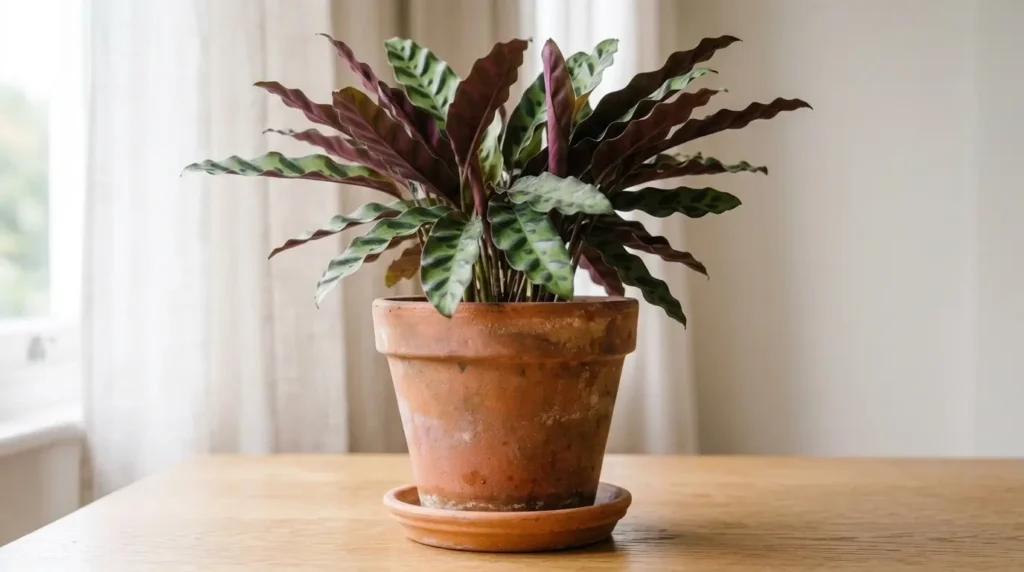
The rattlesnake plant (Calathea lancifolia) stops people in their tracks, with long wavy leaves showing dark green blotches on top and deep purple undersides. Native to Brazilian rainforests, it grows in shady understory conditions. It’s a moderate-difficulty houseplant not the easiest, but forgiving once you nail down consistent care.
Plant Care Card
| Attribute | Details |
|---|---|
| Common Name | Rattlesnake Plant |
| Botanical Name | Calathea lancifolia (also sold as Goeppertia insignis) |
| Family | Marantaceae |
| Plant Type | Tropical perennial |
| Mature Size | 1–2 ft tall x 1–2 ft wide |
| Sun Exposure | Bright, indirect light |
| Soil Type | Well-draining, peat-based potting mix |
| Soil pH | 6.0–6.5 (slightly acidic) |
| Hardiness Zones | USDA 11–12 (grown indoors elsewhere) |
| Native Area | Brazil |
| Toxicity | Non-toxic to cats and dogs |
Rattlesnake Plant Care
Rattlesnake plant care sits right in the middle not beginner-easy, but nowhere near high-maintenance either. Below, we’ll cover light, soil, water, humidity, feeding, and how to fix common problems. Stick with the basics here, and honestly, you’ll do just fine.
Light
This plant likes bright, indirect light a spot a few feet back from an east or north-facing window works great. Direct sun scorches its leaves and fades their color, while too little light dulls the patterns and slows growth. Sheer curtains help filter harsh rays near south windows.
Soil
A loose, well-draining mix is key combine potting soil with perlite and peat moss, roughly 2:1:1. Soggy soil leads to root rot fast, so drainage matters most. According to Clemson Cooperative Extension, a loose, well-aerated mix keeps houseplant roots healthy. Add extra perlite if your mix compacts easily.
Water
Water when the top inch or two of soil feels dry to the touch. Use room-temperature water and let it drain fully through the pot.
Overwatering shows up as mushy, yellowing leaves, while underwatering causes curling and crispy edges. Filtered or distilled water helps, too, since this plant can be sensitive to fluoride and chlorine.
If you’re growing a prayer plant alongside your rattlesnake plant, good news they share nearly identical watering needs. Water less often in fall and winter when growth slows down.
A consistent watering routine matters more than a rigid schedule. Check the soil with your finger before every watering instead of just going by the calendar. Tap water with heavy chlorine or fluoride can build up over time, so letting water sit out overnight before use helps a lot.
Temperature and Humidity
This plant thrives between 65-80°F (18-27°C) and hates anything colder. Humidity is a big deal here aim for 50% or higher if you can.
Average household conditions are fine short-term, but dry winter air causes crispy brown tips. Keep it away from cold drafts, heating vents, and air conditioners, since sudden temperature swings stress it out fast.
A pebble tray or small humidifier makes a real difference for indoor humidity. The arrowhead plant enjoys similarly steamy conditions, so grouping tropical plants together can help everyone stay happy.
Fertilizer
Feed with a balanced liquid fertilizer diluted to half strength every 2-4 weeks during spring and summer. As UMN Extension notes, gentle feeding during active growth prevents weak, stretchy growth and salt buildup. Skip fertilizer entirely in fall and winter.
Types of Rattlesnake Plant
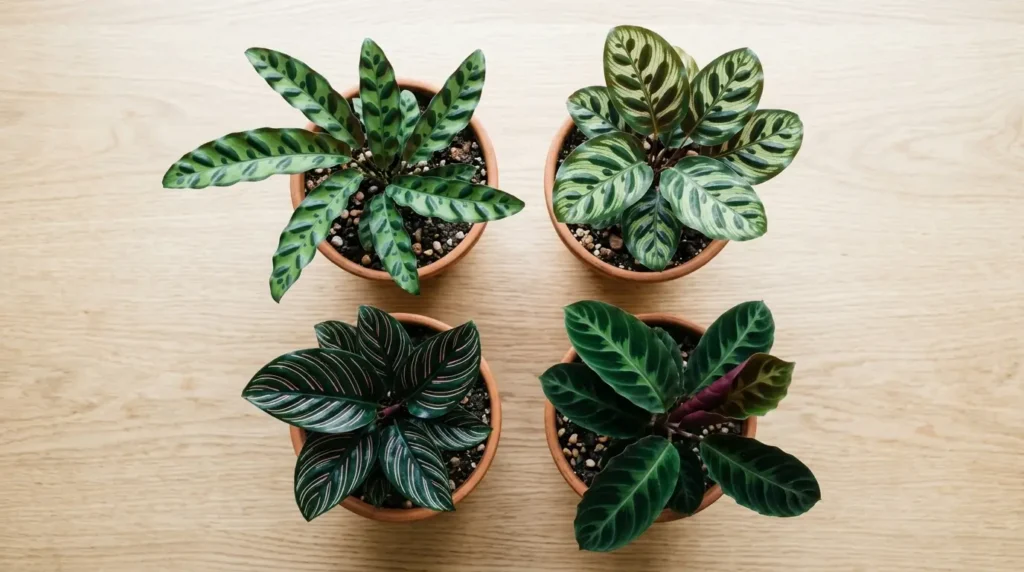
Calathea lancifolia doesn’t have many official cultivars, but it belongs to a family of closely related look-alikes often sold alongside it. Here are a few worth knowing about if you’re building a Calathea collection.
- Peacock Plant (Calathea makoyana): This is the closest cousin, with similar blotchy dark-green patterns on a pale background. Its leaves are rounder and thinner than the rattlesnake plant’s narrow, lance-shaped foliage.
- Pinstripe Plant (Calathea ornata): Known for thin pink or white pinstripes running across solid dark green leaves. It’s pickier about humidity than the rattlesnake plant.
- Jungle Velvet Calathea (Calathea warscewiczii): This one has velvety, fuzzy-textured leaves with a feathery dark-green pattern and rich burgundy undersides.
- Rattlesnake Calathea ‘Insignis’: Sometimes sold under its older botanical synonym, Calathea insignis, this is essentially the same species with slightly narrower leaves.
Pruning
Rattlesnake plants don’t need heavy pruning, but a little upkeep keeps them looking their best. Snip off yellow, brown, or damaged leaves at the base using clean, sharp scissors.
Prune anytime you spot dead or dying foliage there’s no strict schedule to follow. Removing spent leaves redirects energy toward healthy new growth and helps prevent pest problems from taking hold.
Propagating Rattlesnake Plant
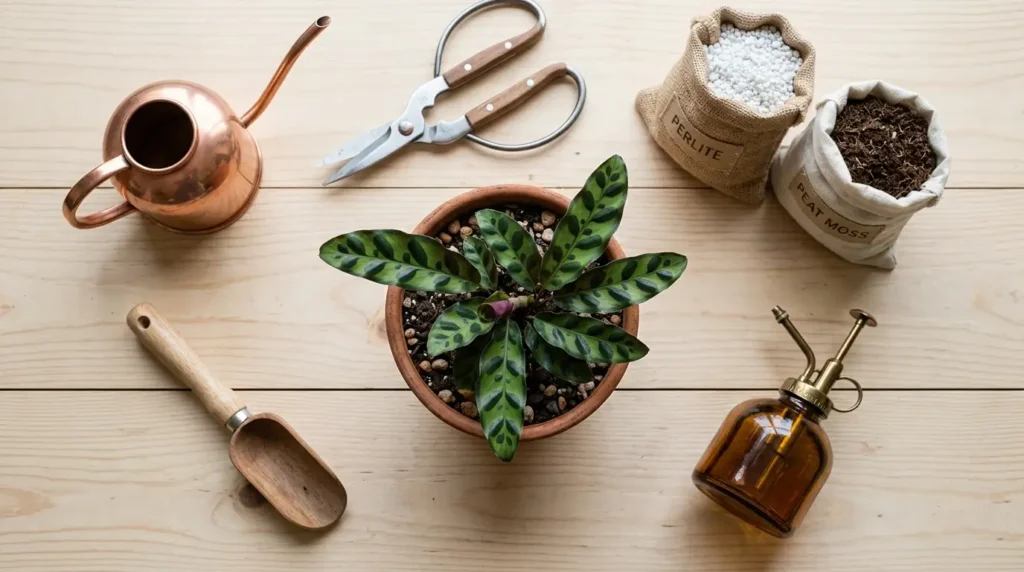
Best time to propagate is during spring and summer, when the plant is actively growing and can recover quickly.
Propagating by Division
Division is the easiest and most reliable method for this plant. It’s basically how the rattlesnake plant naturally spreads in the wild.
Materials needed:
- Sharp, clean knife or garden shears
- Fresh potting mix
- Extra pots with drainage holes
Steps:
- Remove the plant from its pot and gently shake off excess soil from the root ball.
- Look for natural divisions where clusters of stems and roots separate easily from the main clump.
- Cut through the root mass with your clean knife, keeping several stems and healthy roots per section.
- Repot each division immediately into fresh, well-draining soil and water thoroughly.
Give divisions a few weeks in bright, indirect light to settle in. New growth means it worked.
Propagating by Stem Cuttings
This is a shorter, gentler backup method if division feels intimidating. Snip a healthy stem with at least one node attached, just below a leaf joint.
Place the cutting in water or moist potting mix, and keep it warm and humid. Roots typically form within 4-6 weeks. Similar to how you’d propagate a calathea, patience is really the key ingredient here.
Water Propagation
Water propagation works well if you already have a healthy cutting on hand. Simply place the stem in a clear jar of water, keeping at least one node submerged.
Change the water every few days to keep it fresh and oxygenated. Once roots reach about an inch long, transfer the cutting into potting mix.
Potting and Repotting
When to repot: Look for roots poking through drainage holes or growth that’s noticeably slowed down. Most rattlesnake plants need repotting every 1-2 years.
How to repot: Choose a pot just 1-2 inches larger than the current one. Too much extra soil holds excess moisture, which invites root rot.
Gently loosen the roots, set the plant at the same depth, and backfill with fresh mix. Always water thoroughly after repotting to help roots settle.
Spring is the best season for repotting, since your rattlesnake plant is actively growing and recovers fastest then. Avoid repotting in fall or winter, when the plant is resting and less able to bounce back from the stress.
Common Pests and Diseases
Like most houseplants, rattlesnake plant can occasionally attract a few unwanted visitors, especially in dry indoor air. Catching problems early makes treatment far easier, so check the undersides of leaves regularly.
Spider Mites
Look for fine webbing and tiny yellow speckles on leaf surfaces. Treat with a strong water spray or insecticidal soap weekly.
Mealybugs
Identify by white, cottony clusters in leaf joints and along stems. Wipe them off with a rubbing-alcohol-dipped cotton swab.
Scale Insects
Look for small brown bumps stuck firmly to stems and leaf undersides. Scrape off gently, then treat with horticultural oil.
Aphids
Watch for clusters of tiny green or black bugs on new growth. Rinse with water or spray neem oil solution.
Per Colorado State University Extension’s houseplant pest guide, regularly rinsing leaves and isolating new plants goes a long way toward prevention.
Common Problems
Here’s how to troubleshoot the most common issues:
Yellow Leaves
Yellowing usually points to overwatering, which suffocates roots and causes rot. It can also mean nutrient deficiency from old, depleted soil, or simply natural aging of older leaves. Let soil dry out more between waterings and check drainage. If you’ve noticed similar yellowing on a Chinese money plant, the fix is usually the same.
Brown Leaf Tips
Brown, crispy tips almost always mean low humidity or mineral buildup from tap water. Underwatering can also cause this, especially in warm rooms. Switch to filtered water and raise humidity with a pebble tray or humidifier.
Drooping or Wilting Leaves
Drooping usually signals a watering imbalance either bone-dry soil or waterlogged roots. Check the soil moisture first before deciding which direction to correct. This is a similar symptom pattern seen in the nerve plant, so the same troubleshooting logic applies. A thorough, even watering schedule usually fixes it within days.
Leggy Growth
Sparse, stretched-out stems mean your rattlesnake plant isn’t getting enough light. Move it closer to a bright window and trim back leggy stems to encourage fuller, bushier growth.
Curling Leaves
Curling leaves usually mean the air around your rattlesnake plant is too dry or the soil has gone bone-dry. Raise humidity and check your watering routine first. If curling continues, rule out cold drafts nearby.
Slow Growth
Slow or stalled growth often traces back to low light, a nutrient-depleted pot, or the natural winter rest period. Move your plant somewhere brighter, refresh the potting mix, and resume light feeding once spring arrives.
FAQ
Are rattlesnake plants hard to keep alive?
Not really! They’re moderate-difficulty, meaning they need consistent humidity and watering, but they’re pretty forgiving once you find their rhythm.
Where should I put my rattlesnake plant?
Place it near an east or north-facing window with bright, indirect light. Avoid drafty spots or heating vents nearby.
What is the rattlesnake plant good for?
Mainly, it’s a striking decorative houseplant. Its patterned foliage adds bold texture and color to any indoor plant collection.
Do rattlesnake plants need sun?
They need bright, indirect light, not direct sun. Direct rays scorch their leaves, while too little light dulls their patterns.