
In This Article
Garlic plant (Allium sativum) is a hardy bulb crop grown for its papery-wrapped cloves and slender, grass-like leaves. Native to Central Asia, it thrives in USDA zones 3-9. Honestly, it’s one of the easiest edibles a beginner can grow.
Plant Care Card
| Category | Details |
|---|---|
| Common Name | Garlic |
| Botanical Name | Allium sativum |
| Family | Amaryllidaceae |
| Plant Type | Perennial bulb (grown as an annual) |
| Mature Size | 12-24 in. tall, 4-6 in. wide |
| Sun Exposure | Full sun |
| Soil Type | Loamy, well-draining |
| Soil pH | 6.0-7.0 (neutral) |
| Hardiness Zones | 3-9 (USDA) |
| Native Area | Central Asia |
| Bloom Time | Early summer (scapes, if hardneck) |
| Toxicity | Toxic to cats, dogs, and other pets |
Garlic Plant Care
The garlic plant is low-fuss once it’s tucked into the ground in fall. Here’s what you need to know about sun, soil, water, and feeding. Get the basics right and this bulb pretty much takes care of itself.
Light
A garlic plant wants full sun at least 6 hours a day. Skimp on light and you’ll get skinny stalks and small, disappointing bulbs. Pick an open, south-facing bed away from trees or fences that cast afternoon shade, and check this garlic growing guide from Utah State University for regional sun and timing tips.
Soil
This crop wants loose, well-draining soil rich in organic matter heavy clay leads to rot. Aim for a neutral pH between 6.0 and 7.0. A simple mix of 2 parts garden soil to 1 part compost works well. For more detail on building healthy garden beds, the growing garlic in a home garden guide from University of Maryland Extension is a solid reference.
Water
Keep soil evenly moist but never soggy, especially during spring bulb swell. Stick a finger an inch deep to check moisture before watering again. Ease off as leaves yellow near harvest to avoid split bulbs. If you’re growing other drought-sensitive herbs, French tarragon has similar watering habits and pairs nicely in a kitchen garden.
Temperature and Humidity
The garlic plant actually needs a cold snap temperatures below 40°F for a few weeks to form proper cloves. It tolerates hard frost once established and handles summer heat fine as it matures. A layer of straw mulch protects young shoots through harsh winters.
Fertilizer
Feed the garlic plant with a balanced, nitrogen-rich fertilizer in early spring as growth resumes. A light second feeding in late spring supports bulb sizing. Stop feeding once scapes appear, since extra nitrogen then delays bulb maturity.
Types of Garlic Plant
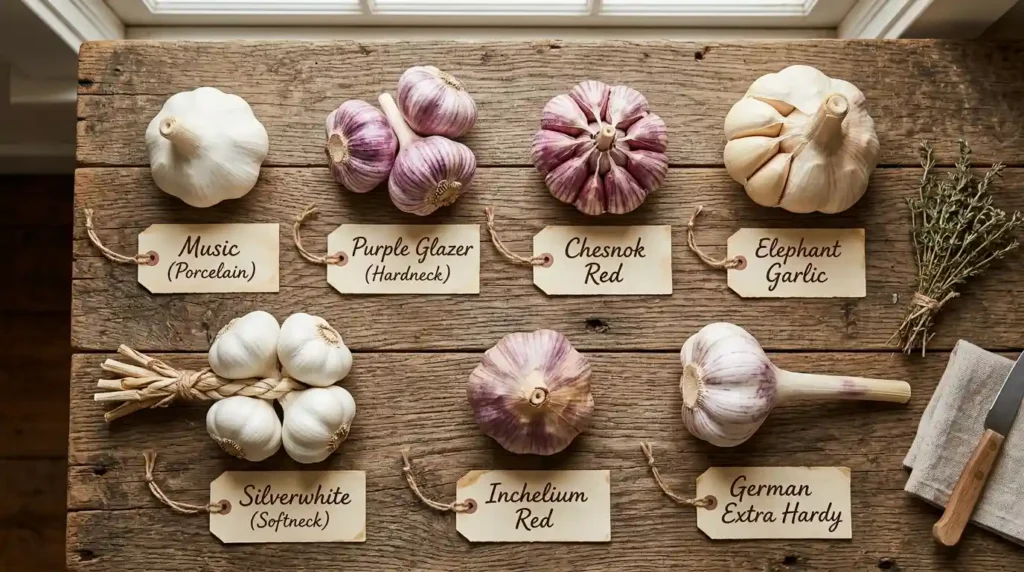
The garlic plant falls into two main groups hardneck and softneck plus several standout varieties within each. Here’s a rundown of the most popular options for home gardeners.
- German Extra Hardy (hardneck): Known for producing large, easy-to-peel cloves and excellent cold tolerance, making it a favorite in northern climates.
- Music (hardneck, Porcelain type): A widely grown variety with just 4-6 big cloves per bulb and a strong, classic garlic flavor.
- Chesnok Red (hardneck, Purple Stripe type): Prized by cooks for its rich, savory flavor that holds up well when roasted.
- Inchelium Red (softneck, Artichoke type): A high-yielding softneck that stores exceptionally long and adapts to milder winters.
- California Early (softneck, Artichoke type): A classic grocery-store type with a mild flavor and reliable performance in warm regions.
- Silverskin (softneck): The longest-storing type of all, often braided thanks to its supple, flexible stems.
- Rocambole (hardneck): Famous for bold flavor and easy-peeling cloves, though it stores for a shorter window than other types.
Hardneck types generally handle cold winters better and grow flowering scapes, while softneck varieties store longer and suit milder climates. If you like the Artichoke-type varieties above, the true artichoke plant makes a fun perennial companion in the same sunny vegetable bed.
Pruning
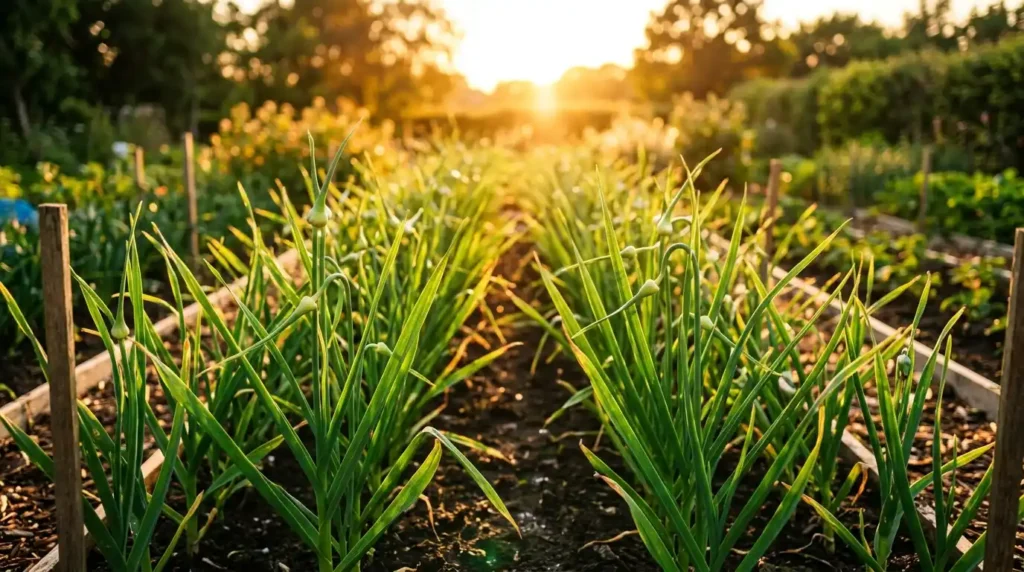
A garlic plant doesn’t need traditional pruning, but hardneck types benefit from scape removal. When curly seed stalks (scapes) appear in early summer, snip them off with clean shears about an inch above the topmost leaf.
Removing scapes redirects the plant’s energy into bulb growth instead of flowering, which noticeably boosts bulb size at harvest. Bonus: scapes are edible and taste fantastic sautéed or blended into pesto. Trim away any yellowing or damaged leaves you spot during the season to keep airflow good and disease pressure low. Growing a companion herb bed nearby? The rue plant responds well to this same light, occasional trimming approach.
Propagating Garlic Plant
A garlic plant is propagated from cloves, not seeds, and the best planting window is fall about 4-6 weeks before your first hard frost. That timing lets roots establish before winter dormancy sets in.
Propagating by Clove Division
This is the standard, most reliable way to grow garlic plants at home.
Materials needed:
- A firm, disease-free garlic bulb
- Well-prepared, loosened garden bed
- Compost or aged manure
Steps:
- Break the bulb apart into individual cloves right before planting, keeping the papery skin intact on each one.
- Choose only the largest, healthiest cloves, since size at planting largely predicts size at harvest.
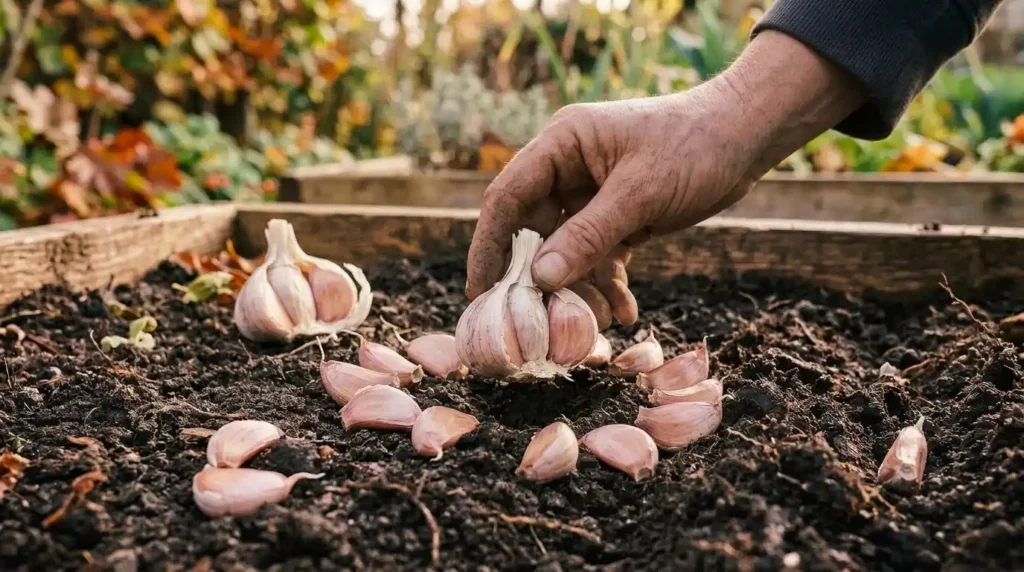
- Plant cloves pointed-end up, 2 inches deep, spaced 4-6 inches apart in rows.
- Cover with soil, then add a 3-4 inch layer of straw mulch for winter insulation.
- Water thoroughly at planting, then let winter rain and snow handle the rest until spring.
Expect green shoots to emerge in early spring, with harvest ready by early-to-mid summer depending on your climate.
Propagating by Bulbils (Hardneck Types)
Hardneck garlic plants also produce tiny bulbils inside their flowering scapes, offering a slower but useful backup method.
Leave scapes uncut until their papery covering splits, revealing tiny bulbils. Harvest and store them like full bulbs, then plant an inch deep the following fall, spaced closely. Year one yields only a small round clove, replanted to form a full bulb later. It’s slow, but great for building disease-free or rare stock.
Planting and Transplanting
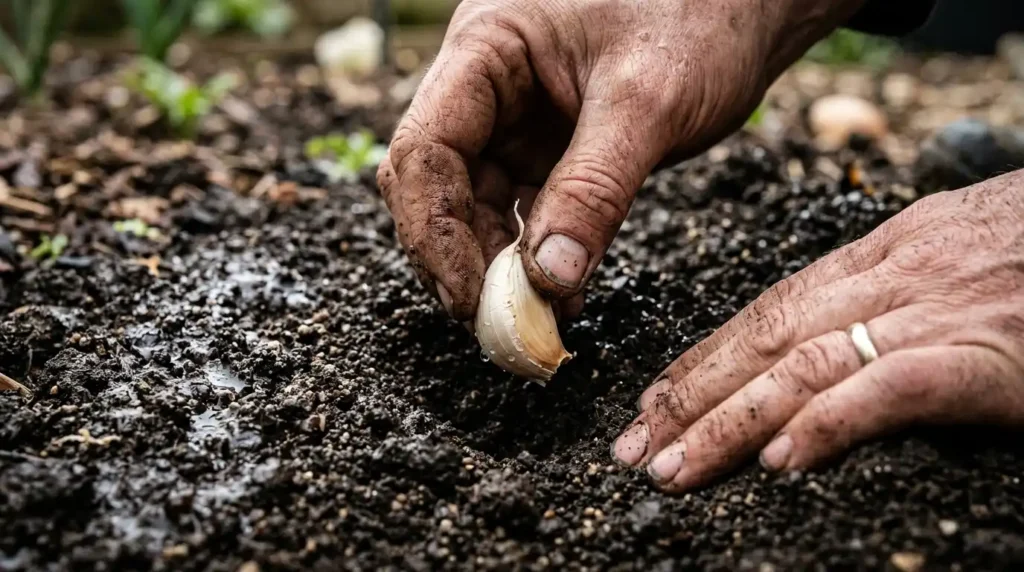
Plant garlic in fall, roughly a month before the ground freezes, giving roots time to establish before winter dormancy. Space cloves 4-6 inches apart in rows 12 inches apart, in a bed that gets full sun all day.
Dig individual holes or a shallow trench 2 inches deep, drop in cloves pointed-side up, then backfill and firm the soil gently. Mulch heavily with straw right after planting to buffer temperature swings and cut down on weeds.
A garlic plant isn’t typically transplanted mid-season, since disturbing the roots stresses bulb development. If you started cloves in containers, move seedlings outdoors in early spring while they’re still small.
Common Pests and Diseases
Like most garden vegetables, a garlic plant can run into a handful of pest and disease issues, though most are manageable with quick action. Rutgers’ growing garlic in the home garden fact sheet is a handy reference if problems get out of hand.
Aphids
Look for clusters of tiny, soft-bodied insects on new leaves and stems. Treat with a strong water spray or insecticidal soap applied weekly until they’re gone.
Onion Thrips
Identify by silvery streaks and distorted leaf tips, especially in hot, dry weather. Reflective mulch and regular watering help; insecticidal soap works for bad infestations.
White Rot
Watch for yellowing leaves and a fluffy white fungal growth at the base of the bulb. There’s no cure pull and destroy infected plants and avoid replanting alliums there for years.
Bulb and Stem Nematodes
Signs include twisted, swollen leaves and soft, discolored bulbs at harvest. Remove and discard affected plants immediately and rotate crops for at least three years.
Botrytis Leaf Blight
Look for white, water-soaked spots that turn brown on leaf tips during humid weather. Improve airflow, avoid overhead watering, and apply a copper-based fungicide if it spreads.
Common Problems with Garlic Plant
Here’s how to troubleshoot the most common garlic plant issues:
Small or No Bulbs Forming
This usually traces back to a few culprits affecting your garlic plant. Not enough sun during the growing season limits energy for bulb swell, so relocate future plantings to a brighter spot. Overcrowding forces cloves to compete for nutrients give each one more room next season. Skipping scape removal on hardneck types also diverts energy away from bulbs, so always snip those scapes.
Yellow or Browning Leaves
Yellowing early in the season often points to overwatering or poor drainage, since soggy roots can’t take up nutrients properly. Nutrient deficiency, particularly nitrogen, is another common cause and usually responds to a light feeding. If pumpkins or other heavy feeders share your garden bed, pumpkin plants show similar yellowing symptoms when soil drainage is off. Note that some yellowing near harvest time is completely normal.
Wilting or Drooping Shoots
Underwatering during dry spells is the most frequent cause, so check soil moisture and water deeply. Transplant shock can also cause temporary wilting in seedlings give them a few days to recover. Extreme heat stress sometimes mimics drought symptoms even with adequate watering.
Leggy, Thin Growth
Weak, spindly shoots on a garlic plant almost always mean insufficient sunlight reaching the bed. Move future plantings to a fully sun-exposed location and thin out any overcrowded rows. Texas sage gets leggy for the same reason, so the fix is the same: more direct sun. Cutting back on nitrogen-heavy fertilizer late in the season also helps stems thicken up.
Splitting Bulbs
Bulbs that crack open before harvest are often left in the ground too long past maturity. Harvest promptly once the bottom third of leaves turns brown, rather than waiting for full dieback. Inconsistent watering late in the season can also trigger premature splitting.
FAQ
How long does it take to grow garlic?
Garlic typically takes 8-9 months from fall planting to summer harvest. It needs a cold period to form bulbs properly, so patience is key here.
Do garlic plants keep mosquitoes away?
Not reliably. While garlic has mild pest-repelling properties, there’s no strong evidence it meaningfully reduces mosquito activity in real garden settings.
Does garlic come back every year?
Not on its own it’s grown as an annual since bulbs are harvested each summer. However, leftover cloves in the soil often self-seed the next season.
Can I plant garlic from the grocery store?
You can, but it’s risky. Store-bought bulbs may carry disease or be treated with growth inhibitors, so certified seed garlic performs far more reliably.