
In This Article
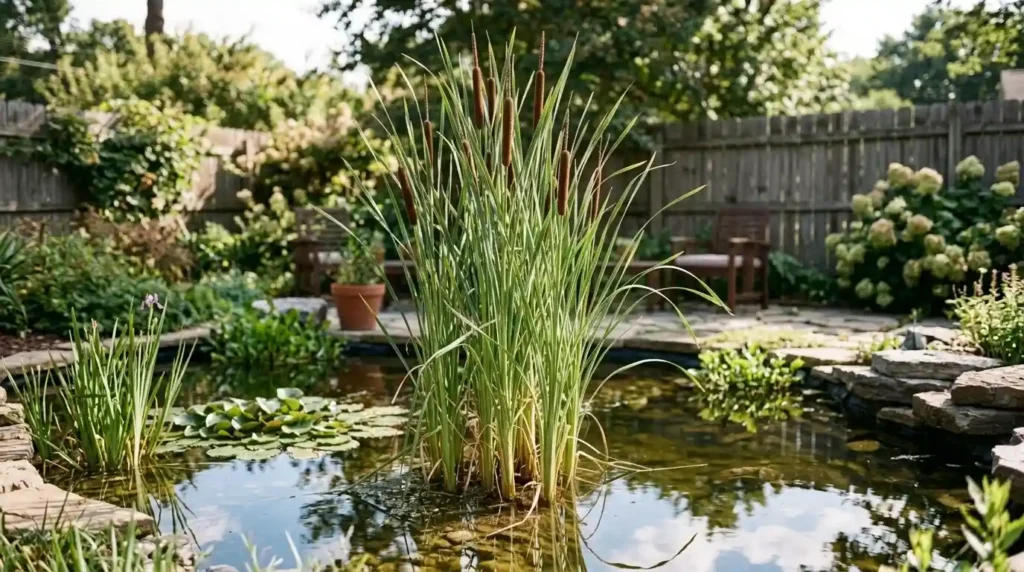
The cat tail plant (Typha latifolia) is a tall wetland perennial with brown, sausage-shaped flower spikes and long, sword-like leaves. This cat tail plant is native to North America and Europe and thrives in USDA zones 3-11, making it a low-maintenance choice for boggy garden spots.
Plant Care Card
| Attribute | Details |
|---|---|
| Common Name | Cat tail plant |
| Botanical Name | Typha latifolia |
| Family | Typhaceae |
| Plant Type | Herbaceous perennial |
| Mature Size | 4-8 ft. tall, 2-4 ft. wide |
| Sun Exposure | Full sun |
| Soil Type | Wet, mucky, or submerged |
| Soil pH | Neutral to slightly acidic |
| Hardiness Zones | 3-11 (USDA) |
| Native Area | North America, Europe |
| Bloom Time | Summer |
| Toxicity | Non-toxic to pets and humans |
Cat Tail Plant Care
Honestly, this wetland perennial thrives with minimal care once it’s settled into a soggy spot. Here’s what you need to know about sun, soil, water, and maintenance for healthy growth. With the right wet conditions, this plant practically takes care of itself all season long.
Light
Cat tail plants love full sun, needing at least six hours of direct light daily for the best growth and flowering. Too little light causes leggy stems and fewer flower spikes. Plant them along a pond edge or ditch that gets sun most of the day.
Soil
These plants grow best in wet, mucky soil with a neutral to slightly acidic pH. Good drainage isn’t a concern here since cat tails actually prefer standing water. For soil basics on wetland plantings, this university guide to wetland soils is a handy resource before planting.
Water
Cat tails need consistently wet or saturated soil, so plant them in a pond edge, rain garden, or bog area. Check moisture by feel; the soil should never dry out. In hot summers, water more often, much like astilbe plants stay evenly moist in shade gardens.
Temperature and Humidity
This hardy perennial tolerates a wide temperature range, from hot summers to freezing winters across its zones. Its roots survive frozen ponds just fine. High humidity near water features suits it perfectly, and no extra winter protection is typically needed.
Fertilizer
Cat tails rarely need fertilizer since they pull nutrients from wet, nutrient-rich soil naturally. If growth seems slow, add a light application of balanced aquatic plant fertilizer in spring. Skip feeding entirely once the growing season slows down in fall.
Types of Cat Tail Plant
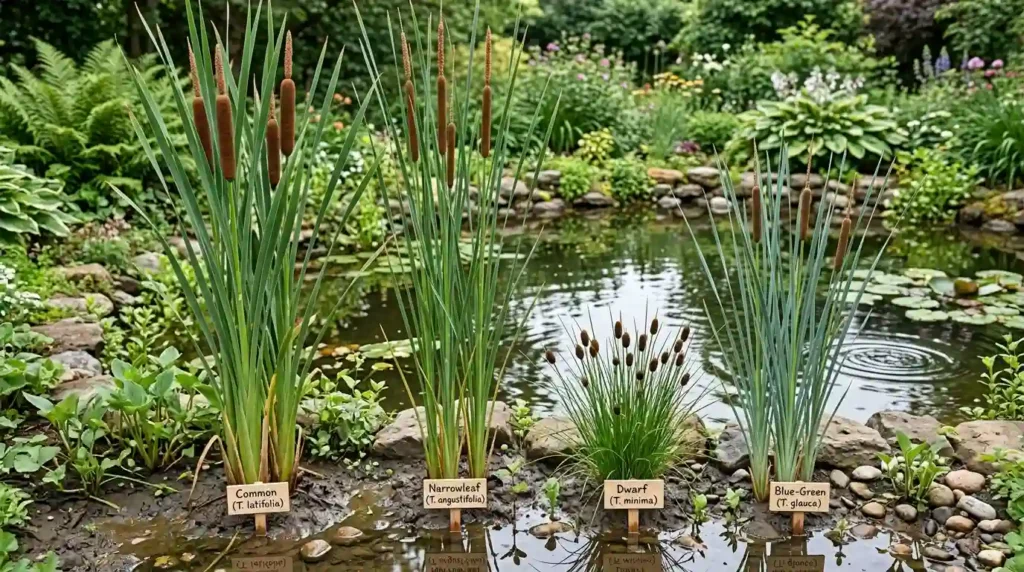
While the common cat tail plant is most familiar, several varieties offer different sizes and looks for the garden. Here are some popular types to consider for your wet garden spot.
- Common Cattail (Typha latifolia): The classic tall variety, reaching 6-8 feet with wide leaves and thick brown flower spikes. Extremely vigorous and spreads quickly, best suited for large ponds or naturalized wetland areas.
- Narrowleaf Cattail (Typha angustifolia): A slimmer variety with thin leaves and a more slender flower spike. Grows well in brackish water and tolerates slightly saltier conditions than the common type.
- Dwarf Cattail (Typha minima): A compact option growing only 12-24 inches tall, perfect for small ponds, containers, or water gardens where space is limited.
- Graceful Cattail (Typha laxmannii): Features slender leaves and delicate, smaller flower spikes. This variety spreads less aggressively, making it a tidier choice for smaller landscapes.
- Blue Cattail (Typha glauca): A natural hybrid with blue-green foliage and a striking silvery hue. Grows tall like the common variety but with a softer, muted color palette.
- Southern Cattail (Typha domingensis): Thrives in warmer climates and brackish marshes, with long narrow leaves suited to zones 8-11.
Pruning
Prune cat tail plants in late fall or early spring before new growth starts. Cut back dead or brown foliage and spent flower spikes to keep the planting tidy and prevent self-seeding into unwanted areas.
Use clean garden shears or loppers to cut stems close to the waterline or soil surface. Removing old growth improves airflow, reduces disease risk, and encourages fuller, healthier flower spikes the following season.
Wear gloves since the leaf edges can be sharp. Regular pruning also keeps this vigorous plant from overtaking smaller pond plants nearby.
Propagating Cat Tail Plant

The best time to propagate a cat tail plant is in spring or early summer during active growth. Two reliable methods work well for home gardeners, and both are fairly forgiving even for beginners.
Propagating by Division
Division is the fastest and most reliable way to multiply your cat tail plant, since it naturally spreads through underground rhizomes.
Materials needed:
- Sharp spade or garden knife
- Gloves
- Bucket of water
- New planting location with wet soil
Step-by-step:
- In spring, dig up a section of the rhizome clump using a sharp spade.
- Choose a piece with at least one healthy shoot and some roots attached.
- Trim away any dead or damaged roots before replanting.
- Place the divided section into shallow water or saturated soil right away.
- Keep the new division consistently wet for several weeks while it establishes.
Expect new shoots on your cat tail plant within 2-4 weeks, and the division should be fully established by the following season. For more on native ranges and growth habits, the USDA plant profile database is worth a look.
Propagating from Seeds
Growing a cat tail plant from seed takes longer but works well if you want many new plants at once.
Materials needed:
- Ripe seed heads
- Shallow tray or pot
- Wet potting mix or mud
To start, collect fluffy seed heads once they turn brown and begin to break apart in fall. Rub the seed heads between your hands to separate the tiny seeds from the fluff. Scatter seeds directly onto wet mud or a tray of saturated soil, pressing lightly without covering them. Keep the tray in a sunny spot and maintain constant moisture, similar to how loofah plants need steady moisture during germination. Seedlings typically sprout within 2-3 weeks, though it may take a full growing season before plants are large enough to transplant outdoors.
Planting and Transplanting Cat Tail Plant
Plant cat tail rhizomes in spring after the last frost, spacing them 18-24 inches apart to allow room for spreading. Set roots about 2-3 inches deep in mud or shallow water at the pond’s edge.
For container planting, use a large pot with no drainage holes, filled with heavy garden soil and topped with a few inches of water. This keeps the roots consistently submerged, much like how iris flowers thrive in marginal pond soil.
Divide and transplant your cat tail plant every 3-4 years to control spread and refresh the planting. Simply lift a section, trim it back, and replant it in fresh wet soil nearby.
Common Pests and Diseases
Like most garden plants, the cat tail plant can occasionally face pest or disease issues in the wrong conditions. Here’s what to watch for and how to treat each problem.
Aphids
Look for clusters of tiny green or black insects on new shoots and flower spikes. Treat with a strong water spray or insecticidal soap applied every few days.
Spider Mites
Look for fine webbing and stippled, yellowing leaves, especially during hot, dry spells. Treat by increasing humidity and spraying leaves with water or neem oil regularly.
Powdery Mildew
Look for a white, powdery coating on leaves, usually in humid, crowded conditions. Treat by improving air circulation and applying a fungicide labeled for water plants.
Root Rot
Look for mushy, blackened roots and a foul smell near the base. Treat by removing affected roots and moving the plant to fresher, oxygenated water.
Caterpillars / Leaf Miners
Look for chewed leaf edges or winding tunnels within the leaf tissue itself. Treat by hand-picking pests or using an approved organic insecticide, following this university IPM guide for wetland pests.
Common Problems with Cat Tail Plant
Here’s how to troubleshoot common cat tail plant issues:
Poor or No Blooms
No flower spikes usually points to insufficient sunlight, since this plant needs at least six hours of direct sun daily. Over-fertilizing can also push leafy growth instead of blooms, so cut back on feeding. Improper pruning at the wrong time may remove developing flower buds. Move the plant to a sunnier spot and ease off fertilizer for better blooming next season.
Yellow/Browning Leaves
Yellowing foliage often signals standing water that’s gone stagnant or poor oxygen flow around the roots. Nutrient deficiency in very sandy soil can also cause pale, weak leaves. This issue looks similar to what affects bamboo plants in waterlogged soil, so refreshing the water source usually helps. Trim damaged leaves and improve water circulation to fix it.
Wilting or Drooping
Wilting usually means the soil has dried out, since this wetland plant can’t tolerate drought for long. Transplant shock after dividing can also cause temporary drooping, and heat stress during extreme summer days adds to the problem. Water deeply and consistently until the plant perks back up.
Leggy or Sparse Growth
Sparse, stretched-out growth usually means the cat tail plant isn’t getting enough direct sunlight each day. Over-fertilizing can also cause weak, floppy stems. Move plants to a sunnier location and prune back leggy growth to encourage fuller regrowth.
Slow Growth
Slow growth often comes down to cool water temperatures or soil that’s too dry between waterings, an issue similar to what slows down artichoke plants in cool soil. Nutrient-poor soil can also stall growth. Add a light feeding in spring and make sure roots stay consistently wet.
FAQ
What are cat tail plants good for?
Cat tail plants filter pollutants from water, provide wildlife habitat, and offer edible roots and shoots. They’re popular for natural ponds, rain gardens, and wetland restoration projects.
Do cat tail plants spread quickly?
Yes, cat tail plants spread quickly through underground rhizomes and self-seeding. Without control, they can dominate a pond edge within just a few growing seasons.
What part of a cattail is edible?
The young shoots, rhizomes, and pollen of a cattail are edible. Shoots taste similar to cucumber, while rhizomes can be cooked like a starchy root vegetable.
How to take care of a cat tail plant?
Give your cat tail plant full sun and consistently wet or submerged soil. It needs little fertilizer, tolerates a wide temperature range, and benefits from occasional dividing.