
In This Article
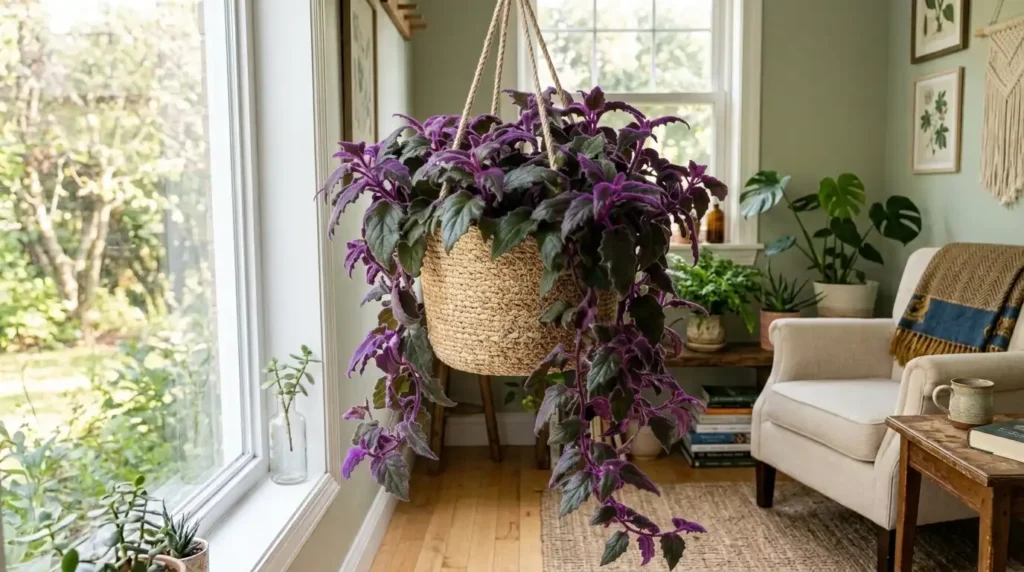
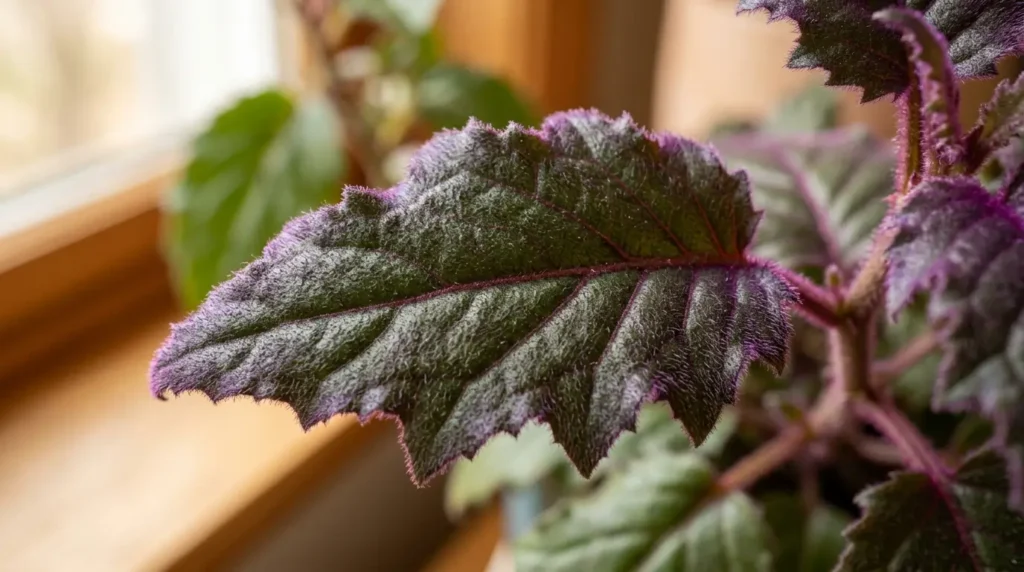
Meet the purple passion plant (Gynura aurantiaca), a velvety houseplant known for its fuzzy, violet leaves. Native to Southeast Asia, this tropical perennial catches the eye. Honestly, once those purple hairs catch the light, you’ll want one on every windowsill. It’s easy to grow, rewarding beginners with fast, trailing growth.
Plant Care Card
| Attribute | Details |
|---|---|
| Common Name | Purple Passion Plant, Velvet Plant |
| Botanical Name | Gynura aurantiaca |
| Family | Asteraceae |
| Plant Type | Tropical perennial |
| Mature Size | 1-2 ft. tall x 1-2 ft. wide (trailing to 6 ft.) |
| Sun Exposure | Bright, indirect light |
| Soil Type | Well-draining, peat-based potting mix |
| Soil pH | 6.0-6.5 (slightly acidic) |
| Hardiness Zones | USDA 10-11 |
| Native Area | Indonesia, Southeast Asia |
| Toxicity | Non-toxic to cats and dogs |
Purple Passion Plant Care
Let’s face it the purple passion plant is pretty forgiving, even if you’re brand new to houseplants. Below, we’ll cover light, soil, water, humidity, feeding, and even pruning so your plant thrives. You’ll love how quickly this fuzzy beauty rewards a little consistent care and attention.
Light
This plant wants bright, indirect light to keep its purple hairs vibrant year round. Too little fades its color to dull green, while too much sun scorches those fuzzy leaves. An east window is ideal, giving gentle morning rays without harsh afternoon sun. No bright spot? A grow light helps.
Soil
Purple passion plants need a loose, well-draining mix that never stays soggy. A DIY blend of 2:1:1 peat, perlite, and compost works well. According to Illinois Extension, equal parts soil, peat moss, and perlite give the drainage most houseplants need. Avoid dense garden soil, since it compacts and traps water.
Water
Water this plant once the top 2 inches of soil feel dry to the touch. It likes evenly moist soil but truly hates sitting in standing water, so drainage matters a lot here. Overwatering causes mushy stems and yellowing, while underwatering leads to crispy, curling leaves and a droopy appearance.
Cut back watering in fall and winter as growth naturally slows down for the season. During peak summer heat, you may find yourself watering more often, sometimes twice a week indoors.
If you enjoy plants with similarly relaxed watering habits, the nerve plant follows nearly the same “moist but never wet” rule, making the two easy to grow side by side on the same shelf.
Temperature and Humidity
Keep things cozy between 65-80°F, since this tropical plant dislikes cold snaps and chilly drafts. It also loves higher humidity, though honestly, it tolerates average home conditions reasonably well without much fuss. Keep it away from drafty windows, heating vents, and air conditioners, all of which dry out its fuzzy foliage fast.
A pebble tray or nearby humidifier helps during dry winter months, especially in heated homes. Plants like the heart-leaf philodendron share this same warm, humid preference, so they make great windowsill neighbors and thrive under similar conditions.
Fertilizer
Feed with a balanced liquid fertilizer every 2-4 weeks throughout spring and summer for steady, healthy growth. Skip fertilizing in fall and winter when growth naturally slows to a crawl. Oklahoma State University Extension notes that diluting fertilizer per label directions keeps houseplants healthy without burning tender roots.
Pruning
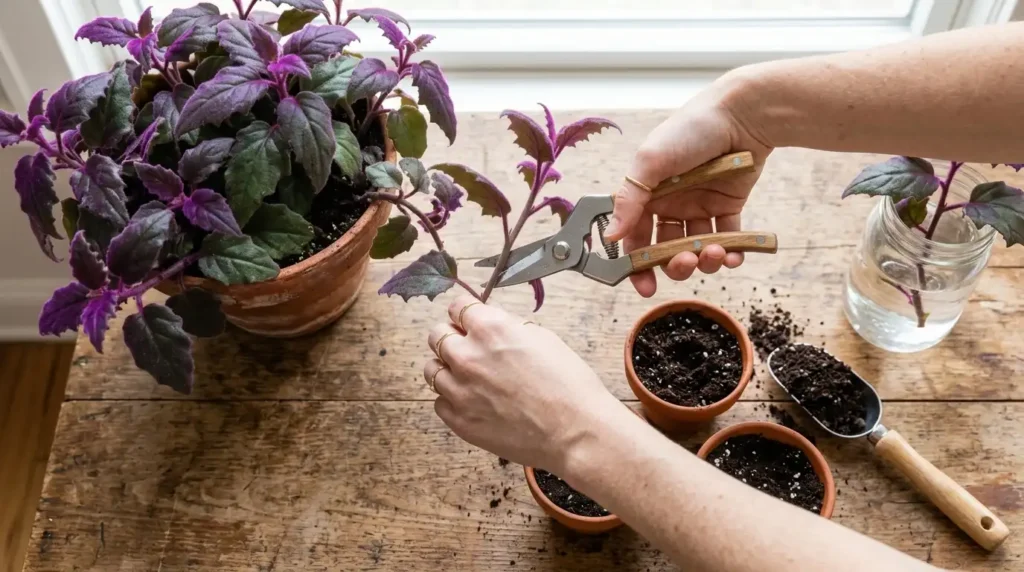
Pinch back leggy stems in spring to encourage a fuller, bushier purple passion plant overall. Simply snip just above a leaf node using clean scissors, removing any dead or faded foliage as you go. Regular pinching also gives you plenty of healthy cuttings for propagating brand-new plants. This plant responds quickly to trimming, so don’t be shy about a good haircut every few months. Frequent pruning also keeps trailing stems from becoming bare and woody near the base.
Propagating Purple Passion Plant
Spring and summer are the best time to propagate, when the plant is actively pushing out fresh new growth.
Propagating by Stem Cuttings
This is the easiest and most reliable method for multiplying your purple passion plant at home.
Materials needed:
- Sharp, clean scissors or pruning shears
- Small pot with fresh potting mix
- Optional rooting hormone
Steps:
- Snip a 4-6 inch stem below a leaf node using clean shears.
- Remove the lower leaves, leaving 2-3 leaves at the top of the cutting.
- Dip the cut end in rooting hormone, if using, then tuck it into moist soil.
- Place the cutting in bright, indirect light and keep the soil lightly moist throughout.
You’ll usually see new roots forming within 2-3 weeks, with fresh top growth appearing soon after that.
Propagating by Water Propagation
You can also root cuttings simply in water, which is a quick and satisfying option for this particular plant.
Take a 4-6 inch stem cutting, strip the bottom leaves, and drop it into a jar of clean water. Change the water every few days and place the jar in bright, indirect light near a window. Roots typically appear in 1-2 weeks, and you can pot it up once roots reach about an inch long. Trailing plants like the wandering jew plant root beautifully using this exact same water propagation method, so it’s a fun side-by-side project.
Propagating by Division
For mature, bushy plants, division is a fast way to create multiple full-sized specimens at once. Gently remove the plant from its pot and separate the root ball into two or three sections by hand. Make sure each section has healthy roots and several stems attached before repotting. Plant each division into its own pot with fresh soil, then water well and keep in bright, indirect light. This method skips the rooting wait entirely, giving you instant, established plants.
Potting and Repotting Purple Passion Plant
Repot every 1-2 years, or sooner if you spot roots poking out through the drainage holes. Choose a pot just 1-2 inches larger than the current one to avoid overwhelming the roots and holding excess water.
Gently loosen the root ball, set it into fresh potting mix, and water thoroughly right afterward to help it settle. Good drainage is essential here, since this plant’s roots dislike sitting in soggy soil for long stretches at a time. Spring is usually the best season for repotting, right as new growth kicks in.
Common Pests and Diseases
Like most houseplants, the purple passion plant can occasionally attract a few common indoor pests. Catching them early makes treatment much easier and far less stressful for you and the plant.
Spider Mites
Look for fine webbing and tiny yellow speckles across the leaves. Treat with insecticidal soap or a strong, repeated rinse of lukewarm water.
Mealybugs
Identify these by their cottony, white clusters near stems and leaf joints. Wipe them off gently with rubbing alcohol on a cotton swab.
Scale Insects
Watch for small, brown bumps clinging stubbornly along stems and leaf undersides. Scrape them off by hand, then follow up with horticultural oil.
Aphids
These tiny green or black bugs cluster thickly on new growth and soft stems. Spray them off with water or apply insecticidal soap weekly. Colorado State University Extension recommends regular water sprays to dislodge mites and aphids naturally, without harsh chemicals.
Fungus Gnats
These tiny flying bugs usually mean the soil is staying too wet between waterings. Let the topsoil dry out fully and consider a sticky trap to catch adults.
Common Problems with Purple Passion Plant
Here’s how to troubleshoot the most common issues with your purple passion plant:
Yellow Leaves
Yellowing usually points to overwatering, which suffocates roots and eventually causes rot. It can also signal nutrient deficiency, or simply natural leaf aging as the plant matures over time. Cut back watering, double-check drainage, and feed regularly during the growing season to fix it. For comparison, the neon pothos shows nearly identical yellowing symptoms when it’s overwatered too, so the fix is basically the same.
Brown Leaf Tips
Crispy, brown tips typically mean low humidity or a buildup of mineral salts from tap water. Underwatering can also cause this same issue if it drags on too long without correction. Try filtered water, boost humidity with a pebble tray, and water more consistently going forward.
Drooping or Wilting Leaves
Drooping leaves signal a watering imbalance either too much water or, just as often, too little. Check the soil moisture first, then adjust your routine accordingly from there. The Swedish ivy wilts in a strikingly similar way whenever its own watering schedule slips, so the two share an easy fix.
Leggy Growth
Sparse, stretched-out stems mean your plant simply isn’t getting enough light these days. Move it closer to a bright window and pinch back leggy stems to encourage fuller, bushier new growth.
Slow Growth or No New Growth
Stalled growth is often caused by low light, a cramped pot, or a lack of feeding during the growing season. Check that your plant gets bright, indirect light and hasn’t outgrown its current container. Feeding on schedule and repotting when needed usually kicks growth back into gear quickly.
FAQ
Does purple passion plant like sun or shade?
It prefers bright, indirect light rather than deep shade or harsh direct sun. Too much direct sunlight can scorch its fuzzy purple leaves quickly.
How do you take care of a purple passion plant?
Give it bright light, well-draining soil, and consistent moisture. Feed every 2-4 weeks in spring and summer for the best growth.
What are the common problems with Purple Passion plants?
Common issues include yellow leaves, brown tips, drooping foliage, and leggy growth. Most stem from watering mistakes or insufficient light exposure.
Are Purple Passion plants hard to grow?
Not at all they’re considered beginner-friendly and fairly forgiving overall. Consistent light and watering habits keep this plant happy indoors.