
In This Article
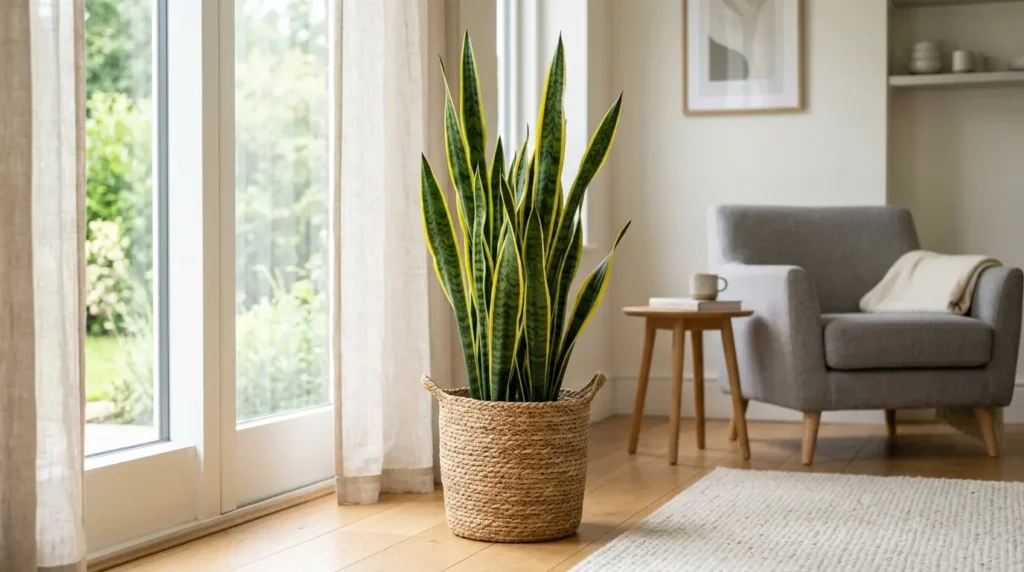
Meet the laurentii plant Sansevieria trifasciata ‘Laurentii’ known for its striking yellow-edged, sword-like leaves. Native to West Africa, this tough beauty is one of the easiest houseplants you’ll ever grow. Honestly, if you’ve killed a few plants before, this one will restore your confidence.
Plant Care Card
| Field | Details |
|---|---|
| Common Name | Laurentii Snake Plant |
| Botanical Name | Sansevieria trifasciata ‘Laurentii’ (syn. Dracaena trifasciata) |
| Family | Asparagaceae |
| Plant Type | Evergreen perennial succulent |
| Mature Size | 2-4 ft tall x 1-2 ft wide |
| Sun Exposure | Bright indirect to low light |
| Soil Type | Well-draining, sandy |
| Soil pH | 5.5-7.5 |
| Hardiness Zones | USDA 9-11 |
| Native Area | West Africa (Nigeria to Congo) |
| Toxicity | Mildly toxic to pets and humans if eaten |
Laurentii Plant Care
This laurentii plant is rated easy, making it perfect for beginners and busy plant parents alike. Below, we’ll cover light, soil, water, temperature, fertilizer, propagation, and common problems. You’ll love how little effort it actually takes!
Light
This laurentii plant thrives in bright, indirect light but tolerates low light surprisingly well. Too much direct sun can scorch the leaves, while very low light slows growth and dulls variegation. An east or north-facing window works great for a happy laurentii.
Soil
A well-draining, sandy mix is essential think succulent or cactus blend. Soggy soil is this plant’s biggest enemy, so drainage really matters here. Try a DIY recipe of 2:1:1 potting soil, perlite, and coarse sand. For more on getting drainage right, check this soil drainage guide from Clemson’s extension office.
Water
Water only when the top 2-3 inches of soil feel completely dry. Overwatering causes mushy, yellowing leaves, while underwatering leads to wrinkled, curling foliage. Water less often in winter. If you want a plant with nearly identical thirst levels, agave plants follow the same “when in doubt, don’t” rule.
Temperature and Humidity
Keep things between 60-85°F for the happiest growth. Average household humidity is completely fine no misting required. Just keep it away from cold drafts, heating vents, and icy windowsills in winter. This laurentii plant genuinely doesn’t fuss much about typical indoor conditions.
Fertilizer
Feed with a balanced liquid fertilizer every 4-6 weeks during spring and summer. Stop fertilizing entirely in fall and winter when growth naturally slows down. Less is more here this plant is not a heavy feeder at all, as this houseplant fertilizing guide from a university extension office confirms.
Types of Laurentii Plant
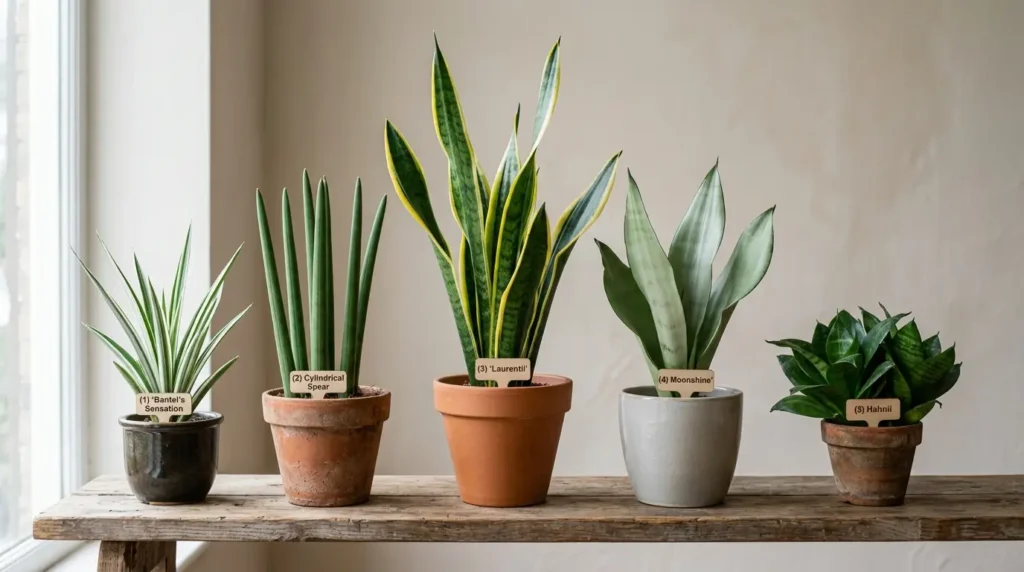
While the classic laurentii plant is the most recognizable, several related varieties bring their own twist to the snake plant family. Each one shares the same tough, low-maintenance nature as the laurentii plant but offers a different look for your shelf or windowsill. If you want a side-by-side rundown, our snake plant varieties roundup covers even more options.
- Bantel’s Sensation: A slender, rare cultivar with narrow white-and-green vertical stripes. It’s slower growing and prized by collectors for its delicate striped look.
- Moonshine: Features solid, pale silvery-green leaves with almost no patterning. It’s a real showstopper against darker furniture or walls.
- Black Gold: Dark green leaves edged in bright gold, similar to laurentii but with deeper, richer coloring. Makes a bold statement plant.
- Cylindrica: Round, spear-like leaves instead of flat blades, often braided for a sculptural display. It’s drought-tolerant even by snake plant standards.
- Hahnii (Bird’s Nest): A compact rosette-forming dwarf variety, perfect for small spaces or desks. Rarely grows taller than 6 inches.
- Golden Hahnii: The dwarf rosette form with yellow leaf margins, basically a mini laurentii. Great for tight shelves.
- Black Coral: Nearly black-green mottled leaves with subtle silver banding. A dramatic, moody addition to any plant collection.
- Twisted Sister: A curly, twisting cultivar with the same yellow-gold edges as laurentii but a wilder, more sculptural silhouette. Fun for adding texture to a plant grouping.
Pruning
Pruning isn’t required often, but you should snip off dead, brown, or mushy leaves at the base. Use clean, sharp scissors and cut close to the soil line. This keeps the plant tidy and redirects energy toward healthy new growth.
Propagating Laurentii Plant
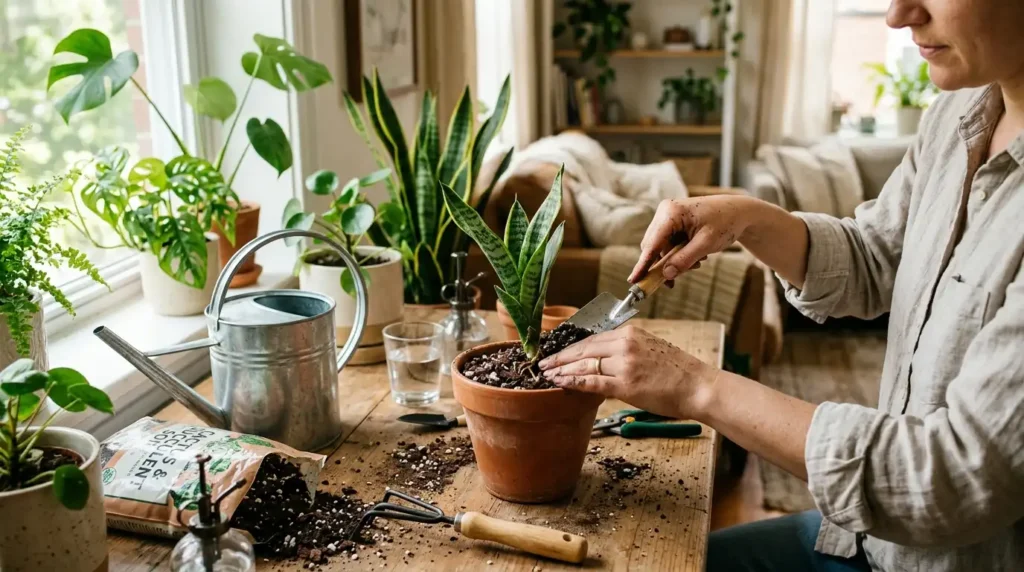
Best time to propagate your laurentii plant is during spring and summer when growth is active.
Propagating by Division
Division is the fastest way to get an identical laurentii plant clone, since it keeps the yellow variegation intact instead of reverting to solid green.
Materials needed:
- Clean, sharp knife or garden shears
- A new pot with drainage holes
- Fresh succulent potting mix
- Rubbing alcohol for sterilizing tools
Steps:
- Remove the parent plant from its pot and gently shake off excess soil.
- Look for natural clusters where multiple rosettes share connected rhizomes underground.
- Cut through the rhizome with a clean, sterilized knife, separating a section with roots attached.
- Let the cut sit out for a few hours so the wound can callous over slightly.
- Pot the new section into fresh, well-draining soil and water lightly right away.
Place the new division in bright, indirect light for a few weeks while it settles in. Expect new leaf growth within 4-8 weeks once the divided laurentii plant establishes itself in its new pot.
Propagating by Leaf Cuttings
This method is fun and low-cost, though new laurentii plant babies may lose their yellow leaf edges, growing solid green instead.
Materials needed:
- Sharp, clean scissors or knife
- A glass of water or well-draining soil
- Rooting hormone (optional)
- Small pots for transplanting later
Steps:
- Cut a healthy leaf into 2-3 inch sections, keeping track of which end faced down originally.
- Let cut edges callous over for a day or two before planting to prevent rot.
- Insert the bottom edge into soil or water, burying about an inch deep.
- Keep it in bright, indirect light and change water weekly if using that method.
- Once roots reach a couple inches long, transplant water-rooted cuttings into soil.
Roots typically form in 4-6 weeks, with new shoots following soon after that first sign of growth. For another plant that roots beautifully in water, the heart leaf philodendron uses nearly the same simple technique.
Potting and Repotting
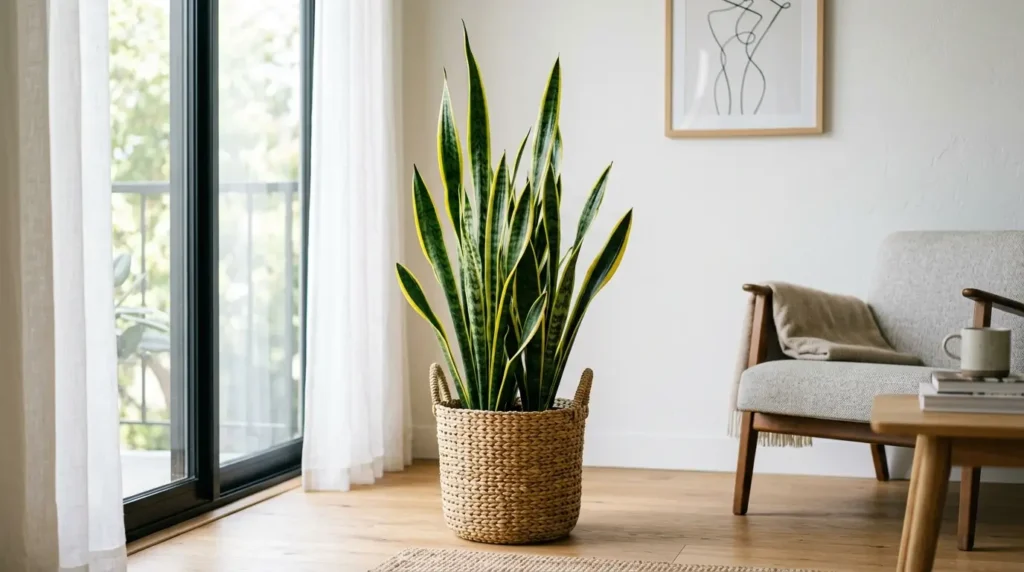
Your laurentii plant only needs repotting every 2-3 years, since it actually prefers being slightly root-bound. Signs it’s time include roots poking through drainage holes, water running straight through, or the pot cracking from pressure.
When you do repot your laurentii plant, choose a container just 1-2 inches larger in diameter going too big can trap excess moisture around the roots. Always use fresh, well-draining soil and a pot with solid drainage holes. Gently loosen the roots before placing in the new pot, backfill with soil, and water lightly to settle everything in. Spring is the ideal season for repotting, since the plant is actively growing and recovers fastest.
Common Pests and Diseases
Like most houseplants, the laurentii plant can occasionally attract a few common pests, though infestations are rare thanks to its tough, fibrous leaves.
Spider Mites
Look for fine webbing and tiny yellow speckles on the leaves, especially in dry indoor air. Treat with insecticidal soap or a strong blast of water to knock them off.
Mealybugs
Identify these by white, cottony clusters tucked into leaf joints and along the base. Dab them with rubbing alcohol on a cotton swab or use neem oil weekly.
Scale Insects
These show up as small, brown, shell-like bumps stuck along the leaves that don’t wipe off easily. Scrape off gently with a fingernail and treat with horticultural oil to prevent return.
Aphids
Watch for clusters of tiny green or black bugs clustered on new growth and flower stalks. Rinse with water or spray insecticidal soap every few days until they’re gone.
Fungus Gnats
Tiny flies hovering near the soil usually mean fungus gnats. Let soil dry out fully between waterings to break their breeding cycle. For more pest-fighting tips, this integrated pest management guide from a university extension office is a solid resource.
Common Problems
Here’s how to troubleshoot common issues with your laurentii plant:
Yellow Leaves
Yellowing on a laurentii plant usually points to overwatering, which causes root rot and mushy stems over time. It can also mean nutrient deficiency from years without fertilizer. Sometimes it’s just natural aging of older leaves near the base. Cut back on watering and check for firm, healthy roots below the soil line. If yellowing keeps popping up elsewhere, the ZZ plant suffers from nearly identical overwatering symptoms.
Brown Leaf Tips
Brown, crispy tips typically come from low humidity or mineral buildup from fluoride and chlorine in tap water. Underwatering for long stretches can also cause this, especially in winter with dry heating. Try filtered or distilled water and trim brown tips at an angle with clean scissors for a natural look.
Drooping or Wilting Leaves
Drooping almost always signals a watering problem, either too much or too little. Overwatered leaves feel soft and mushy, while underwatered ones feel thin and wrinkled. Adjust your schedule and check soil moisture first. The money plant wilts under nearly the same conditions, so the fix works both ways.
Leggy Growth
Leggy, stretched-out growth means your laurentii plant isn’t getting enough light. Move it closer to a bright window and rotate occasionally for even growth. Trim any overly stretched leaves at the base.
Slow Growth
Slow or stalled growth often comes from low light, a cramped pot, or a long stretch without fertilizer. Increase light exposure and feed lightly during spring and summer. Patience helps too this plant is naturally a slow grower.
FAQ
How do you care for a Laurentii snake plant?
Give it bright indirect light, well-draining soil, and water only when the soil is fully dry. It tolerates neglect well, making it beginner-friendly and low maintenance overall.
What are the benefits of laurentii?
The laurentii plant is known for improving indoor air quality, tolerating low light, and needing minimal watering. It’s also strikingly attractive, low maintenance, and virtually impossible to kill accidentally.
How big do laurentii snake plants get?
Most laurentii plants reach 2-4 feet tall and 1-2 feet wide indoors. Growth is slow, so a laurentii plant reaching full mature size can take several years total.
Is Sansevieria laurentii the same as snake plant?
Yes, laurentii is simply a popular cultivar of the common snake plant. It shares the same species but features distinctive yellow-edged leaf variegation.