
In This Article
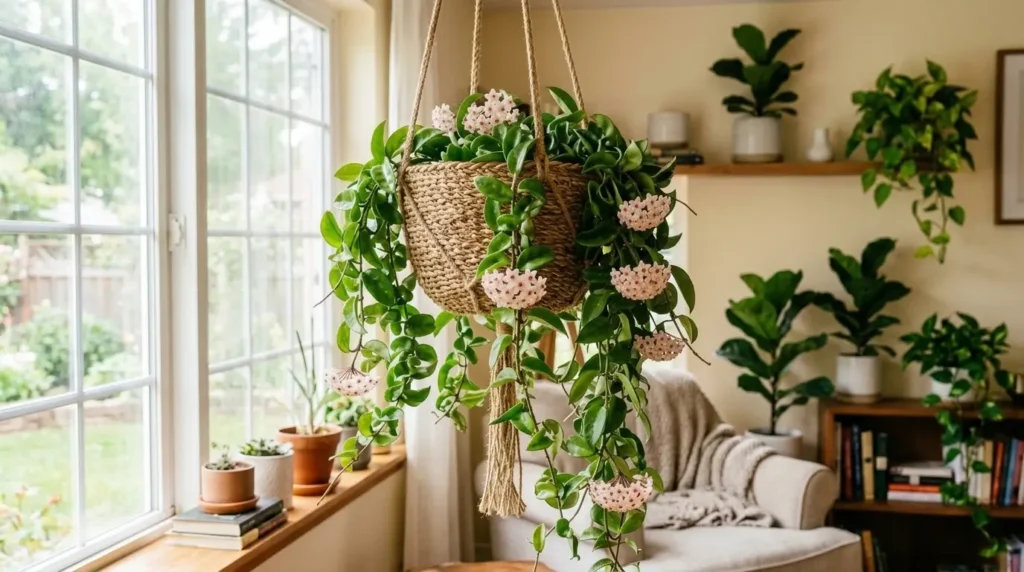
Meet the hoya plant (Hoya carnosa), also called the wax plant for its thick, waxy leaves and star-shaped, fragrant blooms. Native to Southeast Asia and Australia, this trailing beauty is surprisingly easy going. Honestly, if you’ve killed a few plants before, a hoya plant might just restore your confidence.
Plant Care Card
| Feature | Details |
|---|---|
| Common Name | Hoya, Wax Plant, Porcelain Flower |
| Botanical Name | Hoya carnosa |
| Family | Apocynaceae |
| Plant Type | Perennial, tropical vine |
| Mature Size | 3–8 ft trailing length |
| Sun Exposure | Bright, indirect light |
| Soil Type | Well-draining, chunky mix |
| Soil pH | 6.1 to 7.5 |
| Hardiness Zones | USDA 10–12 |
| Native Area | Asia, Australia |
| Toxicity | Non-toxic to pets |
| Bloom Time | Spring through fall |
| Flower Color | Pink, white, or red |
| Growth Rate | Slow to moderate |
Honestly, this care card covers the basics, but every hoya plant has its own quirky personality. Some bloom their first year; others take a while to settle in before flowering. Either way, it rewards patience with gorgeous, long-lasting blooms that make the wait worthwhile.
Hoya Plant Care
Let’s face it, the hoya plant is about as beginner-friendly as tropical plants get. Below, we’ll cover light, soil, water, temperature, and feeding so your vine thrives and blooms happily. You’ll love how little fuss this easygoing plant actually needs, even on busy weeks. Once you nail the basics, it practically takes care of itself.
Light
This plant loves bright, indirect light near an east or west-facing window. Too little light means no blooms; too much direct sun scorches those waxy leaves. A sheer curtain helps filter harsh afternoon rays nicely. Rotate the pot occasionally so growth stays even on all sides.
Soil
Hoyas want a chunky, well-draining mix that mimics their natural tree-dwelling roots. Try a simple recipe: potting mixes for container plants recommend 1:1:1 potting soil, perlite, and orchid bark for airflow. This keeps soggy roots from ever becoming a problem.
Water
Water only when the top 2-3 inches of soil feel dry. Overwatering causes mushy, yellow leaves, while underwatering leads to wrinkled, curling foliage over time. Similar to string of turtles, this plant prefers a good soak-and-dry cycle, especially slowing down in winter months.
Temperature and Humidity
Hoyas enjoy warm rooms between 65-85°F and appreciate moderate to high humidity. They tolerate typical household air fine but hate cold drafts. Keep them away from vents, heaters, and drafty windows for the happiest growth. A small humidifier nearby never hurts, either.
Fertilizer
Feed with a balanced liquid fertilizer diluted to half strength every 4 weeks during spring and summer, when growth is most active. Skip feeding entirely in fall and winter. For general guidance, check this houseplant fertilizing overview from a university extension office.
Types of Hoya Plant
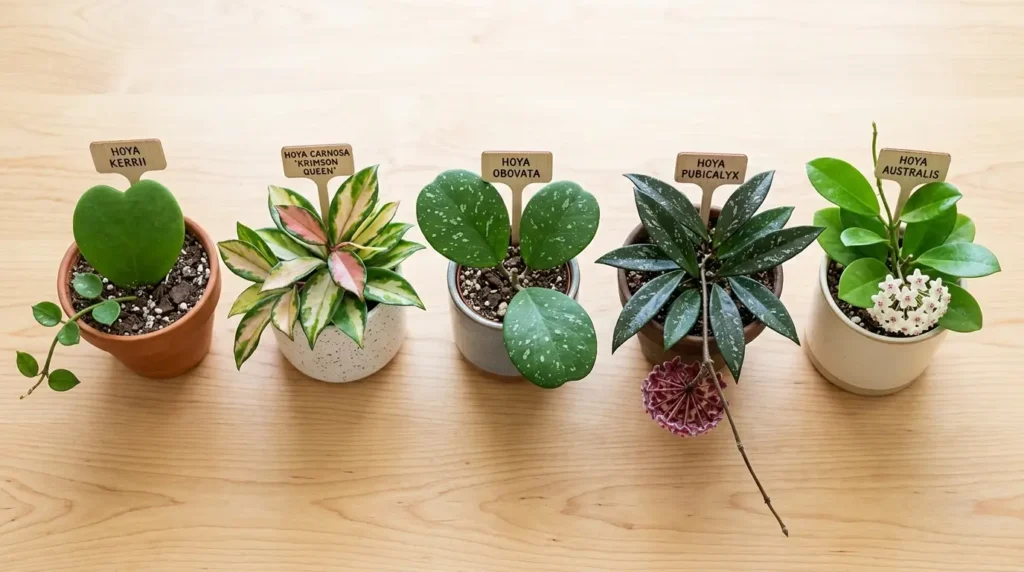
There’s a hoya plant for every plant lover, from tiny succulent leaves to giant trailing vines. Whichever type catches your eye, each one shares that same easygoing, waxy-leafed charm and rewarding, star-shaped blooms. Here are a few standout varieties worth collecting.
- Kerrii: Known as the sweetheart variety, its thick, heart-shaped leaves make it a popular Valentine’s gift. Growth is slow, so patience is key, but a single leaf can eventually root into a full vine.
- Carnosa ‘Krimson Queen’: Features creamy-white leaf edges with a pink blush on new growth. It’s a showier cousin of the classic green wax plant and blooms just as reliably.
- Obovata: Has rounder, larger leaves with speckled silver markings. This variety climbs eagerly if given a moss pole or trellis, and its leaves feel almost velvety to the touch.
- Pubicalyx: Displays speckled, dark green foliage and clusters of maroon-pink flowers. It’s a fast grower compared to most others, making it a great pick for impatient gardeners.
- Australis: Boasts glossy, rounded leaves and clusters of white, fragrant blooms. Similar in vigor to heart-leaf philodendron, it climbs happily on any support you give it.
Pruning
Prune your hoya plant in spring to remove dead or leggy stems and encourage bushier growth. Snip just above a leaf node using clean, sharp scissors. Skip cutting the bloom spurs, though, since new flowers often grow from those same spots year after year. A quick trim once or twice a year is usually plenty to keep it looking full and tidy, and it also gives you fresh cuttings for propagating.
Propagating Hoya Plant
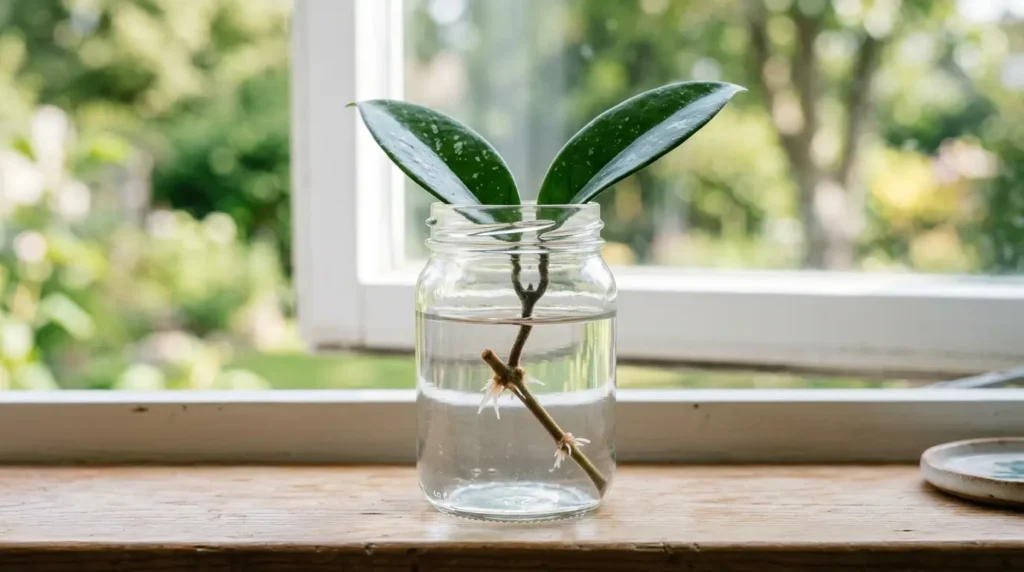
Spring and summer are the best times to propagate a hoya plant, when it’s actively growing and cuttings root fastest. A healthy plant can give you dozens of new cuttings to share with friends or keep for yourself.
Propagating by Stem Cuttings
This is the easiest and most reliable method for beginners, and it works on almost any healthy plant. Materials needed:
- Clean, sharp scissors or pruning shears
- A 4-6 inch stem cutting with 2-3 leaves
- Small pot with fresh potting mix
- Rooting hormone (optional)
Step 1: Cut a healthy stem just below a leaf node, making sure it has at least one node attached.
Step 2: Let the cutting callus over for a few hours, then dip the cut end in rooting hormone.
Step 3: Plant the cutting in moist, well-draining soil, burying the node just beneath the surface.
Step 4: Place in bright, indirect light and keep the soil lightly damp throughout rooting.
Roots typically form within 3-6 weeks, and new growth confirms your hoya plant has successfully taken root. Basically, patience is the biggest ingredient here. Resist the urge to tug on the cutting to check for roots, since that can easily damage tender new growth before it’s ready. Once you see fresh leaves unfurling, you’ll know your new cutting has settled in for good and is ready for normal care and regular watering going forward.
Water Propagation
For a fun alternative, root cuttings in water: submerge one node in a glass, changing the water every few days, and keep it in bright, indirect light. Once roots reach an inch or two, transfer to soil. This works well alongside propagating a rhaphidophora tetrasperma, which roots similarly.
Potting and Repotting Hoya Plant
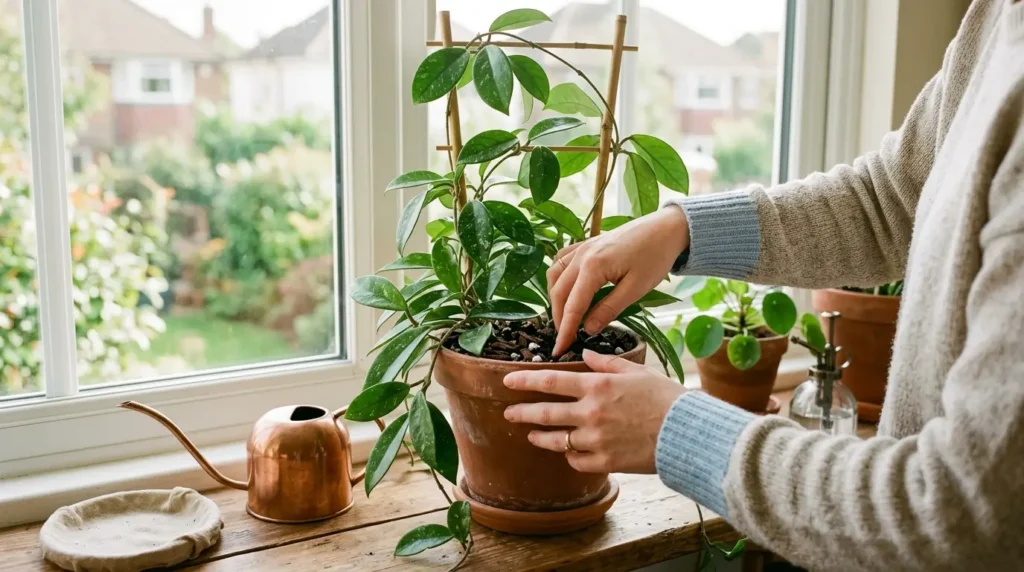
Repot your hoya plant every 2-3 years, or once you notice roots poking through the drainage holes. Slowing growth despite the growing season is another clear sign it’s time.
Choose a pot only 1-2 inches larger than the current one, since these plants actually like being slightly root-bound. Gently loosen the roots, place it in fresh mix, and water thoroughly right away. Good drainage holes matter more than pot size here, so never skip that step. Spring is the ideal season for repotting, giving roots time to recover before active growth kicks in fully across the warmer months ahead.
Common Pests and Diseases
Like most houseplants, a hoya plant can occasionally attract pests, especially when humidity or airflow is low. Catching problems early makes treatment much easier and keeps foliage looking its best.
Spider Mites
Look for fine webbing and tiny yellow speckles across the leaf surface. Treat with insecticidal soap or a strong water spray to knock them off.
Mealybugs
Identify these by white, cottony clumps hiding in leaf joints and stem crevices. Wipe them off with rubbing alcohol on a cotton swab weekly.
Scale Insects
Look for small, brown, waxy bumps clinging tightly along stems and leaf undersides. Scrape off gently and follow up with neem oil treatment.
Aphids
Spot clusters of tiny green or black bugs on new, tender growth. Rinse with water or apply insecticidal soap every few days.
Fungus Gnats
Notice tiny black flies hovering near the soil surface, especially right after watering. Let the topsoil dry out fully between waterings and use sticky traps to catch any remaining adults.
For more prevention tips, this pest management guide covers safer treatment options for houseplants of all kinds.
Common Problems with Hoya Plant
Here’s how to troubleshoot the most common issues affecting a hoya plant:
Yellow Leaves
Yellowing is usually the first warning sign something’s off with your hoya plant. Overwatering is the most common cause, suffocating roots and causing rot. Nutrient deficiency or simple natural aging can also turn older leaves yellow. Cut back watering and check drainage. If you’ve seen similar yellowing on a neon pothos, the fix is nearly identical.
Brown Leaf Tips
Crispy, brown tips usually point to low humidity in the room, especially during dry winter months. Poor water quality, especially heavy tap water, can also cause tip burn over time. Underwatering compounds the issue further. Try filtered water and a humidity tray for relief, and trim off the crispy tips for a tidier look.
Drooping or Wilting Leaves
Droopy leaves almost always signal a watering imbalance, either too much or too little moisture in the soil. Check the soil moisture first before assuming the worst and adjusting anything drastically. Adjust your schedule accordingly and the plant usually perks back up within a day or two. Owners of a pink princess philodendron will recognize this same droopy warning sign.
Leggy Growth
Sparse, stretched-out stems mean your hoya isn’t getting enough light. Move it closer to a bright window and prune back leggy growth to encourage fuller, bushier new stems.
Slow Growth or No New Growth
Stalled growth usually points to low light, cramped roots, or a dormant winter season. Check if it’s simply resting through cooler months first, since many plants naturally pause growth then. If not, brighten its spot or refresh the soil, and new growth should pick back up by spring.
FAQ
Is a hoya plant a good indoor plant?
Yes, the hoya plant is an excellent indoor choice thanks to its low-maintenance nature, non-toxic status, and gorgeous trailing foliage that suits almost any home.
Do hoyas prefer to climb or hang?
These plants naturally vine, so they thrive either climbing a trellis or hanging in a basket. It really comes down to your personal display preference.
Where is the best place to put a hoya plant?
Place this plant near an east or west-facing window with bright, filtered light. Avoid direct afternoon sun, which can scorch its thick leaves.
Do hoya plants need a lot of sun?
A hoya plant needs bright, indirect light to bloom well, but not intense direct sun. Too little light stalls flowering and slows overall growth noticeably.