
In This Article
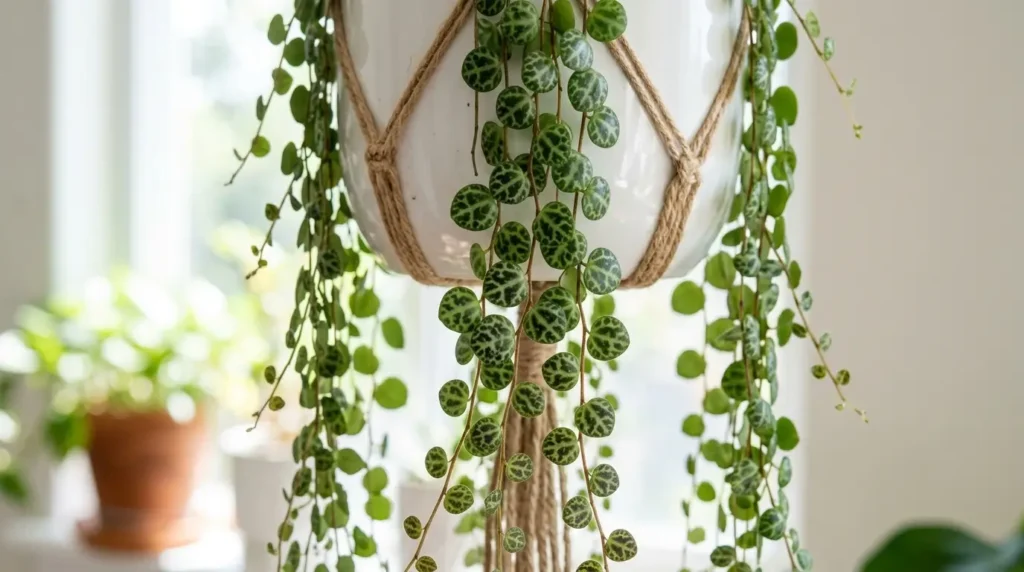
Meet the String of Turtles (Peperomia prostrata) a charming Brazilian trailing succulent with irresistible turtle-shell patterned leaves. Compact, quirky, and surprisingly low-maintenance, it suits beginners and collectors alike. Once you see those tiny “shells” cascading from a hanging pot, you’ll want one immediately. Care level? Easy to moderate.
Plant Care Card
| Field | Details |
|---|---|
| Common Name | String of Turtles |
| Botanical Name | Peperomia prostrata |
| Family | Piperaceae |
| Plant Type | Tropical perennial |
| Mature Size | 12 inches long, 4 inches wide |
| Sun Exposure | Bright indirect light |
| Soil Type | Well-draining, lightweight mix |
| Soil pH | 6.0–7.0 |
| Hardiness Zones | USDA Zones 10–12 |
| Native Area | Brazil (South America) |
| Toxicity | Non-toxic to cats and dogs |
String of Turtles Care
String of Turtles is a beginner-friendly plant that does well with minimal fuss and consistent care. The sections below cover everything from light and water to propagation and common problems. You’ve totally got this even if you’ve struggled with plants before.
Light
String of Turtles loves bright, indirect light think a north or east-facing window where it gets plenty of brightness without harsh, direct sun. Too much direct sunlight will bleach those gorgeous turtle patterns and scorch the leaves. On the flip side, too little light causes slow, leggy growth and faded markings.
A spot a few feet back from a south or west window works great too. Just use a sheer curtain if sunlight hits the leaves directly. Rotate the pot every few weeks so all sides get even exposure.
Soil
This plant needs well-draining, lightweight soil that won’t stay soggy. A standard succulent or cactus mix works well, or you can make your own: try a 1:1 mix of peat moss and perlite for great drainage and aeration.
According to University of Florida IFAS Extension’s guide on houseplant growing media, proper drainage is one of the most important factors in preventing root rot for tropical houseplants. Avoid heavy potting soil on its own it holds too much moisture for this little guy.
Water
Water your String of Turtles when the top 2 inches of soil feel dry. Stick your finger in if it still feels damp, wait a few more days. This plant is semi-succulent and stores water in its leaves, so it doesn’t need frequent watering.
Overwatering is the number one killer here. Signs include mushy stems, yellowing leaves, and a soggy soil smell. Underwatering shows up as shriveled or wrinkled leaves. During spring and summer, you’ll likely water every 7–10 days. In fall and winter, scale back to every 2–3 weeks.
Similar to the Nerve Plant, String of Turtles prefers consistent moisture without ever sitting in waterlogged soil.
Temperature and Humidity
String of Turtles prefers temperatures between 65–80°F (18–27°C). It’s not frost-tolerant at all, so keep it away from cold drafts, air conditioning vents, and windowsills in winter.
Humidity is important aim for 40–60% if possible. Average household humidity works fine in most cases, but if your home is very dry, a small pebble tray with water or a humidifier nearby will help. Avoid placing it near heating vents, which dry the air quickly.
Fertilizer
Feed your String of Turtles with a balanced liquid fertilizer (10-10-10) diluted to half strength every 3–4 weeks during spring and summer. According to Penn State Extension’s fertilization guidelines, over-fertilizing can damage roots, so less is more. Skip feeding entirely in fall and winter when growth slows.
Types of String of Turtles
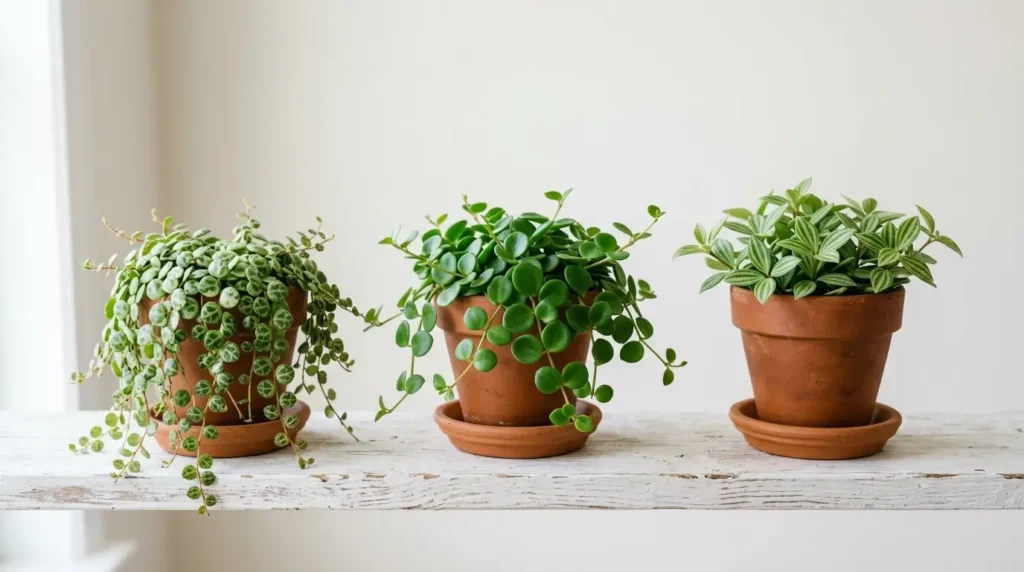
There are a few notable Peperomia prostrata varieties and closely related plants worth knowing about:
- Peperomia prostrata ‘Variegata’ A rare variegated form with cream or yellow edges on the turtle-shell leaves. Slightly slower growing and needs brighter light to maintain its variegation.
- Peperomia rotundifolia (Trailing Jade) A close cousin with smaller, rounder, solid green leaves. It has a similar trailing habit but without the patterned markings.
- Peperomia quadrangularis Features pale green striped leaves and a compact, bushy trailing form. Great for terrariums.
Propagating String of Turtles
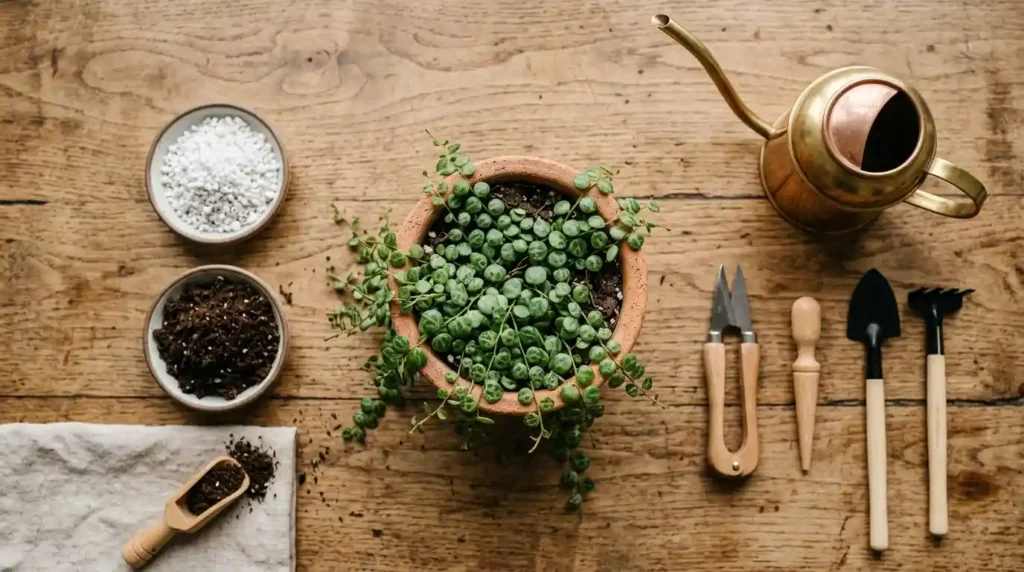
The best time to propagate is during spring or summer when the plant is actively growing.
Propagating by Stem Cuttings
Stem cuttings are the most reliable way to get new String of Turtles plants. It’s simple, and you’ll see roots within a few weeks.
You’ll need:
- Clean scissors or pruning shears
- Small pot with moist, well-draining soil
- Clear plastic bag or humidity dome (optional)
Steps:
Step 1: Choose a healthy stem with 2–4 leaves and cut it just below a node using clean scissors. Make sure the cutting is at least 2–3 inches long.
Step 2: Let the cutting sit on a paper towel for 1–2 hours to dry the cut end slightly. This reduces the risk of rot once planted.
Step 3: Press the cut end about half an inch into moist soil. You can dip it in rooting hormone first, though it’s optional for String of Turtles.
Step 4: Place the pot in bright, indirect light and mist the soil lightly every couple of days. Roots typically develop within 3–5 weeks.
Propagating in Water
Water propagation is a fun option if you want to watch the roots grow. Similar to the Calathea plant, String of Turtles cuttings respond well to this method when kept in a warm, bright spot.
Steps:
- Take a 2–3 inch stem cutting with at least one node.
- Place it in a small jar of water, keeping the leaves above the waterline.
- Change the water every 3–4 days to keep it fresh.
- Transfer to soil once roots are about an inch long (usually 3–4 weeks).
Potting and Repotting String of Turtles
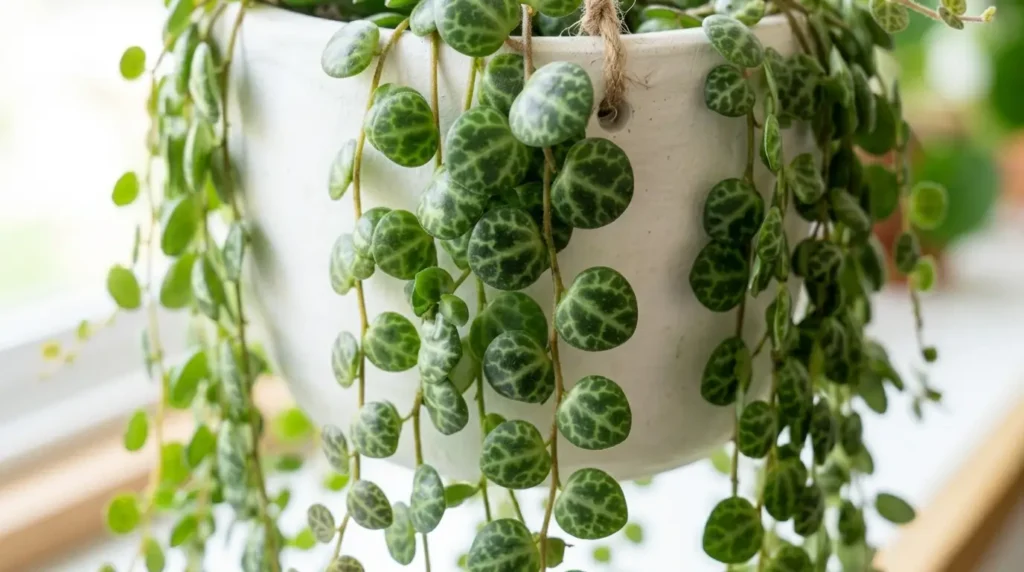
String of Turtles prefers to be slightly root-bound, so don’t rush to repot. Repot every 2–3 years or when you see roots circling the drainage hole or poking out the bottom.
When you do repot, choose a pot only 1 inch larger in diameter. Go too big and the excess soil stays wet, which leads to root rot. Always use a pot with drainage holes this is non-negotiable.
To repot, gently remove the plant, shake off old soil, and place it in fresh, well-draining mix. Water lightly and give it a week or two to adjust before fertilizing. If you love small trailing plants, you might also enjoy our Goldfish Plant care guide it thrives in similar compact pots.
Common Pests and Diseases
Like most houseplants, String of Turtles can occasionally attract pests especially in warm, humid conditions. Catching them early makes treatment much easier. According to University of California Statewide IPM Program, regular inspection is the best prevention.
Spider Mites
Look for fine webbing and tiny dots on leaves. Treat by wiping leaves with a damp cloth and spraying with neem oil or insecticidal soap.
Mealybugs
Identify by white, cottony clusters near stems and leaf joints. Remove with a cotton swab dipped in rubbing alcohol, then spray with neem oil.
Scale Insects
Spot them as brown, waxy bumps stuck to stems. Scrape off manually and treat with horticultural oil or diluted isopropyl alcohol.
Aphids
Look for small, soft-bodied green or black insects clustered on new growth. Blast off with water or treat with insecticidal soap spray.
Common Problems with String of Turtles
Here’s how to troubleshoot common String of Turtles issues:
Yellow Leaves
Yellow leaves are the most common complaint. Overwatering is usually the culprit let the soil dry out more between waterings and check that drainage holes aren’t blocked. Nutrient deficiency can also cause yellowing, especially in spring after a long winter without fertilizing. Finally, natural aging of older leaves at the base is totally normal. For similar yellowing issues, check out our guide on Peperomia plant care for comparison.
Brown Leaf Tips
Brown tips usually mean low humidity in your home try a pebble tray or misting occasionally. Water quality matters too; fluoride and chlorine in tap water can cause tip burn, so try using filtered or rainwater. Underwatering can also dry out leaf edges, so check your watering schedule.
Drooping or Wilting Leaves
Drooping almost always points to a watering issue either too much or too little. Check the soil: soggy means overwatering, bone dry means underwatering. Both are easy fixes once you identify the cause. See our Watermelon Peperomia care guide for similar troubleshooting steps.
Leggy Growth / Sparse Foliage
If your plant is stretching out with long gaps between leaves, it’s not getting enough light. Move it closer to a bright window and consider pinching back leggy stems to encourage fuller, bushier growth. Adding a grow light in dark months helps a lot too.
FAQ
Is String of Turtles hard to care for?
Not at all. String of Turtles is beginner-friendly, needing only indirect light, occasional watering, and good drainage to thrive happily.
Where should I put my String of Turtles?
Place it near a bright north or east-facing window. Avoid harsh direct sun, which can bleach the beautiful leaf patterns quickly.
How often should you water a String of Turtles?
Water every 7–10 days in summer and every 2–3 weeks in winter. Always check that the top 2 inches of soil are dry first.
Do strings of Turtles like shade?
No. They need bright, indirect light to maintain their patterns. Deep shade causes faded leaves and slow, weak growth.
4 thoughts on “How to Grow and Care for String of Turtles”
Comments are closed.