
In This Article
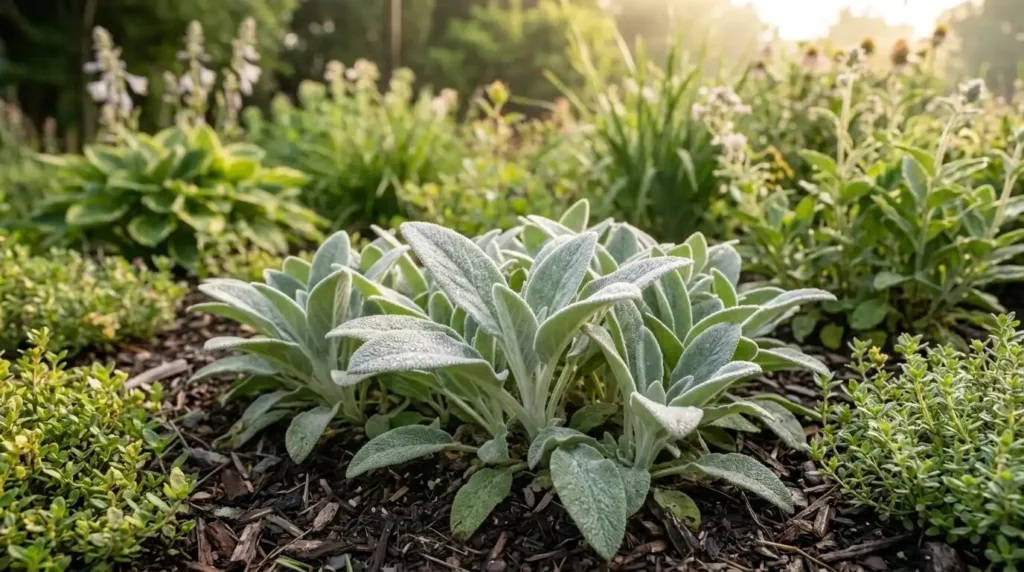
Lamb’s ear plant (Stachys byzantina) is a fuzzy, silver-leafed perennial prized for its soft, felted foliage and low mounding habit. Native to Turkey and Iran, this lambs ear plant thrives in USDA zones 4-8. It’s an easy-care groundcover even beginners can grow successfully.
| Field | Details |
|---|---|
| Common Name | Lamb’s Ear |
| Botanical Name | Stachys byzantina |
| Family | Lamiaceae |
| Plant Type | Herbaceous perennial |
| Mature Size | 6–18 in. tall x 12–18 in. wide |
| Sun Exposure | Full sun to part shade |
| Soil Type | Well-draining, sandy or loamy |
| Soil pH | Neutral to slightly alkaline (6.5–7.5) |
| Hardiness Zones | 4–8 (USDA) |
| Native Area | Turkey, Armenia, Iran |
| Bloom Time | Late spring to summer |
| Toxicity | Non-toxic to pets and humans |
Lamb’s Ear Plant Care
Honestly, this lambs ear plant is one of the easiest perennials you can grow in a sunny border. Here’s what you need to know about sun, soil, water, temperature, and fertilizer. With the right spot, it practically cares for itself all season long.
Light
The lamb’s ear plant wants full sun, at least 6 hours a day, to keep its foliage tight and silvery. In too much shade, plants get leggy and lose that dense, velvety look. A south-facing bed with good airflow is ideal. Afternoon shade helps in hot southern climates.
Soil
This plant is unfussy but needs sharp drainage above all else. Sandy or loamy soil with neutral to slightly alkaline pH works best. Heavy clay causes soggy roots fast. For better drainage, a university extension guide to soil drainage is worth a quick read before planting.
Water
Once established, the lamb’s ear plant is quite drought-tolerant and only needs watering during dry spells. Check soil moisture with a finger test before watering again. Water more in summer heat, less in cooler months. Soggy leaves signal overwatering; a plant with similar low-water needs is gaura, a drought-loving perennial.
Temperature and Humidity
This perennial handles cold well, surviving winters down to USDA zone 4 with no fuss. It struggles more in high humidity, which can cause fuzzy leaves to rot. Good airflow and well-drained beds help. The USDA hardiness zone map is a handy reference for your area.
Fertilizer
The lamb’s ear plant rarely needs feeding. A light application of balanced, slow-release fertilizer in spring is plenty. Skip fertilizing in fall and winter, since the plant is dormant. Too much fertilizer actually causes floppy, weak growth, so less is more here.
Popular Lamb’s Ear Plant Varieties
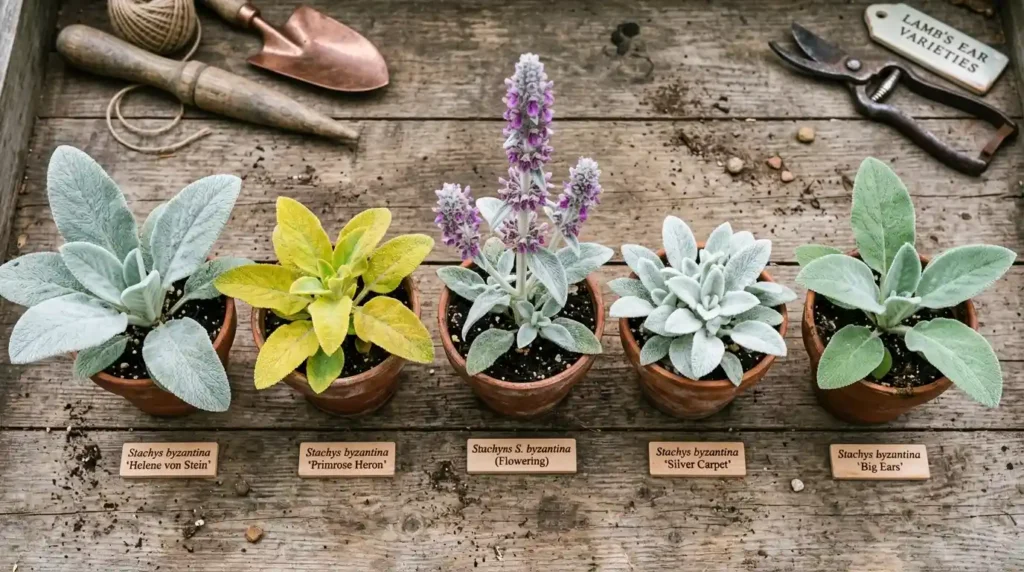
The lamb’s ear plant isn’t just one look several cultivars offer different textures, sizes, and bloom habits. Here’s the thing: picking the right variety depends on whether you want blooms, dense foliage, or a compact form.
- ‘Big Ears’ (Stachys ‘Countess Helen Von Stein’): A larger cultivar with extra-thick, oversized leaves. It rarely flowers, which makes it a great pick for gardeners who just want the foliage look without the fuss of deadheading.
- ‘Silver Carpet’: A compact, non-flowering variety that forms a dense, low mat. It’s a favorite for edging paths and borders since it stays tidy without much pruning.
- ‘Helene von Stein’: Similar to Big Ears with extra-large leaves and strong heat tolerance. This one holds up beautifully even in humid summer climates.
- ‘Primrose Heron’: A striking cultivar with chartreuse-yellow young foliage that matures to soft gray-green. It adds unexpected color contrast to a silver-and-green garden bed.
- ‘Cotton Boll’: Named for its unusual rounded flower clusters that resemble little cotton puffs instead of typical spikes. It’s a fun conversation piece in cottage gardens.
- Common Lamb’s Ear (species type): The classic form with typical purple-pink flower spikes rising above the fuzzy mounds. This lambs ear plant variety attracts bees and other pollinators reliably.
Pruning
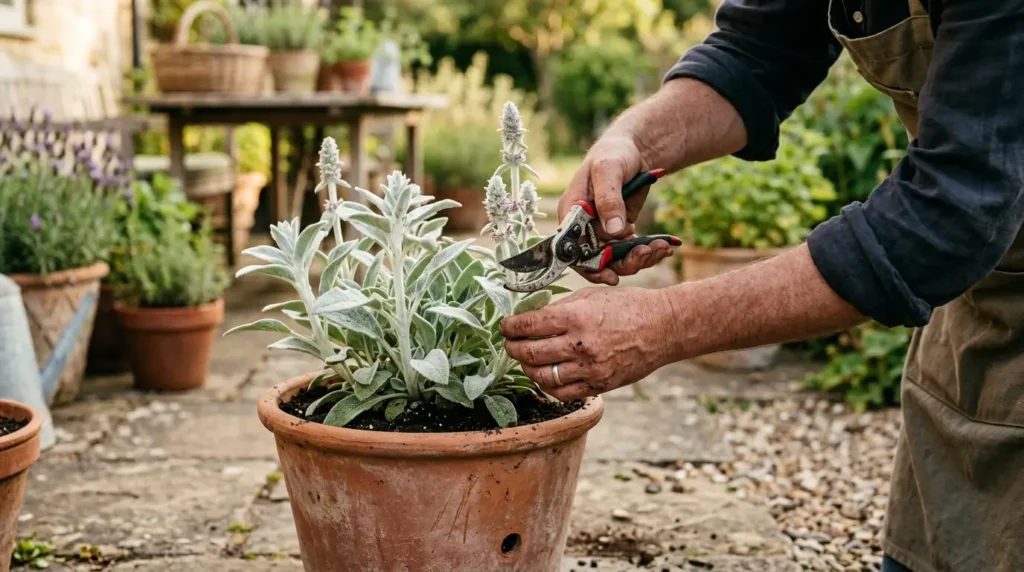
Prune the lamb’s ear plant in late spring or after flowering finishes, usually by midsummer. Snip off spent flower spikes and any leaves that have turned brown or slimy from winter moisture. This keeps the mound looking tidy and encourages fresh new growth.
Use clean, sharp scissors or pruning shears, cutting stems back to the base of the plant. Removing old, matted foliage also improves airflow, which helps prevent rot in humid weather. If you grow a low groundcover like red creeping thyme, you’ll notice similar light trimming keeps it dense and tidy too.
Some gardeners skip flowering altogether by shearing the lamb’s ear plant back hard in early summer, which keeps the foliage extra dense and silvery. A quick trim after any heavy rain also helps clear away slimy, damaged leaves before rot spreads.
Propagating Lamb’s Ear Plant
Spring and early summer are the best times to propagate, since the lambs ear plant is actively growing and roots quickly then. Two easy methods work well: division and stem cuttings.
Propagating by Division
Division is the fastest, most reliable way to multiply this lambs ear plant. You’ll need a garden fork, a sharp knife, and a spot ready for transplanting.
- Step 1: Dig up an established clump in early spring, keeping as much root intact as possible.
- Step 2: Gently shake off excess soil so you can see the natural root sections.
- Step 3: Use a knife to slice the clump into sections, each with roots and several leaves attached.
- Step 4: Replant divisions immediately at the same depth they were growing before.
- Step 5: Water well right after planting to help roots settle in.
New divisions typically establish within 3-4 weeks and start producing fresh growth soon after.
Propagating by Stem Cuttings
Stem cuttings are a fuller method if you want more plants without disturbing the parent clump. Gather a clean pair of scissors, small pots, a well-draining potting mix, and optional rooting hormone, similar to what works for dianthus, another easy-to-divide perennial.
- Materials: sharp scissors, 3-4 inch pots, well-draining potting mix, and rooting hormone (optional)
- Step 1: Snip a 4-6 inch stem below a leaf node using clean, sharp scissors.
- Step 2: Remove the lower leaves so only a few remain near the top.
- Step 3: Dip the cut end in rooting hormone, though this plant roots fine without it.
- Step 4: Plant the cutting in moist potting mix and keep it in bright, indirect light.
- Step 5: Mist occasionally to keep humidity up around the leaves while roots develop.
Roots typically form within two to three weeks, and you’ll notice fresh new growth shortly after that, signaling the cutting is ready for the garden. Keep soil lightly moist but never soggy during this rooting period, since damp, fuzzy leaves are prone to rot.
Planting and Transplanting Lamb’s Ear Plant
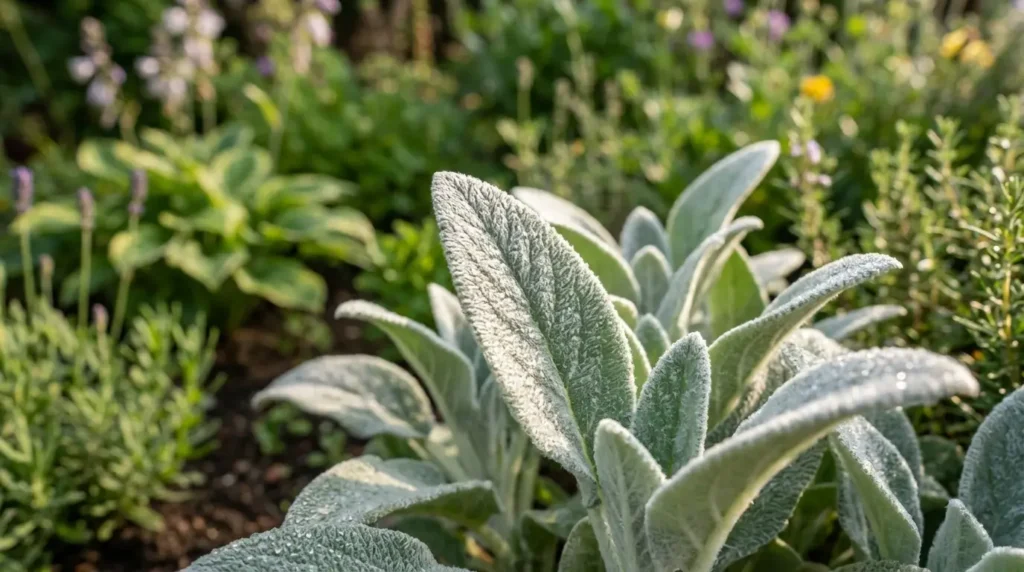
Plant your lamb’s ear plant in spring or early fall once the soil is workable. Space plants 12-18 inches apart to allow for their spreading mounds. Set the crown level with the soil surface, then water thoroughly.
Dig a hole slightly wider than the root ball, backfill gently, and firm the soil around the base. Avoid burying the fuzzy leaves, since trapped moisture invites rot. Mulch lightly to retain moisture without smothering growth.
Divide and transplant clumps every 3-4 years as centers thin out and flowering slows down, much like the division schedule for liatris, another easy-care perennial. Fall transplanting gives roots time to settle before winter dormancy sets in. Water new transplants regularly for the first few weeks until they establish.
Common Pests and Diseases
Like most garden plants, the lamb’s ear plant can occasionally face pest or disease issues, especially in overly wet, crowded, or humid conditions. A university integrated pest management guide is a great resource if problems get out of hand. Here are the most common ones to watch for and how to treat them.
Aphids
Look for clusters of tiny green or black bugs on new growth. Treat with a strong water spray or insecticidal soap applied weekly.
Spider Mites
Fine webbing and stippled, dry-looking leaves signal spider mites, especially in hot, dry weather. Increase humidity and treat with insecticidal soap.
Powdery Mildew
A white, powdery coating on leaves shows up in humid, crowded conditions. Improve airflow and treat with a sulfur-based fungicide if needed.
Root Rot
Mushy, blackened roots and wilting leaves point to root rot from soggy, poorly drained soil. Improve drainage immediately, trim away affected roots, and let soil dry out.
Caterpillars and Leaf Miners
Chewed edges or winding tunnels through leaves indicate caterpillars or leaf miners at work. Handpick caterpillars and remove affected leaves promptly to limit further damage.
Common Problems with Lamb’s Ear Plant
Here’s how to troubleshoot common issues with your lamb’s ear plant:
Poor or No Blooms
Not seeing flower spikes on your lambs ear plant? Insufficient sun is the top cause, since this perennial needs at least 6 hours daily to bloom well. Over-fertilizing pushes leafy growth instead of flowers, so cut back on feeding. Improper pruning at the wrong time can also remove developing buds. Move plants to a sunnier spot and prune only after blooming finishes.
Yellow or Browning Leaves
Yellowing leaves usually mean overwatering or poor drainage trapping moisture around the roots. Nutrient deficiency, though rare, can also cause pale, washed-out foliage. Check that soil drains well and let it dry between waterings. If you’re seeing similar discoloration elsewhere, licorice plant faces the same overwatering troubles.
Wilting or Drooping
Drooping, limp leaves often signal underwatering during hot, dry spells. Transplant shock can cause temporary wilting right after planting or dividing. Heat stress in peak summer also flattens the fuzzy foliage. Water deeply and give new transplants a few weeks to recover fully.
Leggy or Sparse Growth
Stretched, thin growth with gaps between leaves usually means insufficient light reaching the lamb’s ear plant. Over-fertilizing can also cause weak, floppy stems instead of compact mounds. Move to a sunnier location and prune back hard to encourage denser regrowth.
Frost Damage
Blackened, mushy leaves after a cold snap point to frost damage on tender new growth. Established plants usually bounce back fine once temperatures warm. Protect young plants with a light mulch layer before hard frosts hit.
FAQ
Is lamb’s ear a sun or shade plant?
The lamb’s ear plant is primarily a sun plant, needing at least 6 hours of direct light daily. It tolerates afternoon shade in hot climates.
What are the cons of lambs ear?
The lamb’s ear plant can rot in humid, wet conditions and spreads aggressively in ideal spots. Leaves also turn slimy after heavy rain, requiring occasional cleanup and trimming.
Does lamb’s ear plant come back every year?
Yes, this lambs ear plant is a hardy perennial in USDA zones 4-8. It returns reliably each spring, especially when planted in well-draining soil.
What is the plant lamb’s ear good for?
It’s popular as a groundcover, border edging, and texture plant in silver-themed gardens. It’s also deer-resistant and drought-tolerant, perfect for low-maintenance gardens.