
In This Article
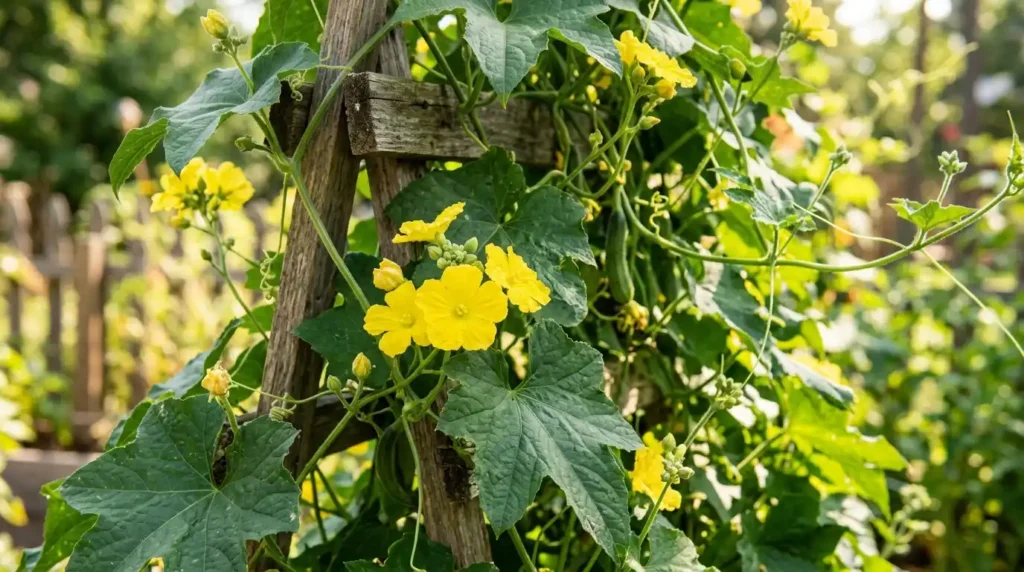
Honestly, the loofah plant (Luffa aegyptiaca) might surprise you that bath sponge starts as a fast-climbing vine with cheerful yellow flowers. Native to South and Southeast Asia, this warm-season cucumber-family annual suits beginners with enough heat and sun. Young fruit tastes like zucchini, while mature fruit dries into a natural sponge.
Loofah Plant Care Card
| Category | Details |
|---|---|
| Common Name | Loofah, luffa, sponge gourd, dishcloth gourd |
| Botanical Name | Luffa aegyptiaca |
| Family | Cucurbitaceae |
| Plant Type | Annual climbing vine |
| Mature Size | 20–30 ft. long vine |
| Sun Exposure | Full sun |
| Soil Type | Rich, well-draining loam |
| Soil pH | 6.0–6.5 (slightly acidic to neutral) |
| Hardiness Zones | 7–11 (grown as an annual elsewhere) |
| Native Area | South and Southeast Asia |
| Bloom Time | Summer through early fall |
| Toxicity | Non-toxic to pets and humans |
Loofah Plant Care
Let’s face it this vine asks for very little once it’s settled into warm soil and has something sturdy to climb. Here’s what you need to know about sun, soil, water, and feeding this heat-loving plant. Give it a trellis and some patience, and it practically takes care of itself.
Light
Loofah plants need full sun to put on the growth spurt they’re famous for. Aim for at least 6 to 8 hours of direct sunlight every day. Without enough light, vines get thin and leggy, and you’ll end up with fewer flowers and smaller fruit.
Plant along a south-facing fence, arbor, or trellis so the vine gets consistent light as it climbs. In cooler regions, a sheltered spot that traps extra heat helps the plant mature before the first frost arrives.
Soil
This vine prefers rich, loamy soil that drains well but still holds a bit of moisture. According to North Carolina State Extension’s plant guide, sponge gourds will even tolerate nutritionally poor ground, as long as drainage stays solid. Soil pH between 6.0 and 6.5 works best.
Work a couple inches of compost into the bed before planting to boost fertility. Avoid heavy clay or compacted soil, since soggy roots invite rot fast much like the well-draining beds pumpkin plants need in the same cucurbit family.
Water
Keep the soil consistently moist, especially while the vine is young and establishing roots. Water deeply 2–3 times a week, checking that the top inch of soil has dried out before you water again.
During hot summer stretches, loofah plants may need water almost daily, while cooler, rainy weeks call for less. Once mature, established vines tolerate brief dry spells better than seedlings do.
Drooping leaves during the heat of the day are often normal. If leaves stay wilted by evening, that’s your cue to check soil moisture right away.
Temperature and Humidity
Loofah plants are true heat-lovers, thriving when temperatures stay between 70 and 90°F. Basically, the hotter and longer the summer, the better your harvest, since fruit needs roughly 150 to 200 frost-free days to mature.
Any hint of frost will kill the vine, so cover young plants or bring potted specimens indoors if a cold snap hits. Mulch around the base to keep roots warm and moisture even.
Fertilizer
Feed loofah plants with a balanced, slow-release fertilizer at planting time. Switch to a low-nitrogen formula every 3 to 4 weeks once vines start flowering, since too much nitrogen grows leaves instead of fruit. In fact, UF/IFAS Gardening Solutions recommends treating loofah like cucumber when in doubt, since dedicated fertilizer research is still limited. Stop fertilizing once the first frost approaches.
Types of Loofah Plant
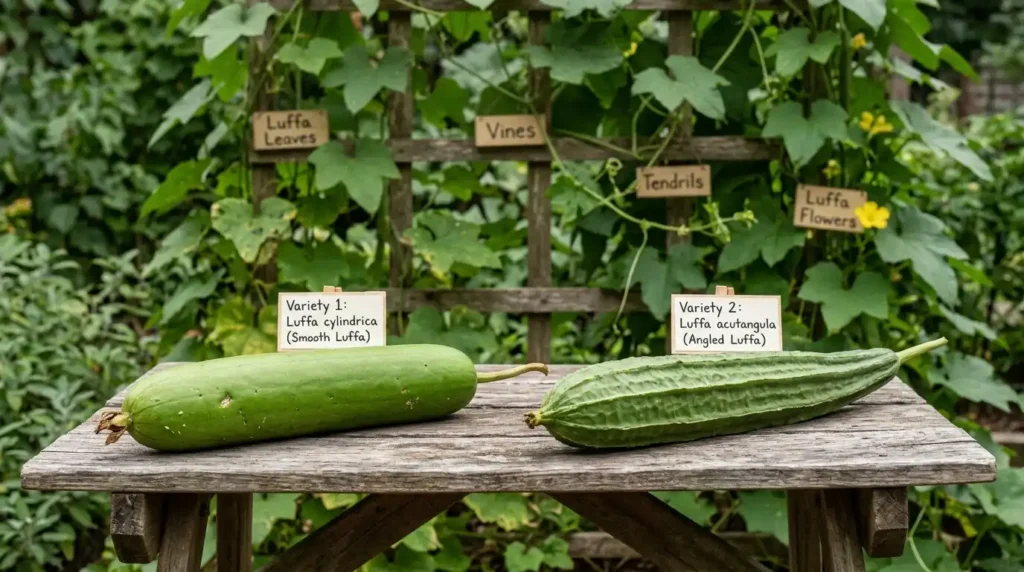
While most gardeners grow one main species, a few varieties and close relatives offer different fruit shapes and flavors. In fact, choosing the right type depends on whether you’re growing for sponges, the kitchen, or both.
- Smooth Luffa (Luffa aegyptiaca): The classic sponge-producing type, with cylindrical, smooth-skinned fruit that resembles a large cucumber. This is the variety most often dried for bath sponges.
- Angled Luffa (Luffa acutangula): Also called Chinese okra or ridged gourd, this variety has distinct longitudinal ribs. Its firmer flesh makes it popular for cooking rather than sponge-making.
- ‘Smooth Beauty’: A compact cultivar prized for producing evenly shaped fruit that’s easier to peel for sponges.
- ‘South Winner’: A vigorous, high-yield cultivar often grown commercially for both eating and sponge production.
Pruning
Prune loofah vines once they’re a few feet tall and actively climbing, usually in early to midsummer. Remove the first few flowers and lateral side shoots, along with any yellowing or diseased leaves you spot along the vine.
Use clean, sharp shears to snip growth just above a leaf node. Regular pruning directs energy into fewer, stronger fruit and keeps air moving through the foliage, which helps fend off disease.
Propagating Loofah Plant
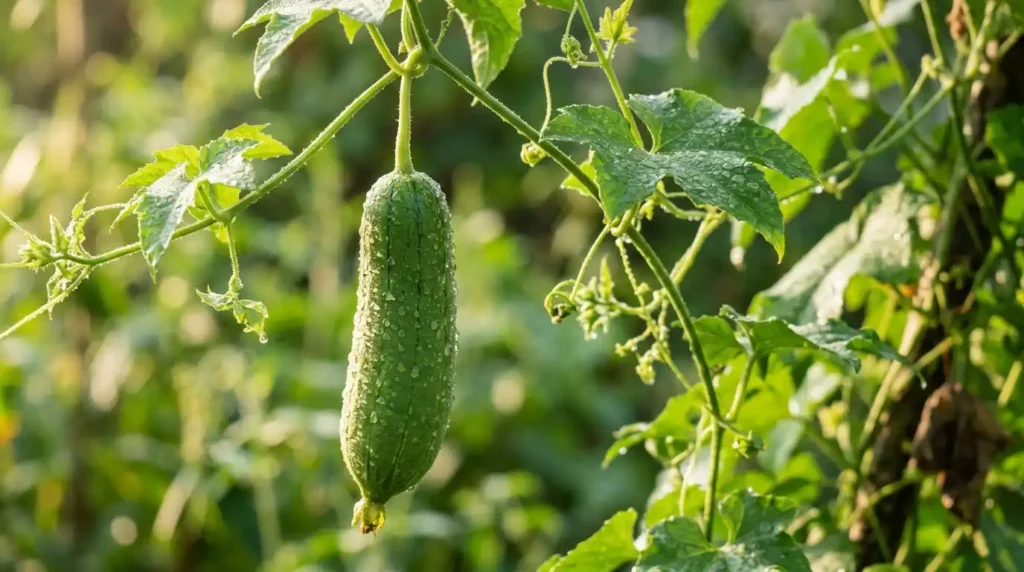
Spring, once nights stay reliably above 60°F, is the best time to start propagating loofah plants. Growing from seed is really the only practical method for this vine, and Clemson HGIC notes that seeds are widely available through most garden catalogs. You can start seeds indoors or sow them directly, depending on your climate.
Propagating from Seed Indoors
This method works well in cooler zones with a shorter growing season.
Materials needed:
- Loofah seeds
- Biodegradable seed pots
- Seed-starting mix
- A warm, sunny windowsill or heat mat
Steps:
- Soak seeds in water for 24 hours to speed up germination before planting.
- Sow seeds about ½ inch deep in moist seed-starting mix.
- Keep pots at 70–80°F using a heat mat until sprouts appear.
- Transplant outdoors after the last frost, once seedlings have 2–3 true leaves.
Expect germination in about 7 to 21 days, so don’t lose faith if sprouts take their time.
Propagating by Direct Sowing
In warmer zones with a long frost-free season, skip the indoor step entirely. Sow seeds directly in the garden once soil temperatures reach 70°F, spacing them 8 to 12 inches apart along a sturdy trellis. Thin seedlings to the strongest one or two per spot once they emerge, then let the vine climb.
Planting and Transplanting Loofah Plant
Plant loofah outdoors after all danger of frost has passed and soil has warmed. Space plants 3 to 4 feet apart, or set hills 6 feet apart if you’re growing multiple vines together.
Set transplants at the same depth they grew in their nursery pot, then water in well. Provide a trellis, fence, or arbor at planting time, since loofah vines can stretch 20 to 30 feet and need support from the start, similar to how artichoke plants need room to spread as they mature.
Common Pests and Diseases
Like most garden vines, loofah plants can occasionally face pest or disease pressure, especially in humid weather. Here’s how to spot and treat the most common culprits.
Aphids
Look for clusters of small, soft-bodied insects on new growth and leaf undersides. Treat with a strong water spray or insecticidal soap.
Spider Mites
Fine webbing and speckled, yellowing leaves signal spider mite damage in dry weather. Treat with insecticidal soap or a steady water rinse.
Powdery Mildew
A white, powdery coating on leaves shows up in humid conditions with poor airflow. Treat with a fungicide and space vines out for better circulation.
Cucumber Beetles
Small striped or spotted beetles chew holes in leaves and can spread disease. Treat with row covers early on or a targeted organic insecticide, much like the preventive care needed for bougainvillea in warm climates.
Common Problems with Loofah Plant
Here’s how to troubleshoot common issues:
Poor or No Fruit Set
If your vine flowers but fruit never forms, insufficient sun is often the culprit loofah needs 6-plus hours daily. Over-fertilizing with nitrogen can also push leafy growth at the expense of blooms. Lastly, a lack of pollinators means flowers simply aren’t getting pollinated. Try hand-pollinating with a small brush, and add pollinator-friendly plants like gerbera daisies nearby to draw in more bees.
Yellow or Browning Leaves
Yellowing leaves usually point to overwatering or soil that drains poorly, which suffocates roots over time. Nutrient deficiency, particularly nitrogen, can also cause pale, yellowing foliage. Cut back watering, improve drainage, and add a balanced fertilizer if leaves stay pale after adjusting moisture.
Wilting or Drooping
Underwatering is the most common cause, especially during hot afternoons when vines droop temporarily. Transplant shock can also cause wilting for a week or two after moving seedlings outdoors. Heat stress on especially scorching days may cause similar drooping that recovers by evening.
Leggy or Sparse Growth
Insufficient light is almost always behind thin, sparse vines that produce few flowers. Move plants to a sunnier spot, similar to how mandevilla vines need bright light to bloom well, and prune back leggy growth to encourage bushier new shoots.
FAQ
How hard are loofahs to grow?
Loofah plants are fairly easy in warm climates but need a long, frost-free season. Give them full sun, rich soil, and a trellis, and they’ll largely manage themselves.
Do loofah plants like sun or shade?
Loofah plants strongly prefer full sun and need at least 6 hours of direct light daily. Shade leads to weak vines, fewer flowers, and disappointing fruit production overall.
Is loofah healthy to eat?
Yes, young loofah fruit is edible and offers fiber, vitamin C, and antioxidants similar to zucchini. Harvest it small, under 6 inches, before it turns fibrous and inedible.
Why do girls use loofahs?
Dried loofah sponges are popular for exfoliating skin during showers, since the coarse fibers slough off dead skin cells. Their natural, biodegradable texture also boosts circulation without synthetic materials.
2 thoughts on “How to Grow and Care for Loofah Plant”
Comments are closed.