
In This Article
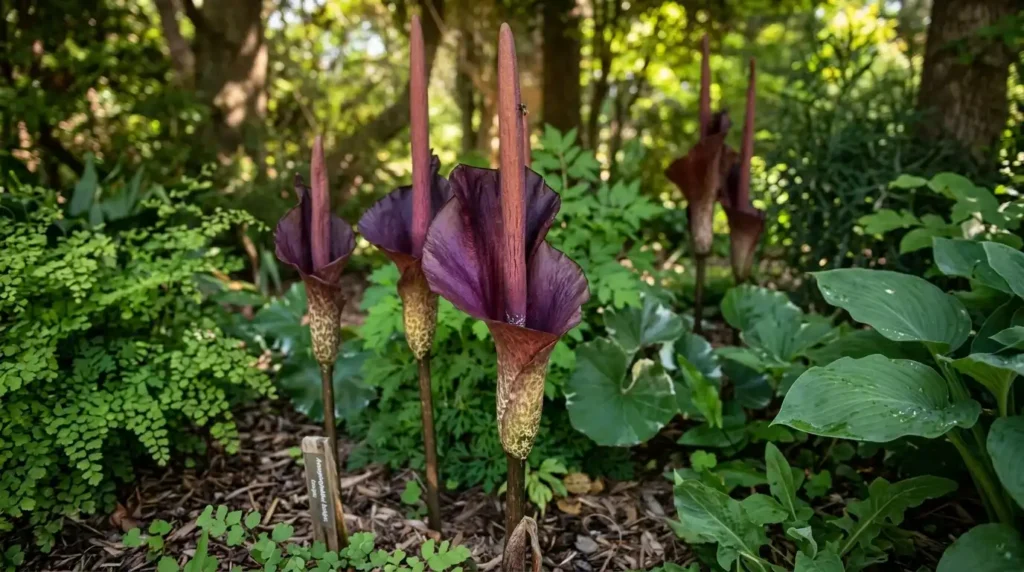
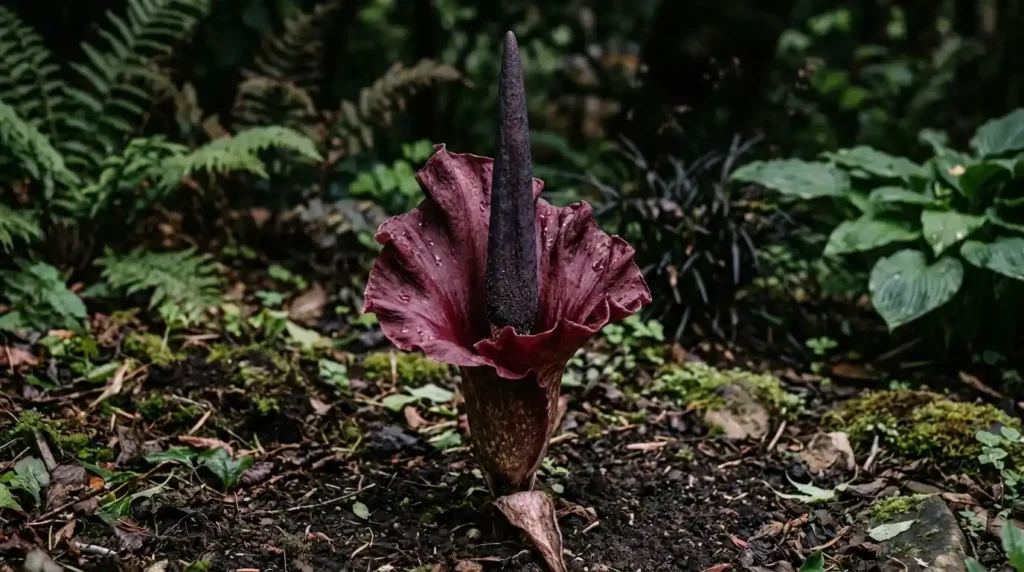
Honestly, the konnyaku plant is a conversation-starter. Also called konjac, voodoo lily, or devil’s tongue, its botanical name is Amorphophallus konjac. One giant leaf unfurls each summer, and every few years a maroon flower blooms, smelling like roadkill. Native to China, it’s genuinely low-maintenance once you balance light and water.
Konnyaku Plant Care Card
| Category | Details |
|---|---|
| Common Name | Konnyaku plant, konjac, voodoo lily, devil’s tongue |
| Botanical Name | Amorphophallus konjac (syn. A. rivieri) |
| Family | Araceae |
| Plant Type | Perennial corm |
| Mature Size | 3-6 ft tall x 3-4 ft wide |
| Sun Exposure | Partial to dappled shade |
| Soil Type | Rich, humusy, well-draining |
| Soil pH | Slightly acidic (6.0-6.8) |
| Hardiness Zones | USDA 6-11 |
| Native Area | East and Southeast Asia |
| Bloom Time | Spring to early summer |
| Toxicity | Toxic to pets and humans if eaten raw |
Konnyaku Plant Care
This konnyaku plant is genuinely low-maintenance once you find it a shady, sheltered spot. Here’s what you need to know about light, soil, water, and feeding it through the season. Get the basics right and this odd beauty practically runs itself.
Light
Konjac plants want bright, dappled shade four to six hours is plenty. Too much sun scorches the leaf; too little weakens growth. Similar to an arrowhead plant, it thrives under taller trees. The Wisconsin Horticulture Extension confirms this corm is hardy to zone 6 when mulched.
Soil
Give your konnyaku plant loose, rich soil with plenty of organic matter mixed in. Drainage matters here this corm rots fast if it sits in soggy ground, so avoid heavy clay entirely. A slightly acidic pH between 6.0 and 6.8 suits it best.
Amend average garden soil with a 1:1 ratio of compost to native soil, plus a handful of perlite for drainage. If you already grow a Swiss cheese plant, you’ll recognize this same chunky, humus-rich mix. Skip compacted, poorly draining beds, and never let water pool around the base the NC State Extension Gardener Toolbox specifically warns that this species does not tolerate clay soil.
Water
Water deeply once a week during active growth, checking soil moisture with a finger first. Cut back once the leaf yellows in fall, since the corm needs dry dormancy. Yellowing with mushy soil signals overwatering. Like dumb cane, konjac prefers drying out slightly over sitting soggy.
Temperature and Humidity
This tropical corm thrives between 60°F and 80°F and sulks below 50°F. Frost kills the foliage outright, so treat it as tender below zone 8. Moderate humidity helps, especially in containers. Mulch 3-4 inches deep to buffer temperature swings, and add extra winter mulch in borderline zones for freeze protection.
Fertilizer
Feed your konnyaku plant with a balanced, slow-release fertilizer every 4-6 weeks through spring and summer. A diluted liquid feed works too, applied biweekly once the leaf fully expands. Stop fertilizing completely once the leaf starts yellowing in late summer, since the plant is heading into dormancy.
Notable Konnyaku Plant Relatives
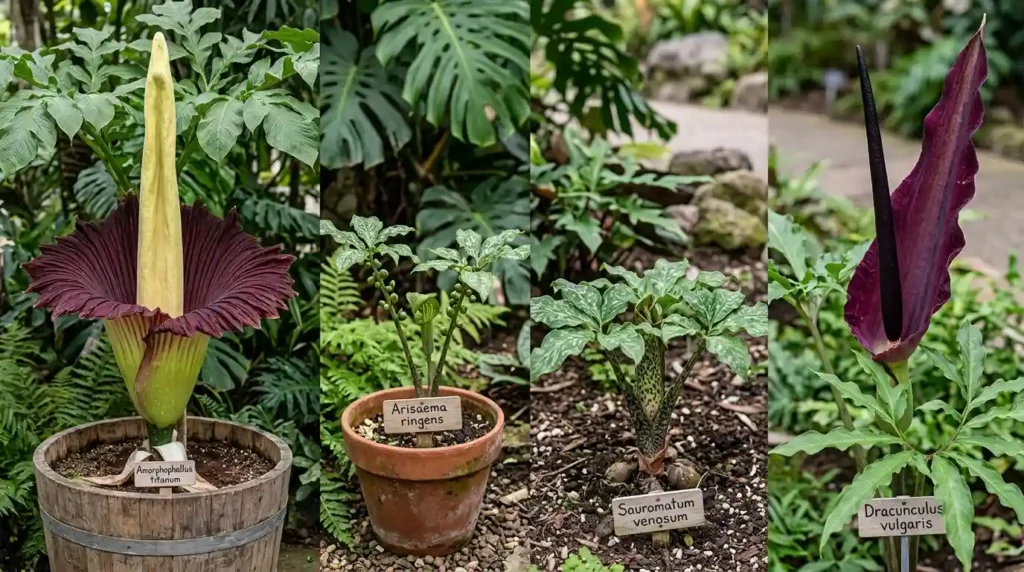
The konnyaku plant doesn’t have named cultivars the way many perennials do, but it belongs to a genus full of equally strange relatives worth knowing.
- Amorphophallus titanum: The famous corpse flower, and konjac’s much larger cousin, with a bloom that can top eight feet and an even stronger stench.
- Amorphophallus bulbifer: Produces small bulbils along the leaf itself, making it one of the easiest species to multiply quickly in a pot.
- Amorphophallus paeoniifolius: Sometimes sold as elephant yam, this species has a squatter, more compact corm and a milder odor when blooming.
- Dracunculus vulgaris: Not a true Amorphophallus, but this dragon arum is a hardier look-alike that survives colder winters in the ground.
Pruning
There isn’t much traditional pruning here, but timing matters. Once the single annual leaf turns yellow and collapses in fall, let it brown completely before cutting it back the plant is still pulling energy into the corm.
Snip off the spent flower stalk after blooming, using clean, sharp scissors or pruners. Removing the fully dried leaf tidies the garden bed and helps you spot the corm for winter storage or division.
Propagating Konnyaku Plant
Late winter through early spring, while the corm is dormant, is the best time to propagate a konnyaku plant. This is also the safest window to inspect the corm for rot or damage before it wakes up for the season.
Propagating by Division
This is the fastest and most reliable method for the konnyaku plant.
You’ll need:
- A trowel or hand fork
- Clean, sharp pruners
- Fresh potting mix
- A dry, shaded spot to cure cut surfaces
Step 1: Carefully lift the parent corm from the soil once it’s fully dormant.
Step 2: Look for smaller cormlets, or offsets, clustered around the base.
Step 3: Gently twist or cut each offset free, keeping any attached roots intact.
Step 4: Let cut surfaces air-dry for a day, then pot each offset in rich, well-draining mix. Expect new growth within a few weeks of replanting once temperatures warm. Much like calla lily corms, konjac offsets are simple to divide and share once you know where to look. Larger offsets, roughly the size of a golf ball or bigger, tend to produce a leaf the very first season, while smaller cormlets may need an extra year to build up enough reserves.
Propagating from Seed
Seeds are far less common since konjac rarely sets fruit outside its native range without hand-pollination. Sow fresh seed shallowly in a moist, sterile mix and keep it warm and humid. Germination is slow and uneven, often taking several months, and seedlings take years to reach flowering size most gardeners stick with division instead. If you do collect seed from a fruiting spadix, clean off the fleshy pulp first, since it can inhibit germination if left on.
Planting and Transplanting Konnyaku Plant
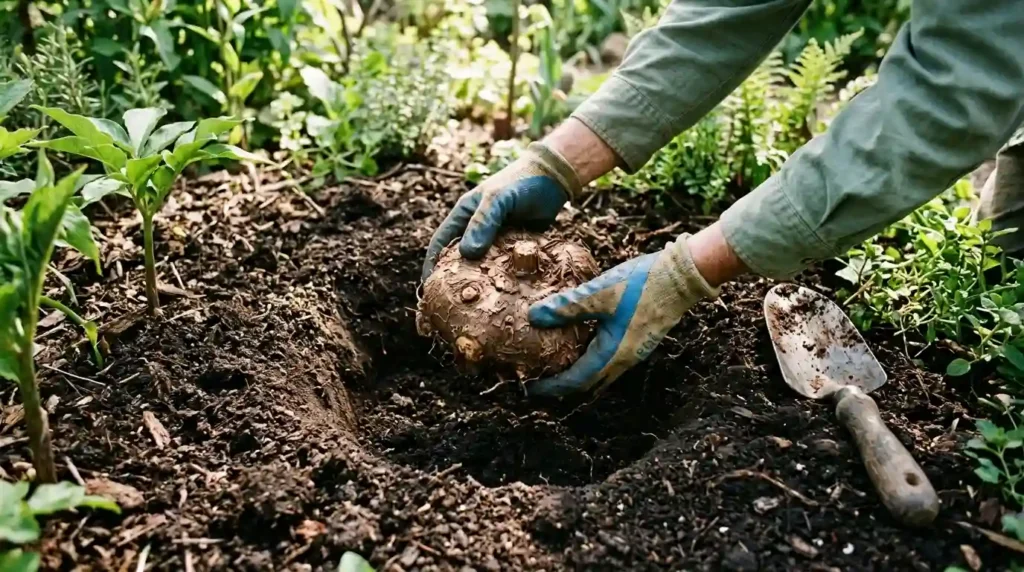
Plant konjac corms after your last frost date, once soil temperatures sit above 60°F. Space corms 24 to 36 inches apart to leave room for that huge, spreading leaf.
Set each corm about twice its own height deep, growing point facing up, in loosened, amended soil. Water thoroughly right after planting to settle the soil around the roots.
Divide and transplant offsets every couple of years in early spring, right as the parent corm breaks dormancy. Wear gloves while handling the USDA National Agricultural Library lists this corm’s calcium oxalate content, the same irritant that makes elephant ears risky to nibble on raw.
Common Pests and Diseases
Like most garden plants, the konnyaku plant can occasionally face pest or disease pressure, especially in overly dry or overly wet conditions.
Aphids
Look for clusters of tiny insects on new growth and leaf undersides. Treat with insecticidal soap or a strong water spray.
Spider Mites
Fine webbing and stippled, dull leaves signal an infestation, common in dry air. If you’ve fought mites on a Monstera albo before, the treatment is identical: raise humidity and treat with insecticidal soap.
Powdery Mildew
A white, powdery coating on leaves shows up in humid, still air. Improve airflow and treat with a sulfur-based fungicide.
Root Rot
Mushy, blackened corm tissue and collapsed growth point to soggy soil. Improve drainage immediately and cut away any rotten sections.
Common Problems with Konnyaku Plant
Here’s how to troubleshoot common konnyaku plant issues:
Poor or No Blooms
Not blooming yet isn’t necessarily a problem this plant typically needs three to five years, and a large enough corm, before it flowers. Insufficient light weakens the corm’s yearly growth, slowing that timeline further. Too much nitrogen fertilizer can also push leaf growth at the expense of storage energy. Improve light exposure and switch to a phosphorus-leaning feed as the leaf matures, and be patient a bigger, healthier corm each year is real progress even without a flower.
Yellow or Browning Leaves
A single leaf yellowing in fall is completely normal dormancy, not a problem at all. Yellowing earlier in the season, paired with soft stems, usually means overwatering and early corm rot. Poor drainage compounds the issue, trapping moisture around the base. Nutrient deficiency, especially in old, depleted potting mix, can also cause a pale, washed-out leaf color. Cut back watering and check the corm for firmness if this happens outside of fall, and refresh the soil if it’s been more than a season.
Wilting or Drooping
Underwatering during hot, dry stretches is the most common cause of a drooping leaf. Transplant shock can cause temporary wilting right after moving or dividing corms. Heat stress on very hot afternoons can also flatten the leaf even with adequate soil moisture. Give the plant a deep drink and some afternoon shade until it recovers, and avoid fertilizing again until new growth firms back up.
Leggy or Sparse Growth
Too little light is almost always behind a stretched, sparse-looking konnyaku plant. Move it to a spot with more bright, filtered brightness for fuller future growth, and pair the relocation with a light feeding once the leaf resumes normal color.
FAQ
What is konnyaku made of?
Konnyaku is a food made by processing the starchy corm of the konjac plant into flour, then cooking it into a firm, gelatin-like block or noodles.
Why is konjac banned in some places?
Only mini-cup jelly candies made with konjac are banned in places like Australia and the EU, due to a genuine choking risk. Konjac noodles remain widely sold.
Is konjac plant healthy?
Cooked konjac corm is low in calories and rich in glucomannan fiber, which may support digestion. Raw corm is toxic and must never be eaten uncooked.
Can you grow konjac in the US?
Yes, gardeners across USDA zones 6-11 grow konjac outdoors, lifting the corm for winter storage in colder regions. It also thrives in containers nationwide.