
In This Article
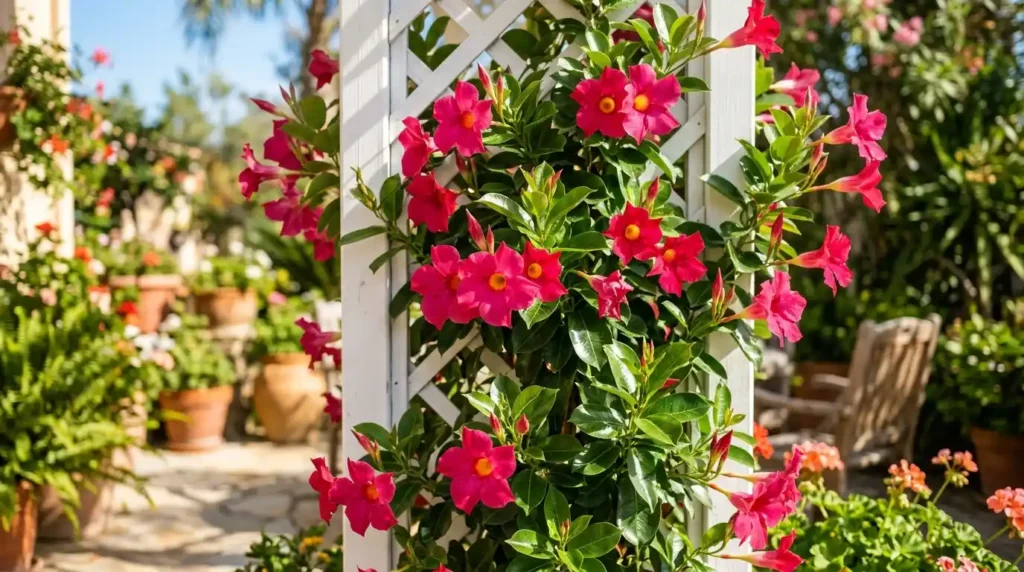
The mandevilla plant (Mandevilla spp.) is a stunning tropical vine native to Central and South America. Its trumpet-shaped flowers bloom in pink, red, white, and coral, climbing trellises with ease. It thrives in USDA zones 9–11 as a perennial and grows beautifully as a summer annual in cooler climates.
Mandevilla Plant Care Card
| Detail | Info |
|---|---|
| Common Name | Mandevilla, Rocktrumpet |
| Botanical Name | Mandevilla spp. |
| Family | Apocynaceae |
| Plant Type | Tropical perennial vine |
| Mature Size | 3–10 ft. tall, 2–3 ft. wide |
| Sun Exposure | Full sun to partial shade |
| Soil Type | Well-draining, sandy loam |
| Soil pH | 6.0–7.0 (slightly acidic to neutral) |
| Hardiness Zones | 9–11 (USDA) |
| Native Area | Central and South America |
| Bloom Time | Summer through fall |
| Toxicity | Toxic to dogs, cats, and humans if ingested |
Mandevilla Plant Care
The mandevilla plant is moderately easy to grow once you give it the warmth and sunlight it craves. Here’s what you need to know about sun, soil, water, feeding, and seasonal care. With the right placement, this tropical vine practically puts on a show without much effort from you.
Light
The mandevilla plant loves full sun ideally six to eight hours daily. Without enough light, it gets leggy and stops blooming. In hot climates, afternoon shade prevents leaf scorch. Place it near a south-facing wall for best results. According to University of Florida IFAS Extension, full sun drives consistent flowering in tropical vines.
Soil
Mandevilla performs best in well-draining, sandy loam soil with a pH between 6.0 and 7.0. Good drainage is non-negotiable waterlogged roots quickly rot. Amend heavy clay with coarse sand and perlite before planting. Raised beds and containers with drainage holes work great, and adding organic compost gives roots a nutrient-rich start.
Water
Water your mandevilla plant deeply once or twice a week, letting the top inch of soil dry out between sessions. It loves consistent moisture but hates soggy roots. Reduce watering in fall and winter during dormancy. Yellowing leaves signal overwatering; wilting or crispy edges mean it needs more water.
Temperature and Humidity
Mandevilla is a true tropical at heart. It thrives between 65°F and 90°F (18°C–32°C) and struggles below 50°F (10°C). Frost will kill it outright, so in zones below 9, bring container plants indoors before the first freeze. High humidity is appreciated a light misting on hot, dry days helps.
In cooler regions, mulch around the base to insulate roots during temperature dips. Covering the plant overnight with frost cloth when temperatures drop unexpectedly can save it.
Fertilizer
Feed your mandevilla plant with a high-phosphorus, slow-release fertilizer (like a 10-20-10 formula) every two to three weeks during spring and summer. Phosphorus supports flower production, which is exactly what you want. Reduce fertilizing in fall and stop completely in winter when it goes dormant.
Types of Mandevilla Plant
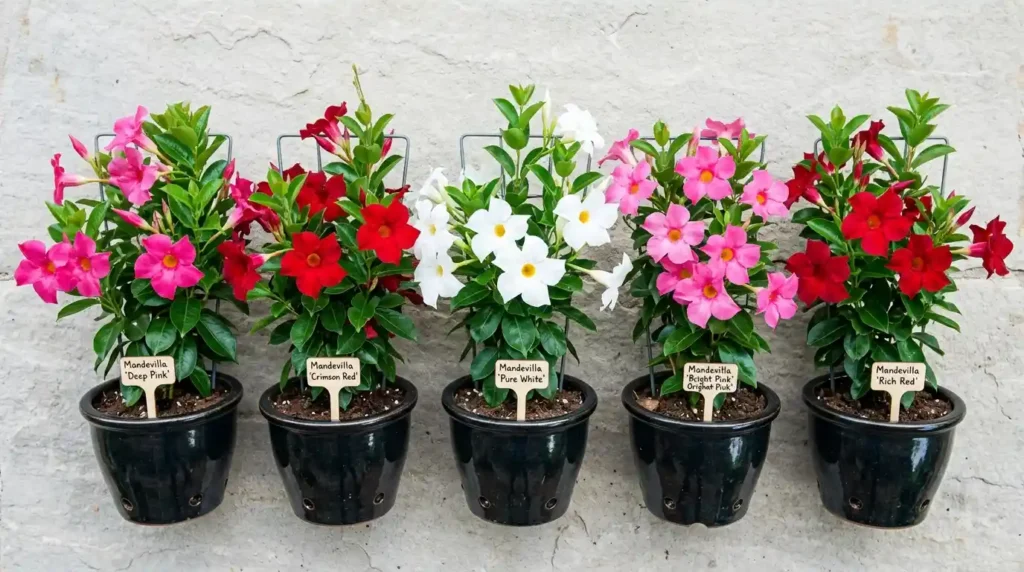
Several varieties offer different looks and habits. Here’s a quick overview:
- Mandevilla sanderi (Brazilian Jasmine): The most commonly grown species, with deep pink or red blooms and a vigorous climbing habit. Excellent for trellises and arbors.
- Mandevilla boliviensis (White Mandevilla): Pure white flowers with a yellow throat. More compact and great for containers. Similar in care to dipladenia, a close relative.
- Mandevilla × amabilis ‘Alice du Pont’: A popular hybrid with large, bright pink blooms up to 4 inches across. Fast-growing and incredibly showy.
- Sun Parasol Series: Hybrid cultivars in crimson, pink, white, and apricot. Bred for heavy blooming and heat tolerance.
- Mandevilla laxa (Chilean Jasmine): Fragrant white flowers and the most cold-hardy of the group, surviving in zone 8 with protection.
Pruning
Prune your mandevilla plant in early spring, just before new growth kicks off, to remove dead, damaged, or overly long stems from the previous season. Light pruning throughout summer removing spent flowers and trimming back leggy shoots keeps things tidy and encourages more blooms. You can cut it back by about one-third at the start of the season without any harm.
Use clean, sharp pruning shears and cut just above a leaf node. Regular deadheading is especially worth doing it signals the plant to keep producing blooms rather than setting seed, extending the flowering season well into fall.
Propagating Mandevilla Plant
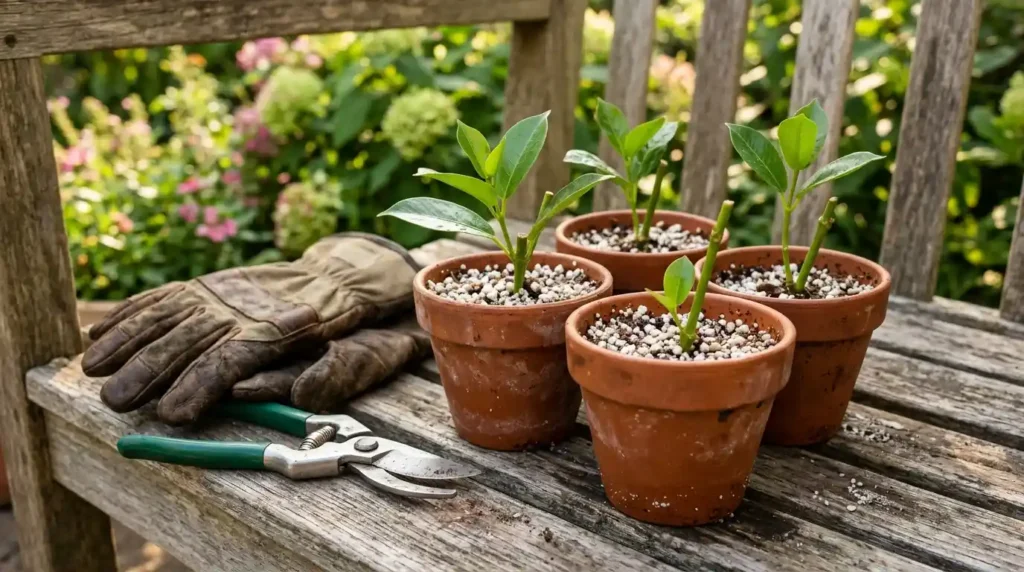
The best time to propagate the mandevilla plant is in spring or early summer when it’s actively growing. Stem cuttings are by far the most reliable method.
Propagating by Stem Cuttings
Stem cuttings give you a genetically identical plant and root quickly in warm conditions.
Materials needed:
- Sharp, sterilized pruning shears
- 4-inch pots filled with perlite and peat mix
- Rooting hormone powder or gel
- Clear plastic bag or humidity dome
Steps:
Step 1: Choose a healthy, non-flowering stem and cut a 4–6 inch section just below a leaf node. Remove lower leaves, leaving two or three at the top.
Step 2: Dip the cut end into rooting hormone powder, tapping off any excess. This significantly improves rooting success for mandevilla.
Step 3: Insert the cutting about 2 inches deep into your perlite-peat mix. Water lightly to settle the medium around the stem.
Step 4: Cover with a clear plastic bag or humidity dome. Place in a warm spot with bright, indirect light avoid direct sun at this stage.
Roots typically develop within three to five weeks. Once new leaf growth appears, remove the dome and gradually acclimate the young mandevilla plant to more sun before transplanting outdoors.
Propagating from Seeds
Growing a mandevilla plant from seed is slower but works well if you have the patience. Sow seeds indoors eight to ten weeks before the last frost date. Press seeds lightly into moist seed-starting mix, cover loosely with plastic wrap, and keep at around 65–70°F. Germination takes two to four weeks. Seedlings are ready to move outdoors after all frost risk has passed. Check the USDA Plant Hardiness Zone Map to confirm your last frost date.
Planting and Transplanting Mandevilla Plant
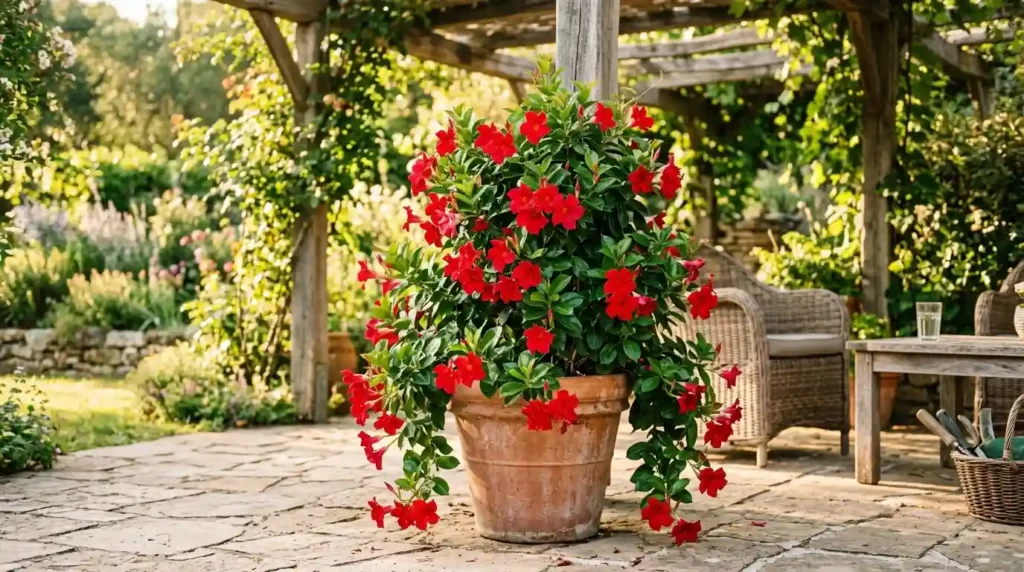
Plant your mandevilla plant after all frost danger has passed in spring, once nighttime temperatures stay above 50°F. Space plants 18 to 24 inches apart to give each vine room to climb and spread. Dig a hole twice the width of the root ball and just as deep. Set the plant at the same depth it was growing in its nursery pot.
For containers, choose a pot at least 12 inches wide with drainage holes. A trellis or stake gives the vine something to climb right away. If transplanting an established mandevilla plant indoors for winter, do so in late fall and trim it back by one-third to reduce transplant stress.
Common Pests and Diseases
Like most garden plants, mandevilla can occasionally face pest or disease challenges, especially in humid conditions.
Aphids
Look for clusters of tiny green or black insects on new growth and flower buds. Knock them off with a strong water spray or treat with insecticidal soap.
Spider Mites
Check for fine webbing on leaf undersides and stippled, dull foliage. Treat with neem oil or miticide, and increase humidity around the plant.
Powdery Mildew
White, powdery coating on leaves signals this fungal issue. Improve air circulation and treat with a diluted baking soda spray or, according to Penn State Extension, a sulfur-based fungicide.
Root Rot
Yellowing, mushy stems at the base usually point to root rot from overwatering. Improve drainage immediately and reduce watering frequency.
Scale Insects
Look for brown, shell-like bumps on stems. Remove by hand or treat with horticultural oil spray applied directly to affected areas.
Common Problems with Mandevilla Plant
Here’s how to troubleshoot common issues:
Poor or No Blooms
Insufficient sun is the top culprit your mandevilla plant needs at least six hours of direct light daily. Over-fertilizing with nitrogen suppresses blooms, so switch to a phosphorus-heavy feed. Improper pruning timing also delays flowering. Move it to a sunnier spot and blooms typically return quickly.
Yellow or Browning Leaves
Yellow leaves usually mean overwatering or poor drainage. Nutrient deficiency in iron or magnesium also causes yellowing between veins a balanced fertilizer fixes this. Browning edges point to heat stress or underwatering. You’ll see similar patterns in bougainvillea, another tropical vine with similar needs.
Wilting or Drooping
A wilting mandevilla is usually just thirsty water deeply and it should perk up within hours. If you’ve just transplanted it, transplant shock is likely and needs a few days to settle. Extreme heat (above 95°F) can also cause temporary midday wilting even in well-watered plants this resolves as evening temperatures cool.
Leggy or Sparse Growth
Leggy, thin stems usually mean this vine isn’t getting enough light. Move it to a sunnier spot first. Over-fertilizing with nitrogen can also push fast, weak growth. Prune leggy stems back to encourage bushier growth from lower nodes combine with better light placement for best results.
Frost Damage
Black, mushy stems and collapsed leaves after a cold night mean frost damage. Cut back all damaged growth to healthy tissue. If the roots are still alive, it often regrows from the base in spring. Similar overwintering strategies work well for esperanza and other tropical bloomers.
FAQ
Do mandevilla come back every year?
In USDA zones 9–11, the mandevilla plant is a true perennial and returns each year. In cooler zones, treat it as an annual or overwinter indoors.
Do mandevilla plants like sun or shade?
Mandevilla plants strongly prefer full sun at least six hours daily. More sun means more blooms. Afternoon shade helps in extreme heat.
Are mandevillas poisonous to touch?
The sap can cause mild skin irritation in sensitive individuals. It’s toxic if ingested by pets or humans, so wear gloves when pruning.
What do you do with a mandevilla in the winter?
In cold climates, bring container plants indoors before frost. Cut back by one-third, reduce watering, and keep in a warm, bright spot until spring.
2 thoughts on “How to Grow and Care for Mandevilla Plant”
Comments are closed.