
In This Article
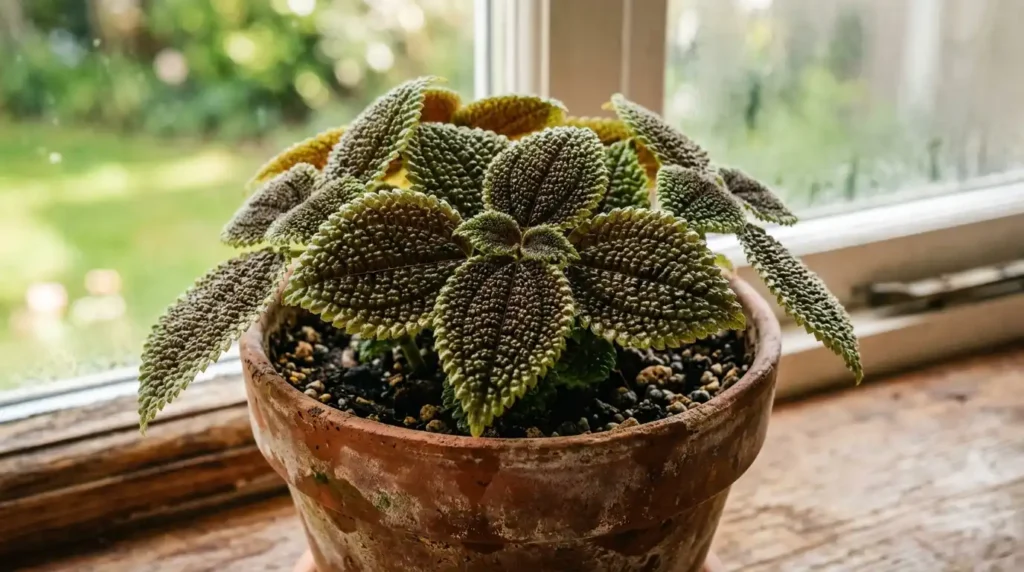
Meet the friendship plant (Pilea involucrata), a fuzzy little tropical with deeply quilted, bronze-green leaves. Honestly, its texture alone makes people stop and touch it. Native to Central and South America, this plant earned its name because it’s so easy to share cuttings with friends. Care difficulty? Low. It’s a genuinely beginner-friendly houseplant that forgives the occasional missed watering.
Plant Care Card
| Field | Details |
|---|---|
| Common Name | Friendship Plant |
| Botanical Name | Pilea involucrata |
| Family | Urticaceae |
| Plant Type | Perennial, tropical foliage plant |
| Mature Size | 6-12 in. tall x 12 in. wide |
| Sun Exposure | Bright, indirect light |
| Soil Type | Well-draining, rich potting mix |
| Soil pH | 6.0-7.0 (slightly acidic to neutral) |
| Hardiness Zones | USDA 11-12 |
| Native Area | Central and South America |
| Toxicity | Non-toxic to cats and dogs |
Friendship Plant Care
Let’s face it the friendship plant is about as low-maintenance as tropical foliage gets. Below, we’ll walk through light, soil, water, humidity, and feeding so your plant thrives year-round. A little consistency goes a long way here, and once you get the rhythm down, this plant basically takes care of itself.
Light
This plant wants bright, indirect light most of the day. An east-facing window is basically perfect, giving gentle morning sun without harsh afternoon rays. Too much direct sun scorches those textured leaves. Too little light makes growth leggy and sparse. In a south-facing window, pull it back a few feet.
Soil
A loose, well-draining potting mix keeps roots happy and prevents rot. Try a simple DIY recipe of 2:1:1 potting soil, perlite, and peat or coco coir. Soggy roots invite fungal problems fast. According to NC State Extension, well-aerated soil is key for healthy houseplant roots. Choose a pot with drainage holes.
Water
Water when the top 2-3 inches of soil feel dry to the touch. Overwatering shows up as mushy stems and yellowing leaves. Underwatering causes crispy, drooping foliage. In winter, water less since growth slows down. A Chinese Money Plant likes this same watering rhythm, so they pair well together.
Temperature and Humidity
Friendship plants like it warm, ideally between 65-80°F. They also love higher humidity, around 50% or more, since they’re tropical natives. Average household humidity is usually tolerable, but a bathroom or kitchen spot helps. Keep this plant away from cold drafts, heating vents, and AC blasts.
Fertilizer
Feed with a balanced liquid fertilizer every 2-4 weeks during spring and summer, diluted to half strength to avoid burning tender roots. Cut back to once a month, or stop entirely, in fall and winter when growth naturally slows down. The Clemson Cooperative Extension notes that over-fertilizing is one of the most common houseplant mistakes beginners make.
Types of Friendship Plant
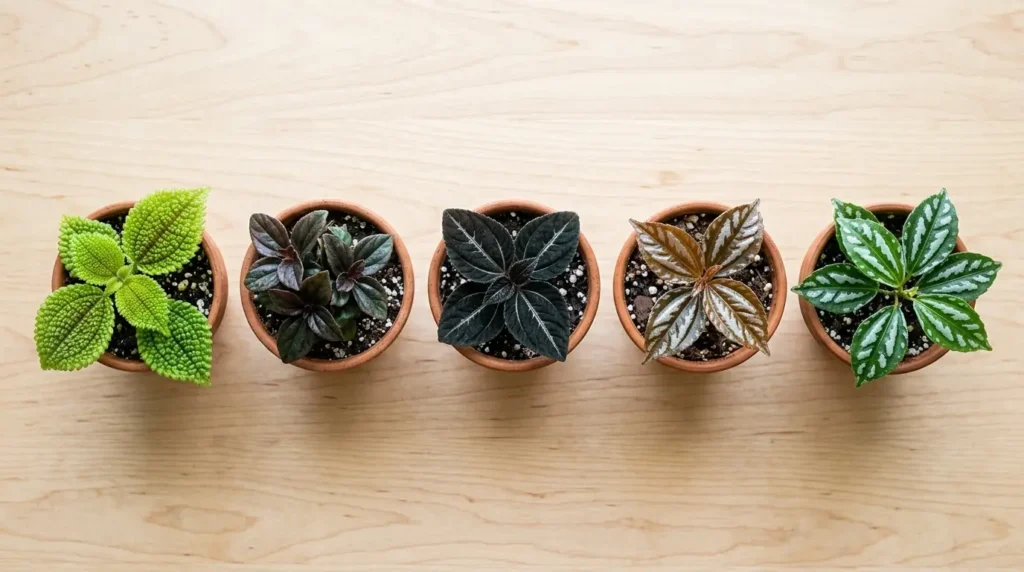
There’s more than one friendship plant to fall in love with, and each brings its own personality to a windowsill. Here are a few standout varieties worth seeking out for your collection.
- Moon Valley Pilea (Pilea involucrata ‘Moon Valley’) Bright chartreuse-green leaves with deep, crater-like quilting. It’s the classic “friendship plant” look most people picture first, and it’s widely available at nurseries.
- Norfolk Friendship Plant (Pilea involucrata ‘Norfolk’) Bronzy-purple foliage with a metallic sheen underneath. Slightly more compact and bushy than other types, making it great for small spaces.
- Dark Mystery Pilea Deep, near-black leaves with silvery highlights along the veins. Adds dramatic contrast next to lighter houseplants like a Swedish Ivy, which shares a similar trailing, mounding habit.
- Silver Tree Pilea Coppery leaves brushed with distinct silver stripes. Grows slightly more upright than trailing varieties, so it works well in a taller pot.
- Aluminum Plant (Pilea cadierei) A close cousin with silvery, splashed markings across dark green leaves. Just as easy to grow and propagate as its friendship plant relatives.
Pruning
Pinch back leggy stems in spring or early summer to encourage bushier, fuller growth. Snip off any dead, damaged, or yellowing leaves as soon as you spot them.
Simply use clean, sharp scissors or your fingers for soft new growth, and always cut just above a leaf node. Regular light pruning keeps this plant compact instead of sprawling and thin, and it gives you a fresh batch of cuttings to propagate every time.
Propagating Friendship Plant
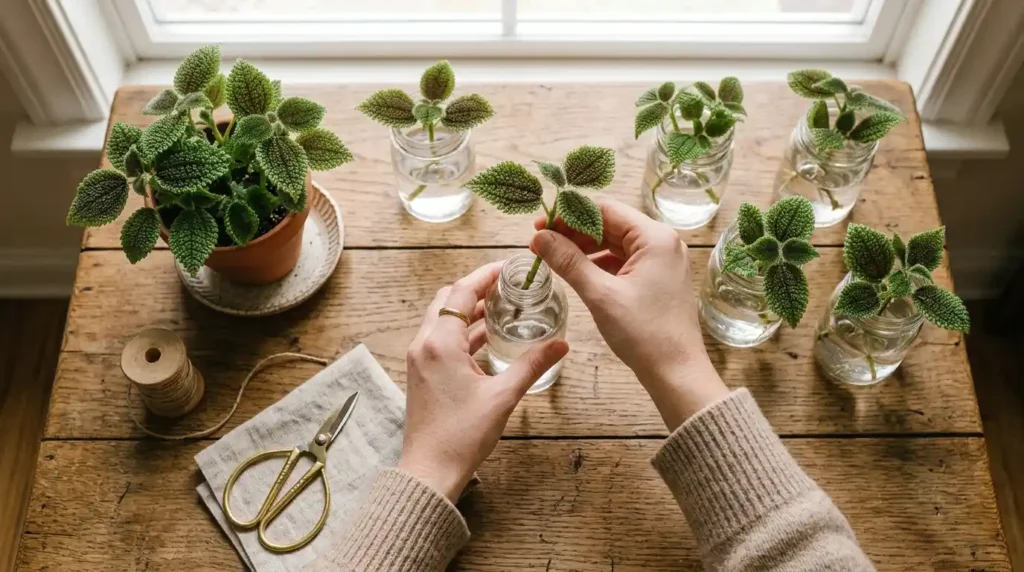
Best time to propagate is during spring and summer, when active growth means faster, more reliable rooting.
Propagating by Stem Cuttings
This is the easiest and most reliable method for a friendship plant, and it’s the one most growers reach for first.
Materials needed:
- Clean, sharp scissors or pruning snips
- Small pot with fresh, well-draining soil
- Optional rooting hormone
Steps:
- Snip a 3-4 inch stem cutting just below a leaf node using clean scissors.
- Remove the bottom one or two leaves so a bare node is exposed for rooting.
- Dip the cut end in rooting hormone, then tuck it into moist soil.
- Keep soil lightly moist and place the pot somewhere warm with bright, indirect light.
You’ll usually see new roots forming within 2-3 weeks, and fresh leaves shortly after that, meaning your cutting is ready for normal care.
Water Propagation
A simpler, more visual way to root your friendship plant cuttings, especially if you like watching the roots grow.
Take the same type of stem cutting and drop it into a jar of clean water, making sure no leaves sit below the waterline. Change the water every few days to keep it fresh and oxygenated. Roots typically appear in 1-2 weeks, and once they’re an inch long, pot the cutting into soil. This method works beautifully for a Peperomia Plant too, since it roots the same easy way in a jar on a sunny sill.
Propagating by Division
A quicker option if your plant has already grown into a full, multi-stemmed clump.
Simply remove the plant from its pot and gently separate the root ball into two or three sections by hand. Repot each section into its own container with fresh soil, water well, and keep it warm. Division skips the rooting wait entirely, so new growth often appears within just a week or two.
Potting and Repotting Friendship Plant
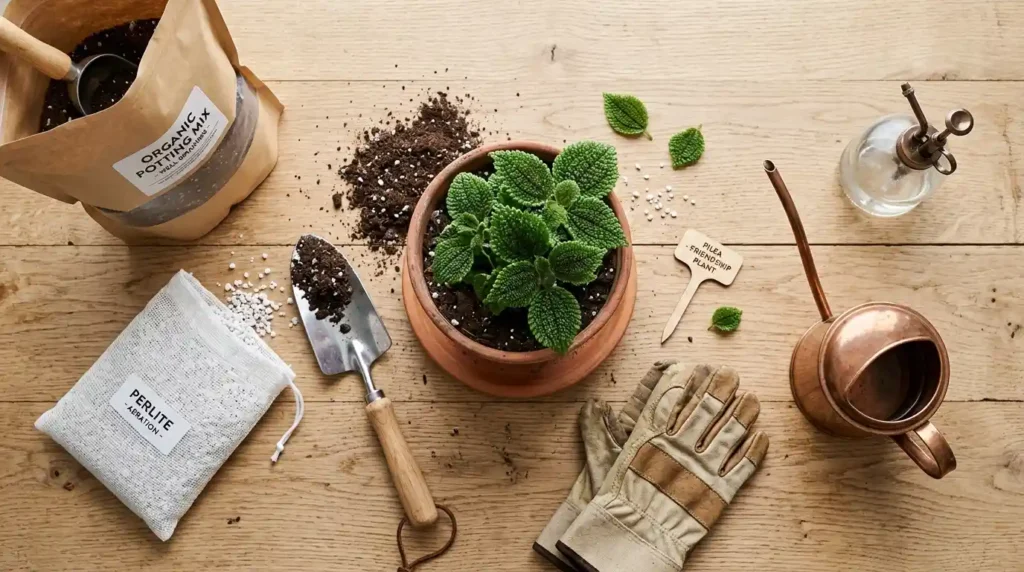
Repot when roots start peeking out of drainage holes or growth noticeably slows down. Most friendship plants need repotting every 1-2 years.
Choose a new pot that’s 1-2 inches larger in diameter than the current one, since jumping too big can leave soil wet for too long. Gently loosen the root ball, set it in fresh soil, and backfill around the sides.
Always pick a pot with drainage holes since trapped water leads to root rot fast.
Common Pests and Diseases
Like most houseplants, the friendship plant can occasionally attract a few common pests, especially if humidity is low or airflow is poor. Catching them early makes treatment much easier and keeps the problem from spreading.
Spider Mites
Look for fine webbing and tiny speckled dots on leaves. Treat with insecticidal soap or a strong water rinse weekly.
Mealybugs
Identify these by white, cottony clusters near leaf joints and stems. Wipe them off with a rubbing alcohol-dipped cotton swab.
Scale Insects
Look for small, brown bumps stuck along stems and leaf undersides. Scrape them off, then treat with horticultural oil.
Aphids
Spot clusters of tiny green or black bugs on new growth. Spray with insecticidal soap or a strong stream of water.
Fungus Gnats
Notice tiny flies hovering around damp soil after watering. Let soil dry out more between waterings to break their cycle.
The University of Florida IFAS Extension recommends regular leaf inspections as the simplest way to catch pests before they spread across your whole collection.
Common Problems with Friendship Plant
Here’s how to troubleshoot common issues:
Yellow Leaves
Yellowing usually signals overwatering, though it isn’t always the culprit. Overwatering suffocates roots, blocking nutrient uptake and causing yellow, mushy leaves that drop easily. Nutrient deficiency can also cause pale, uniform yellowing over time, especially in older plants that haven’t been fed. Natural aging sometimes explains a single yellow leaf near the base too. Let soil dry out more between waterings and feed regularly. For comparison, Nerve Plant owners deal with nearly identical yellowing triggers.
Brown Leaf Tips
Crispy, brown tips almost always point to low humidity, especially during dry winter months. Water quality issues, like chlorine or fluoride buildup, can also cause tip burn over time. Underwatering dries leaf edges out fast, particularly near heating vents. Boost humidity with a pebble tray and water more consistently to fix this.
Drooping or Wilting Leaves
Drooping leaves usually mean a watering imbalance, either too much or too little moisture in the soil. Check soil moisture first, then adjust your schedule accordingly rather than guessing. A thorough soak or a good dry-out period usually perks things back up within a day. Maranta Plant owners will recognize this exact drooping pattern in their own collection.
Leggy Growth
Sparse, stretched-out stems mean your plant isn’t getting enough light throughout the day. Move it closer to a bright window and pinch back leggy stems to encourage fuller, bushier growth.
Slow or No New Growth
Stalled growth often points to low light, a lack of nutrients, or a pot-bound root system. Check whether it’s due for repotting, then adjust light and feeding before assuming something worse is wrong.
FAQ
What plant is considered a friendship plant?
The friendship plant is Pilea involucrata, a tropical foliage plant with deeply textured, quilted leaves that’s easy to propagate and share.
How do you take care of a friendship plant?
Give it bright indirect light, well-draining soil, and consistent moisture. It also loves warmth and higher humidity levels indoors.
Does a friendship plant bloom?
Yes, but flowers are tiny, pale pink, and pretty forgettable. Most growers keep this plant for its foliage, not its blooms.
Can you propagate a friendship plant?
Absolutely stem cuttings root easily in soil or water. It’s one of the easiest houseplants to propagate for beginners.