
In This Article
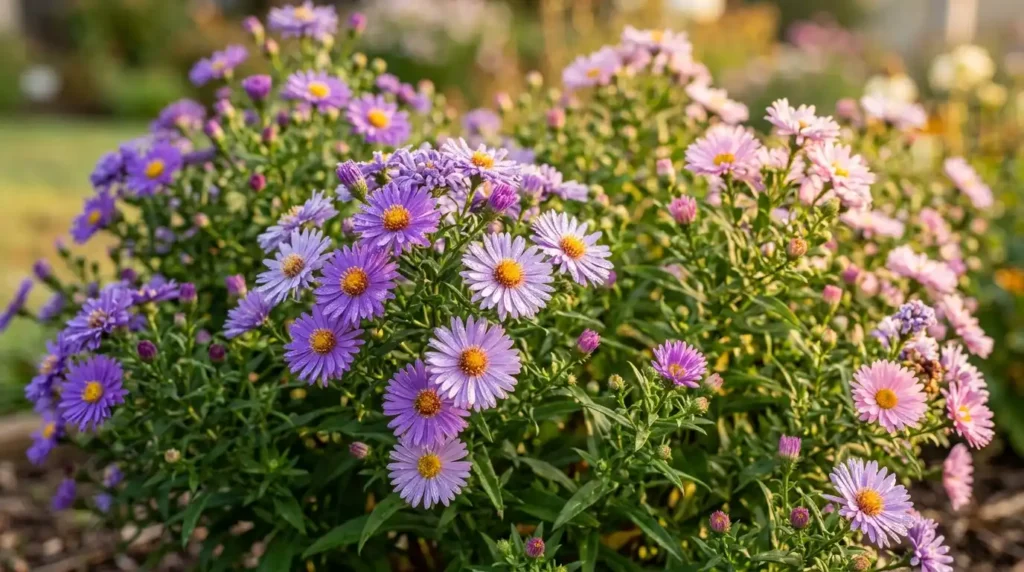
Aster flower (genus Symphyotrichum, formerly Aster) is one of the easiest ways to bring color to your garden when everything else is winding down. Honestly, it’s a star of the fall garden, with daisy-like blooms in purple, blue, pink, and white surrounding cheerful yellow centers.
Native to North America, this perennial grows two to five feet tall depending on the variety, with narrow green leaves and a bushy, branching habit. It thrives across USDA zones 3-8, and most varieties shrug off cold winters without much fuss.
Here’s the thing: aster flower care is genuinely low-maintenance. This plant tolerates poor soil, handles light drought, and rewards you with weeks of pollinator-friendly blooms. You’ll love how little babying it needs.
Aster Flower Care Card
| Category | Details |
|---|---|
| Common Name | Aster, Michaelmas daisy |
| Botanical Name | Symphyotrichum spp. (formerly Aster spp.) |
| Family | Asteraceae |
| Plant Type | Herbaceous perennial |
| Mature Size | 1-5 ft. tall x 1-3 ft. wide |
| Sun Exposure | Full sun to partial shade |
| Soil Type | Well-draining, loamy |
| Soil pH | Slightly acidic to neutral (6.0-7.0) |
| Hardiness Zones | USDA 3-8 |
| Native Area | North America |
| Bloom Time | Late summer through fall |
| Toxicity | Non-toxic to humans and pets |
Aster Flower Care
This plant thrives with minimal care once it’s settled into the right spot. Here’s what you need to know about sun, soil, water, and maintenance. With proper placement, it practically takes care of itself.
Light
Aster flower wants full sun to put on its best show, meaning at least 6 hours of direct light daily. Some varieties tolerate partial shade, but you’ll trade away flower power for it. Too little light leads to weak stems and fewer blooms.
Plant in an open, south-facing bed if possible. Avoid spots shaded by trees or buildings during peak afternoon hours, especially in cooler climates where every bit of sun helps.
Soil
This perennial isn’t picky, but it does best in loamy, well-draining soil with a neutral to slightly acidic pH. Heavy clay or compacted ground holds too much moisture and invites root problems. It’s adaptable to a variety of soil conditions as long as drainage is decent.
If your soil is heavy, work in compost or aged manure at planting time. Avoid soggy, poorly-drained clay sites, since wet feet are this plant’s biggest enemy. University of Illinois Extension notes that moist, well-drained soil in full sun gives the best results.
Water
Water weekly during the first growing season to help roots establish, then taper off. Established plants are moderately drought-tolerant, though consistent moisture keeps blooms more reliable. Check soil moisture by poking a finger an inch deep before watering again.
In summer heat, you may need to water twice weekly; in cooler months, once every week or two is plenty.
Yellowing lower leaves and wilting often signal overwatering, while crispy, curling leaves point to underwatering instead.
Temperature and Humidity
This plant handles a wide range of temperatures, thriving anywhere from cool spring days into the heat of late summer. Most varieties are reliably cold-hardy down to USDA zone 3, surviving winter without extra protection.
A layer of mulch around the base after the first frost helps insulate roots through harsh winters. In humid climates, good air circulation between plants reduces the risk of fungal issues.
Fertilizer
Feed with a balanced, slow-release fertilizer in early spring as new growth appears. A light second feeding in early summer supports bud development. Stop fertilizing by late summer, since too much nitrogen late in the season encourages leggy growth instead of blooms.
Types of Aster Flower
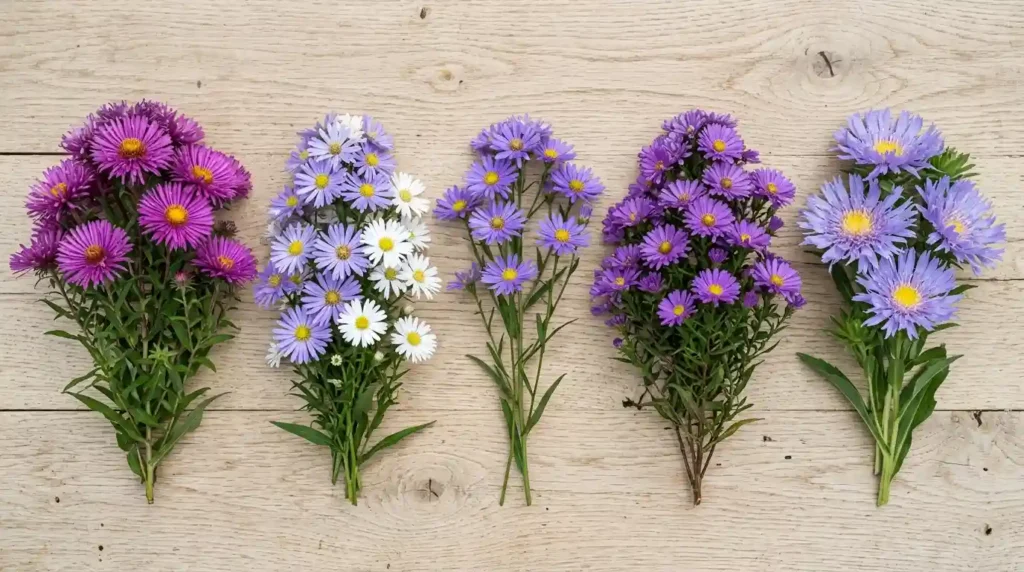
Asters come in dozens of garden-worthy varieties, each with its own personality. Here are a few favorites worth knowing:
- New England Aster (Symphyotrichum novae-angliae): Tall and upright, reaching up to 5 feet, with deep purple-pink blooms that draw monarch butterflies in fall.
- New York Aster (Symphyotrichum novi-belgii): Also called Michaelmas daisy, this bushy type offers blue, pink, or white flowers for mixed borders.
- Smooth Aster (Symphyotrichum laeve): Smooth blue-green leaves and blue-purple flowers; tolerates drier, rockier soil than most varieties.
- Aromatic Aster (Symphyotrichum oblongifolium): A low, mounding type with fragrant foliage and purple flowers, great for front-of-border planting.
- Stokes’ Aster (Stokesia laevis): Compact and low-maintenance, with large blue-lilac blooms. Similar to iris flowers, it adds vivid color without much fuss.
Pruning
Prune aster flower in late spring or early summer by pinching back the tips, which encourages bushier growth and more blooms come fall. After flowering ends, cut spent stems back to keep the bed tidy and prevent excess self-seeding.
Use clean, sharp pruning shears or scissors for the job. Regular deadheading throughout bloom season extends flowering, much like with gaura plants, and a hard cutback after the first frost keeps your aster patch from sprawling next year.
Propagating Aster Flower
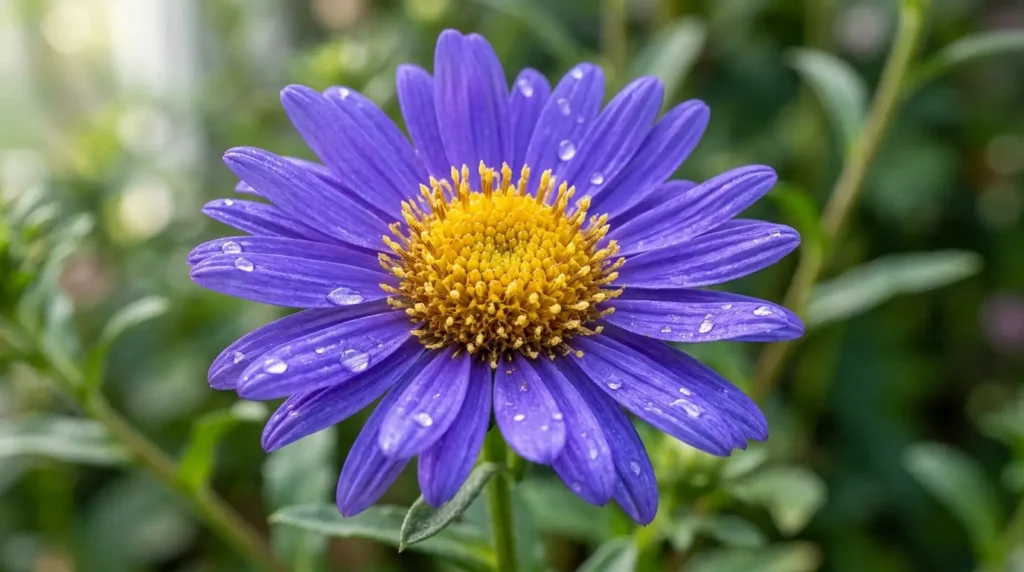
The best time to propagate aster flower is in spring, right as new growth kicks in. Division is the fastest method, though stem cuttings and seeds also work well for this plant, as confirmed by the USDA Plants Database.
Propagating by Division
Division is the easiest and most reliable way to multiply your asters, and it also keeps mature clumps from getting overcrowded.
Materials needed:
- Garden fork or spade
- Sharp knife
- Watering can
Steps:
- In early spring, dig up the entire clump once new shoots appear, lifting carefully to keep roots intact.
- Use a sharp knife or your hands to split the clump into sections, each with several healthy shoots and roots.
- Replant divisions immediately, spacing them at least 18 inches apart in prepared soil.
- Water thoroughly after planting to help roots settle into their new spot.
Expect new divisions to establish within a few weeks and bloom by late summer or fall.
Propagating by Stem Cuttings
Stem cuttings work well in late spring when growth is soft and pliable. Take a 4-inch cutting just below a leaf node, strip the lower leaves, and dip the cut end in rooting hormone. Plant it in moist potting mix, keep it warm and humid, and roots should form within three to four weeks.
Planting and Transplanting Aster Flower
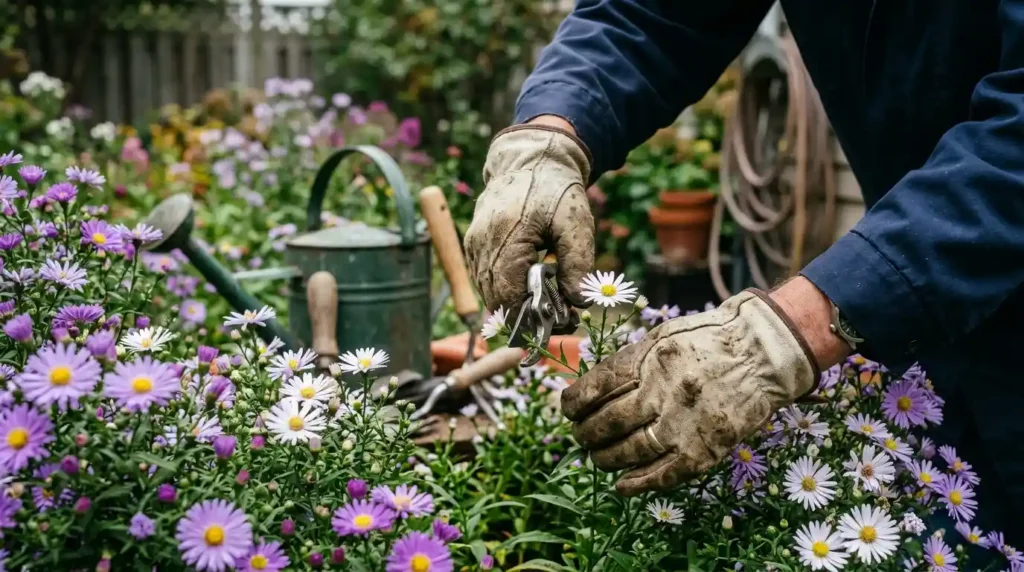
Plant aster flower in spring or early fall, spacing plants 18 to 24 inches apart to allow for their bushy, spreading habit. Set the crown level with the soil surface, then water deeply to settle the roots in.
Dig a hole twice as wide as the root ball, backfill with amended soil, and firm gently around the base. Asters spread rapidly and may require frequent division, similar to fast-spreading creeping myrtle, so plan to divide clumps every two to three years to maintain vigor.
Transplant or divide in early spring, just as new growth emerges, for the best results.
Common Pests and Diseases
Like most garden plants, aster flower can occasionally face pest or disease issues, though none are usually serious if caught early.
Aphids
Look for clusters of tiny green or black insects on new growth and buds, a problem also common on hibiscus plants. Treat with a strong water spray or insecticidal soap.
Spider Mites
Watch for fine webbing and stippled, discolored leaves, especially in hot, dry weather. Treat with neem oil or a forceful water rinse.
Powdery Mildew
A white, powdery coating on leaves signals this fungal disease, common in humid or crowded conditions. University of Maryland Extension recommends improving air circulation and removing badly affected foliage.
Root Rot
Wilting paired with mushy, dark roots points to root rot from soggy soil. Improve drainage immediately and trim away any affected roots.
Common Problems with Aster Flower
Here’s how to troubleshoot common issues:
Poor or No Blooms
If your aster flower isn’t flowering well, insufficient sun is the usual culprit, since fewer than 6 hours of light limits bud formation. Over-fertilizing with high-nitrogen feed can also push leafy growth instead of flowers, a common issue with sun-lovers like esperanza plants too. Improper pruning late in the season removes the buds before they open. Move plants to a sunnier spot, ease up on nitrogen, and prune earlier next year.
Yellow or Browning Leaves
Yellowing leaves usually trace back to overwatering or poor drainage, which suffocates roots and starves the plant of oxygen. Nutrient deficiency, especially nitrogen, can also cause pale, yellowing foliage. Cut back watering, improve soil drainage, and add a balanced fertilizer if leaves stay pale.
Wilting or Drooping
Wilting often points to underwatering, especially during hot, dry stretches. Newly transplanted asters may also droop from transplant shock as roots adjust. Water deeply and consistently until the plant perks back up within a few days.
Leggy or Sparse Growth
Leggy, sparse stems usually mean your aster flower isn’t getting enough light, or it’s been over-fertilized with nitrogen. Move it to a sunnier location and pinch back stems in early summer to encourage fuller, bushier growth.
FAQ
Do asters come back each year?
Yes, aster flower is a hardy perennial that returns yearly in USDA zones 3-8. Divide clumps every few years to keep them blooming strong.
What do aster flowers symbolize?
Asters symbolize love, patience, and elegance. They’re also the official birth flower for September, often gifted to mark daintiness and charm.
Do asters like sun or shade?
Aster flower prefers full sun for the best blooms, needing at least 6 hours daily. Partial shade works but reduces flowering.
Are aster flowers toxic to pets?
No, aster flower is non-toxic to dogs, cats, and humans. It’s a safe pollinator-friendly choice for gardens with curious pets.
4 thoughts on “How to Grow and Care for Aster Flower”
Comments are closed.