
In This Article
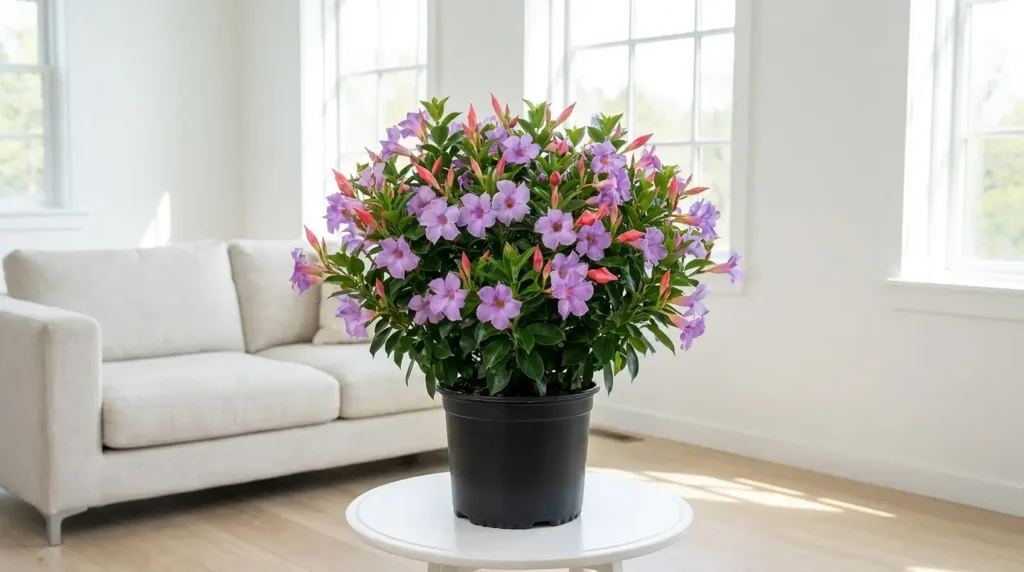
The dipladenia plant (Mandevilla sanderi) is a stunning tropical bloomer from South America, known for its glossy leaves and trumpet-shaped red, pink, and white flowers. Honestly, it looks high-maintenance but isn’t. Dipladenia plant care is rated moderate perfect for beginners and experienced gardeners alike.
Plant Care Card
| Field | Details |
|---|---|
| Common Name | Dipladenia, Rock Trumpet |
| Botanical Name | Mandevilla sanderi |
| Family | Apocynaceae |
| Plant Type | Tropical perennial |
| Mature Size | 1–4 ft tall x 1–3 ft wide (shrubby form) |
| Sun Exposure | Full sun to bright indirect light |
| Soil Type | Well-draining, sandy or loamy mix |
| Soil pH | 6.0–6.5 (slightly acidic) |
| Hardiness Zones | USDA Zones 9–11 (grown as annual in cooler zones) |
| Native Area | South America (Brazil, Argentina) |
| Toxicity | Mildly toxic to pets and humans if ingested |
Dipladenia Plant Care
The dipladenia plant is moderately easy to grow once you understand its basic needs. The sections below cover everything from light and soil to watering, feeding, and beyond. You’ve got this it’s honestly more forgiving than it looks!
Light
The dipladenia plant thrives in full sun to bright indirect light at least 6 hours daily. Indoors, a south- or west-facing window works best. Too little light means fewer blooms; too much scorches leaves. Outdoors, morning sun with light afternoon shade is ideal.
Soil
The dipladenia plant needs fast-draining soil a mix of 1 part potting soil : 1 part perlite : 1 part coarse sand works great. Roots hate soggy conditions. According to Penn State Extension’s guide to potting media and drainage, proper drainage is essential for container plant health.
Water
Let the top 2–3 inches of soil dry out between waterings, then water thoroughly. In fall and winter, water much less. Overwatering causes yellowing and mushy stems; underwatering leads to wilting. Similar watering principles apply to the licorice plant, another bloomer that hates soggy roots.
Temperature and Humidity
The dipladenia plant thrives between 60–90°F (15–32°C) and tolerates average household humidity. Keep it away from cold drafts, AC vents, and heating units. Temps below 50°F for extended periods will cause damage. A little extra moisture helps in very dry indoor environments.
Fertilizer
Feed your dipladenia plant with a balanced liquid fertilizer (10-10-10) or one slightly higher in phosphorus to boost flowering. Apply every 2–4 weeks during spring and summer. Cut back in fall and stop entirely in winter when growth slows. According to University of Florida IFAS Extension’s fertilization guidelines, a consistent feeding schedule during active growth supports strong flowering in tropical plants like dipladenia.
Types of Dipladenia Plant
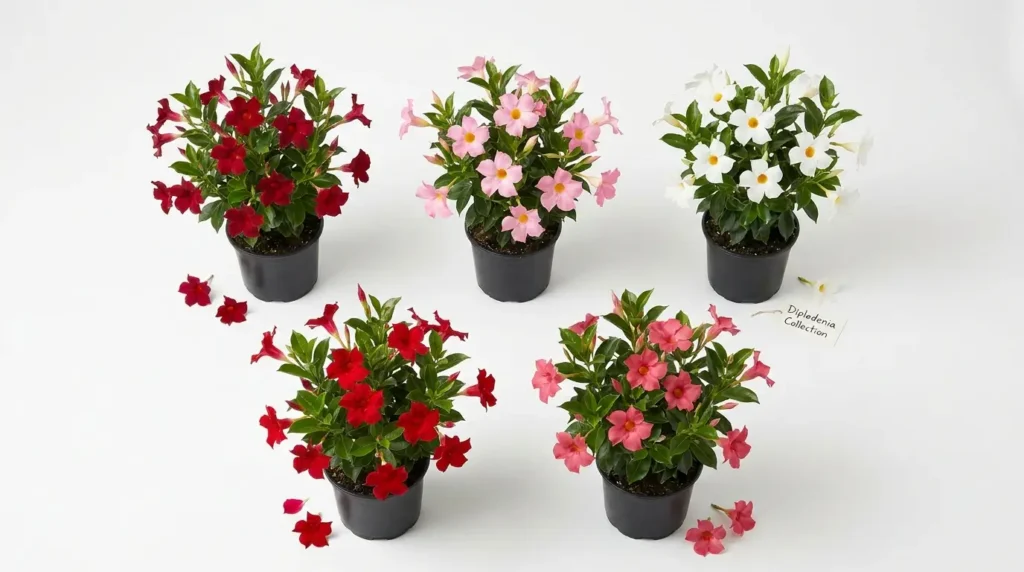
There are several standout dipladenia plant varieties worth knowing. Each brings slightly different color or habit to the table:
- ‘Sundaville Red’ (Mandevilla sanderi ‘Sundaville Red’): One of the most popular cultivars, featuring deep crimson-red blooms on a compact, bushy plant. Excellent for containers and hanging baskets.
- ‘Sundaville Pink’ (Mandevilla sanderi ‘Sundaville Pink’): Produces large, soft pink flowers with a yellow throat. Slightly more vigorous than the red form; great for trellises.
- ‘Rio Dipladenia White’: Crisp white blooms with a golden center. Compact and low-growing, perfect for balcony pots. Very heat tolerant.
- ‘Dipladenia Crimson’: A bold, bright red variety that blooms heavily from spring through frost. Bushy and tidy in habit.
- ‘Rio Rose’: Warm rosy-pink flowers on a trailing to mounding form. Works beautifully in window boxes or mixed containers.
Pruning
Pruning your dipladenia plant keeps it bushy and encourages more blooms. The best time is early spring, just before new growth kicks off. Trim back any leggy stems by about one-third, and remove dead or damaged branches entirely.
Use clean, sharp scissors or pruning shears to avoid tearing stems. Light deadheading (removing spent flowers) throughout the growing season also encourages continuous blooming all summer long.
Propagating Dipladenia Plant
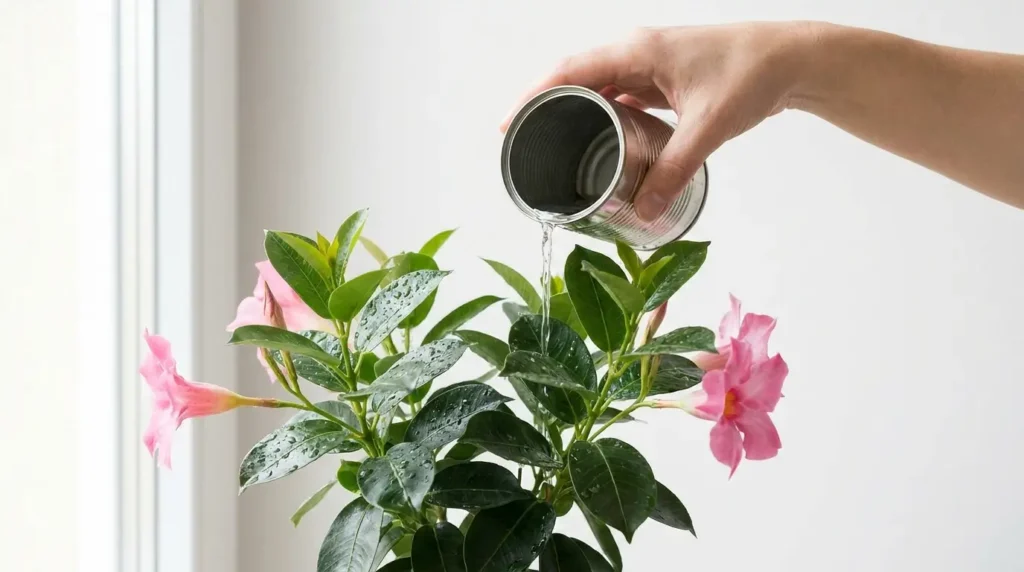
The best time to propagate dipladenia plant is during spring and early summer, when the plant is actively growing and cuttings root most reliably.
Propagating by Stem Cuttings
Stem cuttings are the most reliable propagation method for the dipladenia plant. You’ll need just a few basic supplies.
Materials needed:
- Sharp, clean scissors or pruning shears
- Small pot with drainage holes
- Well-draining propagation mix (perlite + peat, 1:1)
- Rooting hormone powder (optional but helpful)
- Clear plastic bag or humidity dome
Step-by-step instructions:
- Step 1: Take a 4–6 inch cutting just below a leaf node. Remove the lower leaves, leaving 2–3 leaves at the top. Make sure the cutting has no flowers or buds these divert energy away from rooting.
- Step 2: Dip the cut end into rooting hormone powder, then tap off any excess. This step isn’t required but noticeably speeds things up.
- Step 3: Insert the cutting about 2 inches deep into your moist propagation mix. Place the pot in a warm, bright spot (no direct sun) and cover loosely with a plastic bag to hold humidity.
- Step 4: Check every few days. Mist lightly if the mix feels dry. After 3–5 weeks, gently tug the cutting resistance means roots have formed. Remove the plastic cover and start normal care.
This same method works beautifully for the oxalis love plant, another tropical that roots quickly from stem cuttings in warm conditions.
Propagating by Division
Division works well when repotting a mature dipladenia plant that has become quite bushy. Carefully remove the root ball from its pot and gently pull or cut it into two sections, each with healthy roots and stems. Pot each section into fresh, well-draining mix and water lightly. Keep both divisions in a warm, bright spot for a few weeks while they settle in. This method gives you an established dipladenia much faster than cuttings.
Potting and Repotting Dipladenia Plant
When to Repot
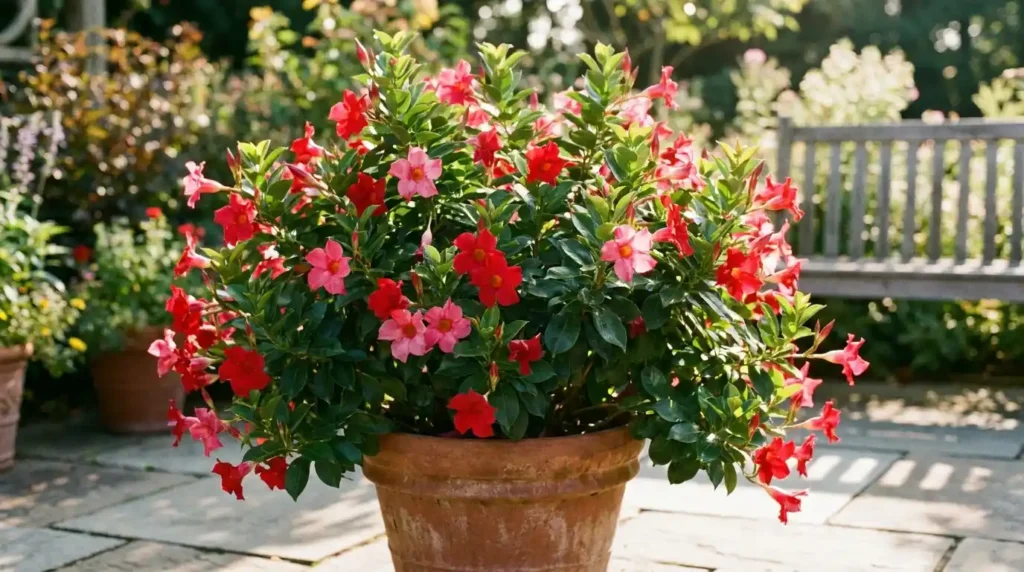
Repot your dipladenia plant every 1–2 years, or sooner if you notice roots circling the bottom of the pot or poking out of drainage holes. Slowing growth despite proper care is another sign it’s time for a size up.
How to Repot
Choose a new pot 1–2 inches larger in diameter than the current one no need to go bigger. Fill the bottom with fresh, well-draining mix. Ease the plant out, loosen the roots gently, and place it in the new pot at the same depth. Fill in around the sides, water thoroughly, and let it settle in a bright spot. Always make sure the new pot has drainage holes.
Common Pests and Diseases
Like most tropical plants, the dipladenia plant can occasionally attract a few common pests. Catching them early makes treatment simple.
Spider Mites
Look for fine webbing between leaves and tiny moving dots. Treat with a strong water spray or neem oil solution applied to all leaf surfaces, especially undersides.
Mealybugs
White cottony clusters at leaf joints and stem bases signal mealybugs. Dab affected areas with rubbing alcohol on a cotton swab or spray with insecticidal soap.
Scale Insects
Brown or tan bumps along stems that don’t move are likely scale. Scrape them off manually, then apply horticultural oil to prevent reinfestation.
Aphids
Clusters of small green, black, or white insects on new growth are a sign of aphids. Blast them off with water or apply insecticidal soap weekly until gone.
Fungus Gnats
Tiny flies hovering near the soil indicate fungus gnats, usually caused by overwatering. Let soil dry more between waterings and use sticky traps to catch adults. According to the University of California IPM Program’s guide to houseplant pest management, allowing soil to dry slightly between waterings is the most effective long-term control for fungus gnats.
Common Problems with Dipladenia Plant
Here’s how to troubleshoot common issues with your dipladenia plant:
Yellow Leaves
Yellowing is the most common complaint, and honestly, it usually points to overwatering. When roots sit in soggy soil too long, they can’t absorb nutrients properly, and leaves start to yellow. Check the soil if it’s wet and mushy, cut back on watering immediately and let it dry out. A nutrient deficiency (especially nitrogen or iron) can also cause yellowing, especially in plants that haven’t been fed in a while. Finally, older lower leaves naturally yellow and drop that’s just aging, not a problem. A similar pattern shows up in the china doll plant when overwatered.
Brown Leaf Tips
Brown tips usually point to low humidity or inconsistent watering. Dry indoor air in winter is a frequent culprit move the plant away from heating vents and consider a small humidifier nearby. Hard tap water high in fluoride can also cause tip burn over time; switching to filtered or rainwater helps. Additionally, letting the plant dry out completely between waterings stresses it and burns the tips.
Drooping or Wilting Leaves
Drooping almost always comes down to watering either too much or too little. Check the soil first. Bone-dry soil = underwatering; water deeply right away. Soggy soil with yellowing = overwatering; let it dry and hold off on watering for several days. Once the root cause is fixed, your dipladenia plant usually bounces back quickly. The same rapid wilt-and-recover pattern is common in red salvias when watering is inconsistent.
Leggy Growth or Sparse Foliage
Long, stretched-out stems with few leaves almost always mean not enough light. Move the plant to a brighter spot with more direct sun exposure. Additionally, a light pruning back by one-third will encourage new, bushier growth from the base.
FAQ
Does dipladenia like sun or shade?
Dipladenia prefers full sun to bright indirect light, ideally 6 or more hours daily. Morning sun with light afternoon shade works best in very hot climates.
Is a dipladenia an annual or a perennial?
It is a tropical perennial in USDA Zones 9–11. In colder zones, most gardeners treat it as a warm-season annual or bring it indoors over winter.
Do dipladenia come back each year?
In frost-free climates, yes dipladenia returns every year. In colder areas, it dies back with frost unless you overwinter it indoors in a bright, warm spot.
What is the difference between a Mandevilla and Dipladenia?
Mandevilla tends to climb and vine aggressively; dipladenia grows in a more compact, bushy shape. Both belong to the same genus but differ mainly in growth habit and flower size.
2 thoughts on “How to Grow and Care for Dipladenia Plant”
Comments are closed.