
In This Article
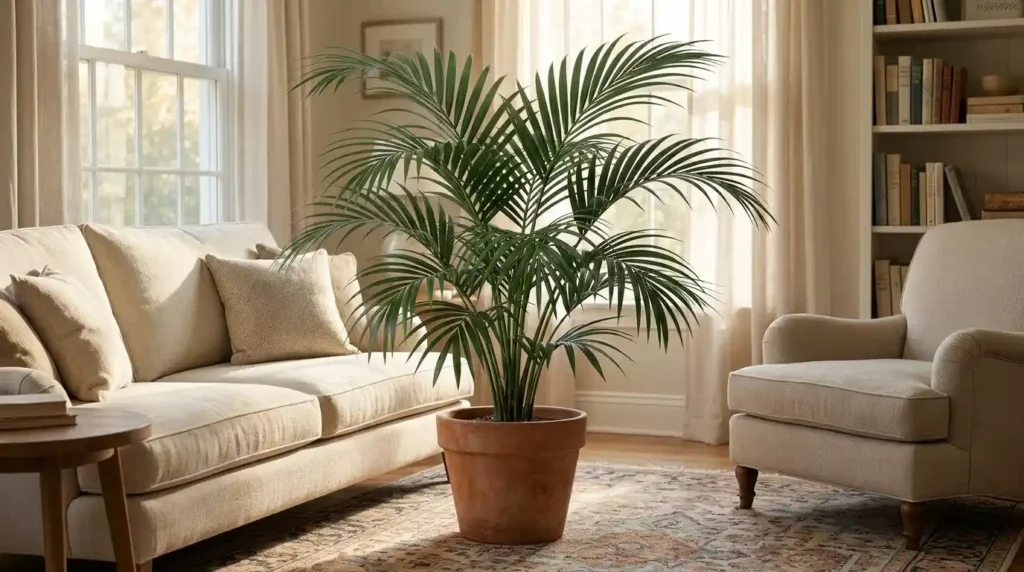
The Howea plant (Howea forsteriana), or Kentia Palm, is an elegant tropical houseplant native to Lord Howe Island, Australia. Its graceful, arching dark green fronds bring instant luxury to any room. Honestly, it looks high-maintenance but is surprisingly forgiving. Care difficulty is moderate totally manageable for everyday plant lovers.
Plant Care Card
| Field | Details |
|---|---|
| Common Name | Kentia Palm, Thatch Palm |
| Botanical Name | Howea forsteriana |
| Family | Arecaceae |
| Plant Type | Tropical perennial palm |
| Mature Size | 10–12 ft tall indoors (up to 40 ft outdoors) |
| Sun Exposure | Bright indirect light; tolerates low light |
| Soil Type | Well-draining, loamy potting mix |
| Soil pH | 6.1–6.5 (slightly acidic) |
| Hardiness Zones | USDA Zones 9–11 |
| Native Area | Lord Howe Island, Australia |
| Toxicity | Non-toxic to cats and dogs |
Howea Plant Care
The Howea plant is considered a moderate-care houseplant it’s not a beginner’s cactus, but it’s far from fussy. The sections below cover everything from light and water to propagation and common problems. You’ve got this once it settles in, a Kentia Palm can thrive for decades.
Light
The Howea plant thrives in bright, indirect light near an east- or north-facing window. Direct sun scorches fronds fast. Honestly, Kentia Palm is one of the most light-tolerant palms around it handles low-light rooms well. However, too little light long-term causes slow, floppy growth. Sheer curtains near a south window work perfectly.
Soil
The Howea plant needs a well-draining mix try 2 parts potting soil : 1 part perlite : 1 part coarse sand. This keeps roots aerated and prevents waterlogging. According to the University of Florida IFAS Extension’s guide on well-draining soil for indoor plants, proper drainage is the top factor in preventing root rot.
Water
Most people overwater their Howea plant don’t. Let the top 2–3 inches dry out before watering again. Water every 7–10 days in summer, every 2–3 weeks in winter. Overwatering causes mushy roots; underwatering brings crispy tips. Similar rhythms apply to the China Doll plant, another tropical that hates soggy soil.
Temperature and Humidity
Kentia Palm thrives between 65°F–85°F standard household temps. It tolerates brief dips to 55°F, but nothing colder. The Howea plant prefers humidity above 50% dry winter air causes brown tips fast. Keep it away from vents, AC units, and cold drafts. A nearby humidifier or regular misting makes a real difference.
Fertilizer
Feed your Howea plant with a balanced liquid fertilizer (10-10-10) diluted to half strength, every 4–6 weeks during spring and summer. Skip fertilizing in fall and winter the plant is resting and doesn’t need the extra nutrients. According to Penn State Extension’s fertilization guide for houseplants, over-fertilizing palms can cause more harm than under-feeding.
Types of Howea Plant
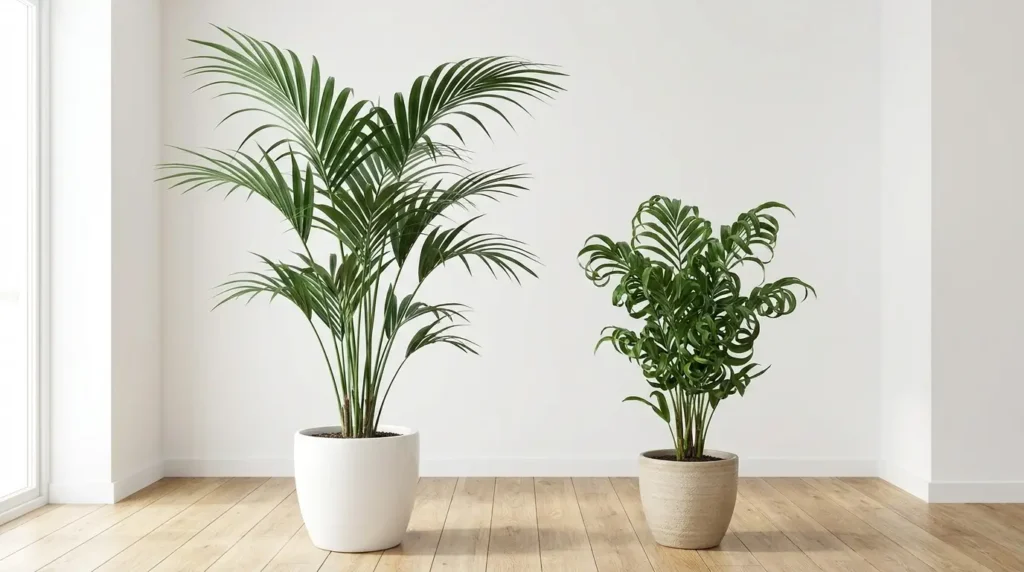
There are two species in the Howea genus, both native to Lord Howe Island. Here’s a quick look at each:
- Kentia Palm (Howea forsteriana) The most popular variety by far. It grows taller and faster than its sibling, with broader, more arching fronds. This is the one you’ll find in most garden centers and interior design shoots.
- Curly Palm (Howea belmoreana) Slightly smaller and more compact, with fronds that arch more dramatically upward before curling downward. It’s a bit rarer to find in nurseries but equally elegant. Grows a little slower than forsteriana.
Propagating Howea Plant
The best time to propagate is during spring or early summer when the plant is actively growing. Fair warning: the Howea plant is one of the trickier ones to propagate at home but it’s totally doable with patience.
Propagating by Seed
Growing Kentia Palm from seed is the primary propagation method. It takes time, but it’s the most reliable way to get a new plant.
Materials needed:
- Fresh Howea forsteriana seeds (pre-soaked for 48 hours)
- Seed-starting mix or coconut coir
- Small pots or seed trays with drainage holes
- Plastic wrap or a humidity dome
- Warm spot (75–85°F)
Step 1: Soak the seeds in warm water for 48 hours to soften the hard outer casing and improve germination rates. Change the water once during soaking.
Step 2: Fill small pots with a moist seed-starting mix. Press one seed about 1 inch deep into each pot, and cover loosely.
Step 3: Cover with plastic wrap or a humidity dome to trap warmth and moisture. Place in a warm, bright spot not direct sunlight. Check moisture every few days.
Step 4: Be patient! Germination can take anywhere from 3 to 6 months sometimes longer. Don’t give up if nothing happens right away. Once seedlings appear, remove the dome and move to bright indirect light.
This method works equally well for the Lychee tree, another tropical plant grown successfully from seed with similar warmth and patience requirements.
Propagating by Division
If your Howea plant has produced offshoots or a clumping base with multiple stems, division is possible though rarely recommended since it can stress the parent plant.
Step 1: Carefully remove the plant from its pot and identify natural separations at the root base where stems have their own root systems.
Step 2: Use a clean, sharp knife to separate the offset from the mother plant, making sure it has several healthy roots attached.
Step 3: Pot the division immediately into a well-draining mix, water lightly, and keep in a warm, humid spot while it recovers. Expect a slow adjustment period of a few weeks.
Potting and Repotting Howea Plant
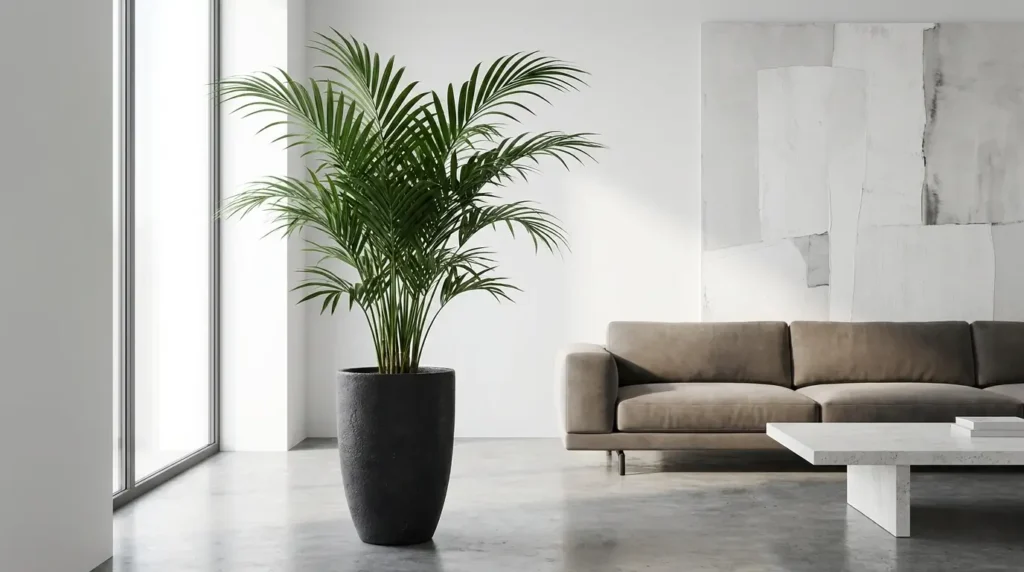
Repot your Howea plant every 2–3 years, or when you see roots creeping out of the drainage holes. These palms actually prefer being slightly root-bound, so don’t rush to go bigger.
When you do repot, choose a new pot just 1–2 inches larger in diameter. Going too big too fast leads to soil staying wet for too long which, as we’ve covered, is bad news. Always make sure the new pot has drainage holes.
To repot: gently tip the plant out, shake off excess old soil, trim any dead or mushy roots, and settle it into fresh palm mix. Water it in and leave it in a stable, bright spot to recover.
Common Pests and Diseases
Like most houseplants, the Howea plant can occasionally attract unwanted visitors. Check the leaves regularly catching pests early makes treatment much easier.
Spider Mites
Look for fine webbing on the undersides of fronds and tiny moving dots. Treat by wiping leaves with a damp cloth and spraying with diluted neem oil or insecticidal soap weekly until clear.
Mealybugs
Identify by white, cottony clusters near leaf bases and joints. Dab them off with a cotton swab dipped in rubbing alcohol, then follow up with neem oil spray.
Scale Insects
Look for brown, waxy bumps stuck to stems and frond midribs. Scrape off with a soft toothbrush and treat with horticultural oil or neem oil solution.
Aphids
Tiny green or black insects clustered on new growth. Blast them off with a strong jet of water, then apply insecticidal soap. According to the University of California IPM program’s pest management guide, consistent monitoring is the best prevention for all common houseplant pests.
Common Problems with Howea Plant
Here’s how to troubleshoot common issues with your Kentia Palm:
Yellow Leaves
Overwatering is the top cause of yellow fronds in the Howea plant let soil dry out more between waterings. A nutrient deficiency (magnesium or potassium) can also trigger yellowing; try a palm-specific fertilizer. A few yellow lower leaves is just natural aging. Similar issues affect the China Doll plant when overwatered.
Brown Leaf Tips
Brown tips on a Kentia Palm almost always mean low humidity or inconsistent watering. Dry indoor air especially in winter pulls moisture from the leaf edges. Try misting the fronds regularly or placing a pebble tray with water beneath the pot. Using tap water high in fluoride or chloride can also cause tip burn; switching to filtered or rainwater often helps. These brown-tip issues look very similar to what happens with the Licorice plant in dry conditions.
Drooping or Wilting Leaves
Droopy fronds usually signal a watering problem either too much or too little. Check the soil: if it’s bone dry, give a thorough watering and the plant should perk up within a day. If it’s soggy and the roots look mushy, ease off water immediately and consider repotting into fresh, dry soil. The Oxalis love plant shows similar drooping behavior when watering is off-balance.
Leggy Growth / Sparse Foliage
If your Howea plant is producing thin, widely-spaced fronds that reach awkwardly toward the light, insufficient light is almost certainly the cause. Move it closer to a bright window and the new growth should be fuller and more upright. Light pruning of the weakest fronds helps redirect the plant’s energy into stronger new growth.
FAQ
Is Howea an indoor plant?
Yes, the Howea plant thrives indoors. It adapts well to indoor light levels and stable temperatures, making it a popular houseplant worldwide.
How to look after a Howea plant?
Provide bright indirect light, water when the top 2–3 inches of soil dry out, and maintain moderate humidity for best results.
Is Howea toxic to dogs?
No, the Howea plant is non-toxic to dogs and cats, making it a pet-safe choice for households with animals.
Why is Kentia Palm so expensive?
Kentia Palm seeds germinate slowly — taking months — and the plant grows very slowly, making commercial production time-consuming and costly.