
In This Article
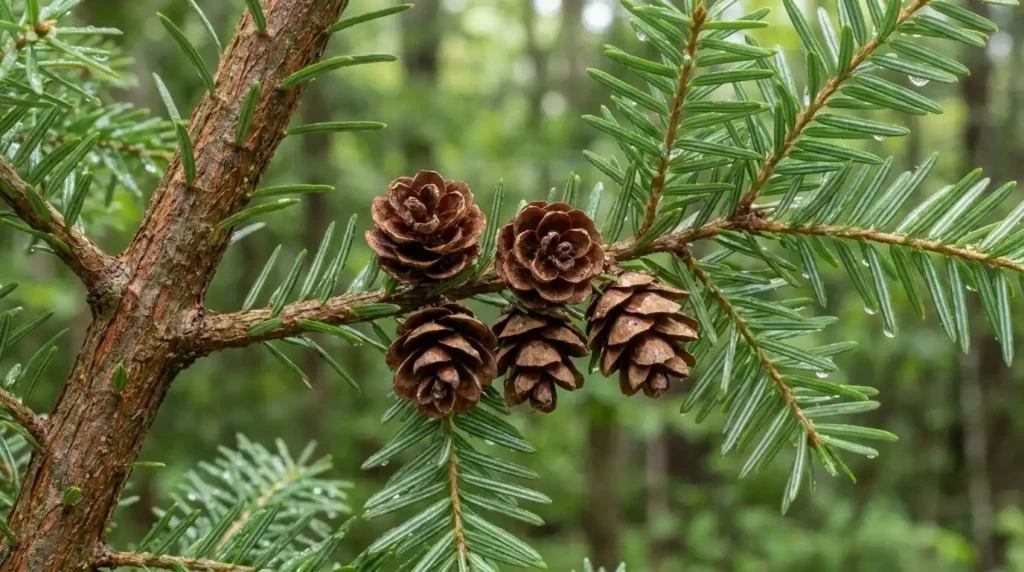
The hemlock tree (Tsuga spp.) is a graceful North American native conifer with soft, feathery needles, drooping branch tips, and a pyramidal silhouette. Its foliage is deep green on top and silvery-white beneath. Native to cool, moist woodlands, it thrives in USDA Zones 3–8 with moderate care.
Plant Care Card
| Detail | Information |
|---|---|
| Common Name | Hemlock tree |
| Botanical Name | Tsuga canadensis (Eastern), Tsuga caroliniana (Carolina) |
| Family | Pinaceae |
| Plant Type | Evergreen conifer tree or large shrub |
| Mature Size | 40–70 ft tall x 25–35 ft wide (species-dependent) |
| Sun Exposure | Full sun to partial shade |
| Soil Type | Moist, well-draining, loamy or sandy |
| Soil pH | 4.5–6.0 (acidic) |
| Hardiness Zones | 3–8 (USDA) |
| Native Area | Eastern North America, Appalachian Mountains, parts of Asia |
| Bloom Time | Spring (inconspicuous cones, not ornamental flowers) |
| Toxicity | Non-toxic to humans and pets (not to be confused with poison hemlock, which is a completely different plant) |
Hemlock Tree Care
Hemlock trees are moderate-care conifers that truly shine when planted in the right spot. Here’s what you need to know about sun, soil, water, and maintenance. With proper placement and a watchful eye for pests, this tree practically cares for itself.
Light
Hemlock trees tolerate full sun to deep shade, but aim for 4–6 hours of daily sunlight for the best density. Avoid harsh afternoon sun in southern regions morning sun with afternoon shade works perfectly in Zones 6–8. According to the University of Connecticut Extension, eastern hemlocks are well-adapted to shaded forest edges.
Soil
Hemlock trees prefer moist, acidic, well-draining soil. Think loamy or sandy textures with plenty of organic matter worked in. They thrive at a soil pH between 4.5 and 6.0 similar to other acid-loving trees like the brown turkey fig tree, which also demands good drainage and rich, slightly acidic ground. Heavy clay or compacted soil is a real problem; it holds too much moisture around the roots and promotes rot.
If your soil needs improvement, mix in aged compost and pine bark fines at a 1:1:1 ratio (existing soil, compost, bark). The USDA Natural Resources Conservation Service offers detailed soil health guides that can help you assess and amend your ground before planting. Avoid planting near concrete foundations, which can raise soil pH over time.
Water
Water newly planted hemlock trees deeply once or twice per week, checking soil moisture 2 inches down before watering. These trees love consistent moisture but hate soggy ground. Once established, they’re more drought-tolerant increase watering during summer heat waves and reduce in winter without letting the soil dry out completely.
Temperature and Humidity
Hemlock trees are cold-hardy to -30°F (Zone 3) but struggle in excessive heat and drought. Humidity is their friend they naturally thrive in moist, mountainous regions. In dry climates, apply 2–3 inches of organic mulch around the root zone to retain moisture and regulate soil temperature year-round.
Fertilizer
Hemlock trees don’t need much feeding. Apply a slow-release, acidic fertilizer (like one formulated for evergreens or hollies) once in early spring. A balanced 10-6-4 formula works well. Skip fertilizing in fall, as this can push tender new growth that won’t harden before frost.
Types of Hemlock Trees
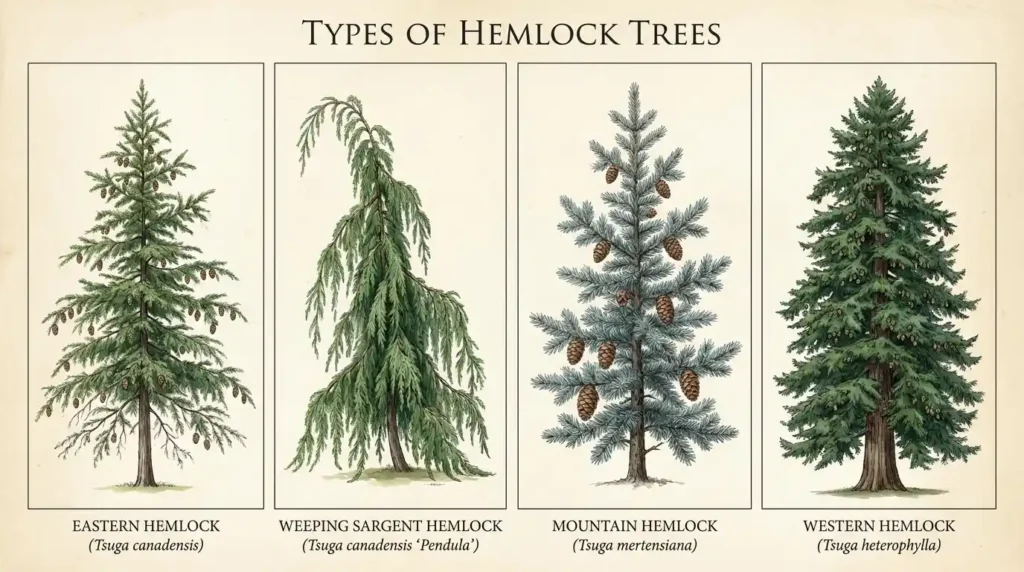
There are several notable hemlock species worth knowing before you plant. Here’s a quick look at the most common ones:
- Eastern Hemlock (Tsuga canadensis): The most widely grown species in North American gardens. Reaches 40–70 ft tall with graceful, drooping branch tips. Excellent as a tall privacy screen or specimen tree.
- Carolina Hemlock (Tsuga caroliniana): Native to the southern Appalachians, slightly more heat-tolerant than Eastern hemlock. Similar appearance but narrower in form. A good choice for Zones 5–7.
- Western Hemlock (Tsuga heterophylla): A towering Pacific Northwest native that can reach 100+ ft in the wild. Best for large landscapes in Zones 6–8 with consistent moisture.
- Mountain Hemlock (Tsuga mertensiana): A high-altitude species with bluish-gray needles. More cold-hardy and slower-growing—great for alpine-inspired gardens.
- Sargent Weeping Hemlock (Tsuga canadensis ‘Pendula’): A stunning dwarf cultivar with dramatically drooping branches. Grows just 2–3 ft tall and wide per decade perfect for smaller gardens.
Pruning
Prune hemlock trees in late winter to early spring, removing dead, damaged, or crossing branches first. Light shaping in mid-summer works well too. Unlike many conifers, hemlocks tolerate aggressive shearing and still push out new growth. Regular light pruning keeps the tree full; heavy pruning every few years rejuvenates older specimens.
Propagating Hemlock Trees
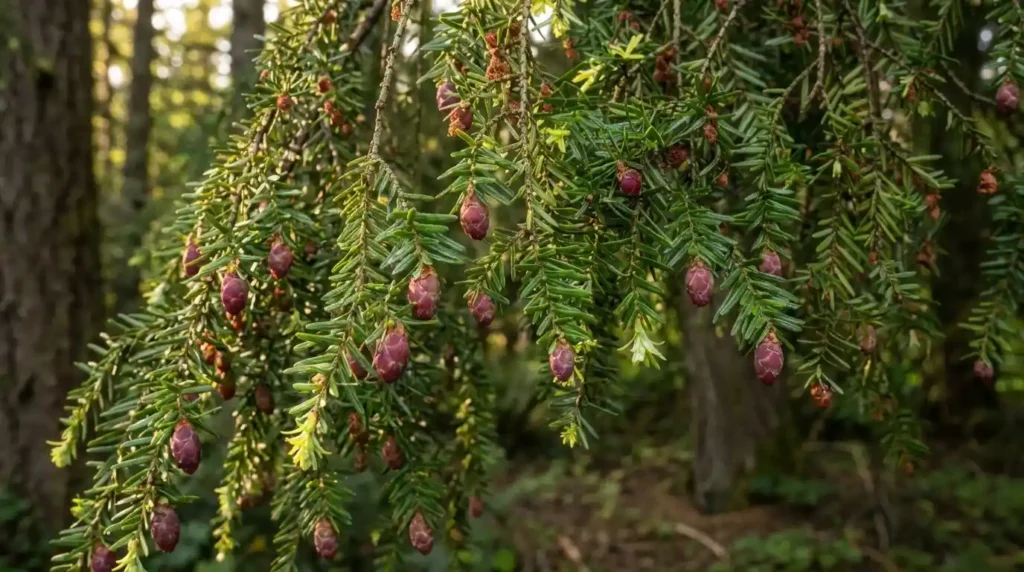
The best time to propagate hemlock trees is in late summer to early fall when semi-hardwood cuttings are available. You can also grow them from seed, though this method takes considerably longer.
Propagating by Stem Cuttings
This is the most reliable method for home gardeners and produces trees identical to the parent plant.
Materials needed:
- Sharp pruning shears or a clean knife
- Rooting hormone powder or gel
- Small pots with a 50/50 mix of perlite and peat moss
- Clear plastic bags or a humidity dome
Step 1: In late summer, select healthy, semi-hardwood stems from the current year’s growth. Each cutting should be 4–6 inches long with several sets of needles.
Step 2: Strip the needles from the bottom third of each cutting. Dip the cut end in rooting hormone powder, tapping off any excess.
Step 3: Insert the cutting about 1–2 inches deep into your prepared perlite-peat mix. Water gently and cover with a clear plastic bag to hold humidity. Set in a bright spot out of direct sun.
Step 4: Check for moisture every few days and mist lightly if needed. Roots typically develop in 8–12 weeks. Give the cutting a gentle tug—resistance means roots have formed.
Transplant rooted cuttings into individual pots in spring and grow them on for one more season before planting outdoors.
Propagating from Seeds
Hemlock seeds need a period of cold stratification before they’ll germinate. Collect ripe cones in fall and allow them to dry indoors until the scales open. Mix the seeds with slightly moist peat moss, place in a sealed bag, and refrigerate for 60–90 days. Afterward, sow them in trays of seed-starting mix and place in a warm, bright spot. Expect germination within 2–4 weeks. Seedlings grow slowly plan for 2–3 years before they’re ready for the garden. Similar slow-growing conifers like Arizona ash trees also reward this kind of patience with their long-lived, stately presence.
Planting and Transplanting Hemlock Tree
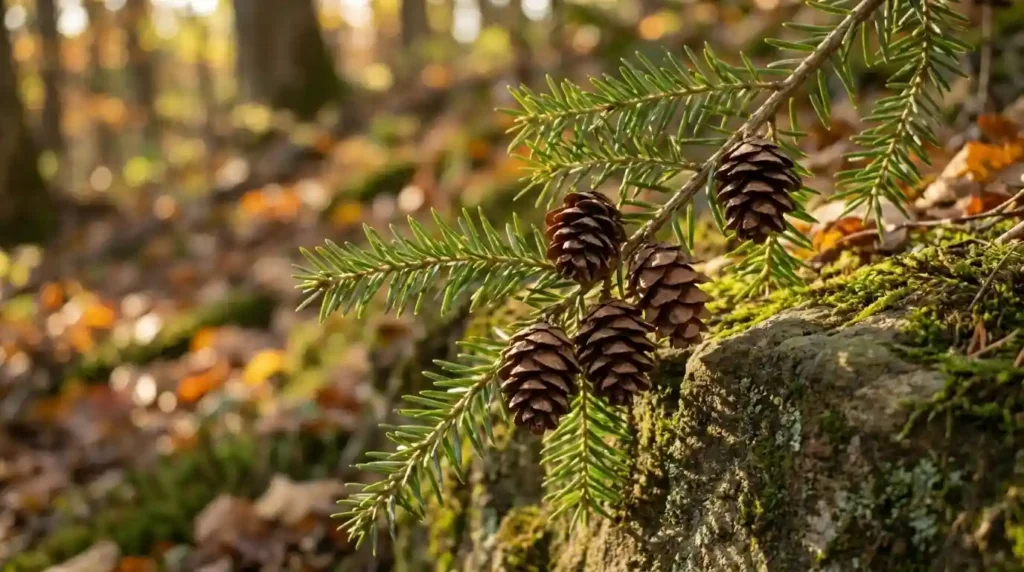
Plant hemlock trees in spring or early fall when temperatures are cool and rainfall is more reliable. Spacing depends on your goal: for a privacy screen, plant 6–8 feet apart; for specimen trees, allow the full mature spread of 25–35 feet. The USDA Plants Database lists full native range and hardiness data for each hemlock species, which is handy when choosing the right type for your region.
Dig the planting hole twice as wide as the root ball but only as deep. Set the tree so the root flare sits slightly above the surrounding soil level. Backfill with the native soil mixed with compost, water thoroughly, and apply mulch. Unlike fruit trees such as the dwarf cherry tree or lychee tree, hemlocks don’t need staking unless exposed to strong winds.
Transplant established hemlock trees only in early spring. Root disturbance is stressful, so water generously for the entire first season after moving.
Common Pests and Diseases
Like most garden plants, hemlock trees can occasionally face pest or disease challenges. Here’s what to watch for:
Woolly Adelgid
Look for white, cottony masses clustered at the base of needles, especially in spring. This invasive pest is the most serious threat to eastern hemlocks. Treat with horticultural oil or systemic insecticides, and check out Penn State Extension’s IPM resources for up-to-date treatment options.
Spider Mites
Look for fine webbing and a dusty, stippled appearance on needles in hot, dry weather. Spray with a strong jet of water or apply insecticidal soap to knock back populations quickly.
Root Rot
Look for yellowing needles, branch dieback, and soft bark near the base. Usually caused by poorly draining soil or overwatering. Improve drainage immediately and avoid wetting the trunk.
Elongate Hemlock Scale
Look for small, brown, waxy bumps along the undersides of needles. Treat with horticultural oil in early spring before crawlers hatch, repeating as needed.
Common Problems with Hemlock Tree
Here’s how to troubleshoot common hemlock tree issues:
Poor or No Needle Growth / Sparse Foliage
Sparse foliage usually signals insufficient light, drought stress, or iron/magnesium deficiency in high-pH soils. Test your soil and apply acidifying fertilizer if needed. Consistent watering and proper placement fix most cases. For similar foliage challenges in other landscape plants, see our guide on travelers palm growing care.
Yellow or Browning Needles
Yellowing is one of the most common hemlock tree complaints. Overwatering or poor drainage causes roots to suffocate, leading to rapid needle yellowing. On the other hand, underwatering during hot spells causes browning at needle tips first. Nutrient deficiency particularly iron chlorosis in alkaline soils turns needles yellow-green rather than a rich deep green. Check soil pH and drainage before assuming pest damage. Adjust watering and amend soil pH accordingly.
Wilting or Drooping Branches
Sudden drooping usually signals transplant shock after a recent move, or severe underwatering in summer heat. Give the tree a deep, slow watering and mulch around the root zone immediately. If drooping persists with adequate moisture, check for root rot or woolly adelgid at the base of the needles.
Leggy or Thin Growth
Thin, stretched growth on a hemlock tree almost always points to too much shade or overcrowding from nearby trees. Move younger specimens to a brighter spot if possible, or thin surrounding vegetation. Light pruning encourages back-budding and thicker new growth.
Frost Damage
Late spring frosts can burn tender new growth on hemlock trees, leaving brown, scorched needle tips. This looks alarming but is rarely fatal. Wait until growth resumes in mid-spring and then lightly prune the damaged tips. Protect young hemlock trees in their first two winters with burlap wrap in colder zones.
FAQ
What is the problem with hemlock trees?
The biggest threat to hemlock trees is the woolly adelgid, an invasive pest that kills trees by feeding on needle bases and cutting off nutrient flow.
What is special about a hemlock tree?
Hemlock trees are one of the only conifers that genuinely thrive in partial to deep shade, making them prized for woodland gardens and privacy screens.
Is a hemlock tree poisonous?
No the hemlock tree (Tsuga spp.) is non-toxic. Poison hemlock is an unrelated wildflower plant, not a tree; they share only a name.
Where do hemlock trees grow best?
Hemlock trees grow best in cool, moist climates with acidic, well-draining soil and protection from harsh afternoon sun and drying winds.