
In This Article
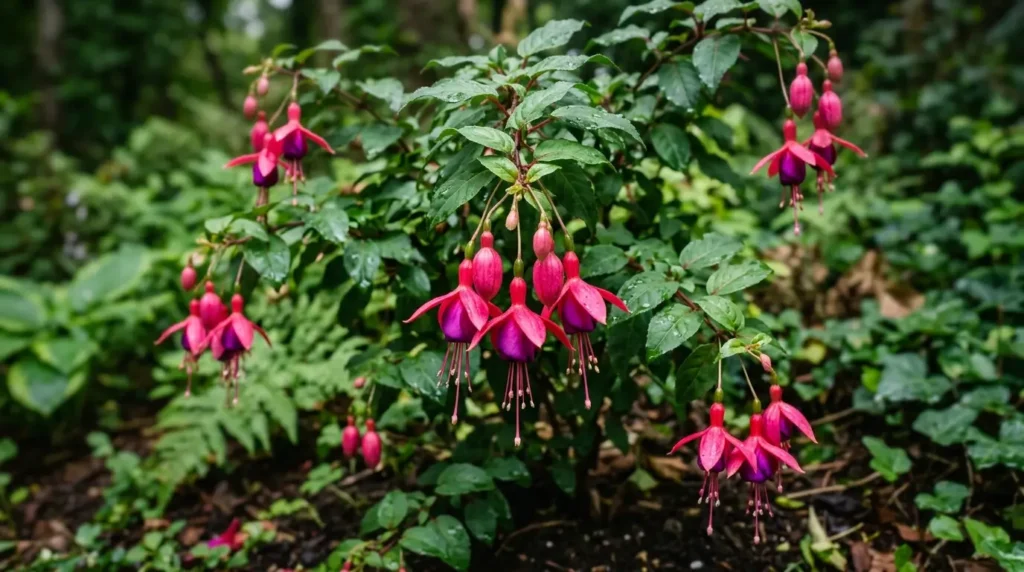
The fuchsia plant (Fuchsia spp.) is known for its dangling, lantern-shaped blooms in pink, purple, red, and white. Native to Central and South America, this shrubby perennial thrives in USDA zones 6-11 and is considered easy to moderate to grow.
| Category | Details |
|---|---|
| Common Name | Fuchsia |
| Botanical Name | Fuchsia spp. |
| Family | Onagraceae |
| Plant Type | Perennial shrub |
| Mature Size | 1-3 ft. tall x 1-3 ft. wide |
| Sun Exposure | Partial shade to full shade |
| Soil Type | Rich, well-draining, moisture-retentive |
| Soil pH | Slightly acidic to neutral (6.0-7.0) |
| Hardiness Zones | 6-11 (USDA) |
| Native Area | Central and South America |
| Bloom Time | Late spring through fall |
| Toxicity | Non-toxic to pets and humans |
Fuchsia Plant Care
Honestly, the fuchsia plant is fairly forgiving once it’s settled into a shady, cool spot. Here’s what you need to know about sun, soil, water, and general upkeep. With the right placement, this plant practically takes care of itself.
Light
Your fuchsia plant wants partial to full shade, especially in hot climates, with morning sun being ideal. Give it at least 3-4 hours of gentle light daily. Too little light causes leggy stems and fewer blooms, so an east-facing spot works great.
Soil
This plant likes rich, loamy soil that drains well but still holds a bit of moisture. Aim for a slightly acidic to neutral pH between 6.0 and 7.0. Mix in compost at a 2:1 ratio with garden soil for the best texture. For more tips on building healthy garden beds, this soil preparation guide breaks it down well.
Water
Keep the soil consistently moist but never soggy, watering about 2-3 times weekly in summer. Check moisture by poking a finger an inch deep into the soil. Drooping leaves usually mean it’s thirsty, while yellowing signals too much water. If you’re dealing with a similarly moisture-loving bloomer, the bleeding heart plant has nearly identical watering needs.
Temperature and Humidity
Fuchsias prefer cool temperatures between 60-75°F and struggle once it climbs past 85°F. They’re not big fans of frost, so protect roots with mulch in zones 6-7. Humidity should stay moderate to high; misting helps in dry spells. Check your local plant hardiness zone before planting outdoors.
Fertilizer
Feed your fuchsia plant with a balanced liquid fertilizer every 2-4 weeks during the growing season. Start in spring once new growth appears. Cut back to monthly in late summer, and stop completely once the plant goes dormant in fall.
Types of Fuchsia Plant
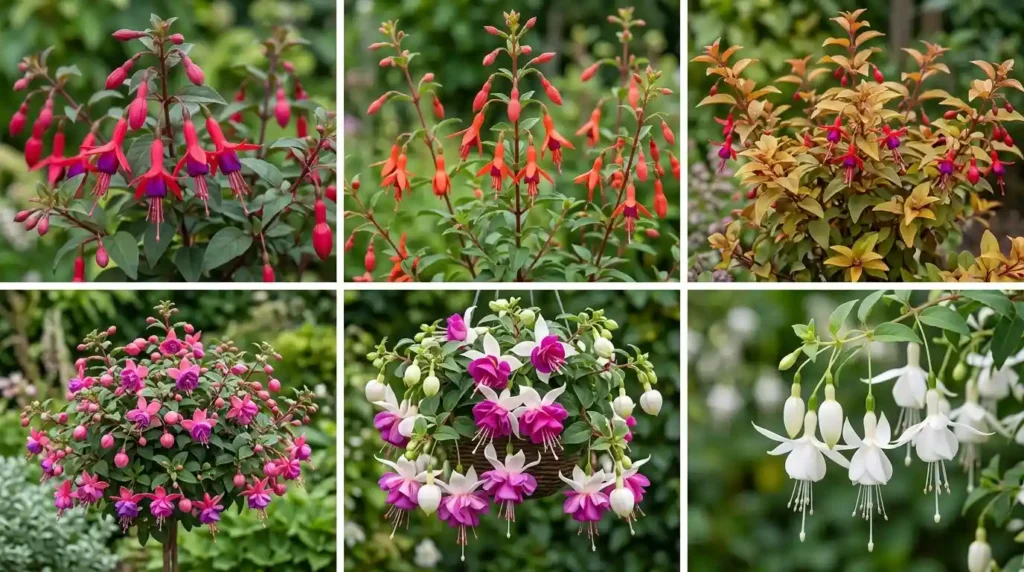
Let’s face it, there are hundreds of fuchsia cultivars out there, but a handful stand out for home gardens. Each brings its own flower shape, color combo, or growth habit to the table.
- Fuchsia magellanica: A hardy, upright variety with slender red-and-purple blooms. It tolerates colder winters better than most types and can reach 6 feet in mild climates.
- ‘Gartenmeister Bonstedt’: Known for its orange-red tubular flowers and bronzy foliage. This one is a hummingbird magnet and holds up well in warm summers.
- ‘Autumnale’: Grown mainly for its striking bronze, gold, and red foliage rather than its small purple-red flowers. It works beautifully as a container accent.
- ‘Tom Thumb’: A compact, dwarf cultivar reaching just 12 inches tall. Perfect for small pots, rock gardens, or edging along a shaded path.
- Trailing (basket) fuchsias: Varieties like ‘Marinka’ cascade beautifully from hanging baskets. Their double blooms in deep pink and purple make a dramatic display all summer.
- ‘Hawkshead’: A rare white-flowered variety with slender, elegant blooms. It’s a nice change of pace if you want something other than the usual pink-and-purple combo.
Pruning
The best time to prune a fuchsia plant is late winter or early spring, right before new growth starts. Cut back around one-third of the previous season’s growth, removing dead, damaged, or crossing stems. This encourages bushier growth and more blooms later in the season.
Use clean, sharp bypass pruners and cut just above a healthy leaf node at a slight angle. Throughout the blooming season, deadhead spent flowers regularly to keep new buds forming. Regular pruning also improves air circulation, which helps prevent fungal problems.
For trailing types, occasional light trims during summer keep the growth from getting too straggly. A tidy fuchsia plant blooms more reliably and looks fuller overall.
Propagating Fuchsia Plant
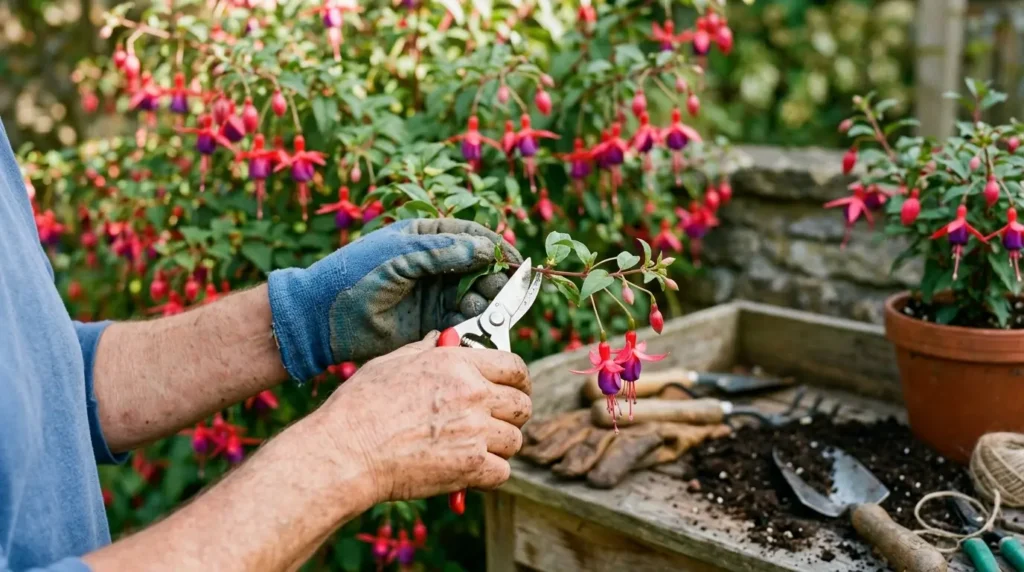
Spring and early summer are the best times to propagate a fuchsia plant, while it’s actively pushing out new growth. Two reliable methods work well for home gardeners: stem cuttings and division.
Propagating by Stem Cuttings
Stem cuttings are the fastest and most popular way to multiply your fuchsia plant. This method roots quickly and produces a genetic match of the parent.
Materials needed:
- Sharp, clean scissors or pruning shears
- 4-inch pots with well-draining potting mix
- Rooting hormone (optional but helpful)
- A clear plastic bag or humidity dome
Steps:
- Snip a 3-4 inch stem cutting just below a leaf node, choosing healthy, non-flowering growth.
- Remove the lower leaves, leaving just two or three sets at the top of the cutting.
- Dip the cut end into rooting hormone, tapping off any excess powder gently.
- Insert the cutting into moist potting mix, burying about an inch of the stem.
- Cover with a plastic bag to hold humidity, and place in bright, indirect light.
Roots typically form within 2-4 weeks, and you’ll notice new leaf growth once established. Keep the soil moist but not waterlogged the entire time.
Propagating by Division
Division works well for mature, clump-forming fuchsia plants that have outgrown their space. It’s a slower method, but it gives you an instantly larger new plant.
Dig up the root ball in early spring before new growth starts, then separate natural root clumps. Cut into two or three sections with a clean knife, keeping healthy roots and stems on each. Replant immediately and water well; new growth appears within weeks, much like propagating a nearby dipladenia plant.
Planting and Transplanting Fuchsia Plant
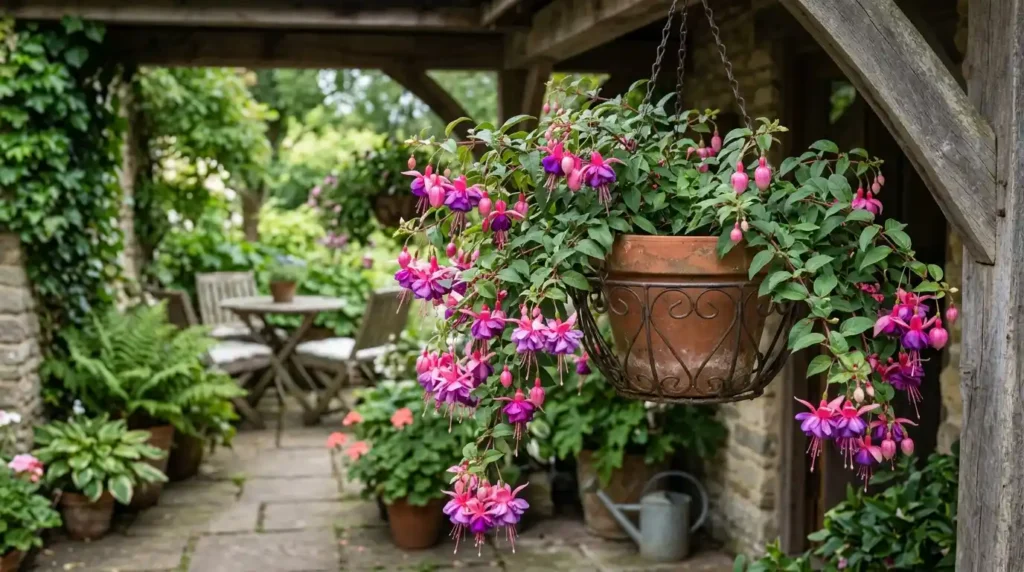
Plant your fuchsia plant in spring after the last frost, spacing plants 18-24 inches apart to allow airflow. Dig a hole as deep as the root ball and twice as wide, then backfill with amended soil.
Set the plant at the same depth it was growing in its nursery pot, and water deeply right after planting. Mulch around the base to retain moisture and keep roots cool through summer heat.
Transplant or divide mature plants every 2-3 years in early spring, once you notice reduced blooming or overcrowded roots. Shade-loving perennials like the astilbe plant follow a similar transplanting schedule, so the two pair nicely in a woodland border.
Common Pests and Diseases
Like most garden plants, a fuchsia plant can occasionally run into pest or disease trouble, especially in humid or crowded conditions. Catching problems early makes treatment much easier.
Aphids
Look for clusters of tiny green or black bugs on new growth and buds. Treat with insecticidal soap or a strong spray of water.
Spider Mites
Fine webbing and stippled, yellowing leaves are the telltale signs of spider mites. Increase humidity and treat with neem oil or miticide as needed.
Powdery Mildew
A white, powdery coating on leaves and stems signals this fungal disease. Improve airflow and apply a fungicide labeled for powdery mildew.
Root Rot
Mushy, blackened roots and wilting despite moist soil point to root rot. Cut back watering and repot into fresh, well-draining soil.
Caterpillars and Leaf Miners
Chewed leaf edges or winding tunnels inside leaves indicate caterpillars or leaf miners. Hand-pick caterpillars and remove affected leaves promptly. For more detail on identifying garden pests, this integrated pest management guide is a solid resource. The same watering and light needs that keep pests away also apply nicely to a calla lily growing nearby.
Common Problems with Fuchsia Plant
Here’s how to troubleshoot common fuchsia plant issues:
Poor or No Blooms
Not seeing many flowers on your fuchsia plant? Insufficient light is the most common culprit, since too much shade limits bud formation. Over-fertilizing, especially with high-nitrogen feeds, pushes leafy growth instead of blooms. Improper pruning at the wrong time of year can also remove developing flower buds. Move to brighter indirect light, switch to a bloom-boosting fertilizer, and prune only in late winter.
Yellow or Browning Leaves
Yellowing leaves usually point to overwatering or poor drainage, which suffocates the roots over time. Nutrient deficiency, particularly low magnesium or nitrogen, can also cause pale or yellow foliage. Check that pots have drainage holes and let soil dry slightly between waterings. A weak dose of balanced fertilizer often perks foliage back up. Gardeners growing an angel wing begonia nearby will notice very similar yellowing triggers.
Wilting or Drooping
Underwatering is the most frequent cause of sudden wilting, especially during hot spells. Transplant shock can cause temporary drooping right after moving the plant. Heat stress above 85°F also wilts leaves quickly. Water deeply, move to a cooler spot, and give newly transplanted specimens a week or two to recover.
Leggy or Sparse Growth
Insufficient light stretches stems and thins out foliage over time. Over-fertilizing with nitrogen-heavy feeds can also encourage weak, leggy growth instead of compact form. Move to brighter shade and prune back stems to encourage bushier regrowth.
Slow Growth
Cool temperatures below 60°F or nutrient-poor soil often slow a fuchsia plant’s growth. Root-bound pots restrict expansion too. Repot into fresh soil, feed lightly, and make sure temperatures stay within its comfort range.
FAQ
Do fuchsias like sun or shade?
Fuchsias prefer partial to full shade, especially in hot climates. Morning sun with afternoon shade works best. Too much direct sun scorches leaves and reduces blooming.
Does fuchsia come back each year?
In USDA zones 8-11, fuchsia often returns as a perennial. In colder zones, treat it as an annual or bring potted plants indoors for winter.
Are fuchsias better in pots or ground?
Pots offer more control over soil, moisture, and winter protection. In-ground planting suits mild climates with consistent shade and rich soil.
How do you care for a potted fuchsia plant?
Water regularly, feed every 2-4 weeks, and keep in bright shade. Repot every couple years and prune in late winter for fuller growth.