
In This Article
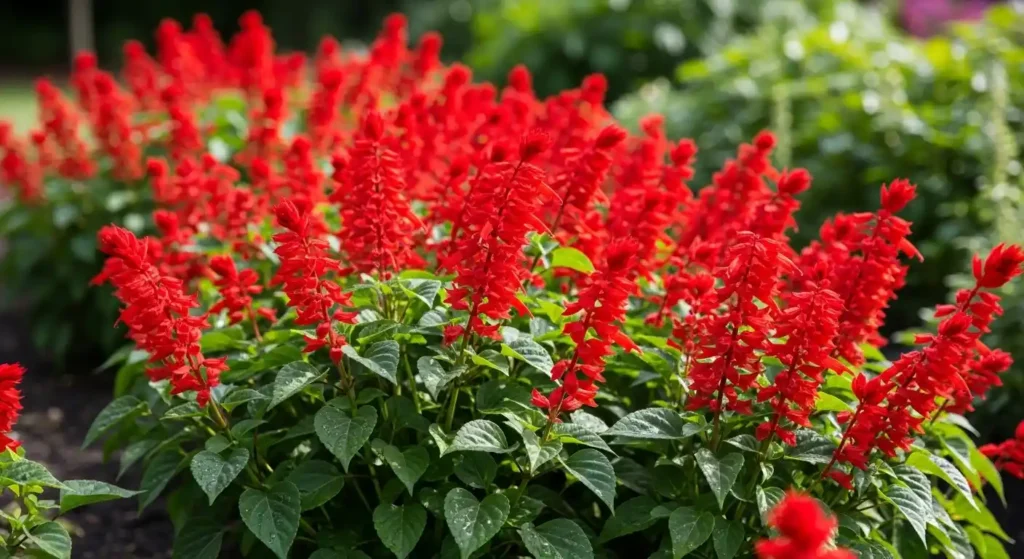
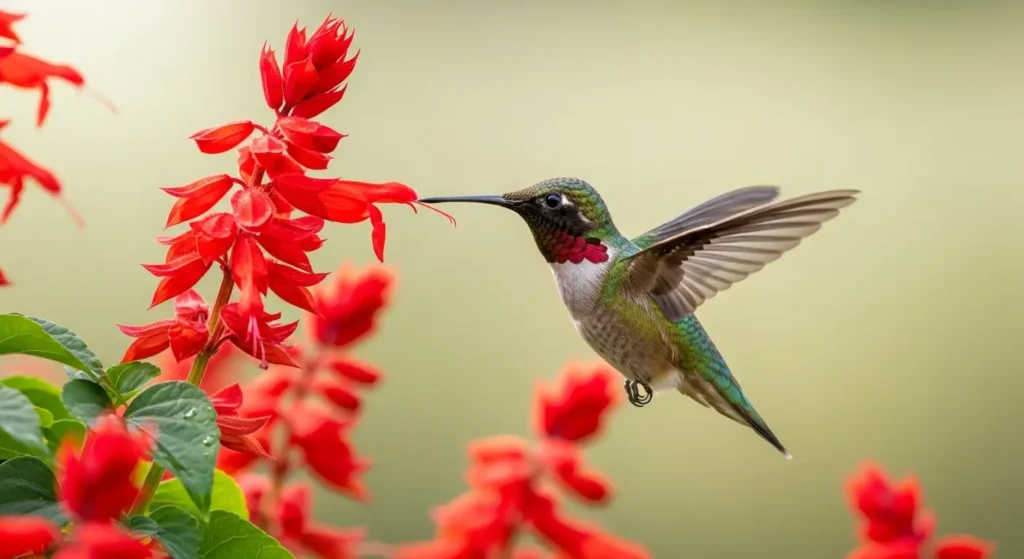
The red salvias plant (Salvia splendens) is a showstopping bedding plant producing brilliant scarlet flower spikes that attract hummingbirds and butterflies all season. Native to Brazil, it thrives as a perennial in zones 10–11 and as a warm-season annual elsewhere rewarding gardeners of every skill level with effortless, long-lasting color.
Plant Care Card
| Field | Details |
|---|---|
| Common Name | Red salvia, scarlet sage |
| Botanical Name | Salvia splendens |
| Family | Lamiaceae |
| Plant Type | Perennial (zones 10–11); grown as annual in cooler zones |
| Mature Size | 1–3 ft tall × 1–2 ft wide |
| Sun Exposure | Full sun to partial shade |
| Soil Type | Loamy, well-draining |
| Soil pH | 5.5–6.5 (slightly acidic) |
| Hardiness Zones | 10–11 (USDA); annual in zones 3–9 |
| Native Area | Brazil |
| Bloom Time | Late spring through first frost |
| Toxicity | Non-toxic to humans; mildly toxic to dogs and cats |
Red Salvias Plant Care
Red salvias are wonderfully low-maintenance once they’re settled into the right spot. This guide covers everything you need to know about sun, soil, water, fertilizing, and more. With the right placement, the red salvias plant practically puts on a show all by itself.
Light
Red salvias plant need at least 6–8 hours of full sun daily for the richest color and heaviest blooms. Partial shade produces leggier, less floriferous plants. Plant in a south- or west-facing bed for uninterrupted afternoon light. Try pairing them with red creeping thyme as a low-growing, sun-loving companion.
Soil
Red salvias plant prefer loamy, well-draining soil with a slightly acidic pH of 5.5–6.5. Good drainage is critical soggy soil quickly causes root problems. According to the University of Florida IFAS Extension, loose, fertile soil with good aeration produces the healthiest blooms. For heavy clay, mix in compost and coarse sand.
Water
Water red salvias plant once or twice weekly, letting the top inch of soil dry between waterings. Increase frequency during summer heat, especially in containers. Cut back in fall as growth slows. Watch for yellowing leaves as a sign of overwatering, and wilting or crispy edges as signs of underwatering.
Temperature and Humidity
Red salvias plant thrive in warm temperatures between 60°F and 85°F and are not frost-hardy. In zones 10–11 they survive winter outdoors; elsewhere treat them as annuals. In humid climates, ensure good air circulation to prevent fungal issues. Apply a 2-inch mulch layer to regulate soil temperature and retain moisture.
Fertilizer
Feed red salvias plant with a balanced slow-release fertilizer (10-10-10) at planting time, then follow up with a liquid bloom booster every 4–6 weeks during the growing season. Reduce feeding in late summer and stop entirely once blooming slows in fall. Over-fertilizing with nitrogen-heavy products encourages lush foliage but far fewer blooms.
Types of Red Salvias Plant
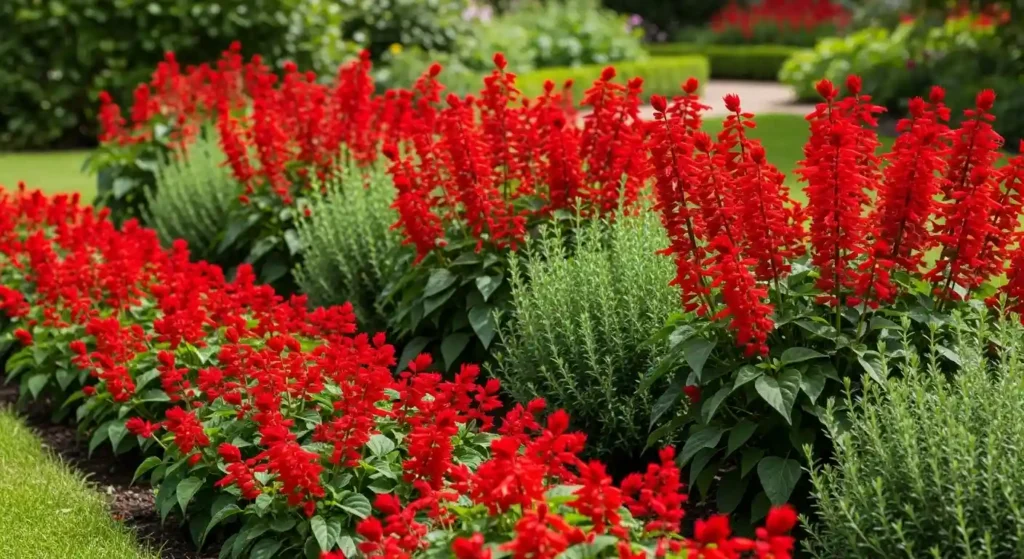
There are several fantastic cultivars worth knowing about. Here are some of the best red salvias plant varieties for home gardens:
- ‘Vista Red’ (Salvia splendens ‘Vista Red’): A compact, weather-resistant cultivar growing 10–14 inches tall with dense spikes of deep scarlet flowers. Excellent for borders and containers.
- ‘Sizzler Red’ (Salvia splendens ‘Sizzler Red’): Produces large, dramatic flower spikes on 14–18 inch plants. One of the most heat-tolerant red salvias varieties available.
- ‘St. John’s Fire’ (Salvia splendens ‘St. John’s Fire’): An early-blooming dwarf variety at 8–10 inches tall. Great for edging or mass plantings with vibrant scarlet spikes.
- ‘Salsa Red’ (Salvia splendens ‘Salsa Red’): Known for its vivid red color and vigorous, upright habit. Performs well in both heat and humidity, reaching 12–14 inches.
- ‘Bonfire Red’ (Salvia splendens ‘Bonfire’): A classic, taller variety reaching up to 24 inches, producing bold flower spikes all season long a longtime garden favorite.
Pruning
Prune red salvias plant throughout the blooming season to keep them looking tidy and to encourage new flower production. Deadhead spent flower spikes as soon as the blooms fade this is the single most effective thing you can do to extend the display. Additionally, trim back leggy stems by one-third in midsummer if your red salvias plant start to look stretched or sparse.
Use clean, sharp scissors or pruning shears to cut just above a healthy set of leaves or a lateral branch. Sanitize your tools before use to reduce the risk of disease transmission. Regular pruning also improves air circulation, which helps prevent fungal problems. Much like dianthus plants, consistent deadheading keeps the show going far longer than leaving plants untouched.
Propagating Red Salvias Plant
The best time to propagate red salvias plant is in spring or early summer when plants are actively growing and temperatures are warm.
Propagating by Stem Cuttings
Stem cuttings are the fastest and most reliable way to multiply red salvias, giving you true-to-type plants with strong root systems.
Materials needed:
- Sharp, clean pruning shears or scissors
- Small pots (3–4 inch)
- Seed-starting mix or well-draining potting mix
- Rooting hormone powder (optional but helpful)
- Clear plastic bag or humidity dome
Step 1: Select a healthy, non-flowering stem that is 3–4 inches long. Cut just below a leaf node using clean shears. Remove all lower leaves, leaving only the top 2–3 pairs.
Step 2: Dip the cut end in rooting hormone powder, then tap off any excess. This step is optional but significantly improves rooting success rates for red salvias plant.
Step 3: Insert the cutting 1–2 inches deep into a moistened seed-starting mix. Firm the mix gently around the base so the cutting stays upright and has good contact with the medium.
Step 4: Place the pot inside a clear plastic bag or under a humidity dome to retain moisture. Set it in bright indirect light not direct sun and keep the mix evenly moist but not soggy.
Cuttings of red salvias typically develop roots within 2–3 weeks. Once new growth appears and roots have formed, transition the young plants to a sunnier spot and treat them like mature red salvias.
Propagating from Seeds
Starting red salvias plant from seed is another great option, especially for beginners. Sow seeds indoors 6–8 weeks before the last frost date. Press seeds onto the surface of a moist seed-starting mix they need light to germinate, so do not cover them with soil. Mist regularly and maintain temperatures around 70–75°F. Germination occurs in 10–21 days. Once seedlings have two sets of true leaves, thin them and transplant to individual cells before hardening off and moving outdoors.
Planting and Transplanting Red Salvias Plant
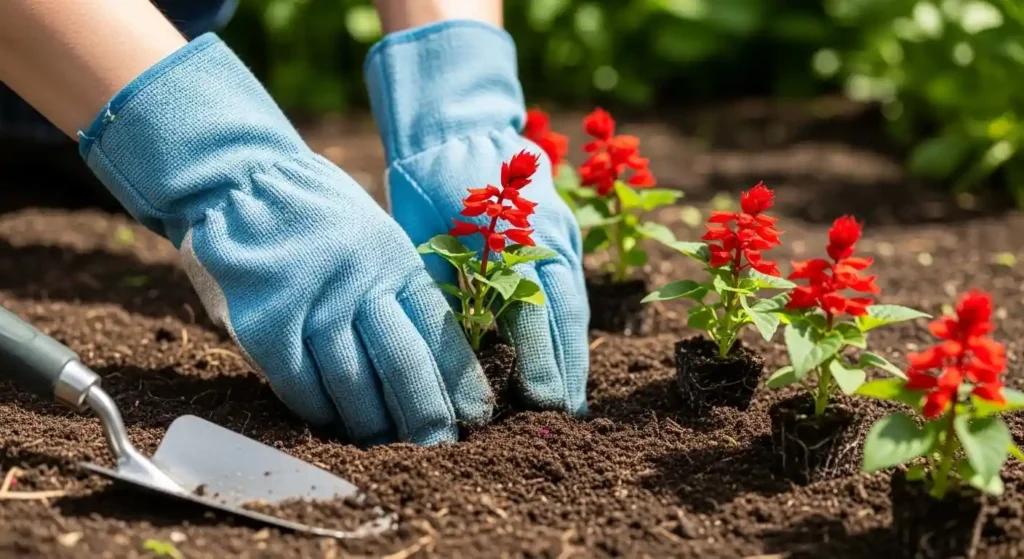
Plant red salvias outdoors after all danger of frost has passed in spring, when soil temperatures are consistently above 60°F. Space red salvias plant 10–12 inches apart in garden beds to allow for good airflow and room to spread. In mass plantings, spacing them slightly closer at 8–10 inches creates a fuller, more dramatic color display.
Dig a hole as deep as the root ball and twice as wide. According to the USDA Plant Guide, incorporating organic matter into the planting hole gives young transplants a stronger start. Backfill, firm gently, and water thoroughly after planting. For similarly heat-loving perennials that thrive under the same planting conditions, see our guide to Texas sage.
Divide or transplant container-grown red salvias in early spring before new growth begins. If transplanting established plants in warmer zones, do so on a cooler, overcast day to reduce transplant shock.
Common Pests and Diseases
Like most garden plants, red salvias plant can occasionally face pest or disease challenges but with good care, these are rarely serious.
Aphids
Look for clusters of small, soft-bodied insects on new growth and flower buds. Treat with a strong blast of water or apply insecticidal soap to affected areas, repeating every few days.
Spider Mites
Identify by fine webbing on stems and tiny dots of stippling on leaves. They thrive in hot, dry conditions. Spray foliage with water or neem oil solution to control populations quickly.
Powdery Mildew
Watch for a white, powdery coating on upper leaf surfaces, especially in humid conditions with poor air circulation. Treat with a sulfur-based fungicide and improve airflow by spacing plants properly.
Root Rot
Look for wilting despite moist soil and blackened, mushy roots. This is almost always caused by overwatering or poor drainage. Remove affected roots, amend the soil, and reduce watering frequency immediately. The University of California IPM Program recommends well-draining soil as the single best prevention against root rot in red salvias.
Caterpillars / Leaf Miners
Check for ragged holes in leaves or pale, winding tunnels through leaf tissue. Hand-pick caterpillars and apply Bt (Bacillus thuringiensis) for heavier infestations.
Common Problems with Red Salvias Plant
Here’s how to troubleshoot common issues with red salvias:
Poor or No Blooms
The most common fix for poor blooms is more sun red salvias plant need at least 6 hours of direct light daily. Avoid excess nitrogen fertilizer; switch to a phosphorus-rich bloom formula instead. Check pruning timing to avoid removing new buds. For similar issues, see our guide to iris flower.
Yellow or Browning Leaves
Yellow leaves on red salvias plant usually signal overwatering, poor drainage, or nutrient deficiency particularly iron or magnesium in alkaline soils. Let soil dry between waterings and run a soil test if needed. Browning leaf edges typically indicate heat stress or underwatering during summer heat waves.
Wilting or Drooping
Wilting red salvias usually signal underwatering during hot weather water deeply and the plant typically bounces back within hours. However, if the soil is already wet and the plant is wilting, you may be dealing with root rot or transplant shock. For recently planted specimens, give them a few days to settle; shade them temporarily if temperatures are extreme.
Leggy or Sparse Growth
Leggy, stretched growth with wide gaps between leaves almost always comes down to insufficient light. Move red salvias to a sunnier location as soon as possible. In some cases, over-fertilizing with nitrogen makes plants race upward without filling in properly. Prune back leggy stems by one-third to encourage bushier growth and reduce fertilizer frequency. For more on keeping red-flowering perennials looking full and vibrant, see our guide to red geraniums.
Frost Damage
If temperatures dip below freezing, red salvias plant in zones 3–9 will show blackened, collapsed stems and wilted foliage. In zones 10–11, apply mulch around the base before a cold snap to protect the root zone. In colder zones, either pot up plants and bring them indoors before the first frost, or simply treat red salvias as a warm-season annual and replant the following spring.
FAQ
Do red salvias come back every year?
In USDA zones 10–11, red salvias are true perennials and return annually. In colder zones, they’re grown as warm-season annuals and replanted each spring.
Do red salvias like sun or shade?
Red salvias perform best in full sun with at least 6–8 hours of daily light. They tolerate partial shade but produce noticeably fewer blooms in lower-light conditions.
How big do red salvias get?
Depending on the variety, red salvias typically reach 1–3 feet tall and 1–2 feet wide at maturity, making them versatile for borders and beds.
Do you cut back red salvias in winter?
In zones 10–11, cut back stems by one-third in late fall. In colder zones, plants die with frost, so simply remove spent plants after the first hard freeze.
3 thoughts on “How to Grow and Care for Red Salvias Plant”
Comments are closed.