
In This Article
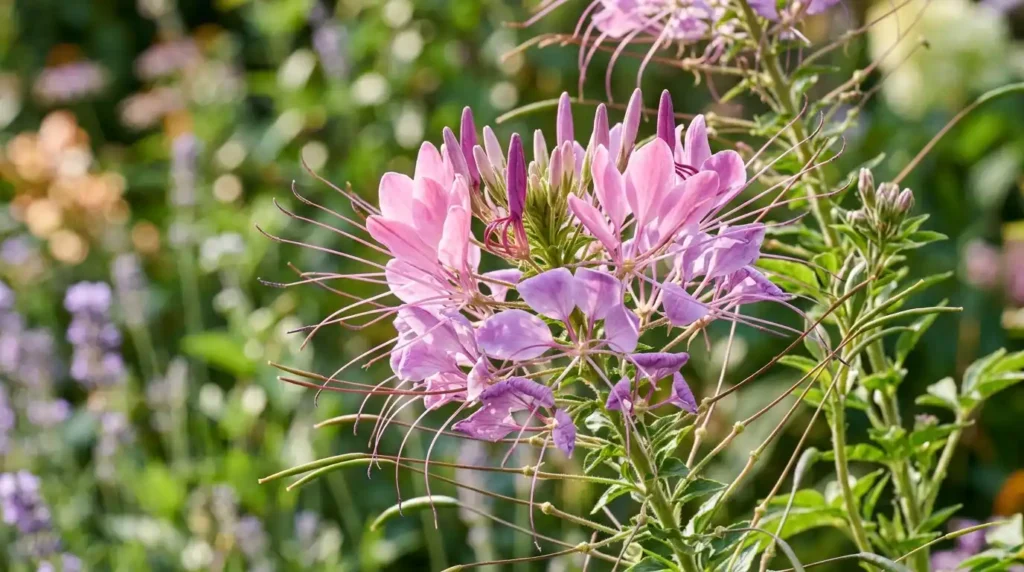
Spider flower (Cleome hassleriana) is a tall, easy-to-grow annual with airy clusters of pink, purple, white, or lavender blooms on stems up to 5 feet tall. Its long, spidery stamens give it its name. Native to South America, it thrives in warm climates and suits any garden.
Spider Flower Plant Care Card
| Feature | Details |
|---|---|
| Common Name | Spider flower, cleome |
| Botanical Name | Cleome hassleriana |
| Family | Cleomaceae |
| Plant Type | Annual (self-seeding) |
| Mature Size | 3–5 ft tall, 1–2 ft wide |
| Sun Exposure | Full sun |
| Soil Type | Well-draining, average to poor |
| Soil pH | 6.0–7.0 (slightly acidic to neutral) |
| Hardiness Zones | USDA Zones 2–11 (grown as annual) |
| Native Area | South America |
| Bloom Time | Summer through frost |
| Toxicity | Mildly toxic to pets and humans if ingested; skin irritant |
Spider Flower Care
Spider flower thrives with very little fuss once it’s established in the right spot. Here’s what you need to know about sun, soil, water, and routine maintenance. Honestly, with good placement, this plant practically takes care of itself.
Light
Spider flower needs full sun at least 6 to 8 hours daily. Less light means leggy growth and fewer blooms. Place it along a south- or west-facing border for best results. In hot climates, light afternoon shade is fine. Like red salvias, it rewards a sunny spot with generous blooms.
Soil
Spider flower thrives in average to poor, well-draining soil rich beds actually reduce blooms. Good drainage is non-negotiable; waterlogged roots cause problems fast. According to NC State Extension, it tolerates most soil conditions as long as drainage is adequate. Target a pH of 6.0–7.0 and avoid heavy clay.
Water
Water newly planted spider flowers once or twice a week until established. After that, they’re impressively drought-tolerant check the top inch of soil and only water when dry. Reduce watering in fall. Overwatering is the bigger risk here, as soggy soil leads to root rot.
Temperature and Humidity
Spider flower loves heat, thriving between 70°F and 95°F. It has zero frost tolerance even a light frost kills plants. In cold climates, start seeds indoors 4–6 weeks before the last frost. Humidity isn’t usually an issue, but proper spacing prevents fungal problems in wetter climates.
Fertilizer
Spider flower generally doesn’t need much fertilizing, especially in average garden soil. If you want to give it a boost at planting time, apply a balanced slow-release fertilizer (10-10-10) once in spring. Avoid high-nitrogen fertilizers during the growing season — too much nitrogen encourages leafy growth at the expense of blooms. Skip fall fertilizing entirely.
Types of Spider Flower
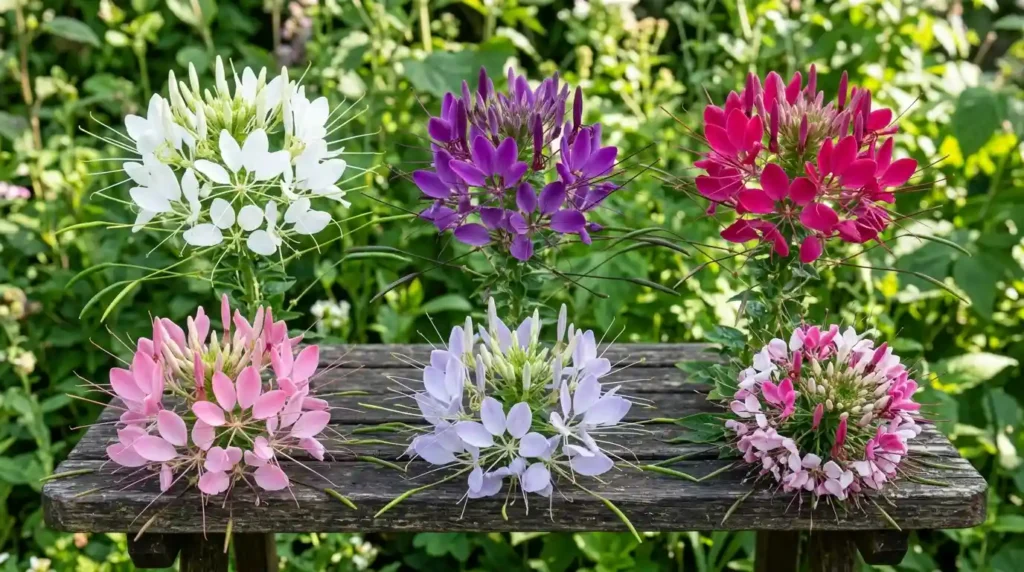
There are several popular cultivars worth knowing. Here’s a quick look at the most common ones:
- ‘Queen Helen’ (Cleome hassleriana ‘Queen Helen’): Large white blooms with a clean, bright appearance. Great for evening gardens and pairs well with deep purples.
- ‘Violet Queen’: Rich violet-purple flowers on tall stems, excellent for creating vertical drama in borders. One of the most widely grown varieties.
- ‘Cherry Queen’: Deep pink to cherry-rose blooms. A warm-toned option that works beautifully alongside orange and yellow daisy-type flowers.
- ‘Rose Queen’: Soft rose-pink flowers that fade gracefully as they age. Very reliable self-seeder.
- ‘Señorita Rosalita’ (Cleome hybrid): A thornless, sterile hybrid that doesn’t self-seed aggressively — a big selling point for gardeners who want more control. Compact habit at 2–3 ft.
- ‘Solo Lavender’: Pale lavender flowers with a delicate, airy look. Stays slightly shorter than the standard species.
Pruning
Spider flower doesn’t require heavy pruning, but a little deadheading and cleanup go a long way. Deadhead spent blooms regularly throughout summer to keep the plant looking tidy and to reduce self-seeding, which can be aggressive in some gardens. Remove seed pods before they burst if you want to limit volunteer seedlings next year.
In late summer or fall, you can cut plants back by about one-third to refresh their appearance before the first frost. Use clean, sharp scissors or pruning shears to snip off spent flower clusters just above a leaf node. For gaura-like cottage garden plants, this same light pruning approach extends seasonal interest. Regular pruning also improves airflow, which helps reduce the risk of fungal disease in humid climates.
Propagating Spider Flower
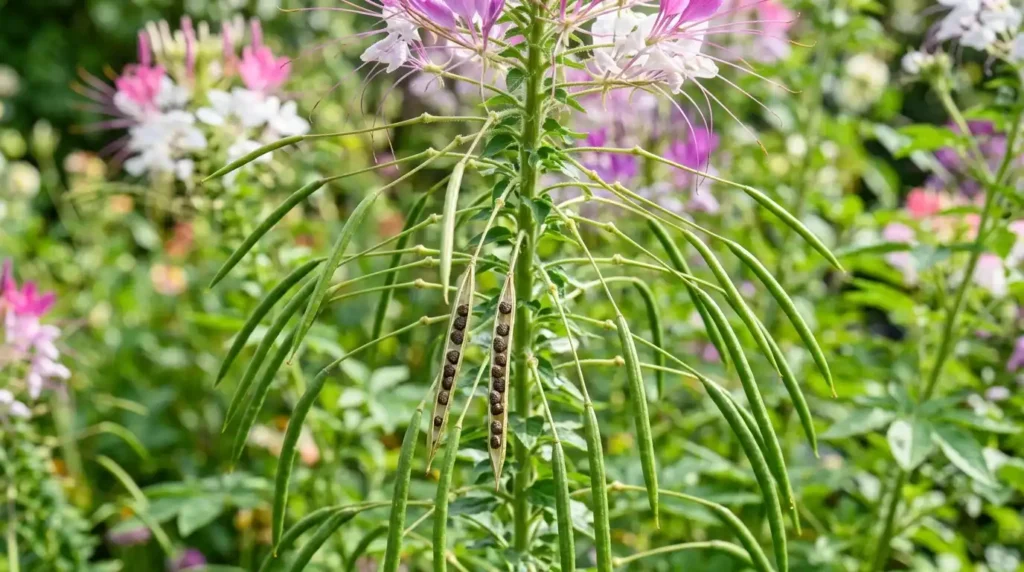
Spider flower is most commonly grown from seed, and it’s one of the easiest plants to propagate this way. The best time to start seeds is in early spring, either indoors 4–6 weeks before the last frost or directly in the garden once soil temperatures reach at least 60°F.
Propagating by Direct Sowing
Direct sowing outdoors is the simplest method for most gardeners, and spider flower actually does very well with it.
Materials needed:
- Fresh spider flower seeds
- Prepared, well-draining garden bed
- Watering can or gentle hose nozzle
- Garden rake
Steps:
Step 1: Prepare your planting area by loosening the top 2–3 inches of soil and removing any weeds or debris. Spider flower prefers minimal soil disturbance.
Step 2: Scatter seeds lightly on the soil surface. You can gently press them into the soil, but do not bury them spider flower seeds need light to germinate and should sit at the surface or barely below it.
Step 3: Water gently and consistently to keep the seedbed moist. Germination typically occurs within 7–14 days in warm conditions. Thin seedlings to 12–18 inches apart once they reach 3–4 inches tall.
Step 4: Allow plants to grow without much intervention spider flowers are competitive and will establish quickly once they’ve sprouted. According to Cornell University Cooperative Extension, direct-seeded spider flowers often perform as well as transplants.
Expect flowering to begin 8–10 weeks after germination.
Propagating by Starting Indoors
Starting indoors gives you a head start in short-season climates and is the preferred method where springs are unpredictable.
Materials needed:
- Seed trays or small pots
- Light seed-starting mix
- Grow lights or bright window
Steps:
Step 1: Fill seed trays with moist seed-starting mix. Press seeds lightly onto the surface without covering them remember, spider flower seeds need light.
Step 2: Place trays under grow lights or in a sunny south-facing window. Keep the medium consistently moist but not soggy. Germination takes about 7–10 days at temperatures between 70°F and 80°F.
Step 3: Harden off seedlings outdoors for 7–10 days before transplanting. Spider flower dislikes root disturbance, so handle transplants gently and disturb roots as little as possible.
Step 4: Transplant to the garden after all frost risk has passed, spacing plants 12–18 inches apart. Water well immediately after planting to help settle roots.
Planting and Transplanting Spider Flower
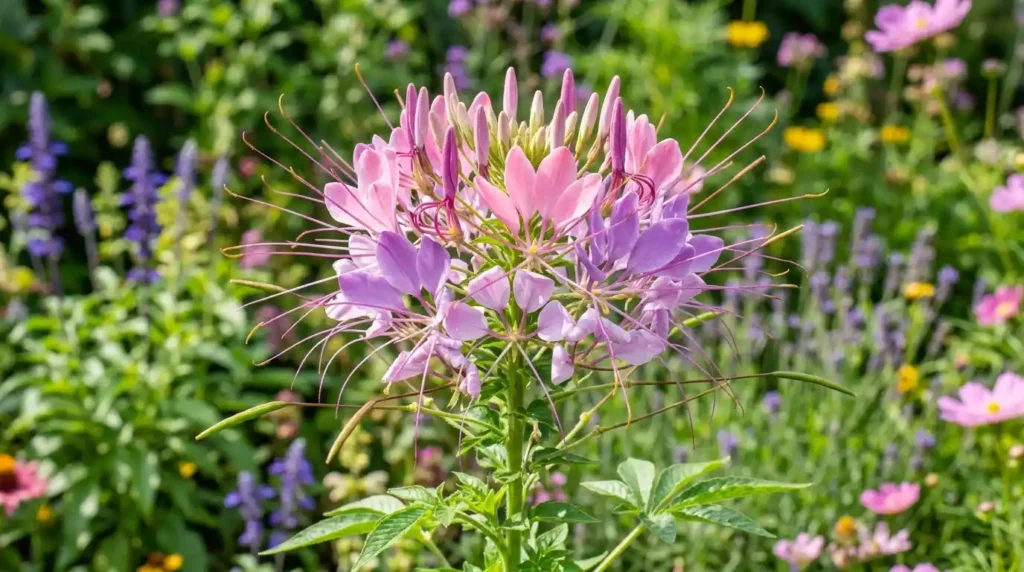
Plant spider flower in the garden after all danger of frost has passed and nighttime temperatures consistently stay above 50°F. In most of the U.S., this means late May to early June in colder zones, and as early as March or April in warmer regions.
Space plants 12 to 18 inches apart to allow good airflow. Dig a planting hole just deep enough to match the root ball, and set the plant at the same depth it was growing in the container. Backfill with the original soil, tamp lightly, and water thoroughly.
Spider flower self-seeds prolifically, so you may not need to replant from scratch each year simply thin volunteer seedlings in spring to your desired spacing. If you’re moving a seedling, do it when it’s still small to minimize transplant shock.
Common Pests and Diseases
Like most garden plants, spider flower can occasionally face pest or disease challenges, though it’s generally quite resistant. Here’s what to watch for.
Aphids
Look for clusters of small, soft-bodied insects on new growth and stem tips. Treat with a strong blast of water or insecticidal soap spray applied in the morning.
Spider Mites
Tiny speckling or bronzing on leaves and fine webbing underneath signal spider mites. Increase watering and use neem oil or miticide spray as needed.
Powdery Mildew
White powdery coating on leaves indicates a fungal issue, usually triggered by poor airflow or high humidity. Improve spacing and apply a fungicide if needed.
Root Rot
Yellowing, wilting, and mushy stems at the base point to root rot. Improve drainage immediately and avoid overwatering going forward. The USDA Plant Database notes that well-drained soil is critical for healthy cleome growth.
Caterpillars
Ragged leaf edges or chewed flower buds are signs of caterpillar feeding. Hand-pick or apply Bacillus thuringiensis (Bt) as a targeted treatment.
Common Problems with Spider Flower
Here’s how to troubleshoot common issues:
Poor or No Blooms
Weak flowering is one of the most common complaints. Insufficient sun is the most likely culprit move plants (or plant next season) in a full-sun location. Over-fertilizing with nitrogen is another common cause, pushing leafy growth at the expense of blooms; switch to a phosphorus-heavy fertilizer or cut back entirely. Improper pruning timing can also delay flowering avoid heavy pruning right as buds are forming. For context, similar issues affect other sun-loving plants like dianthus.
Yellow or Browning Leaves
Yellowing leaves are usually a watering or drainage problem. Overwatering saturates the root zone and prevents oxygen from reaching the roots let the soil dry out more between waterings. Poor drainage compounds this, even with normal watering frequency. Nutrient deficiency (particularly nitrogen or iron) can also cause yellowing, especially in very sandy soils a light balanced fertilizer application may help. Remove affected leaves and correct the underlying cause.
Wilting or Drooping
Wilting on a hot afternoon is normal and temporary plants usually recover by evening. Persistent wilting points to underwatering; give the plant a deep drink and check soil moisture regularly. Transplant shock causes wilting in newly planted specimens, typically resolving within a week or two. Water deeply immediately after transplanting and provide shade for a few days if wilting is severe.
Leggy or Sparse Growth
Tall, floppy stems with sparse foliage are a clear sign of insufficient light. Relocate plants to a sunnier spot next season. Over-fertilizing with nitrogen can also cause lush, leggy growth ease off fertilizer and let the plant focus on blooming. Pinching back young plants early in the season can encourage bushier growth. For a similarly bold vertical plant, consider liatris as an alternative for tight spaces.
Aggressive Self-Seeding
Spider flower can reseed enthusiastically sometimes more than you’d like. Deadhead spent flowers before seed pods mature to keep it in check. Alternatively, grow the sterile ‘Señorita Rosalita’ cultivar, which doesn’t set seed at all.
FAQ
Do spider flowers come back every year?
Spider flower is an annual, not a perennial. However, it self-seeds so freely that it often reappears in the same spot each spring without any effort from you.
Is spider flower invasive?
It can be mildly invasive in some regions due to prolific self-seeding. Deadhead spent blooms before seed pods open to manage spread in your garden.
Is spider flower toxic to cats?
Yes, spider flower is mildly toxic to cats and dogs if ingested. It can also cause skin irritation when handled. Wear gloves when pruning.
Do spider flowers like sun or shade?
Spider flowers strongly prefer full sun at least six to eight hours of direct sun daily. Less sun means fewer blooms and weaker, leggier plants.