
In This Article
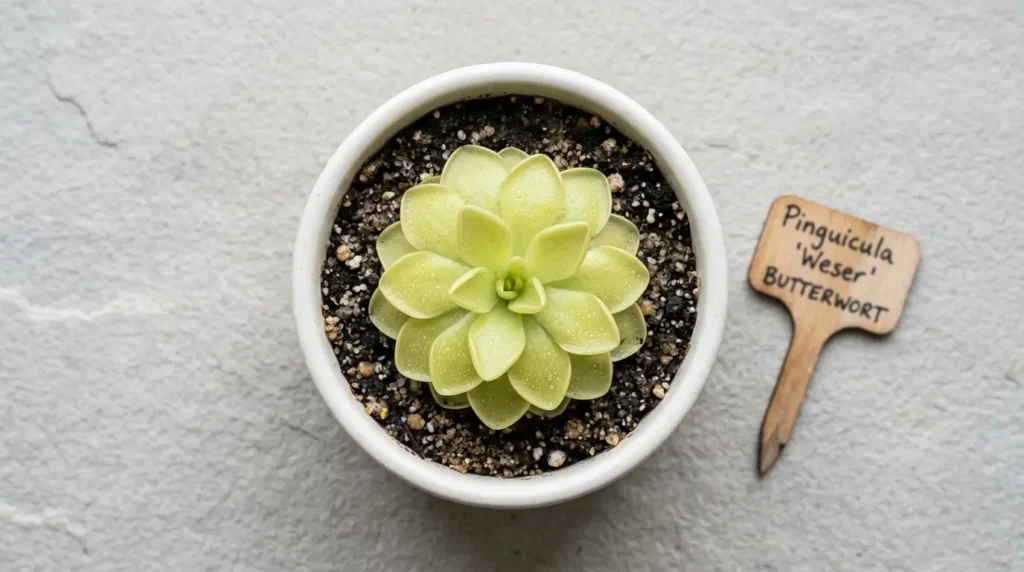
Meet the butterwort plant (Pinguicula spp.) a charming, compact carnivorous plant native to nutrient-poor bogs across North America, Europe, and Mexico. Instead of snapping at prey, it silently traps tiny insects on its sticky, flat leaves. Beginner-friendly and surprisingly easy to care for, many varieties even bloom with delicate violet-like flowers in spring.
Butterwort Plant Care Card
| Field | Details |
|---|---|
| Common Name | Butterwort |
| Botanical Name | Pinguicula spp. |
| Family | Lentibulariaceae |
| Plant Type | Carnivorous perennial |
| Mature Size | 1–6 inches tall × 2–6 inches wide |
| Sun Exposure | Bright indirect to partial direct light |
| Soil Type | Poor, well-draining, low-nutrient mix |
| Soil pH | 5.0–6.5 (acidic) |
| Hardiness Zones | USDA Zones 9–11 (varies by species) |
| Native Area | North America, Central America, Europe |
| Toxicity | Non-toxic to pets and humans |
Butterwort Plant Care
The butterwort plant is one of the more forgiving carnivorous houseplants you’ll come across once you respect its unusual soil and water needs, it practically takes care of itself. The sections below cover everything from light and soil to propagation and common problems. You’ve got this!
Light
Butterworts thrive in bright indirect light or gentle morning sun a south- or east-facing windowsill works perfectly. Too little light slows growth; harsh midday sun scorches delicate leaves. Under grow lights, keep bulbs 6–8 inches above the plant for 12–14 hours daily. Outdoors, a shaded patio suits them well in warmer months.
Soil
Never use regular potting mix nutrients will harm butterworts. Go for a poor, gritty mix: 1:1 perlite and peat moss works perfectly. According to University of Florida IFAS Extension, low-nutrient, well-draining substrates are essential for bog-adapted plants. Always use a pot with drainage holes to prevent root rot.
Water
Always use distilled water, rainwater, or reverse osmosis water tap water minerals damage roots over time. Water every 5–10 days using the tray method: let roots sip from below, then empty after a few hours. Reduce watering significantly in fall and winter. Similar rules apply to pitcher plant care, another mineral-sensitive carnivorous houseplant.
Temperature and Humidity
Most butterworts prefer 60–80°F (15–27°C) normal indoor conditions work perfectly. Mexican species tolerate warmer, drier air well. Average household humidity of 40–60% is just fine. Keep them away from heating vents, cold drafts, and air conditioning units sudden temperature swings stress the plant far more than slightly low humidity.
Fertilizer
Butterworts feed themselves by catching small insects and fungus gnats on their sticky leaves so skip the fertilizer entirely in most cases. If your plant isn’t catching bugs naturally, mist leaves with a very dilute (1/8 strength) balanced liquid fertilizer no more than once a month during spring and summer only. According to Penn State Extension’s guide on fertilizing indoor plants, over-fertilizing is one of the most common mistakes with specialty indoor plants. Never fertilize in fall or winter.
Types of Butterwort Plants
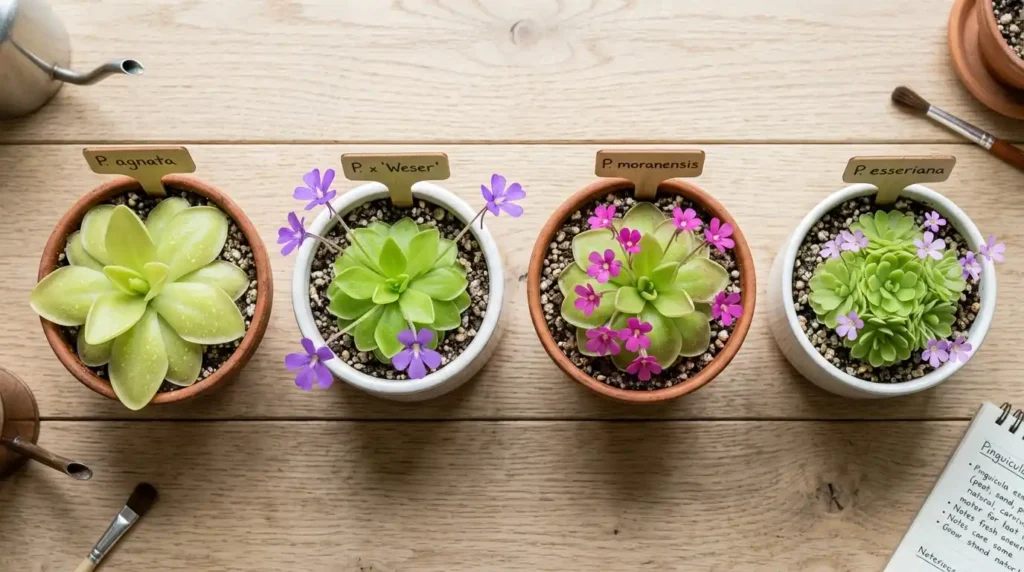
There are over 80 Pinguicula species with different care needs and appearances. Here are the most popular varieties to grow at home:
- Mexican Butterwort (Pinguicula spp. from Mexico) — The most beginner-friendly group. Broad, flat, pale green leaves that feel waxy. Produces small purple or pink flowers. Tolerates drier indoor air well.
- Pinguicula moranensis — A Mexican species with large, rosette-forming leaves and pretty pink-purple flowers. One of the most widely sold varieties. Handles indoor growing conditions easily.
- Pinguicula gigantea — Lives up to its name! This Mexican species produces some of the largest leaves in the genus — up to 4 inches long. A real showstopper on a bright windowsill.
- Pinguicula agnata — Another popular Mexican species with vivid violet flowers and a tidy rosette shape. Stays compact and does very well under grow lights.
- Pinguicula vulgaris (Common Butterwort) — A temperate species native to North America and Europe. Smaller than Mexican types and needs a cold winter dormancy. Better suited for outdoor bog gardens.
Propagating Butterwort Plant
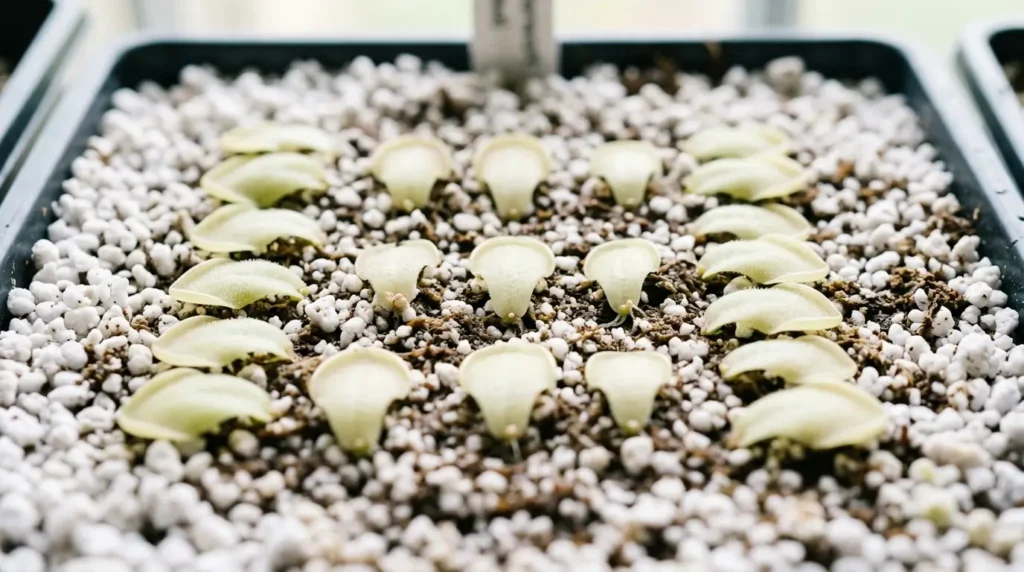
The best time to propagate a butterwort plant is during spring or early summer, when the plant is in active growth. Fortunately, there are a couple of easy methods to try.
Propagating by Leaf Pullings
Leaf pullings are the most reliable and popular way to propagate a butterwort plant indoors. It’s low-effort and surprisingly effective.
Materials needed:
- Healthy mature butterwort plant
- Clean tweezers or fingers
- Small tray or container
- 1:1 perlite and peat moss mix (lightly moistened with distilled water)
- Clear plastic bag or humidity dome
Steps:
- Step 1: Gently peel a healthy leaf from the base of the rosette, pulling it as close to the root as possible so it comes off with a small white “heel.” This heel is where new plantlets will form.
- Step 2: Lay the leaf flat on top of your moistened perlite-peat mix. Press it down slightly so it makes good contact with the surface don’t bury it.
- Step 3: Place the tray inside a clear plastic bag or under a humidity dome. Set it in a bright spot away from direct sun. Keep the medium barely moist with distilled water only.
- Step 4: Check every 1–2 weeks. Tiny plantlets typically appear along the base of the leaf within 4–8 weeks. Once they’re big enough to handle (about ½ inch), carefully separate and pot them individually.
This propagation method works equally well for bridal veil plant care, another humidity-loving houseplant that roots reliably from leaf and stem cuttings.
Propagating by Division
If your butterwort plant has formed multiple rosettes (which Mexican species often do after flowering), division is the quickest option. Simply remove the plant from its pot and gently separate individual rosettes at the base, making sure each has its own roots. Pot each one into fresh low-nutrient mix and water lightly with distilled water. New growth should appear within a few weeks.
Potting and Repotting Butterwort Plant
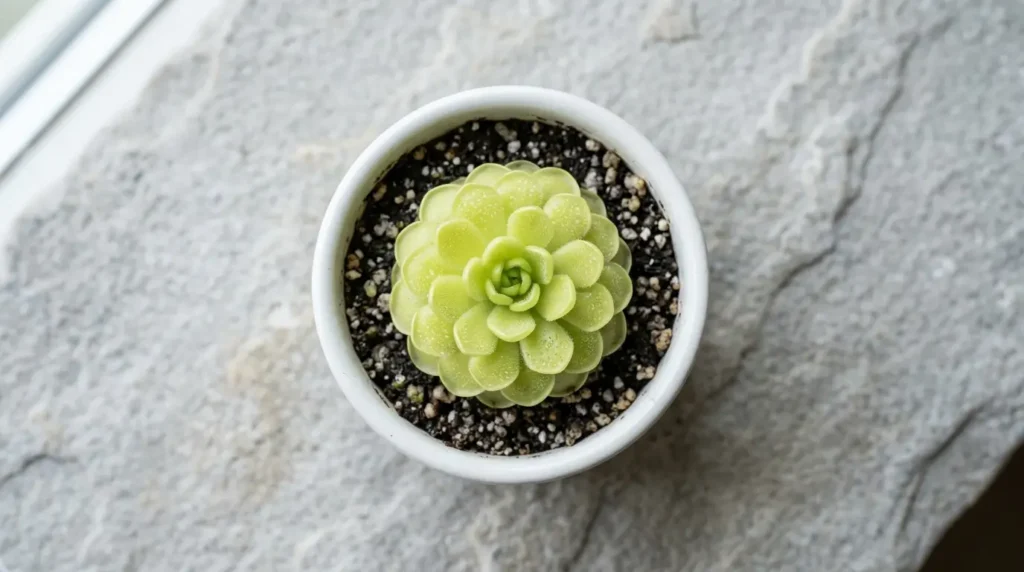
Butterworts are slow growers and don’t need frequent repotting. Plan to repot every 1–2 years, or when you notice roots poking out of drainage holes or growth has completely stalled.
When repotting, choose a pot only 1 inch larger in diameter than the current one. These plants actually prefer slightly snug conditions. Terracotta pots work well because they breathe, but plastic pots with good drainage holes are fine too.
To repot, gently remove the plant, shake off old mix, and place it in fresh perlite-peat medium. Avoid disturbing roots too much. Water lightly with distilled water and keep it in bright indirect light for a week or two while it adjusts.
Common Pests and Diseases
Like most houseplants, the butterwort plant can occasionally attract a few unwanted visitors especially if growing conditions aren’t quite right.
Spider Mites
Look for fine webbing and stippled, dull-looking leaves. Treat with insecticidal soap or neem oil spray, focusing on leaf undersides. Repeat weekly for 3–4 weeks.
Mealybugs
White, cottony clusters appear on leaf bases or stems. Remove visible bugs with a cotton swab dipped in rubbing alcohol, then follow up with diluted neem oil.
Scale Insects
Small brown bumps appear stuck to stems or leaf undersides. Scrape them off gently with a soft toothbrush, then apply horticultural oil to prevent reinfestation.
Aphids
Tiny green or black insects cluster on new growth. Rinse them off with a gentle water spray or treat with insecticidal soap. According to the University of California IPM Program, consistent plant monitoring is the most effective defense against aphid populations indoors.
Fungus Gnats
Butterworts actually trap adult gnats naturally on their sticky leaves handy! If the infestation is severe, let the medium dry slightly between waterings to break the larval cycle.
Common Problems with Butterwort Plant
Here’s how to troubleshoot common issues with your butterwort plant:
Yellowing Leaves
Yellow leaves are one of the most common complaints but they’re usually fixable. Overwatering is the top culprit: soggy, waterlogged conditions prevent oxygen from reaching roots. Let the medium partially dry out and double-check drainage. Mineral buildup from tap water can also trigger yellowing; switch to distilled or rainwater immediately. Finally, older outer leaves naturally yellow and die back as the plant focuses energy on new growth totally normal. Similar yellowing issues pop up with nephthytis plant care when watering is inconsistent or soil drainage is poor.
Brown Leaf Tips
Brown, crispy edges usually point to low humidity or mineral damage from tap water. The leaf tissue dries out faster than roots can supply moisture. Try placing a pebble tray with water beneath the pot to boost ambient humidity slightly. Switching to distilled water often resolves tip burn within a few weeks. Underwatering can also cause browning check that the medium isn’t bone dry.
Drooping or Wilting Leaves
A drooping butterwort plant usually signals a watering issue either too much or too little. Overwatered plants often look soft and mushy at the base; underwatered plants feel dry and papery. Check the medium and adjust your schedule. In winter, mild wilting is normal as Mexican species enter their semi-dormant, succulent-like phase. These issues also show up with philodendron micans during overwatering or root stress.
Leggy Growth / Sparse Foliage
Leggy growth where leaves stretch out thin and pale almost always means insufficient light. Move your butterwort plant to a brighter spot, ideally a south- or east-facing windowsill. Under grow lights, reduce the distance between the bulb and the plant. Trim back any stretched leaves to encourage a tighter, healthier rosette shape.
FAQ
Are butterworts hard to take care of?
Butterworts are fairly easy once you master two key rules: use distilled water only and avoid nutrient-rich potting soil completely.
Can I buy a butterwort plant?
Yes! Many specialty carnivorous plant nurseries sell butterworts online, and some local garden centers carry them seasonally.
Does Walmart sell butterwort?
Walmart occasionally stocks carnivorous plants, but butterworts are rare there. Specialty online nurseries are your most reliable source.
Is butterwort toxic to pets?
Great news: butterwort plants are non-toxic to cats, dogs, and humans, making them a perfectly safe choice for pet-friendly homes.
1 thought on “How to Grow and Care for Butterwort Plant”
Comments are closed.