
In This Article
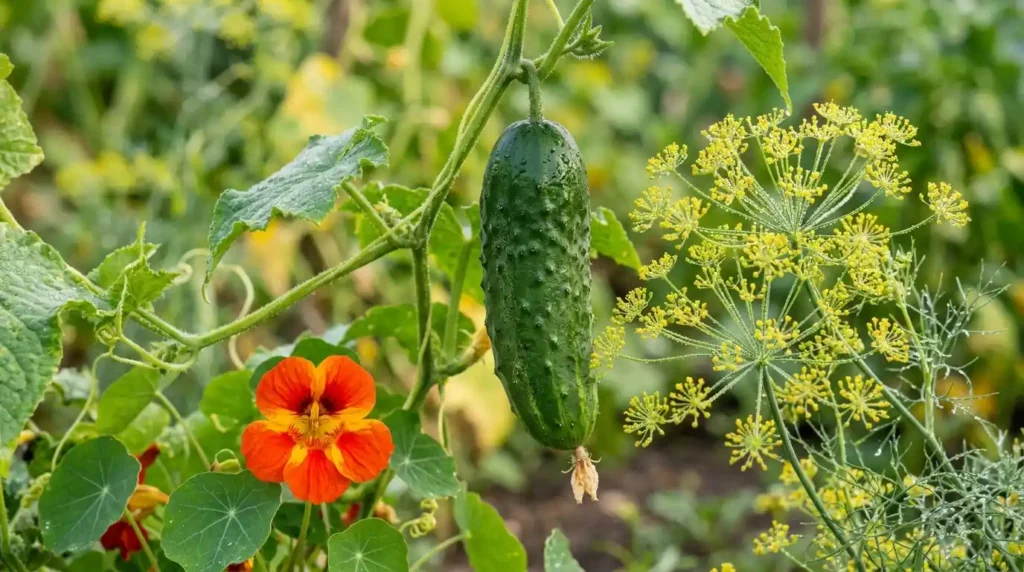
Cucumber Companion Plants (Cucumis sativus) is a fast-growing vining vegetable with yellow flowers and broad, textured leaves, native to South Asia. Thriving in USDA zones 4-11 as a warm-season annual, it’s easy to grow, and the right cucumber companion plants make it even easier.
Plant Care Card
| Category | Details |
|---|---|
| Common Name | Cucumber |
| Botanical Name | Cucumis sativus |
| Family | Cucurbitaceae |
| Plant Type | Annual vine |
| Mature Size | 1-2 ft tall x 3-6 ft spread (vining) |
| Sun Exposure | Full sun |
| Soil Type | Loamy, well-draining |
| Soil pH | 6.0-6.8 (slightly acidic to neutral) |
| Hardiness Zones | 4-11 (grown as annual) |
| Native Area | South Asia |
| Bloom Time | Summer |
| Toxicity | Non-toxic to pets and humans |
Cucumber Companion Plants Care
Honestly, cucumbers are pretty forgiving once they’re settled into warm soil and steady sun. Here’s what you need to know about sun, soil, water, and maintenance. With the right cucumber companion plants nearby, this vine practically takes care of itself.
Light
Cucumbers need full sun at least 6-8 hours daily. Skimp on light and you’ll get leggy vines with few blooms. Choose a south-facing spot sheltered from strong wind. Good light also helps cucumber companion plants like marigolds and nasturtiums thrive alongside them.
Soil
Cucumbers want loose, loamy soil that drains well but holds some moisture. Aim for a slightly acidic to neutral pH, and work in aged compost before planting. For a simple homemade mix, try 2 parts topsoil to 1 part compost. This university guide to growing cucumbers walks through soil prep step by step.
Water
Water cucumbers deeply about 1-2 inches per week, checking soil moisture with a finger test before each round. Increase watering during hot summer stretches and ease off during cooler weeks. Wilting, pale leaves signal underwatering, while yellowing and mushy stems point to too much. If you’re growing a pumpkin patch nearby, it shares nearly identical watering needs handy to know when planning cucumber companion plants for a mixed bed.
Temperature and Humidity
Cucumbers love warmth, ideally 65-75°F. They’re frost-tender and will die back at the first cold snap, so wait until nighttime temps stay above 55°F to plant. They tolerate summer heat well but appreciate afternoon shade in scorching climates. Mulch heavily to keep roots cool and moist.
Fertilizer
Feed cucumbers with a balanced, slow-release fertilizer at planting, then switch to a phosphorus-rich formula once flowering starts. Fertilize every 3-4 weeks through the growing season. Cut back once fruiting slows in late summer to avoid pushing excess foliage.
Best Cucumber Companion Plants
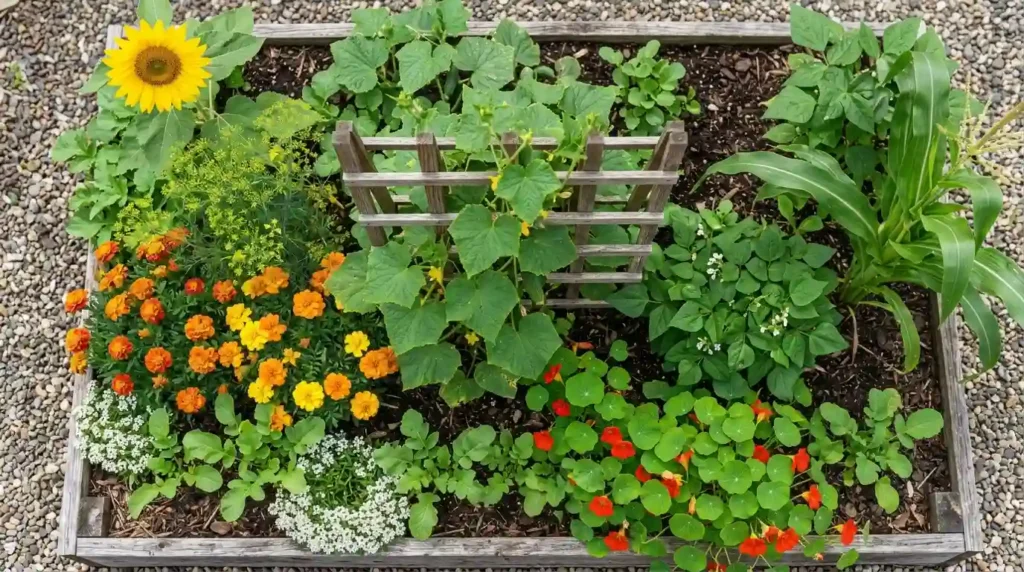
Not every neighbor helps a cucumber patch the right cucumber companion plants repel pests, boost pollination, or improve flavor and yield. Here are some of the most reliable pairings for your vegetable bed.
- Marigolds: These cheerful orange and yellow blooms release compounds that deter cucumber beetles and nematodes while pulling in parasitic wasps that prey on aphids.
- Nasturtium: A classic trap crop aphids flock to its leaves instead of your vines, and its scent helps confuse cucumber beetles hunting by smell.
- Dill: Once it flowers, dill draws in ladybugs and other predatory insects that keep aphid populations in check.
- Bush beans: Compact and upright, bush beans fix nitrogen in the soil, feeding hungry cucumber roots without crowding the vines.
- Radishes: Fast-growing radishes act as a decoy, luring cucumber beetles away from tender young cucumber seedlings.
- Sweet alyssum: Its tiny clustered flowers support hoverflies and other small beneficial insects that patrol for aphids all season.
- Corn: Sturdy stalks double as a natural trellis for lighter cucumber varieties, while the vines mulch the soil below and retain moisture.
- Sunflowers: Tall sunflowers give climbing cucumbers something to lean on and attract pollinators that boost fruit set.
Pruning
Prune cucumbers in mid to late summer once vines get sprawling and tangled, or whenever you notice yellowing, damaged foliage. Snip off spent leaves near the base and any side shoots crowding the main stem, always cutting just above a leaf node with clean pruning shears.
Regular pruning improves airflow around the plant, which lowers the risk of powdery mildew and other fungal issues common in humid gardens. It also redirects the plant’s energy toward fruit production instead of excess leafy growth, giving you a bigger harvest by season’s end.
A quick trim every couple of weeks keeps trellised vines tidy and easier to manage. Wipe your blades with rubbing alcohol between cuts to avoid spreading disease between plants and any nearby cucumber companion plants.
Propagating Cucumber Companion Plants
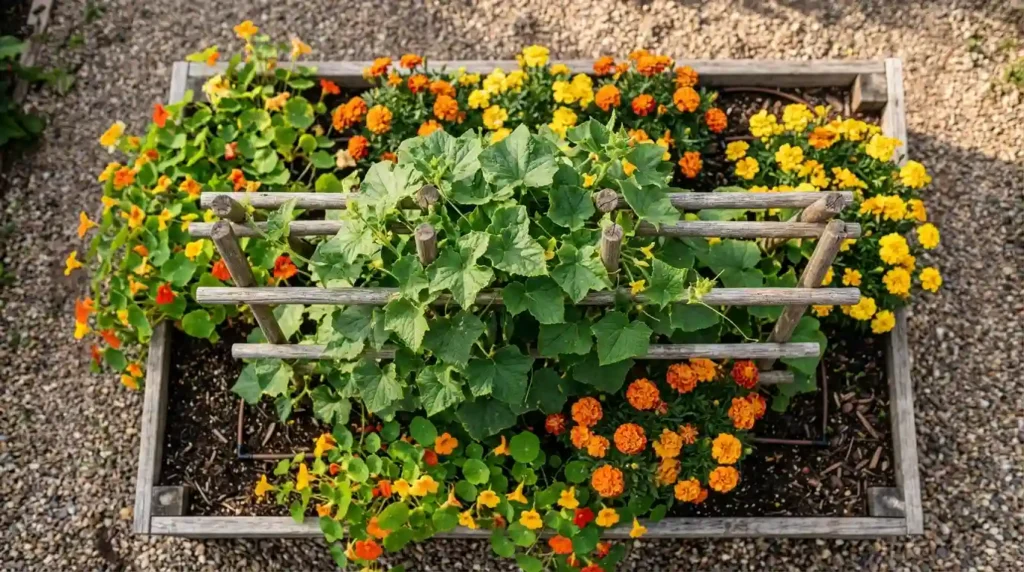
Cucumbers are simple to start fresh, and spring through early summer is the best window while soil warms and days lengthen. Two easy methods work well: direct sowing seeds and starting seeds indoors for a head start.
Propagating by Direct Sowing
This is the most common way home gardeners start cucumbers, since the vines dislike having their roots disturbed. You’ll need seeds, a sunny bed with amended soil, and a watering can.
What you’ll need:
- Cucumber seeds
- Prepared garden bed or mound
- Compost or aged manure
- Watering can or hose
Start by working compost into your planting site once soil temperatures reach 60°F. Sow seeds about 1 inch deep, spacing them 12 inches apart in rows or 3 feet apart in hills. Water gently right after planting to settle the soil around each seed. Keep the bed consistently moist, never soggy, until sprouts appear. Thin seedlings to the strongest one or two per hill once true leaves develop. Expect germination within 7-10 days, with vines taking off quickly once warm weather sets in a good time to tuck in a few cucumber companion plants along the border.
Propagating by Starting Seeds Indoors
Gardeners in cooler regions often get a jump on the season by starting seeds inside 2-3 weeks before the last frost. Because cucumbers hate root disturbance, use biodegradable pots that go straight into the ground. Gather seed-starting mix, small biodegradable pots, and a warm, bright windowsill or grow light.
Fill each pot with moistened seed-starting mix, then sow one or two seeds about a half-inch deep. Keep the containers somewhere warm, around 70°F, until seedlings emerge. Once true leaves form, move pots to a sunny window or under grow lights for strong, stocky growth. Harden seedlings off outdoors for about a week before transplanting the whole pot into the garden. This approach works especially well alongside cucumber companion plants like tarragon, which also prefers an early indoor start in cold climates.
Planting and Transplanting Cucumber Companion Plants
Plant cucumbers outdoors in late spring once soil has warmed and frost danger has fully passed. Space vining varieties 12 inches apart along a trellis, or give bush types 24-36 inches of open ground to sprawl.
Set transplants at the same depth they grew in their pots, firming soil gently around the base without burying the stem. Water thoroughly right after planting to reduce transplant shock and help roots settle in.
Cucumbers rarely need dividing since they’re grown as annuals. If starting new plants mid-season for a fall harvest, direct-sow a second round in July for many warm climates, spacing in a few more cucumber companion plants as you go.
Common Pests and Diseases
Like most vegetable garden plants, cucumbers can occasionally run into pest or disease trouble, especially in humid or crowded conditions. Choosing pest-repelling cucumber companion plants helps, but here’s what to watch for and how to respond regardless.
Aphids
Look for clusters of tiny green or black insects under leaves and curled new growth. Treat with a strong water spray or insecticidal soap applied weekly.
Spider Mites
Fine webbing and stippled, yellowing leaves signal an infestation, especially in hot, dry weather. Rinse leaves regularly and introduce predatory mites if numbers climb.
Powdery Mildew
A white, dusty coating spreads across leaves in humid, still air with poor circulation. Prune for airflow and apply a sulfur or potassium bicarbonate fungicide.
Root Rot
Wilting despite moist soil and mushy, dark roots point to waterlogged, poorly drained ground. Improve drainage immediately and avoid overwatering going forward.
Cucumber Beetles
Small striped or spotted beetles chew holes in leaves and can spread bacterial wilt between plants. This UC IPM pest guide recommends floating row covers on young seedlings for the best protection.
Common Problems with Cucumber Companion Plants
Here’s how to troubleshoot common issues:
Poor or No Blooms
Flowers appearing but not developing into fruit usually means poor pollination or insufficient sun. Too little direct light limits flower production altogether, while over-fertilizing with nitrogen pushes leafy growth instead of blooms. Improper pruning that removes too many flowering side shoots can also cut yields. Move plants to a sunnier spot, ease off nitrogen, and add cucumber companion plants like sunflowers to draw in more pollinators.
Yellow or Browning Leaves
Yellowing foliage most often traces back to overwatering or poor drainage that suffocates roots. Nutrient deficiency, particularly low nitrogen or magnesium, can also cause pale, blotchy leaves. Fungal disease spread by wet foliage is another common culprit in crowded beds. Cut back watering, feed lightly, and space plants for better airflow. Gardeners growing aster flowers nearby often notice the same yellowing pattern when drainage is off.
Wilting or Drooping
Sudden wilting during the heat of the day is often just heat stress and usually recovers by evening. Underwatering and recent transplant shock are other frequent causes of droopy vines. Water deeply at the base and provide light afternoon shade during heat waves for quick relief.
Leggy or Sparse Growth
Thin, stretched vines with few leaves typically mean the plant isn’t getting enough direct light. Over-fertilizing with high-nitrogen feed can worsen the sprawling, weak growth pattern too. Relocate to a sunnier bed and prune lightly to encourage bushier, sturdier stems.
Slow Growth
Stalled vines are commonly tied to cold soil, since cucumbers stall below 60°F. Compacted or nutrient-poor soil can also slow root development significantly. Warm the bed with black plastic mulch and work in compost to get growth moving again.
FAQ
What should you not plant next to cucumber?
Avoid planting aromatic herbs like sage and potatoes near cucumbers, since they can stunt growth and increase disease risk through shared soil pathogens.
What is the best companion plant for cucumbers?
Nasturtium is widely considered the top choice among cucumber companion plants, acting as a trap crop for aphids while also repelling cucumber beetles nearby.
What do coffee grounds do for cucumbers?
Coffee grounds add mild nitrogen and slightly acidify soil over time, though they should be composted first rather than applied directly around tender roots.
What does cucumber like to be planted near?
Cucumbers thrive near beans, corn, radishes, and flowering plants like marigolds, which support pollination and keep common pest pressure naturally low.