
In This Article
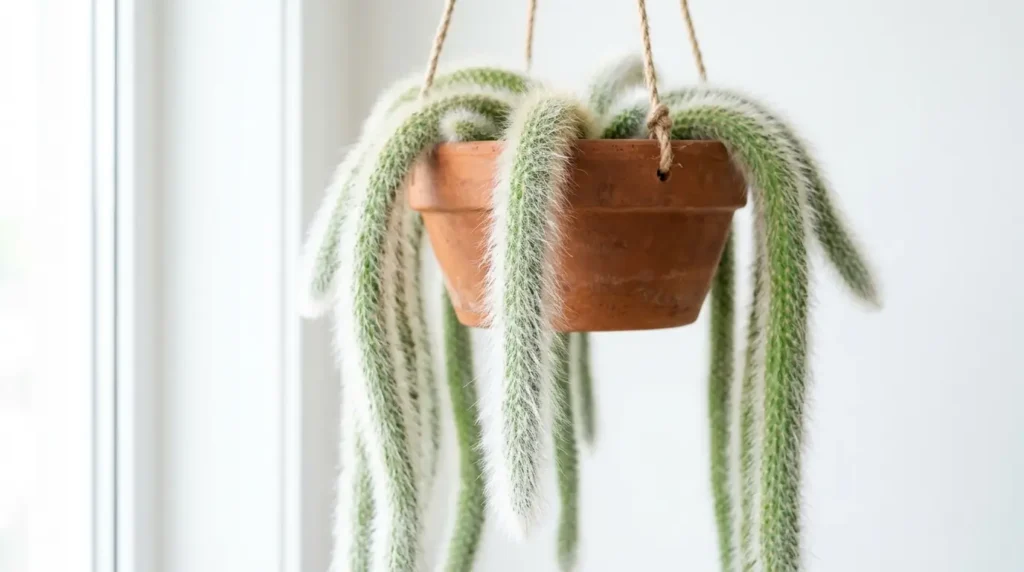
Meet the monkey tail cactus (Cleistocactus winteri subsp. colademononis) one of the most eye-catching cacti you’ll ever own. Those long, drooping stems covered in soft white spines really do look like a fluffy monkey’s tail. Native to the rocky cliffs of Bolivia, this easy-care trailing cactus produces stunning red-orange flowers.
Plant Care Card
| Field | Details |
|---|---|
| Common Name | Monkey Tail Cactus |
| Botanical Name | Cleistocactus winteri subsp. colademononis |
| Family | Cactaceae |
| Plant Type | Perennial succulent |
| Mature Size | Up to 4–6 ft long (trailing) |
| Sun Exposure | Bright direct to indirect light |
| Soil Type | Well-draining cactus mix |
| Soil pH | 6.0–7.0 |
| Hardiness Zones | USDA Zones 9–11 |
| Native Area | Bolivia (Santa Cruz region) |
| Toxicity | Non-toxic to pets and humans |
Monkey Tail Cactus Care
The monkey tail cactus is a low-maintenance plant that even beginner gardeners can grow with confidence. The sections below cover everything from light and water to propagation and common problems. Get these basics right, and your cactus will reward you with gorgeous blooms every spring.
Light
The monkey tail cactus loves 4–6 hours of bright light daily. A south- or west-facing window works best indoors. Too little light causes weak, stretchy stems that lose their shape. Too much harsh midday sun scorches the tips. If you notice bleaching or browning, move it slightly from the glass.
Soil
Good drainage is non-negotiable. Use a commercial cactus mix, or make your own with a 2:1 ratio of potting soil to perlite. According to the University of Arizona Cooperative Extension, heavy or moisture-retentive mixes are the number-one cause of root rot. Never use regular potting soil alone.
Water
Water your monkey tail cactus deeply but infrequently. During spring and summer, let the top 2–3 inches of soil dry out completely before watering again usually every 7–10 days depending on your climate.
In fall and winter, cut back to once every 3–4 weeks. The plant goes semi-dormant and needs very little moisture. Overwatering is the most common mistake watch for mushy stems or yellowing at the base. Underwatering shows up as shriveled, wrinkled stems.
If you’re also growing a golden barrel cactus, it follows a nearly identical watering schedule, which makes managing both a breeze.
Temperature and Humidity
This cactus thrives in temperatures between 60°F and 90°F (15°C–32°C). It can tolerate brief dips down to around 25°F (-4°C), but extended cold will damage the stems. Keep it away from air conditioning vents and cold drafts near windows in winter.
Humidity isn’t a big concern — average household levels (30–50%) are just fine. In fact, too much humidity can encourage fungal issues. Good air circulation around the plant helps prevent that.
Fertilizer
Feed your monkey tail cactus with a balanced liquid cactus fertilizer (5-10-5) diluted to half strength. Apply once a month during spring and summer to support healthy growth and blooming. According to Penn State Extension’s fertilization guidelines, avoid feeding in fall and winter when the plant is resting.
Types of Monkey Tail Cactus
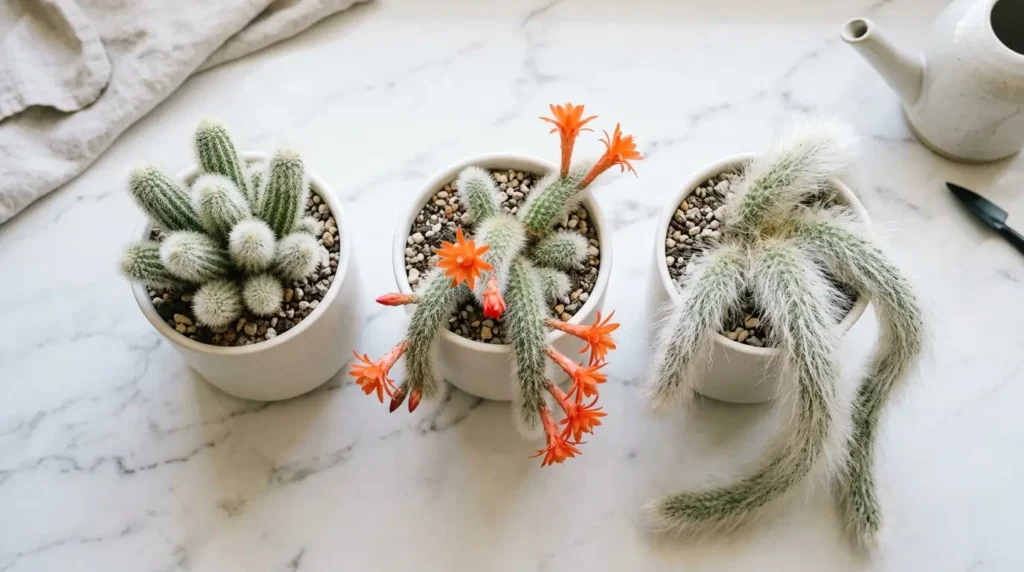
The monkey tail cactus has a couple of close relatives worth knowing about:
- Cleistocactus winteri ‘Crystal Castle’ A compact cultivar with exceptionally dense white spines. Its shorter, more upright growth makes it ideal for smaller pots and windowsills.
- Cleistocactus winteri subsp. winteri The parent species, slightly less dramatic in its trailing habit but equally floriferous with bright orange-red blooms in spring.
- Cleistocactus colademononis Sometimes sold under this older name, this is the classic long-trailing form most commonly found in garden centers.
Propagating Monkey Tail Cactus
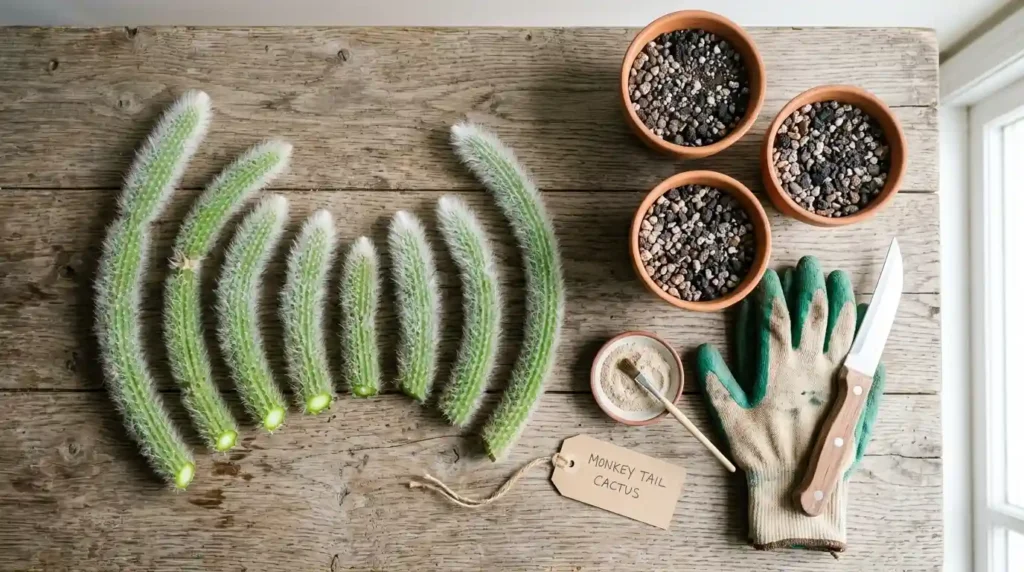
The best time to propagate your monkey tail cactus is during spring or early summer, when the plant is actively growing. You’ll get the fastest results and strongest root development during this window.
Propagating by Stem Cuttings
Stem cuttings are the easiest and most reliable method for multiplying your monkey tail cactus.
Materials needed:
- Sharp, sterile knife or pruning shears
- Gloves (the spines are soft but abundant)
- Cactus potting mix
- Small pot with drainage holes
- Rooting hormone (optional)
Steps:
Step 1: Use a clean, sharp knife to cut a healthy stem segment at least 4–6 inches long. Choose a firm, pest-free section near the tip.
Step 2: Allow the cutting to callous over for 3–5 days in a dry, shaded spot. This step prevents rot once you plant it. Don’t skip this!
Step 3: Once calloused, place the cut end about 1 inch deep into slightly moist cactus mix. You can dip it in rooting hormone first, though the monkey tail cactus roots easily without it.
Step 4: Place the pot in bright indirect light and water lightly once every 10 days. Roots typically develop within 3–6 weeks.
You can expect your new monkey tail cactus cutting to establish fully within 2–3 months. If you enjoy propagating cacti, check out our guide on moon cactus care it uses a similar cutting technique with great results.
Propagating by Offsets
Mature monkey tail cactus plants occasionally produce small offsets (pups) at the base. These are the easiest way to grow new plants since they’re already partially developed.
Step 1: Gently pull or cut the offset away from the parent stem, making sure it has a small base attached.
Step 2: Allow it to callous for 2–3 days, then pot it up in cactus mix just as you would a stem cutting.
Step 3: Water sparingly until new growth confirms the roots have taken hold usually within 4–6 weeks.
Potting and Repotting
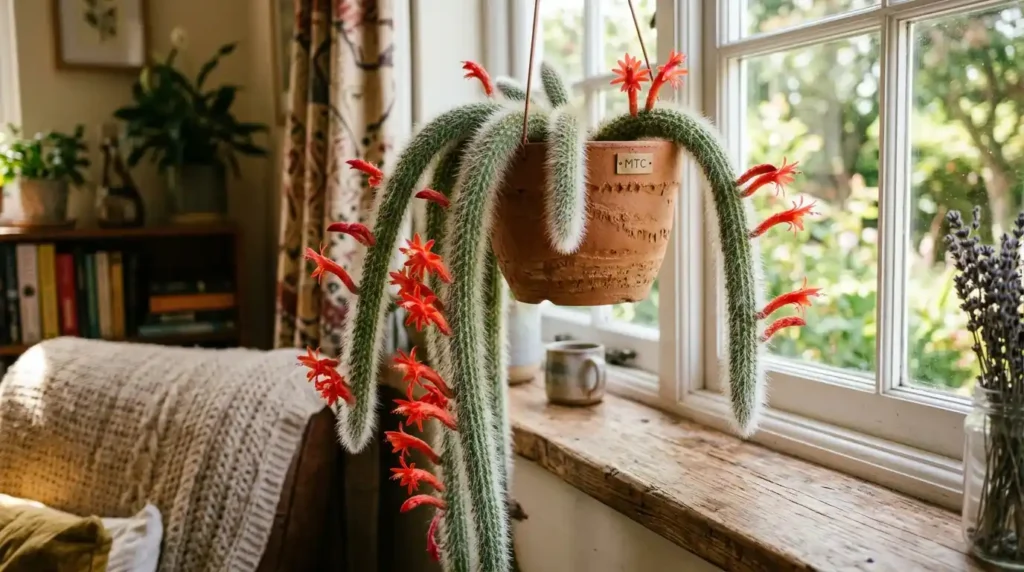
Repot your monkey tail cactus every 2–3 years, or sooner if roots are growing out of the drainage holes. Because it’s a trailing plant, it does especially well in hanging baskets or tall pots where the stems can cascade naturally. For another great candidate for hanging display, check out our Swedish ivy care guide.
When repotting, choose a container only 1–2 inches larger than the current one. Overly large pots hold excess moisture and increase root rot risk. Always use a pot with drainage holes no exceptions.
To repot, gently tip the plant out, shake off old soil, trim any dead roots, and replant in fresh cactus mix. Let it settle for a week before watering.
Common Pests and Diseases
Like most cacti, the monkey tail cactus can attract a few unwanted visitors. Regular checks go a long way toward keeping it healthy. According to the University of California IPM Program, early detection is the most effective pest management strategy.
Spider Mites
Look for fine webbing and dusty, stippled patches on the stems. Treat with a neem oil spray or insecticidal soap, repeating weekly for 3–4 weeks.
Mealybugs
White cottony clusters usually form at stem joints. Remove with a cotton swab dipped in rubbing alcohol, then spray the whole plant with diluted neem oil.
Scale Insects
Brown or tan bumps clinging to stems are a telltale sign. Scrape off manually and follow up with neem oil or horticultural oil spray.
Aphids
Tiny green or black insects clustered near new growth. A strong blast of water often dislodges them; follow up with insecticidal soap if they persist.
Common Problems
Here’s how to troubleshoot common issues:
Yellow Leaves / Yellowing Stems
Yellowing is usually a watering problem. Overwatering is the most common culprit soggy soil causes root rot, which cuts off nutrient flow. Check the roots: brown, mushy roots confirm this. Nutrient deficiency can also cause yellowing, especially in plants that haven’t been fertilized in over a year. Natural aging of older stem sections is normal and not a cause for alarm. Fix overwatering by cutting back water and repotting if roots are damaged. For similar issues, see our agave plant care guide.
Brown Stem Tips / Brown Patches
Brown tips usually signal low humidity or inconsistent watering. Hard tap water can also cause tip burn over time try switching to filtered or rainwater. Scorched patches often result from too much direct afternoon sun, especially through glass. Move the plant slightly, adjust your watering routine, and the new growth should come in healthy.
Drooping or Wilting Stems
While trailing is normal, sudden wilting is not. Underwatering causes stems to go limp and slightly wrinkled a good drink usually fixes this within hours. Overwatering can also cause drooping if the roots are too damaged to absorb water properly. Check the soil moisture before watering to diagnose which is the issue. Our zygocactus care guide covers similar drooping problems in trailing cacti.
Leggy Growth / Sparse Spines
If stems are growing long but sparse and the white spines look thin, the plant isn’t getting enough light. Move it to a brighter spot ideally where it gets some direct morning sun. You can also trim back overly leggy stems to encourage bushier, more vigorous new growth.
FAQ
How do you care for a monkey tail cactus?
Give it bright light, well-draining cactus soil, and infrequent but deep watering. Fertilize monthly in spring and summer for best results.
Is a monkey tail cactus rare?
It’s not extremely rare but isn’t found at every garden center. Specialty succulent nurseries and online shops typically carry it.
Can you touch a monkey tail cactus?
Yes its spines are surprisingly soft and hair-like. Still, handle carefully since dense clusters can irritate sensitive skin.
Can monkey tail cacti take full sun?
They can handle full sun outdoors, especially morning light. Protect from intense midday summer sun to prevent stem scorching.