
In This Article
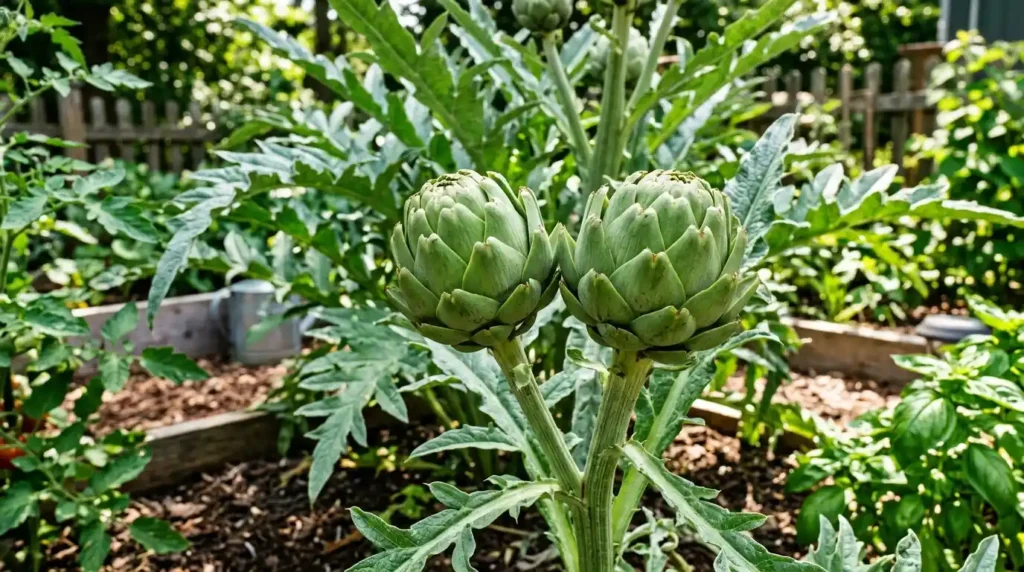
The artichoke plant (Cynara cardunculus var. scolymus) is a bold, architectural perennial with silvery-green lobed leaves and dramatic thistle-like buds. Native to the Mediterranean, it thrives in USDA zones 7–11. Honestly, it’s not fussy give it sun, space, and good drainage, and it’ll reward you generously.
Artichoke Plant Care Card
| Detail | Info |
|---|---|
| Common Name | Artichoke, Globe Artichoke |
| Botanical Name | Cynara cardunculus var. scolymus |
| Family | Asteraceae |
| Plant Type | Perennial (grown as annual in colder zones) |
| Mature Size | 3–5 ft tall x 4–6 ft wide |
| Sun Exposure | Full sun |
| Soil Type | Fertile, well-draining, loamy |
| Soil pH | 6.0–7.0 (slightly acidic to neutral) |
| Hardiness Zones | 7–11 (USDA) |
| Native Area | Mediterranean region |
| Bloom Time | Spring to summer |
| Toxicity | Non-toxic to humans; mildly toxic to cats and dogs |
Artichoke Plant Care
Artichoke plants are moderate to grow they need the right start, but reward you generously once settled. Here’s what you need to know about sun, soil, water, and maintenance. With a little attention early on, this perennial practically takes care of itself.
Light
Artichoke plants need at least 6–8 hours of full sun daily to produce those signature edible buds. Less light means sparse growth and poor harvests. Plant in a south- or west-facing spot away from shade. In very hot climates, a little afternoon shade prevents leaf scorch.
Soil
Artichokes need fertile, well-draining loamy soil with a pH of 6.0–7.0. Avoid heavy clay soggy roots invite rot fast. According to the University of California Cooperative Extension, amending with compost before planting improves both drainage and nutrients. A mix of native soil, compost, and coarse sand works perfectly.
Water
Water your artichoke plant deeply once or twice per week, keeping soil moist but never waterlogged. Reduce watering in winter when plants go semi-dormant. Yellowing lower leaves signal overwatering. Once established, artichokes become surprisingly drought-tolerant much like elephant ears, which also need consistent moisture early on.
Temperature and Humidity
Artichokes prefer mild temperatures between 60–75°F and tolerate light frost down to 28°F. In zones 7–8, mulch heavily before winter to protect the crown. In zones 9–11, plants stay evergreen year-round. High humidity encourages fungal disease prioritize good air circulation when spacing plants in humid regions.
Fertilizer
Feed artichoke plants with a balanced fertilizer (10-10-10) or a nitrogen-rich organic option at the start of the growing season. Apply again mid-season to support bud development. Similar to agave plants, artichokes are heavy feeders that respond visibly to regular nutrition. Stop fertilizing in late fall as plants slow down.
Types of Artichoke Plant
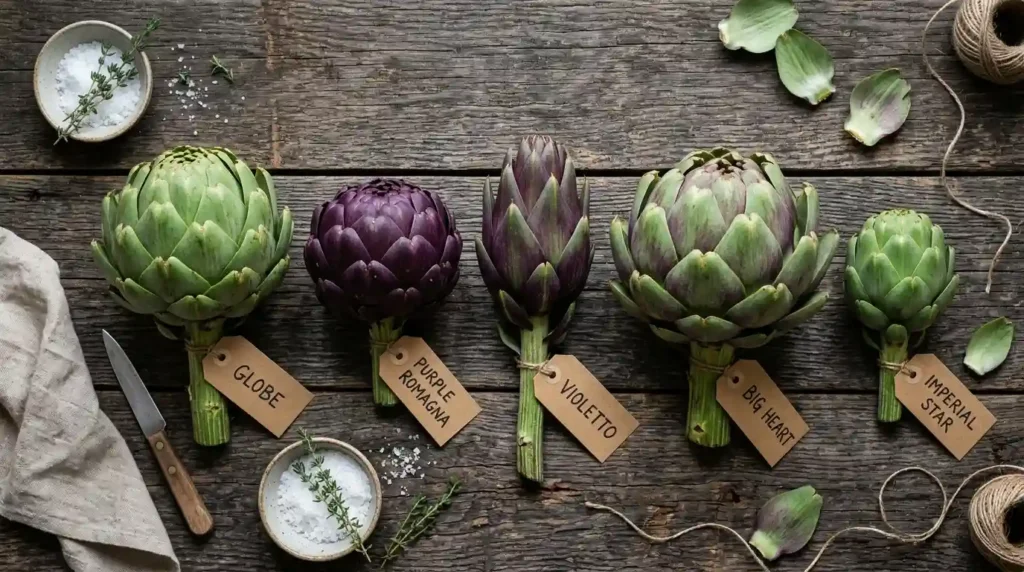
There are several excellent artichoke varieties worth knowing. Each brings something slightly different to the garden or kitchen.
- ‘Green Globe’: The most widely grown variety in the US. Large, round heads with tightly packed scales classic flavor and reliable production.
- ‘Imperial Star’: Bred specifically for annual production in colder climates. Produces buds in the first year without vernalization.
- ‘Purple of Romagna’: A stunning Italian heirloom with deep purple-tinged buds. Slightly nutty flavor and gorgeous on the plate.
- ‘Violetto’: Another purple variety with elongated, tender heads. More ornamental than most, excellent for edible landscaping.
- ‘Big Heart’: A thornless variety with extra-large, uniform buds. Great for home gardeners who want easy harvesting.
Pruning
Prune artichoke plants in late fall or early spring, depending on your climate. After harvest, cut back any spent flower stalks down to ground level. Remove dead or yellowing outer leaves throughout the growing season to keep airflow moving through the plant. In zones where plants die back in winter, cut the entire plant to about 6 inches above ground after the first hard frost.
Come spring, use clean, sharp pruners or loppers to remove any remaining dead material. Regular pruning encourages vigorous new growth and better bud production the following season. It also keeps the plant looking tidy artichokes can get quite large and unruly without a little management. French lavender responds similarly well to regular seasonal cutbacks.
Propagating Artichoke Plant
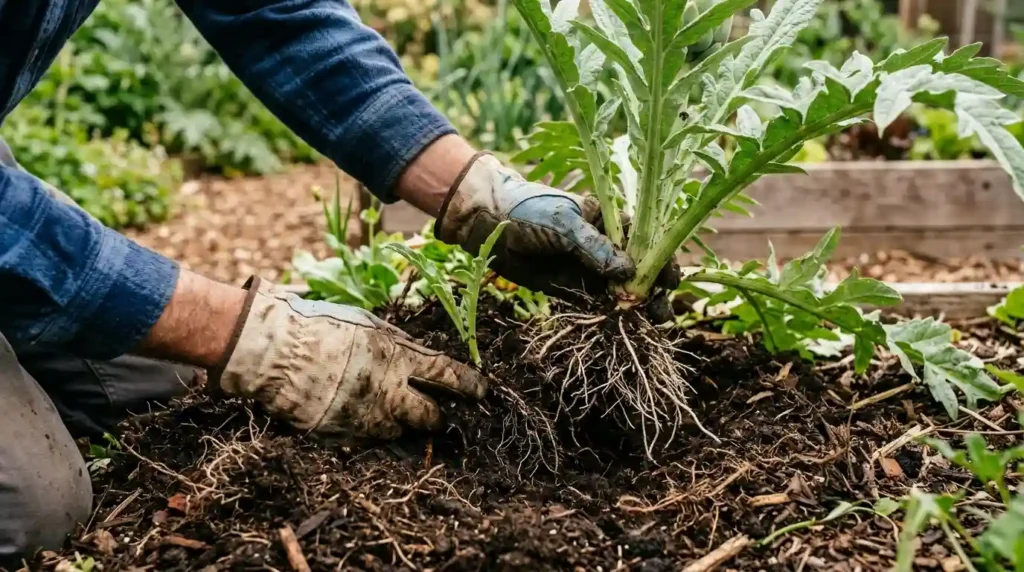
The best time to propagate artichoke plants is spring, when plants are actively pushing new growth. You have a few solid options depending on your setup.
Propagating by Division
Division is the most reliable and quickest method for home gardeners. Established artichoke plants naturally produce offshoots called “suckers” around their base each spring.
Materials needed:
- Sharp spade or garden fork
- Clean pruning knife
- Compost-amended soil
- Watering can
Steps:
- Identify a healthy sucker that has at least 3–4 leaves and is 6–8 inches tall. Choose one growing close to the mother plant’s base.
- Cut downward with your spade about 4–6 inches from the sucker’s base, severing its connection to the mother plant cleanly. Try to get some roots attached.
- Lift the offset carefully and move it immediately to a prepared planting hole in its new location. Don’t let the roots dry out.
- Plant at the same depth it was growing previously and water deeply. Add a light layer of compost around the base to help it establish.
Expect the new artichoke plant to settle in within 2–3 weeks and begin active growth shortly after.
Propagating from Seeds
Growing artichoke plants from seed takes more patience but works well for varieties like ‘Imperial Star’. Start seeds indoors 8–10 weeks before your last frost date.
Steps:
- Sow seeds ¼ inch deep in seed-starting mix. Keep soil temperature around 70–75°F for germination.
- Seedlings emerge in 10–14 days. Thin to one plant per cell once they have two true leaves.
- Harden off seedlings for 7–10 days before transplanting outdoors after last frost.
According to USDA Plant Database resources, artichoke seedlings benefit from a brief cold exposure (vernalization) of 250–500 hours below 50°F to trigger bud formation in perennial types.
Planting and Transplanting Artichoke Plant
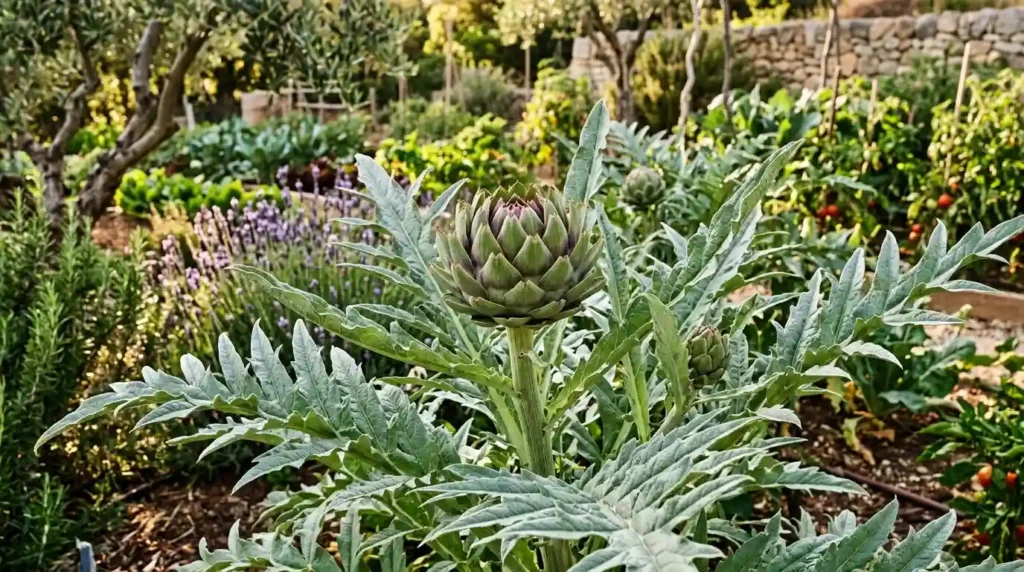
Plant artichokes outdoors in early spring, 2–4 weeks before your last expected frost, or in fall in mild-winter zones. Space plants 4–6 feet apart in all directions these are big plants and they need room to spread out comfortably.
Dig a hole twice as wide as the root ball and amend generously with compost. Set the crown at or just above soil level to prevent crown rot. Water in well and mulch around (but not touching) the base.
Transplant or divide established plants every 3–4 years in early spring before new growth begins. Dividing rejuvenates older clumps that have become crowded and less productive over time. If you enjoy growing edible perennials, the raspberry plant follows a similar division-and-replanting cycle worth knowing.
Common Pests and Diseases
Like most garden plants, artichoke plants can occasionally attract a few unwanted visitors. Here’s what to watch for.
Aphids
Look for clusters of small green or black insects on new growth and bud scales. Knock them off with a strong spray of water or apply insecticidal soap.
Earwigs
Check inside bud scales for earwigs hiding in the folds. Trap them with rolled newspaper overnight, or use food-grade diatomaceous earth around the plant base.
Powdery Mildew
White powdery coating on leaves signals this fungal issue. Improve air circulation and treat with a diluted baking soda spray or neem oil solution.
Root Rot
Yellowing stems and mushy crowns indicate root rot from poor drainage. Remove affected tissue and improve soil drainage immediately prevention is far easier than treatment.
Botrytis (Gray Mold)
Look for fuzzy gray growth on stems or buds, especially in wet weather. Remove affected parts promptly and avoid overhead watering. According to University of California IPM, removing plant debris is the most effective preventive step.
Common Problems with Artichoke Plant
Here’s how to troubleshoot common artichoke plant issues:
Poor or No Buds
No buds is the most frustrating artichoke problem. Insufficient sunlight is the top culprit plants producing foliage but no buds are almost certainly not getting 6+ hours of direct sun. Over-fertilizing with nitrogen encourages lush leafy growth at the expense of bud formation. Additionally, young plants in their first year often skip bud production entirely this is normal. Move plants to sunnier spots, switch to a low-nitrogen fertilizer mid-season, and be patient with first-year plants.
Yellow or Browning Leaves
Yellow lower leaves usually signal overwatering or poor drainage let the soil dry out slightly between waterings and check that water isn’t pooling near the crown. If upper leaves are yellowing, suspect nitrogen deficiency and apply a balanced fertilizer. Brown, crispy leaf tips often point to heat stress or underwatering during hot spells. Water more deeply and consider light afternoon shade in extreme heat climates.
Wilting or Drooping
Wilting during cool mornings typically means underwatering deep watering usually fixes this fast. If soil is moist and the plant still droops, it may be transplant shock from recent planting or division. Give it time and consistent moisture. Sudden wilting with moist soil in summer can also mean crown rot check the base of the plant immediately.
Leggy or Sparse Growth
Leggy, floppy artichoke foliage almost always comes down to insufficient light. Move the plant to a sunnier spot if possible, or thin surrounding vegetation that may be casting shade. Bougainvillea and other sun-loving garden plants face similar issues when shaded out. Over-fertilizing with nitrogen can also push weak, watery growth reduce feeding frequency if this is happening.
Frost Damage
Blackened, mushy leaves after a cold snap indicate frost damage. Don’t panic artichoke crowns are surprisingly resilient. Cut back all damaged foliage, mulch heavily, and the plant will likely re-sprout from the crown in spring. For future protection, cover plants with frost cloth when temperatures below 28°F are expected.
FAQ
Will artichokes come back every year?
Yes, in zones 7–11 artichokes return annually as perennials. In colder zones, grow them as annuals or overwinter crowns with heavy mulch protection.
Do artichokes like full sun or shade?
Artichokes strongly prefer full sun at least 6–8 hours daily. Shade significantly reduces bud production and weakens overall plant growth.
What not to plant next to artichokes?
Avoid planting artichokes near potatoes or other heavy feeders that compete aggressively for nutrients. Also skip plants that prefer dry conditions, since artichokes need regular moisture.
Where do artichokes grow best?
Artichoke plants grow best in mild coastal climates with cool summers zones 9–10 on the California coast are ideal. They also thrive wherever the Mediterranean climate pattern applies.
2 thoughts on “How to Grow and Care for Artichoke Plant”
Comments are closed.