
In This Article
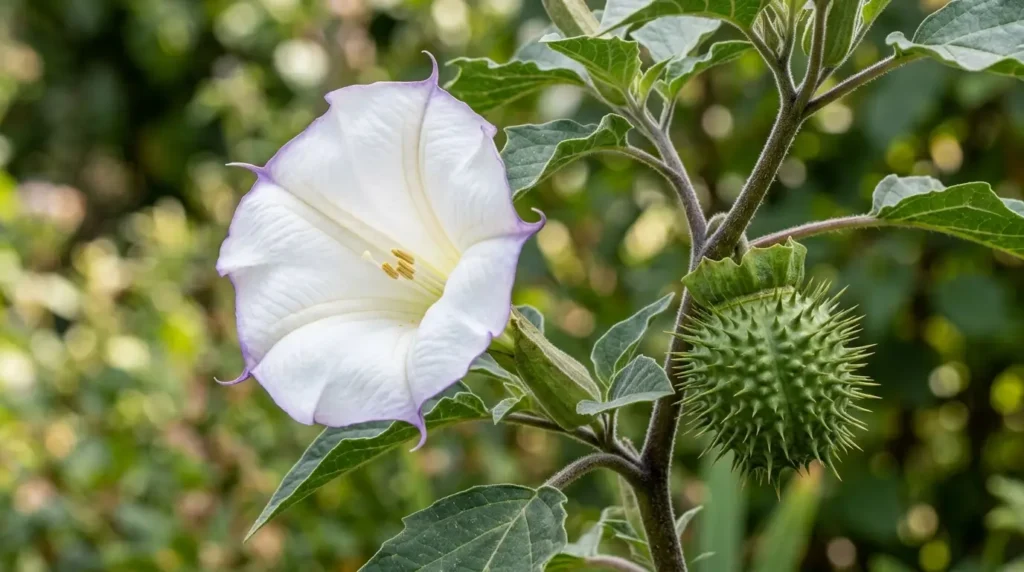
The devil’s weed plant (Datura stramonium) is a bold, fast-growing annual known for its trumpet-shaped white or purple flowers and spiny seed pods. Native to the Americas, this devil’s weed plant thrives in USDA zones 3-10 and self-seeds readily. Every part of this plant is toxic, so care difficulty is easy, but placement needs real thought.
Plant Care Card
| Category | Details |
|---|---|
| Common Name | Devil’s weed, jimsonweed, thorn apple |
| Botanical Name | Datura stramonium |
| Family | Solanaceae |
| Plant Type | Annual (sometimes short-lived perennial in warm zones) |
| Mature Size | 2-5 ft tall x 2-4 ft wide |
| Sun Exposure | Full sun to partial shade |
| Soil Type | Well-draining, loamy or sandy |
| Soil pH | 6.0-7.5 (neutral) |
| Hardiness Zones | 3-10 (grown as annual in cooler zones) |
| Native Area | Central America, naturalized worldwide |
| Bloom Time | Summer through first frost |
| Toxicity | Highly toxic to humans and pets if ingested |
Devil’s Weed Plant Care
Honestly, the devil’s weed plant practically grows itself once it’s settled into the right spot. Here’s what you need to know about sun, soil, water, and keeping it in check. With the right placement, this plant asks very little of you.
Light
Devil’s weed wants full sun for the biggest blooms, though it tolerates partial shade. Aim for at least 6 hours of direct light daily. Too little sun leads to leggy stems and fewer flowers. Pick a south-facing spot, sheltered from strong wind.
Soil
This plant likes loose, well-draining soil and isn’t fussy about fertility. Sandy or loamy mixes work best, with a neutral pH. Soggy, compacted soil invites root rot fast. For heavy clay, work in compost using a soil amendment planting guide before you plant.
Water
Water weekly until established, then only during dry spells this plant is fairly drought-tolerant. Check soil moisture by pressing a finger an inch down. Cut back in winter dormancy. Yellowing leaves usually mean overwatering, while drooping means it’s thirsty, much like the rue plant’s watering needs.
Temperature and Humidity
This plant loves warm weather between 65-85°F and struggles below freezing. It behaves as an annual anywhere frost arrives before fall, so it helps to check your area’s plant hardiness zone map before planting. Humidity isn’t a major concern outdoors. Mulch around the base to buffer temperature swings and hold moisture.
Fertilizer
Feed lightly with a balanced, slow-release fertilizer once in spring. Skip fertilizing mid-summer onward to avoid pushing floppy growth. Too much nitrogen means fewer blooms and more foliage. Once dormancy sets in, stop feeding completely.
Types of Devil’s Weed Plant
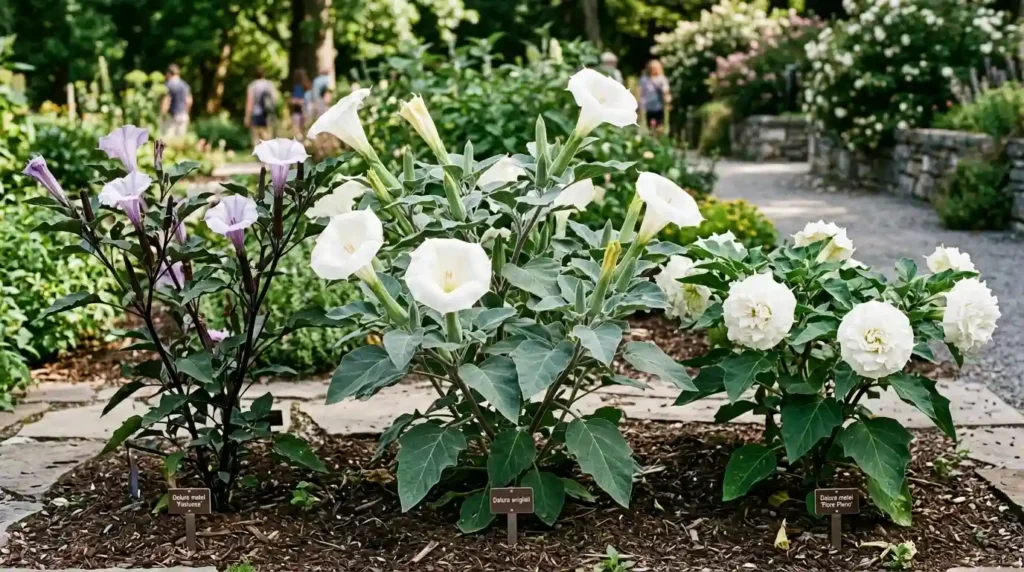
The devil’s weed plant has several related Datura species and cultivated varieties gardeners encounter, each with slightly different flower color, size, or growth habit. If you like the look of drought-tolerant, sculptural garden plants, you may also enjoy browsing agave varieties for a similar bold silhouette.
- Purple Devil’s Weed (Datura metel): Deep purple-black stems with pale lavender trumpet blooms. Popular in ornamental beds for its striking foliage contrast.
- Angel’s Trumpet Look-Alike (Datura inoxia): Fuzzy, silvery leaves and huge white flowers that open at dusk. Prized for its evening fragrance.
- Double Flowered Datura: A cultivar with layered, ruffled petals resembling a rose inside a trumpet. Slower to set seed than the species type.
- Datura ferox: Known for unusually spiny, aggressive seed pods. Mostly grown by collectors, not typical home gardens.
- Golden Queen: A yellow-flowered selection that’s less common but holds color well in full sun.
- Evening Fragrance Types: Selected for scent that intensifies after sunset, popular near patios and seating areas (kept well away from pets and kids, given the toxicity).
Pruning
Prune the devil’s weed plant in mid-summer once the first flush of flowers fades, cutting back leggy stems to encourage a bushier shape. Remove spent blooms and any damaged or yellowing foliage as you spot them throughout the season.
Cut just above a leaf node using clean, sharp bypass pruners this pushes new side shoots and more flowers. Wear gloves every time, since the sap can irritate skin, much as you would when handling a Texas sage shrub. A light shaping in early summer also keeps the plant from flopping over as it grows tall.
Deadheading regularly is the single best thing you can do to keep this devil’s weed plant blooming into fall.
Propagating Devil’s Weed Plant
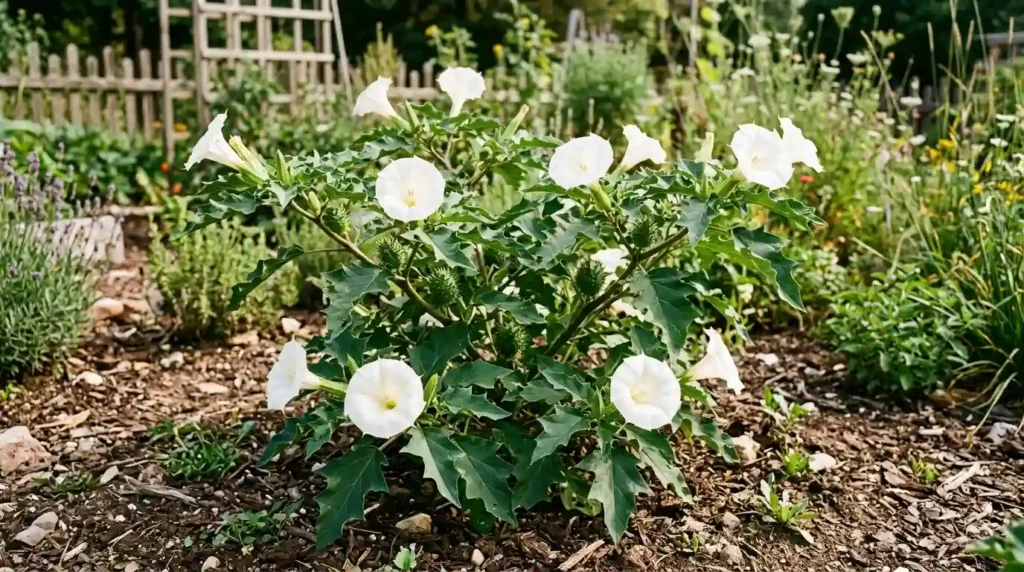
Spring, once the soil warms, is the best time to start new devil’s weed plants, whether from seed or cuttings.
Propagating by Seed
Seeds are the easiest and most common way to grow more of this devil’s weed plant.
You’ll need:
- Ripe seed pods
- Seed-starting mix
- Small containers or trays
Here’s the process:
- Collect dry, brown seed pods from the plant in fall.
- Crack the spiny pods open carefully and shake out the seeds.
- Sow seeds a quarter-inch deep in moist starting mix.
- Keep the tray somewhere warm, around 70°F, until sprouting.
- Transplant seedlings outdoors after the last frost passes. Expect germination in 1-3 weeks, with flowers by midsummer.
Propagating by Stem Cuttings
Stem cuttings work well if you want to clone a specific flower color or form rather than leave it to chance.
You’ll need a sharp knife, rooting hormone, and a small pot of moist mix. Take a 4-6 inch cutting below a leaf node, strip the lower leaves, dip in hormone, and plant in damp soil. Cover loosely for humidity; roots form in 2-3 weeks, much like a spider flower cutting.
Planting and Transplanting Devil’s Weed Plant
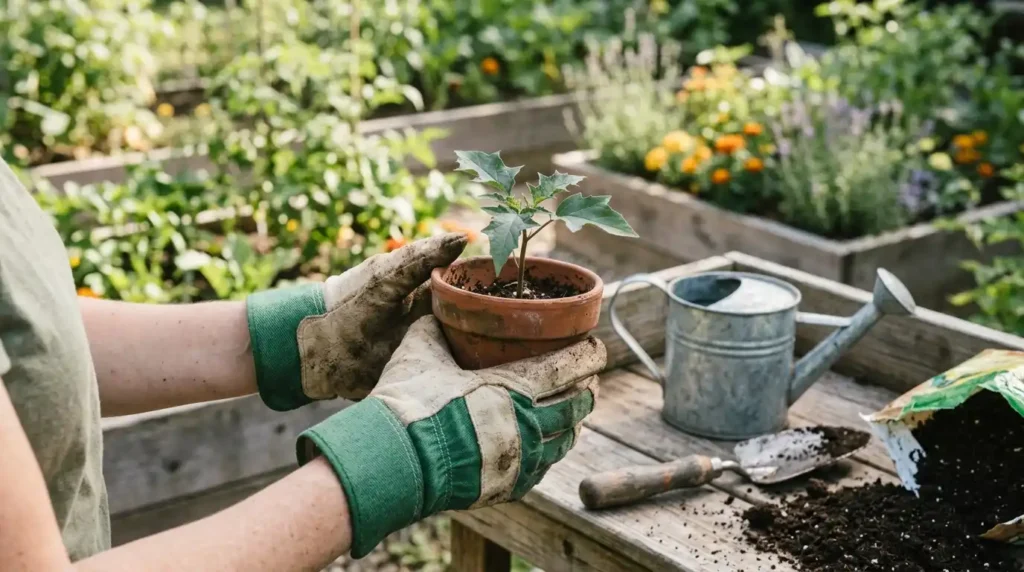
Plant your devil’s weed plant outdoors after the last frost, spacing plants 24-36 inches apart to allow airflow. Set seedlings at the same depth they were growing in their nursery pot.
Choose a spot with full sun and loose, well-draining soil, and work compost into the planting hole before setting the plant in, following a basic university planting guide for annual bedding plants. Because it self-seeds so freely, many gardeners let volunteer seedlings emerge rather than replanting each year.
If you do need to move an established plant, transplant it in early spring before new growth starts, and water deeply right after.
Common Pests and Diseases
Like most garden plants, the devil’s weed plant can occasionally face a handful of common pest and disease problems, though it’s fairly resilient overall.
Aphids
Look for clusters of tiny green or black insects on new growth and buds. Treat with a strong water spray or insecticidal soap every few days.
Spider Mites
Fine webbing and stippled, pale leaves signal an infestation, especially in dry conditions. Treat with neem oil or by increasing humidity around the plant.
Powdery Mildew
A white, powdery coating on leaves shows up in humid, poor-airflow conditions. Improve spacing and treat with a sulfur-based fungicide if needed.
Root Rot
Wilting despite moist soil and blackened roots point to root rot from overwatering. Improve drainage and cut back watering right away.
Caterpillars and Leaf Miners
Chewed leaf edges or squiggly tunnels through foliage are the telltale signs here. Hand-pick caterpillars or use a targeted organic pesticide.
Common Problems with Devil’s Weed Plant
Here’s how to troubleshoot common issues with your devil’s weed plant:
Poor or No Blooms
If your devil’s weed plant isn’t flowering, insufficient sun is the top culprit it needs a full 6+ hours daily. Over-fertilizing with high-nitrogen feed also pushes leafy growth over blooms. Improper or late-season pruning can remove developing buds too. Fix it by moving to a sunnier spot, easing off fertilizer, and timing prune cuts earlier in summer.
Yellow or Browning Leaves
Yellowing leaves most often mean overwatering or poor drainage, which suffocates the roots. Nutrient deficiency, especially nitrogen, can also cause pale, yellowing foliage. If you’ve seen similar yellowing on a gaura plant in your beds, the fix is usually the same: cut back water and check soil structure. Let the soil dry between waterings and add a light balanced fertilizer if growth still looks weak.
Wilting or Drooping
Underwatering is the most common cause of sudden wilting, especially in hot weather. Transplant shock can also cause temporary drooping after moving the plant. Heat stress during extreme summer days adds to the problem too. A deep watering and some afternoon shade usually perks it back up within a day.
Leggy or Sparse Growth
Leggy, thin stems almost always trace back to insufficient light, since the plant stretches toward any available sun. Over-fertilizing can also cause weak, floppy stems that can’t support the foliage. Move the plant to a sunnier spot and prune back hard to encourage bushier regrowth.
Frost Damage
Blackened, mushy leaves after a cold snap signal frost damage, since devil’s weed can’t handle freezing temperatures. Mulch heavily around the base before the first expected frost each fall. In cooler zones, treat it as an annual and simply replant from seed each spring.
FAQ
Is devil’s weed toxic to pets and humans?
Yes every part is toxic if ingested, causing serious symptoms in pets and people. Keep it well away from curious kids, grazing animals, and vegetable beds.
How do I get rid of devil’s weed in my garden?
Pull young seedlings by hand before they set seed, wearing gloves throughout. Mature plants need digging out at the root, since cutting alone often allows regrowth.
Does devil’s weed come back every year?
In warm zones it can act as a short-lived perennial, but most gardeners see it return through self-seeding. Remove spent pods early if you don’t want volunteers.
When should I prune devil’s weed?
Prune in mid-summer after the first bloom flush fades, cutting back leggy growth. This encourages a bushier shape and a stronger second flowering.