
In This Article
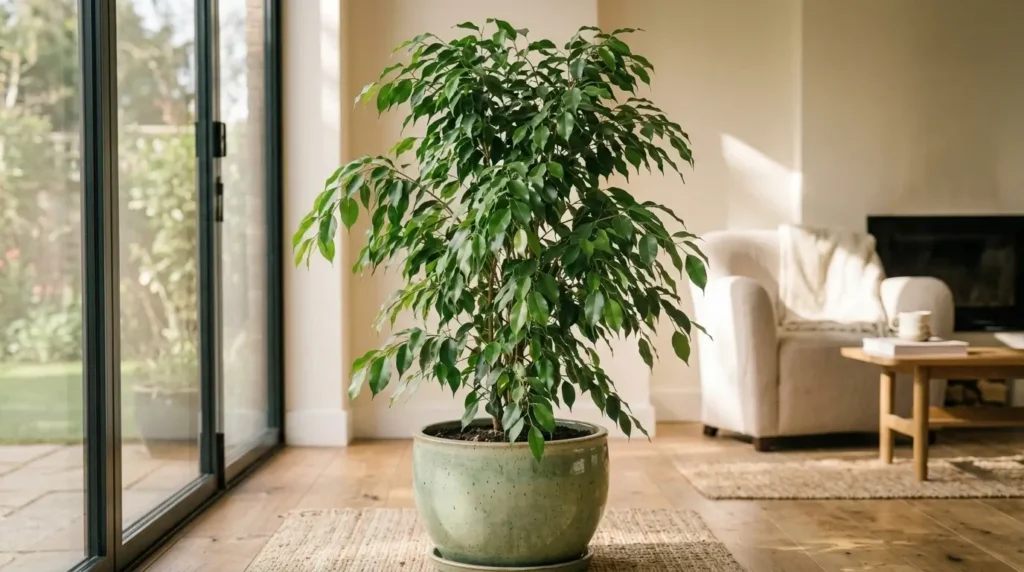
Meet ficus tree plants, best represented by the graceful Ficus benjamina, loved for glossy, weeping leaves and a braided trunk. Native to South and Southeast Asia, these tropical houseplants add instant jungle vibes indoors. Honestly, ficus tree plants are moderate-care, not the easiest, but so worth it once settled in.
Plant Care Card
| Field | Details |
|---|---|
| Common Name | Ficus tree, weeping fig |
| Botanical Name | Ficus benjamina |
| Family | Moraceae |
| Plant Type | Tropical evergreen tree |
| Mature Size | 3-10 ft tall indoors, 3-6 ft wide |
| Sun Exposure | Bright, indirect light |
| Soil Type | Well-draining potting mix |
| Soil pH | 6.0-6.5, slightly acidic |
| Hardiness Zones | USDA 10-12 |
| Native Area | Asia, Australia |
| Toxicity | Toxic to cats and dogs |
Ficus Tree Plants Care
Let’s face it, this plant has a reputation for being a little fussy about change. Below, you’ll find tips on light, soil, water, temperature, and feeding. Stick with the basics and you’ll love how it rewards you with lush, glossy growth.
Light
Ficus tree plants crave bright, indirect light for at least six hours a day. Too little light causes leggy growth and leaf drop, while direct sun can scorch leaves. An east or south-facing window with a sheer curtain works great.
Soil
This tree wants a loose, well-draining mix that never stays soggy. Peat-based potting soil with added perlite, roughly a 2:1 ratio, keeps roots happy. For more on drainage basics, this university guide to soil drainage is a handy read.
Water
Water once the top 2-3 inches of soil feel dry, then soak thoroughly until it drains out the bottom. Overwatering causes yellow leaves on ficus tree plants, while underwatering brings crispy brown tips. Cut back in winter. If you like predictable routines, the string of turtles follows a similar dry-between-waterings schedule.
Temperature and Humidity
Keep ficus tree plants between 65-75°F, since they hate sudden temperature swings. Aim for 40% humidity or higher with a pebble tray or humidifier. Avoid placing near drafty doors, heating vents, or air conditioners.
Fertilizer
Feed ficus tree plants with a balanced liquid fertilizer every 2-4 weeks during spring and summer. Skip feeding entirely in fall and winter when growth slows. For general guidance on feeding schedules, this USDA plant nutrition overview is worth a look. Simply put, less is more here.
Types of Ficus Tree Plants
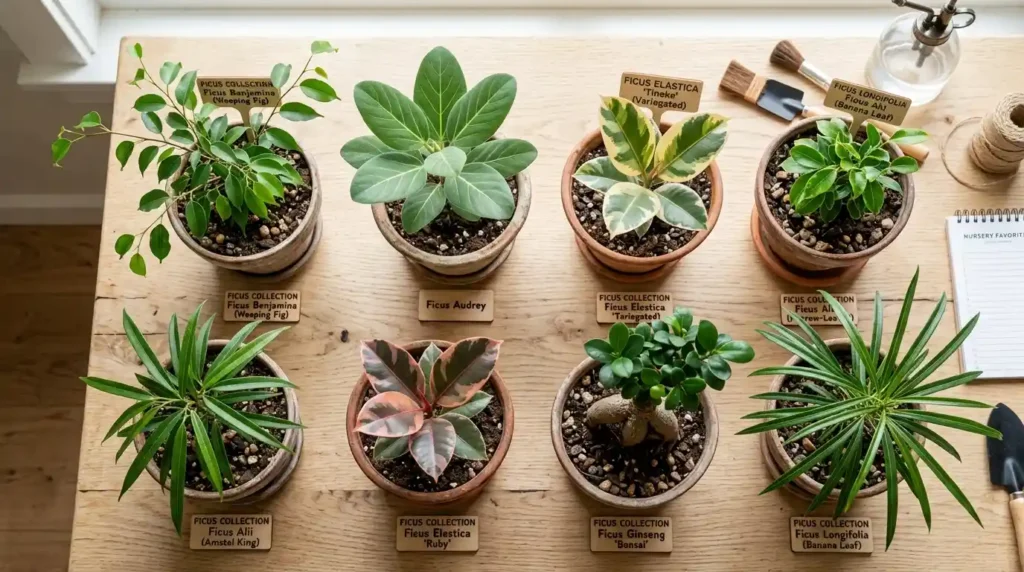
There’s more than one variety among ficus tree plants worth growing, and each brings its own personality. Here are some popular picks for houseplant fans:
- Weeping Fig (Ficus benjamina): The classic ficus tree with slender, arching branches and small glossy leaves. It’s the variety most people picture when they hear “ficus.”
- Ficus Audrey: A fuzzy-leaved cousin native to India, admired for its bold, upright growth. Check out our ficus Audrey care guide for specifics.
- Variegated Ficus: Features cream-and-green splashed leaves that add extra visual interest. It generally needs a touch more light than solid-green types.
- Ficus Alii: Sports long, narrow leaves that give it a willowy, elegant look. It’s also more tolerant of low light than most ficus varieties.
- Ruby Ficus: A newer cultivar with pink-tinged new growth that matures to deep green. Honestly, it’s a showstopper on a sunny windowsill.
- Ficus Ginseng: Grown as a bonsai with a thick, bulbous trunk and small aerial roots. It’s beginner-friendly and a fun way to try bonsai styling.
- Ficus Longifolia: Known for its long, narrow, ribbon-like leaves that dangle gracefully from thin branches. This variety thrives under the same bright, indirect light most ficus tree plants prefer.
Pruning
Prune your ficus tree in late winter or early spring before new growth starts. Snip off dead, damaged, or leggy branches to keep a full, tidy shape. Use clean, sharp shears and always cut just above a leaf node.
Propagating Ficus Tree Plants

Best time to propagate ficus tree plants is during spring and summer when growth is active. You’ll love how simple it is once you get the hang of it.
Propagating by Stem Cuttings
Stem cuttings are the easiest and most reliable way to multiply ficus tree plants.
Materials needed:
- Sharp, clean pruning shears
- A 4-6 inch stem cutting with 2-3 healthy leaves
- Rooting hormone (optional, but it helps)
- Small pot with fresh, well-draining soil
Steps:
- Select a healthy stem below a leaf node and make a clean, angled cut.
- Remove lower leaves, leaving just 2-3 at the top of the cutting.
- Dip the cut end in rooting hormone to speed things along nicely.
- Plant the cutting in moist, well-draining soil about an inch deep.
- Cover loosely with plastic to hold humidity, then place in bright, indirect light.
Roots typically form in 4-6 weeks on ficus tree plants, so be patient and keep the soil lightly moist the whole time. Tug gently after a month to check for resistance, a sure sign roots have taken hold.
Water Propagation
If soil feels intimidating, water propagation is a fun, low-mess alternative for ficus tree plants.
Materials needed:
- A 4-6 inch healthy stem cutting
- A clear glass jar filled with room-temperature water
- Sharp, clean shears
- A small pot with well-draining soil for later
Steps:
- Take a cutting just like you would for soil, right below a leaf node.
- Strip off any leaves that would sit underwater to prevent rot.
- Place the cutting in a jar of room-temperature water in bright, indirect light.
- Change the water every few days to keep it fresh and oxygenated.
- Once roots reach 1-2 inches, pot the cutting into soil like you would with the monstera albo, another plant that roots well in water.
Expect roots within 3-4 weeks, and don’t rush the transfer to soil. Give the new roots a week or two to toughen up in water before potting, so they handle the switch better.
Potting and Repotting Ficus Tree Plants
When to Repot
Ficus tree plants need repotting when roots start peeking out of drainage holes or growth slows down noticeably. As a rule, plan on repotting every 1-2 years in spring, right as new growth kicks in.
How to Repot
Choose a pot just 1-2 inches larger in diameter than the current one. Going too big can lead to soggy soil and root rot, so resist the urge to size up dramatically.
Gently loosen the root ball, trim any circling or mushy roots, and place it in fresh well-draining mix. Water thoroughly right after, then skip fertilizer for a few weeks so roots can settle. Good drainage holes are non-negotiable for keeping ficus tree plants healthy long-term, since standing water invites rot fast.
Common Pests and Diseases
Like most houseplants, ficus tree plants can occasionally attract unwanted visitors, especially when air gets dry indoors. Here’s what to watch for and how to treat each one before it spreads.
Spider Mites
Look for fine webbing and tiny yellow speckles across the leaves, especially in dry winter air. Treat with insecticidal soap or a strong spray of water every few days.
Mealybugs
Identify these by the cottony white clusters tucked into leaf joints and stems. Dab them directly with rubbing alcohol on a cotton swab, or use neem oil weekly.
Scale Insects
Watch for small, brown, shell-like bumps stuck along stems and leaf undersides. Scrape them off gently with a fingernail, then follow up with horticultural oil.
Aphids
These tiny green or black bugs cluster on new growth and the undersides of tender leaves. Rinse them off with a strong stream of water or treat with insecticidal soap weekly.
Fungus Gnats
Spot these by tiny flies hovering near the soil surface. Let soil dry out more between waterings on ficus tree plants and use sticky traps to catch adults. For broader pest strategies, this extension pest management guide covers the basics well.
Common Problems with Ficus Tree Plants
Here’s how to troubleshoot common issues:
Yellow Leaves
Seeing yellow leaves on ficus tree plants? This usually points to overwatering, which suffocates roots and stresses the plant. It can also mean a nutrient deficiency, especially nitrogen, or simply natural aging of older leaves. Cut back watering and check drainage first. If you’re facing similar yellowing, the rubber plant often shows the exact same symptom from overwatering.
Brown Leaf Tips
Crispy, brown tips are usually a sign of low humidity in your home, especially during winter. Poor water quality, like heavy chlorine or fluoride, can also cause tip burn over time. Underwatering is another common culprit. Try filtered water and a humidifier to fix it.
Drooping or Wilting Leaves
A drooping ficus tree is almost always a watering issue, either too much or too little. Check the soil moisture first before deciding which direction to correct. Overwatered plants often feel soggy, while underwatered ones feel bone dry. Adjust your schedule and the plant should perk back up within days. The heart leaf philodendron droops in a nearly identical way when thirsty.
Leggy Growth
Sparse, stretched-out branches almost always mean your plant isn’t getting enough light throughout the day. Move it closer to a bright window and prune back leggy stems to encourage bushier, fuller regrowth. Patience pays off here.
Leaf Drop
Ficus tree plants are famous for dropping leaves after any change, like a new location, repotting, or a drafty window. This is a normal stress response, and the plant usually bounces back within a few weeks. Keep conditions stable, avoid moving it around, and resist the urge to panic.
FAQ
Is a ficus tree a good houseplant?
Yes, ficus tree plants make a great statement choice for bright rooms. They’re moderately easy once settled, though they dislike sudden changes in light or temperature.
What are the disadvantages of the ficus tree?
It’s toxic to pets and drops leaves easily when stressed by moves, drafts, or repotting. It also needs steady, bright light to thrive.
Where do ficus trees grow best?
They grow best in warm, humid climates similar to their native Asia and Australia range. Indoors, a bright, stable spot near a window works well.
Do ficus plants like full sun or shade?
Ficus tree plants prefer bright, indirect light over full sun or deep shade. Direct sun scorches leaves, while low light causes leggy, sparse growth over time.