
In This Article
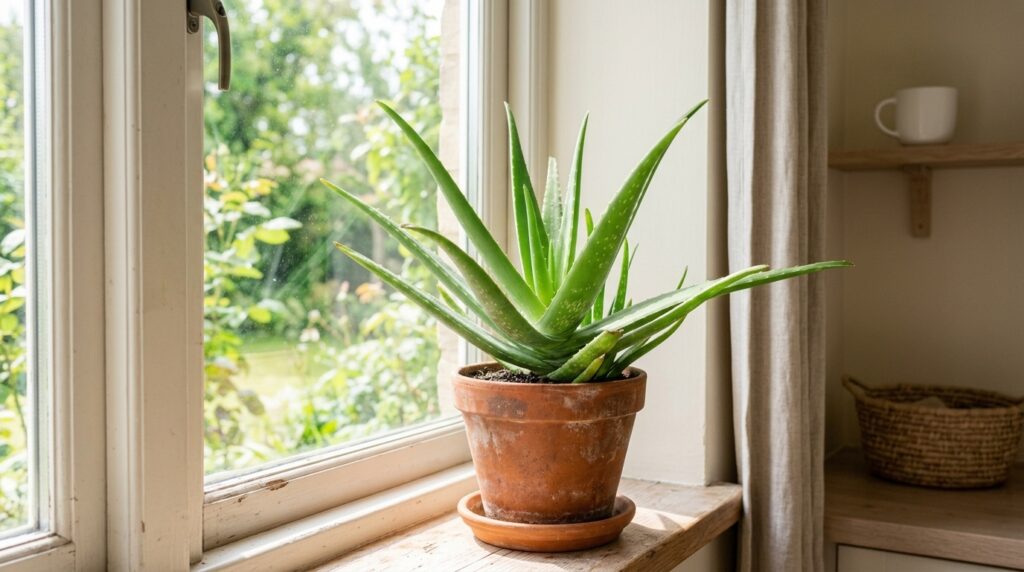
The aloe vera plant, native to the Arabian Peninsula, is a beloved windowsill succulent known for its thick, water-storing leaves and soothing gel, often used for sunburns and skin irritation. Beginner-friendly and remarkably neglect-tolerant, it thrives with minimal attention, making it a popular, low-maintenance choice for kitchens, bathrooms, and first-time plant owners alike.
Plant Care Card
| Feature | Details |
|---|---|
| Common Name | Aloe Vera |
| Botanical Name | Aloe barbadensis miller |
| Family | Asphodelaceae |
| Plant Type | Succulent, perennial |
| Mature Size | 12–24 in. tall, 12–24 in. wide |
| Sun Exposure | Bright, indirect light |
| Soil Type | Well-draining, sandy |
| Soil pH | 6.0–8.0 |
| Hardiness Zones | 9–11 (USDA) |
| Native Area | Arabian Peninsula |
| Toxicity | Toxic to cats and dogs |
Aloe Vera Plant Care
Aloe vera plant care is pretty simple, even if you’ve never grown a succulent before. Below, we’ll walk through light, soil, watering, temperature, and fertilizer needs, plus propagation and troubleshooting tips. Stick with these basics, and you’ll have a happy, thriving plant in no time. Honestly, once you get the hang of it, this plant pretty much takes care of itself.
Light
Aloe vera plants thrive in bright, indirect light, ideally near a south- or west-facing window. Too much direct sun scorches leaves brown or reddish, while too little causes leggy, pale growth. Aim for gentle daily sun with afternoon shade, and rotate the pot every week or two for even growth.
Soil
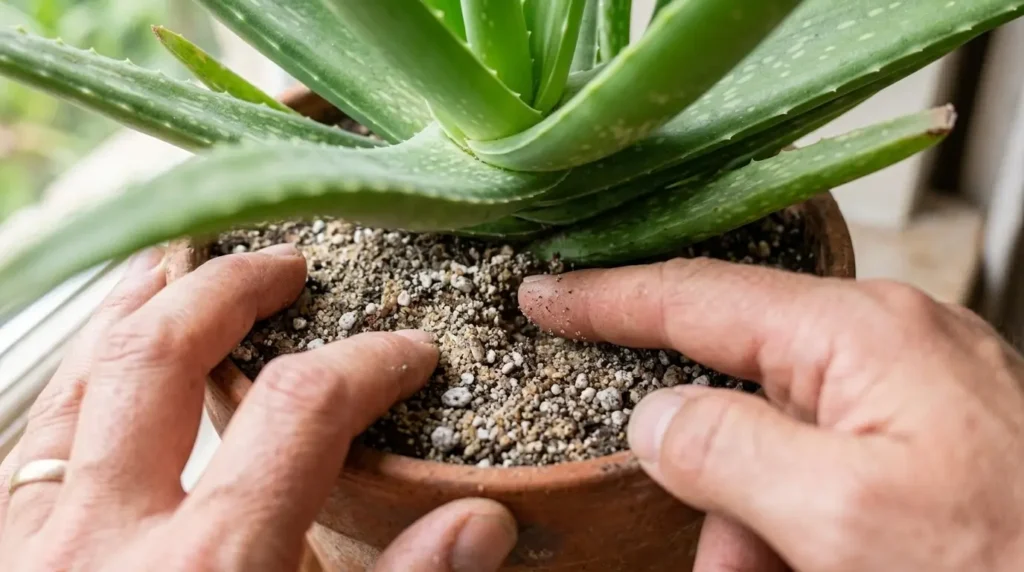
Well-draining soil is essential regular potting soil retains too much moisture, causing root rot. Use a cactus or succulent mix, or a 1:1 blend of potting soil and coarse sand or perlite. Per University of Florida IFAS Extension, well-draining mixes prevent root rot in succulents.
Water
Watering is where most people mess up with their aloe vera plant. Let the top 2-3 inches of soil dry out completely before you water again. Overwatering is the number one killer of these succulents, so when in doubt, wait it out a little longer.
Signs of overwatering include mushy, translucent leaves and a soft, discolored base. Underwatering shows up as shriveled, wrinkled leaves that feel thin to the touch. In winter, cut back watering even more since growth slows way down and the soil stays damp longer.
If you enjoy low-maintenance succulents, you might also like our guide to the golden barrel cactus, which shares similar drought-tolerant watering needs to this plant.
Temperature and Humidity
An aloe vera plant prefers average room temperatures, ideally between 55-80°F. These succulents actually thrive in low humidity, which makes them perfect for typical household conditions, unlike a lot of finicky tropical plants that demand a humidifier.
That said, keep your plant away from cold drafts, heating vents, and air conditioning units. Sudden temperature swings can stress it out and cause discoloration or slowed growth over time.
Fertilizer
Feed your aloe vera plant a balanced, diluted liquid fertilizer every 4-6 weeks during spring and summer. Clemson Cooperative Extension recommends diluting fertilizer to half strength for succulents to avoid root burn. Skip feeding entirely in fall and winter—less really is more here.
Types of Aloe Vera
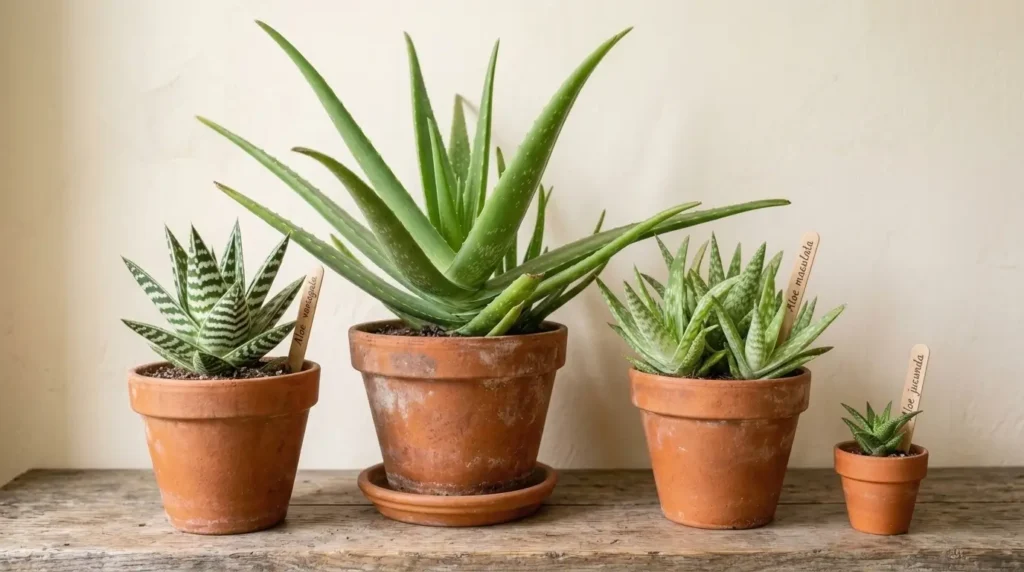
This succulent comes in more varieties than most people realize, and each one brings something a little different to your collection. Here are a few popular ones worth checking out.
- Aloe ‘Chinensis’: A compact variety with shorter, thicker leaves and white speckling. Great for small spaces or windowsills where a full-size plant won’t fit.
- True Aloe (Aloe barbadensis): The most common variety, known for its large gel-filled leaves used in skincare products and home remedies alike.
- Tiger Aloe (Aloe variegata): Features bold white stripes across dark green leaves, adding extra visual interest to any plant shelf.
- Miniature Aloe: A more petite version, often used as a tabletop plant for small apartments or office desks.
Pruning
You won’t need to prune this plant often, but trimming dead or damaged leaves keeps it looking tidy. Use clean, sharp scissors to snip leaves at the base, close to the main stem. Removing spent flower stalks after blooming also helps the plant put energy into new growth instead of seed production. Wipe your blades with rubbing alcohol between cuts to avoid spreading disease.
Propagating Aloe Vera
Best time to propagate your aloe vera plant is during spring and summer when it’s actively growing and putting out new pups.
Propagating by Offsets (Pups)
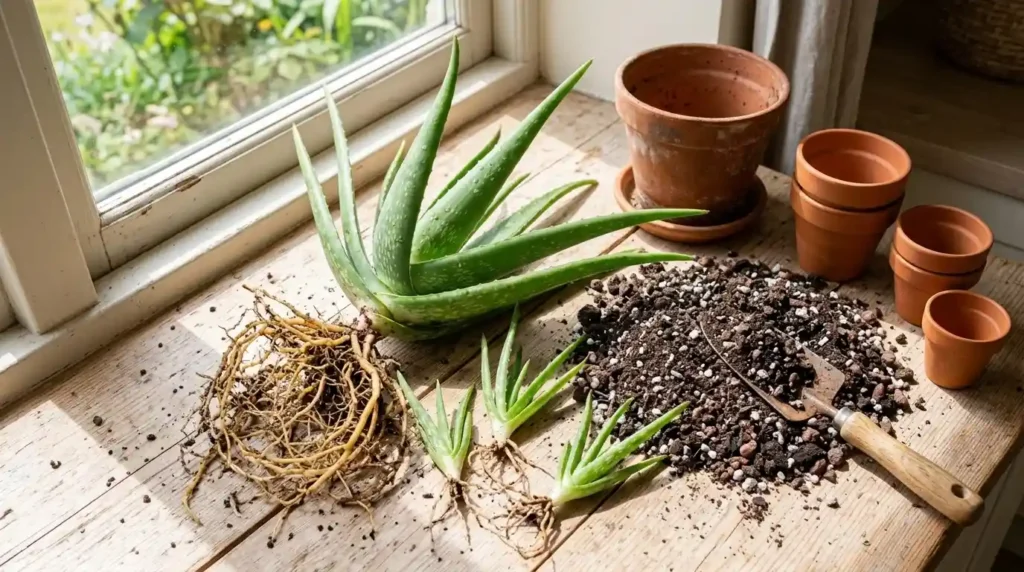
Aloe vera plants naturally produce baby offsets, often called “pups,” at the base of the mother plant. This is by far the easiest and most reliable way to propagate.
Materials needed:
- Clean, sharp knife or scissors
- Well-draining potting mix
- Small pot with drainage holes
Steps:
- Step 1: Gently remove the aloe vera plant from its pot and look for pups with roots already attached.
- Step 2: Carefully separate the pup from the mother plant using a clean knife, cutting close to the base.
- Step 3: Let the cut end callous over for a day or two before planting to prevent rot.
- Step 4: Plant the pup in well-draining soil and water lightly to settle it in.
You’ll see new growth within a few weeks if conditions are right, and the pup should establish its own root system within a couple of months.
Propagating by Leaf Cuttings
You can also try leaf cuttings, though this method is less reliable than pups for this succulent. Cut a healthy leaf near the base, let it callous for several days, then place the cut end in soil. Keep it in bright, indirect light and water sparingly until roots form. Similar to the string of turtles, rooting can take several weeks, so patience really pays off here. Don’t be discouraged if the original leaf shrivels while a new tiny rosette forms at its base that’s completely normal.
Potting and Repotting
Repot your aloe vera plant every 1-2 years, or whenever you notice roots poking out of the drainage holes. Slowing growth or a top-heavy pot that tips over easily are other signs it’s ready for a bigger home.
When repotting, choose a pot just 1-2 inches larger than the current one. Aloe plants actually prefer being slightly rootbound, so don’t size up too much or the soil may stay wet for too long. Similar to the black ZZ plant, this one prefers snug pots over roomy ones. Always use a pot with good drainage holes to prevent water from pooling at the bottom, and consider terracotta since it helps excess moisture evaporate faster.
Common Pests and Diseases
Like most houseplants, an aloe vera plant can occasionally attract a few common pests. Catching problems early makes treatment much easier and keeps infestations from spreading to nearby plants.
Spider Mites
Look for tiny webbing and stippled, discolored leaves. Treat with insecticidal soap or a strong water spray to knock mites off the foliage.
Mealybugs
These show up as white, cottony clusters on leaves and stems. Wipe them off with rubbing alcohol on a cotton swab, checking back weekly.
Scale Insects
Look for small, brown bumps stuck to leaves that don’t move. Treat with horticultural oil or neem oil spray, reapplying every couple of weeks.
Aphids
Tiny green or black bugs cluster on new growth. Spray with insecticidal soap or a strong stream of water. The University of Minnesota Extension has a helpful guide on managing common houseplant pests naturally.
Common Problems
Here’s how to fix common issues with your aloe vera plant:
Yellow Leaves
Yellowing usually points to overwatering, which suffocates roots and causes rot. It can also mean nutrient deficiency or just natural aging of older leaves near the base. Cut back watering, check drainage, and remove old yellow leaves as you spot them. If you’ve had similar trouble, our snake plant care guide covers comparable overwatering issues in another easy-care succulent.
Brown Leaf Tips
Brown tips often come from low humidity, tap water minerals, or underwatering. Try using filtered water and watering more consistently on a set schedule. Trim brown tips with clean scissors for a tidier look, cutting at an angle to match the leaf shape.
Drooping or Wilting Leaves
Drooping usually signals a watering problem, either too much or too little moisture in the soil. Check the soil moisture first, then adjust your schedule accordingly. Similar to zebra plant care, consistent moisture levels prevent this issue from recurring.
Leggy Growth
Leggy, stretched growth means your plant isn’t getting enough light throughout the day. Move it to a brighter spot and trim leggy stems if needed to encourage compact new growth.
FAQ
Where should you put an aloe vera plant?
Place it in a bright spot near a south- or west-facing window. Indirect sunlight works best for healthy, steady growth.
Do aloe vera plants need full sunlight?
Not exactly full sun. These plants prefer bright, indirect light, since direct afternoon sun can scorch and discolor leaves.
What does an aloe vera plant do for your house?
It adds fresh greenery, improves indoor aesthetics, and provides a soothing gel handy for minor burns and skin irritation.
How do I look after an aloe vera plant?
Give it bright indirect light, well-draining soil, and water only after the soil dries out completely between each watering.
1 thought on “How to Grow and Care for Aloe Vera Plant”
Comments are closed.