
In This Article
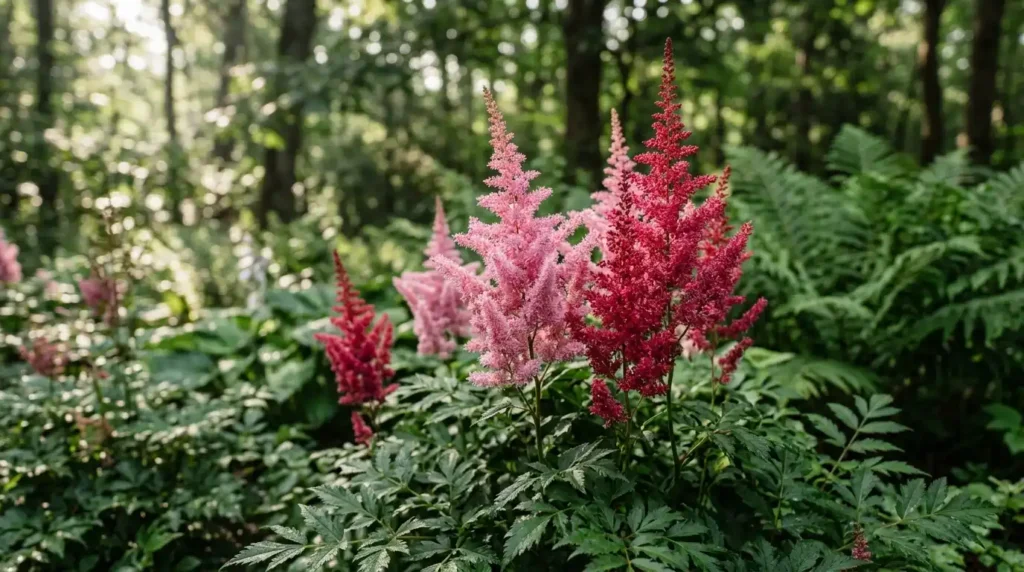
Honestly, if you’ve got a shady corner needing life, the astilbe plant might be perfect. This feathery perennial produces plume-like spikes in pink, red, white, and lavender above fern-like foliage. Native to Asia and North America, it’s hardy in zones 3-9. This astilbe plant is easy-care, rewarding you with reliable blooms year after year.
Astilbe Plant Care Card
| Category | Details |
|---|---|
| Common Name | Astilbe, false spirea, false goat’s beard |
| Botanical Name | Astilbe spp. |
| Family | Saxifragaceae |
| Plant Type | Herbaceous perennial |
| Mature Size | 1-4 ft. tall, 1-3 ft. wide |
| Sun Exposure | Partial shade to full shade |
| Soil Type | Rich, moist, well-draining |
| Soil pH | Slightly acidic (5.5-6.5) |
| Hardiness Zones | 3-9 (USDA) |
| Native Area | Asia, North America |
| Bloom Time | Late spring through summer |
| Toxicity | Non-toxic to pets and humans |
Astilbe Plant Care
An astilbe plant thrives with minimal care once it’s settled into the right spot in your garden. Here’s what you need to know about sun, soil, water, and maintenance for your astilbe plant. With the right placement, this plant practically takes care of itself.
Light
An astilbe plant prefers partial to full shade, needing 2-4 hours of dappled morning light for healthy leaves and strong blooms. Too little light causes sparse, weak spikes. Try a spot near shade lovers like calla lily, and check Penn State Extension for regional growing guides.
Soil
An astilbe plant wants rich, humus-heavy soil that drains well without staying soggy, with a slightly acidic pH of 5.5-6.5. Mix compost into garden soil and avoid heavy clay. See USDA NRCS on drainage, which matters for iris and liatris too.
Water
An astilbe plant is thirsty compared to many other perennials, so plan on watering 2-3 times a week during the growing season. Check soil moisture by sticking a finger an inch deep; if it’s dry, your astilbe plant is ready for water.
In summer heat, you may need to water more often, while cooler fall weather usually means you can ease off. Established plants tolerate brief dry spells better than new transplants.
Yellowing leaves often signal too much water, while crispy brown edges point to too little. Adjust your schedule based on what the leaves are telling you.
Temperature and Humidity
An astilbe plant handles a wide temperature range and is fully frost-hardy once established, making it a solid choice for cold winter climates. It struggles more in extreme summer heat, especially above 85°F, when afternoon shade becomes essential for keeping an astilbe plant comfortable.
This plant appreciates higher humidity and consistently moist air, which is one reason it does so well near ponds or water features. A 2-inch layer of mulch helps protect roots through harsh winters and retains moisture in summer.
Fertilizer
Feed your astilbe plant with a balanced, slow-release fertilizer once in early spring as new growth appears. A second light feeding after the first bloom flush can encourage more flowers on your astilbe plant. Stop fertilizing by late summer so the plant can prepare for dormancy naturally.
Types of Astilbe
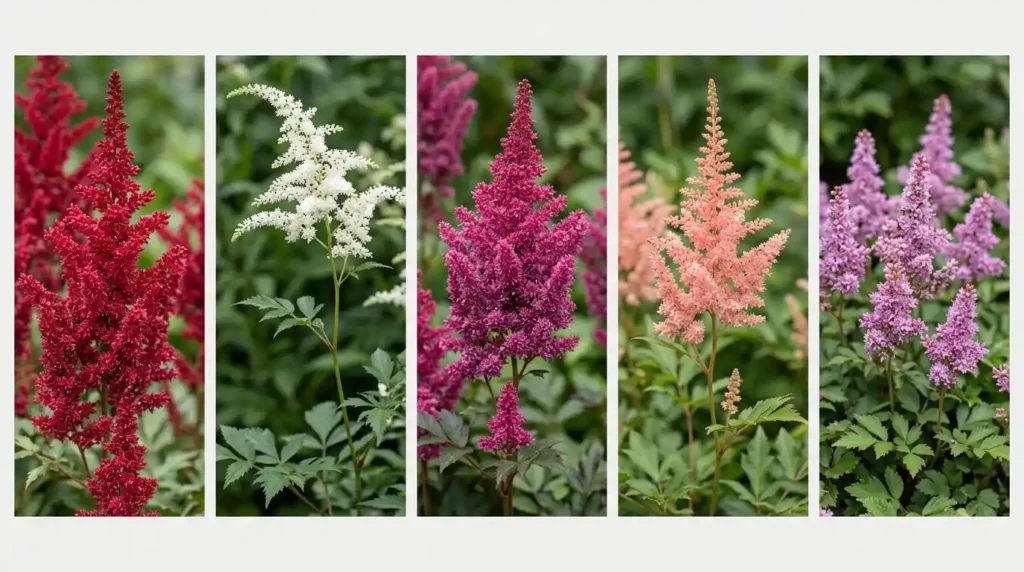
An astilbe plant comes in dozens of cultivars, so there’s a shade and size to fit nearly any garden design. Similar to aster, color variety makes it easy to build a layered shade border with different astilbe plant types. Here are a few standout varieties worth seeking out.
- Astilbe ‘Fanal’: Deep crimson-red plumes on compact, 2-foot plants. One of the earliest astilbes to bloom, with striking dark green foliage.
- Astilbe ‘Bridal Veil’: Pure white, arching flower plumes that create a soft, romantic look. Excellent for brightening deeply shaded corners.
- Astilbe ‘Visions’: Bright raspberry-pink, dense plumes with a sweet fragrance. A shorter variety, making it great for borders.
- Astilbe ‘Peach Blossom’: Soft peachy-pink flowers with a gentle, old-fashioned charm. Performs well even in slightly drier soil than other types.
- Astilbe ‘Chinensis Pumila’: A dwarf, spreading variety with lilac-pink blooms. Works well as a groundcover under trees.
Pruning
Prune your astilbe plant in late fall or early spring, once flower spikes have faded and turned brown. Remove spent blooms and any dead or damaged foliage down to the ground using clean, sharp shears.
Cutting back old growth improves air circulation and keeps the astilbe plant looking tidy for the following season. It also redirects energy toward root development, which means stronger blooms next year for your astilbe plant. Some gardeners leave the dried plumes over winter for visual interest, then cut back in early spring instead.
Propagating Astilbe
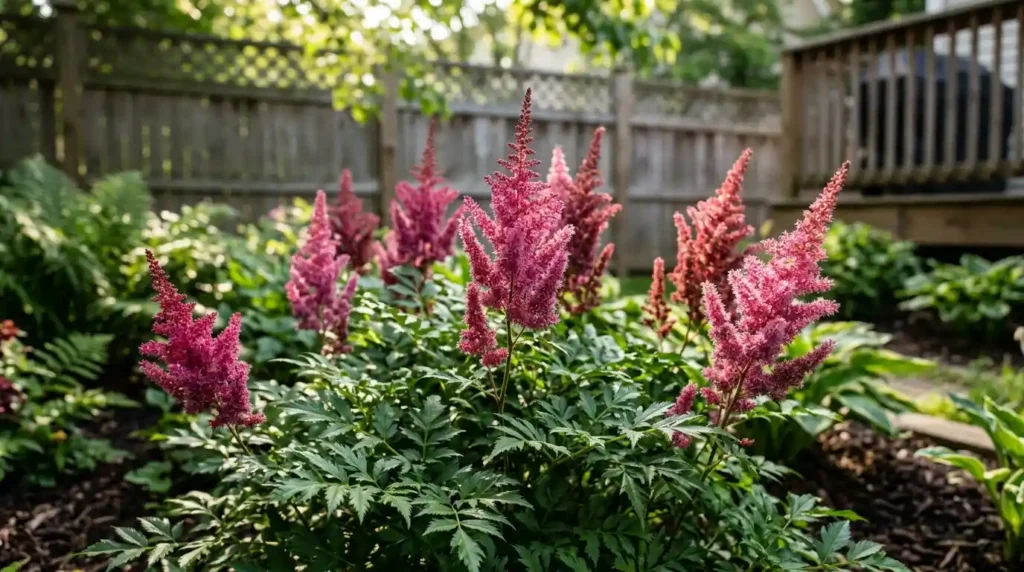
Spring is the best time to propagate an astilbe plant, right as new growth emerges and the plant is actively growing. Division is by far the easiest and most reliable method for home gardeners looking to multiply their astilbe plant collection.
Propagating by Division
Division is the go-to method for astilbe plant propagation, and it’s simple even for beginners. You’ll need a garden fork, a sharp knife or spade, and a prepared planting spot with moist, rich soil.
- Step 1: Dig up the entire root clump carefully, keeping as much root intact as possible.
- Step 2: Shake off excess soil so you can clearly see the natural root sections.
- Step 3: Use a clean knife to slice the clump into sections, each with roots and at least one growth point.
- Step 4: Replant each division immediately at the same depth it was growing before.
Water thoroughly after replanting, and expect new growth within 2-3 weeks as roots settle in.
Propagating from Seeds
Growing an astilbe plant from seed takes longer but works well if you’re patient. Sprinkle seeds on top of moist potting mix, since they need light to germinate. Keep the soil consistently damp and place the tray somewhere warm to give your future astilbe plant the best start.
Germination typically takes 3-4 weeks, though seedlings can take two full seasons before they’re ready to bloom. This method suits gardeners who enjoy watching plants grow from scratch, similar to starting gerbera daisy from seed. Cornell Cooperative Extension has additional guidance on seed-starting timelines for perennials.
Planting and Transplanting
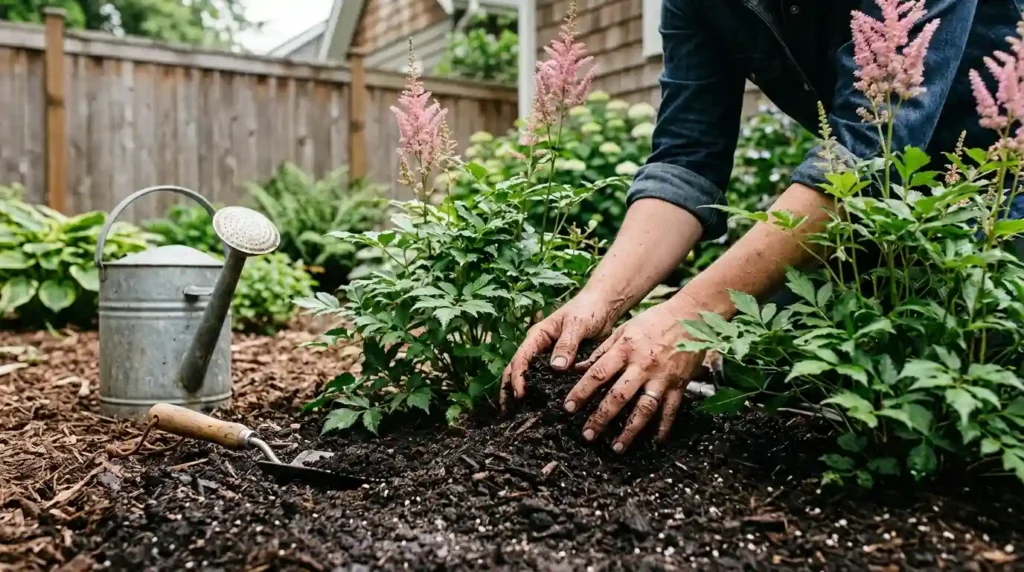
Plant astilbe in spring or early fall when temperatures are mild and rainfall is more reliable. Space plants 1-3 feet apart depending on the mature size of your chosen variety, since good airflow helps prevent fungal issues.
Dig a hole as deep as the root ball and twice as wide, then backfill with soil enriched with compost. Water deeply right after planting to help roots establish. Divide mature clumps every 3-4 years in early spring to keep plants vigorous and blooming well.
Common Pests and Diseases
Like most garden perennials, astilbe can occasionally face pest or disease issues, though it’s fairly resistant overall. Catching problems early makes them much easier to manage.
Aphids
Look for clusters of tiny green or black insects on new growth and flower buds. Treat with a strong spray of water or insecticidal soap applied weekly.
Spider Mites
Look for fine webbing and speckled, dull leaves, especially during hot, dry spells. Treat with regular misting and insecticidal soap to disrupt their life cycle.
Powdery Mildew
Look for a white, powdery coating on leaves, usually in humid, crowded conditions. Improve air circulation and treat with a fungicide labeled for ornamental perennials.
Root Rot
Look for mushy, blackened roots and wilting despite moist soil. Improve drainage immediately and avoid overwatering going forward.
Common Problems
Here’s how to troubleshoot common issues:
Poor or No Blooms
If your astilbe isn’t flowering, insufficient sun is often the main culprit, since flower buds need some light to form. Over-fertilizing with high-nitrogen feed can also push leafy growth instead of blooms. Improper pruning at the wrong time may remove next season’s buds. Move plants to a spot with a bit more morning light, switch to a balanced fertilizer, and prune only after flowering ends.
Yellow or Browning Leaves
Yellowing leaves usually point to overwatering or soil that simply won’t drain. Poor drainage suffocates roots, preventing them from taking up nutrients properly. Nutrient deficiency, especially of nitrogen, can also cause pale, yellowing foliage. Cut back watering, amend heavy soil with compost, and apply a balanced fertilizer in spring. If you’re troubleshooting similar drainage issues elsewhere, our dianthus guide covers comparable moisture-related problems.
Wilting or Drooping
Underwatering is the most common cause of sudden wilting, particularly in hot weather. Transplant shock can also cause temporary drooping after moving or dividing plants. Heat stress from too much direct sun makes leaves droop by midday. Water deeply, provide afternoon shade, and be patient with recently transplanted astilbe.
Leggy or Sparse Growth
Insufficient light is the leading cause of thin, leggy astilbe with weak stems. Over-fertilizing can also encourage floppy, sparse growth instead of dense foliage. Relocate to a spot with better dappled light and cut back on fertilizer, then prune to encourage bushier growth.
FAQ
Where is the best place to plant astilbe?
Plant astilbe in partial to full shade with rich, consistently moist soil. Near ponds, under trees, or in woodland gardens works especially well for this shade-loving perennial.
Does astilbe come back each year?
Yes, astilbe is a reliable perennial that returns each spring in zones 3-9. Dividing clumps every few years keeps plants healthy and blooming strong.
What are the cons of astilbe?
Astilbe needs consistent moisture and struggles in drought or intense summer heat. It also requires some shade, limiting placement options in sunnier gardens.
Do astilbe plants spread?
Astilbe spreads slowly through its root clumps, gradually widening over several years. Dividing every 3-4 years controls size and creates new plants for free.
4 thoughts on “How to Grow and Care for Astilbe Plant”
Comments are closed.