
In This Article
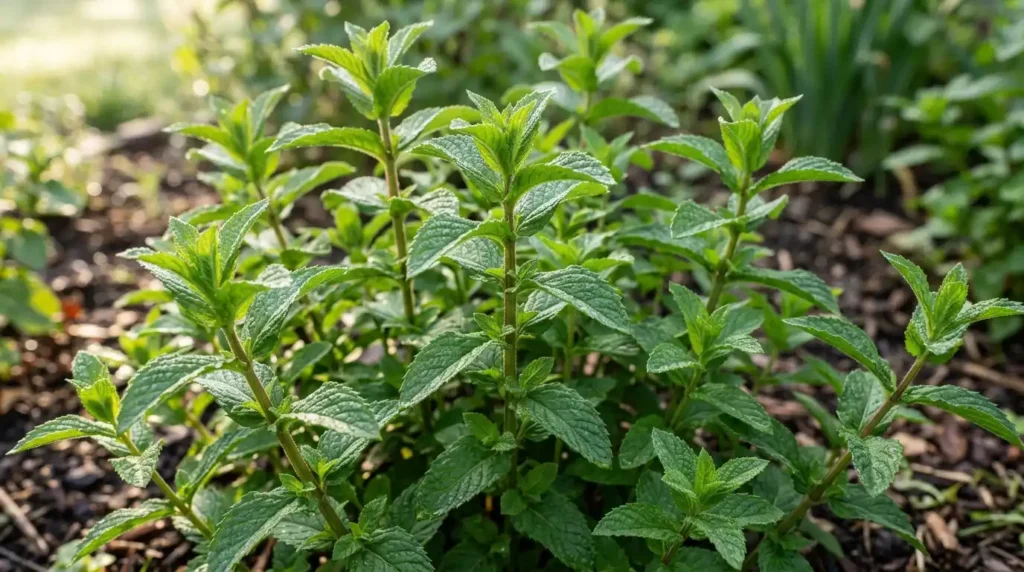
Peppermint Plant (Mentha × piperita) is a fast-spreading perennial herb with square stems, toothed leaves, and a sharp, cool scent. This peppermint plant is a natural hybrid of watermint and spearmint, native to Europe and hardy in USDA zones 3-11. Honestly, peppermint plant care is easy, forgiving, and perfect for beginners.
Peppermint Plant Care Card
| Category | Details |
|---|---|
| Common Name | Peppermint |
| Botanical Name | Mentha × piperita |
| Family | Lamiaceae (mint family) |
| Plant Type | Herbaceous perennial |
| Mature Size | 1–3 ft. tall x 1.5–2 ft. wide (spreads by rhizomes) |
| Sun Exposure | Full sun to partial shade |
| Soil Type | Rich, moist, well-draining |
| Soil pH | 6.0–7.0 (neutral) |
| Hardiness Zones | 3–11 (USDA) |
| Native Area | Europe |
| Bloom Time | Summer |
| Toxicity | Non-toxic to humans; can cause mild stomach upset in cats and dogs in large amounts |
Peppermint Plant Care
This peppermint plant thrives with almost no fuss once it settles into the right spot. Here’s what you need to know about sun, soil, water, and general upkeep. With the right placement, this herb practically takes care of itself.
Light
Peppermint does best with full sun but tolerates partial shade better than most herbs. Aim for four to six hours of direct sun daily, matching the light range on the USDA PLANTS profile. Without enough light, expect leggy stems and weaker flavor move plants brighter for denser growth.
Soil
This peppermint plant isn’t picky but does best in rich, loamy soil that holds moisture without staying soggy, with a neutral pH of 6.0-7.0. For heavy clay, work in compost first. Avoid compacted ground or pure sand, unlike the gritty mix preferred by tarragon.
Water
Keep soil consistently moist, watering twice a week in warm weather check by feeling an inch down. Water containers more often in summer; cut back in fall and winter. Yellowing leaves signal overwatering; crispy leaves mean thirst. A well-watered peppermint plant bounces back fast from missed days.
Temperature and Humidity
Peppermint grows best between 55 and 70°F, though it handles brief heat spikes without much drama. It’s quite cold-hardy too, often dying back in winter and returning reliably from the roots come spring.
A layer of mulch over the root zone helps protect this peppermint plant through harsh winters in colder zones. This plant also appreciates a bit of humidity, so it thrives near other moisture-loving companions like red creeping thyme.
Fertilizer
Feed peppermint lightly with a balanced, organic fertilizer once a month during the growing season. Too much fertilizer actually weakens the essential oils that give the leaves their punchy flavor, a trade-off similar to what growers see with strongly aromatic herbs like ruda. Stop feeding by early fall as the plant heads into dormancy.
Types of Peppermint
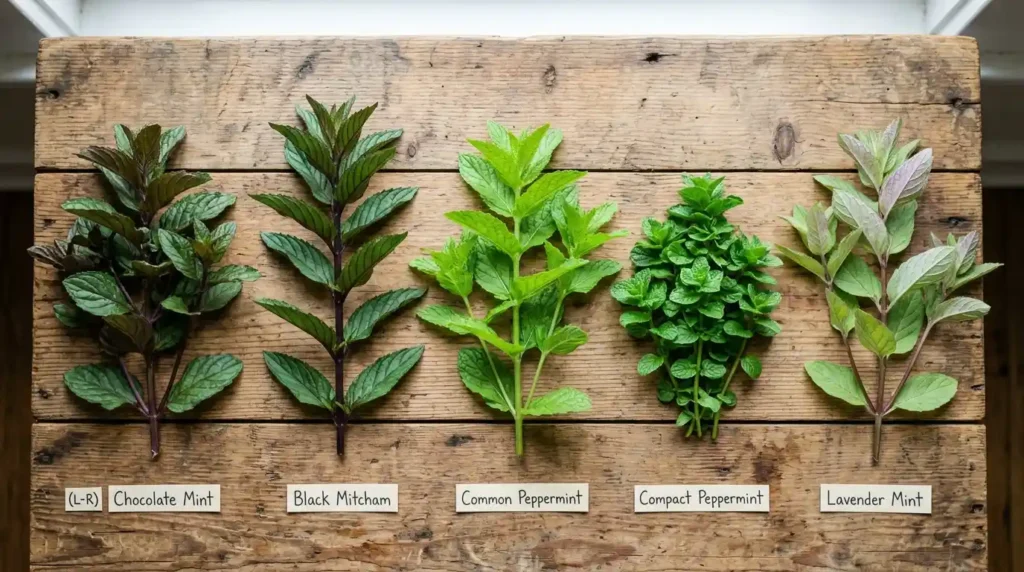
This peppermint plant has several popular varieties, each with its own twist on that classic minty flavor. Here’s a look at a few worth growing.
- Chocolate Mint (Mentha × piperita ‘Chocolate’): Dark green leaves with a faint cocoa scent alongside the classic peppermint kick. It’s a fun choice for desserts and herbal teas.
- Black Peppermint (Mentha × piperita ‘Vulgaris’): Features deep purple-black stems and darker foliage. Many gardeners consider it stronger and more pungent than standard peppermint.
- White Peppermint (Mentha × piperita ‘Officinalis’): A milder variety with lighter green stems and leaves. It’s often preferred for teas since the flavor is gentler.
- Candy Mint (Mentha × piperita ‘Candy’): Known for an extra-sweet aroma that’s popular in candy-making and flavoring. This variety tends to grow a bit more compact than others.
- Lavender Mint (Mentha × piperita ‘Lavender’): Combines a floral lavender note with the classic peppermint bite. It’s a favorite for herbal teas and homemade potpourri blends.
Pruning
Prune this peppermint plant regularly throughout the growing season to keep it bushy rather than tall and sparse. Pinch or trim the tips every few weeks, and cut back hard by about half in midsummer once flowering starts.
Use clean pruning shears or scissors, cutting just above a leaf node to encourage new branching. Regular trimming also boosts leaf production, similar to how deadheading benefits flowering plants like gaura.
Propagating Peppermint
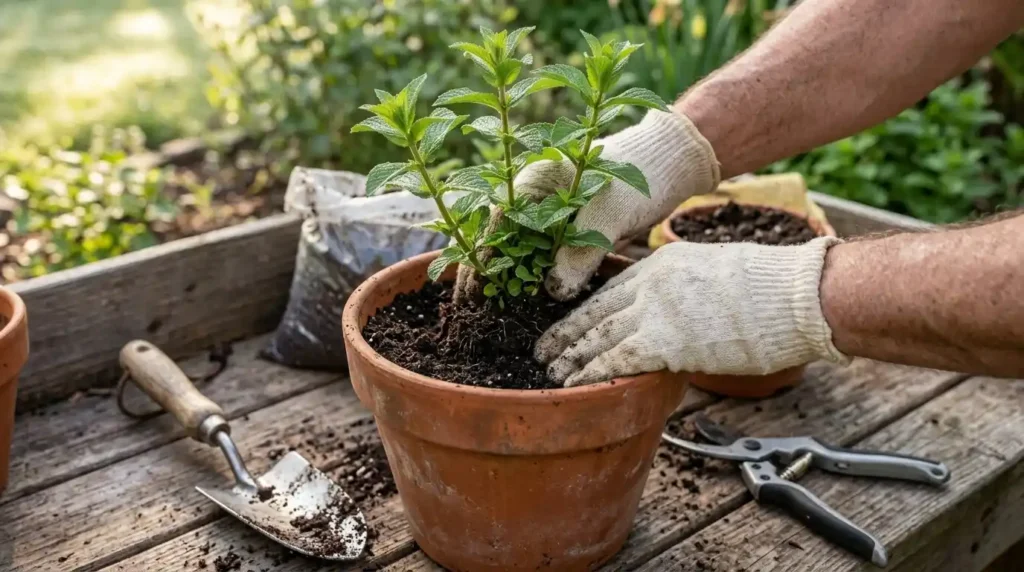
Spring and early summer are the best times to propagate, when the plant is actively growing and putting out fresh stems. Peppermint roots so easily that most gardeners never bother starting from seed.
Propagating by Division
Division is the fastest and most reliable way to multiply your peppermint plant. Here’s what you’ll need:
- A garden fork or trowel
- Sharp, clean pruning shears
- A new planting spot or container
Step 1: Dig up an established clump, digging wide to capture as much of the root system as possible. Step 2: Gently pull or cut the rhizome mass into sections, making sure each piece has roots attached. Step 3: Replant divisions immediately, spacing them about 18 inches apart in prepared soil. Step 4: Water thoroughly right after planting to help roots settle in.
New divisions typically take root within two to three weeks and start producing usable leaves shortly after.
Propagating by Stem Cuttings
This method works well if you’d rather not disturb the whole plant. Snip a 4-inch stem below a leaf node, strip the lower leaves, and place the cutting in a glass of water. Roots usually appear within seven to ten days, at which point you can transplant into soil.
Propagating from Seeds
Growing a peppermint plant from seed is possible, though it’s the slowest and least reliable option. Since peppermint is a hybrid, seedlings won’t always grow true to the parent plant. Sow seeds indoors six to eight weeks before your last frost, pressing them lightly into moist seed-starting mix without covering, since they need light to germinate. Keep the soil evenly moist, and expect sprouts within one to two weeks under warm conditions.
Planting and Transplanting
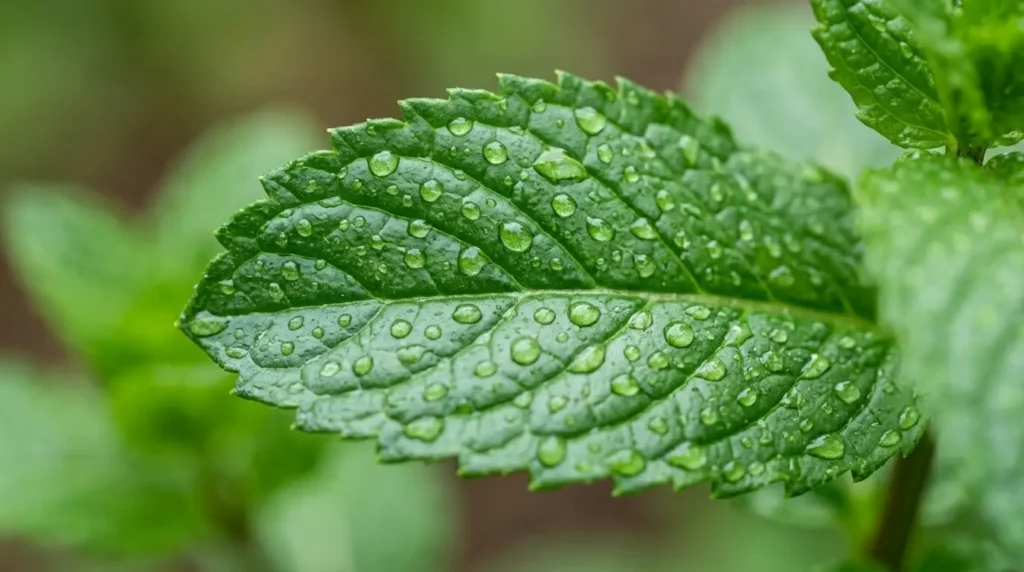
Plant this peppermint plant in spring after the last frost, or in early fall in milder climates. Because it spreads aggressively by rhizomes, space plants at least 18 to 24 inches apart, or better yet, grow it in a container to keep it contained.
Set root balls at the same depth they were growing previously, then water well to settle the soil. According to the North Carolina State Extension Gardener Plant Toolbox, peppermint spreads by rhizomes to form an aggressive ground cover, so many gardeners choose pots specifically to control its reach.
Divide established clumps every two to three years in spring to keep growth vigorous and prevent overcrowding.
Common Pests and Diseases
Like most garden herbs, this peppermint plant can occasionally run into a few pest and disease issues. Most problems are manageable with quick action and good garden hygiene.
Aphids
Look for clusters of tiny green or black insects on new growth and leaf undersides. Treat with a strong water spray or insecticidal soap applied weekly.
Spider Mites
Watch for fine webbing and stippled, dull-looking leaves, especially in hot, dry weather. The UC Statewide IPM Program recommends regular misting and insecticidal oil for control.
Powdery Mildew
A white, powdery coating on leaves signals this fungal disease, common in humid, crowded conditions. Improve air circulation and remove affected leaves promptly.
Root Rot
Mushy, blackened roots and wilting stems point to root rot from soggy soil. Improve drainage immediately and cut back watering right away.
Common Problems
Here’s how to troubleshoot common peppermint issues:
Poor or No Blooms
If your peppermint plant isn’t flowering, insufficient sunlight is often the culprit. Too much nitrogen fertilizer can also push leafy growth over blooms. Improper or overly aggressive pruning right before bloom time removes flower buds too. Move plants to a sunnier spot, ease up on fertilizer, and time pruning around bloom season for best results, the same fix that helps sun-loving bloomers like Texas sage flower reliably.
Yellow or Browning Leaves
Yellowing leaves usually mean overwatering or soil that drains poorly, leaving roots sitting wet. Nutrient deficiency, particularly nitrogen, can also cause pale, yellowing foliage. Cut back watering, improve drainage with compost, and feed lightly with a balanced fertilizer if leaves stay pale.
Wilting or Drooping
Underwatering is the most common cause of sudden wilting, especially in containers or hot weather. Transplant shock can also cause temporary drooping after moving or dividing plants. Heat stress during summer heat waves adds up too. Water deeply, provide afternoon shade if needed, and give transplants a week or two to recover.
Leggy or Sparse Growth
Insufficient light is usually behind thin, stretched-out stems with sparse leaves. Over-fertilizing can also push weak, leggy growth instead of bushy foliage. Move plants to a brighter spot and pinch back stems regularly to encourage fuller growth.
FAQ
What do peppermint plants keep away?
Peppermint’s strong scent is known to deter mice, ants, and some other insects. Gardeners often plant it near entryways or use dried leaves indoors as a natural repellent.
Does the peppermint plant come back every year?
Yes, peppermint is a hardy perennial that dies back in winter and returns from its roots each spring. It’s reliable in USDA zones 3 through 11 with minimal winter protection needed.
Is peppermint an indoor or outdoor plant?
Peppermint thrives outdoors in garden beds or containers with good sun and moisture. It can also grow indoors near a bright window, though outdoor growth tends to be more vigorous.
Do peppermint plants keep mice away?
Yes, the strong menthol scent is unpleasant to mice and other rodents. Placing pots near doorways or scattering dried leaves in problem areas can help discourage them.
1 thought on “How to Grow and Care for Peppermint Plant”
Comments are closed.