
In This Article
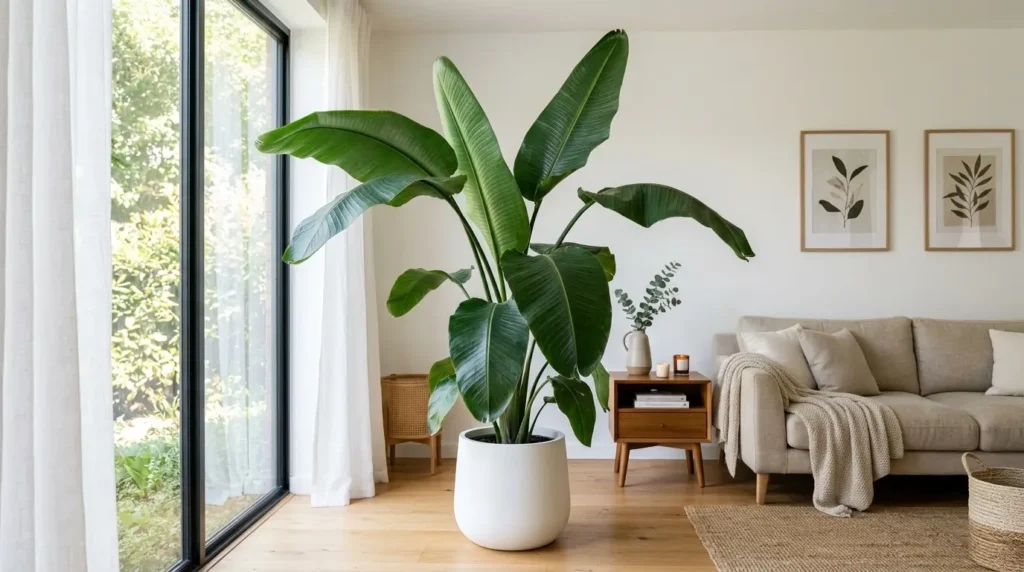
The banana leaf plant (Musa spp.) is a showstopper tropical native to Southeast Asia, known for its enormous, paddle-shaped leaves. Honestly, it’s hard not to fall in love. Despite its dramatic look, this banana leaf plant is surprisingly beginner-friendly — moderate care, big rewards.
Plant Care Card
| Field | Details |
|---|---|
| Common Name | Banana Leaf Plant, Banana Plant |
| Botanical Name | Musa spp. |
| Family | Musaceae |
| Plant Type | Tropical perennial |
| Mature Size | 4–12 ft tall × 3–8 ft wide (indoors: typically 4–6 ft) |
| Sun Exposure | Bright indirect to full sun |
| Soil Type | Rich, well-draining loamy soil |
| Soil pH | 5.5–7.0 |
| Hardiness Zones | USDA Zones 8–11 |
| Native Area | Southeast Asia, South Pacific, tropical Africa |
| Toxicity | Non-toxic to humans; mildly toxic to cats and dogs |
Banana Leaf Plant Care
The banana leaf plant is a moderate-care tropical that rewards attentive growers with stunning, fast-growing foliage. The sections below cover everything from light and soil to propagation and common problems. Don’t worry it’s easier than it looks, and you’ve totally got this.
Light
The banana leaf plant thrives in bright, indirect to full sunlight at least 6 hours daily. A south- or east-facing window works best indoors. Too little light causes leggy, pale growth. Too much direct afternoon sun scorches leaves. A sheer curtain filters harsh summer rays perfectly.
Soil
This plant loves rich, well-draining soil waterlogged roots are its biggest enemy. Try 2 parts potting soil : 1 part perlite : 1 part compost for the perfect mix. According to the University of Florida IFAS Extension, good drainage prevents root rot. Like the elephant ears plant, it prefers a pH of 5.5–7.0.
Water
Water thoroughly when the top 2–3 inches of soil dry out every 5–7 days in summer, 10–14 days in winter. Overwatering causes yellowing leaves and mushy stems; underwatering brings drooping, dry-edged foliage. Much like the calathea plant, it needs consistent moisture without ever sitting in soggy soil.
Temperature and Humidity
The banana leaf plant is happiest in 65–85°F (18–29°C). It can tolerate brief dips to 50°F, but anything colder will cause leaf damage and stunted growth. Keep it away from drafts, air conditioning vents, and heating units sudden temperature swings stress it out fast.
Humidity-wise, aim for 50–60% or higher. Most homes run a bit dry, especially in winter. A humidifier, pebble tray with water, or regular misting can all help. Grouping it with other tropical plants also naturally raises the humidity around it.
Fertilizer
Feed your banana leaf plant a balanced liquid fertilizer (10-10-10 or similar) every 2–4 weeks during spring and summer. According to Penn State Extension’s fertilization guidelines, reducing fertilizer during the dormant season prevents salt buildup. Cut back to monthly in fall and stop entirely in winter.
Types of Banana Leaf Plants
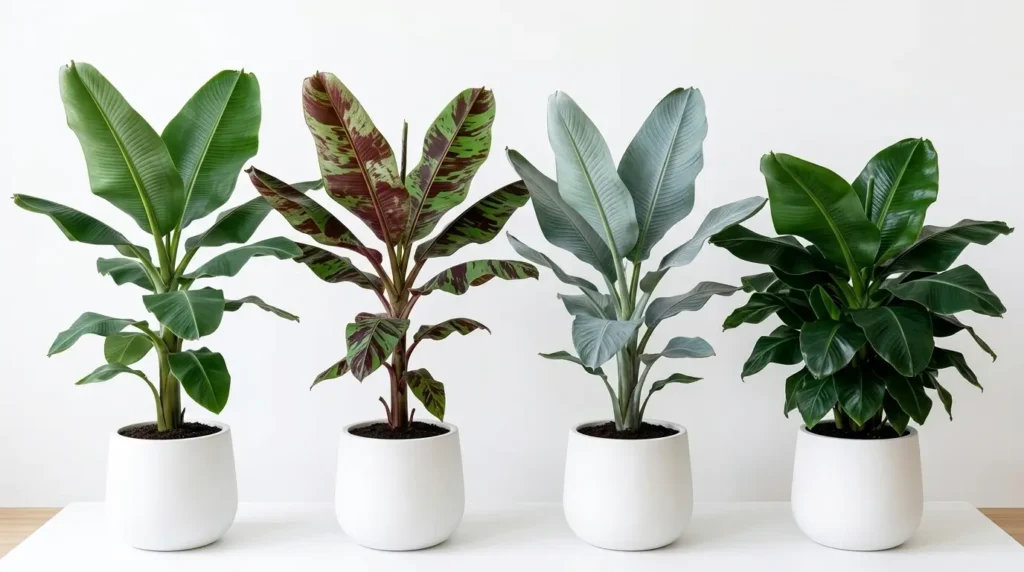
There are several banana varieties worth knowing about. Here’s a quick breakdown of popular types:
- Dwarf Cavendish (Musa acuminata ‘Dwarf Cavendish’): The most popular indoor variety, growing 4–6 feet tall with wide, dark green leaves and occasional fruit production in ideal conditions.
- Musa basjoo (Japanese Banana): The most cold-hardy variety, surviving down to Zone 5 with mulching. It won’t fruit in most climates but produces lush, dramatic foliage.
- Red Banana (Musa acuminata ‘Zebrina’): Stunning burgundy and green striped leaves with reddish undersides. A real conversation piece but slightly harder to find.
- Ice Cream Banana (Musa acuminata ‘Blue Java’): Silvery-blue leaves that turn green as they mature, known for producing sweet, vanilla-like fruit in warm climates.
Propagating Banana Leaf Plant
The best time to propagate is spring or early summer, when the plant is actively growing and recovery is fastest.
Propagating by Division (Pups/Offshoots)
Division is by far the easiest and most reliable method for the banana leaf plant. Mature plants regularly produce “pups” small offshoots that appear at the base. You’ll love how simple this is.
Materials needed:
- Sharp, sterilized knife or garden spade
- Fresh potting mix (well-draining)
- A new pot with drainage holes
- Optional: rooting hormone powder
Steps:
Step 1: Wait until the pup is at least 6–8 inches tall and has developed a few leaves of its own. Gently brush away soil to expose where it connects to the mother plant.
Step 2: Use your sterilized knife or spade to cut the pup away from the parent, making sure to keep some roots attached. A clean cut reduces infection risk.
Step 3: Let the cut end dry for a few hours (or dust with rooting hormone). Then pot the pup into its own container with fresh, well-draining potting mix. Water lightly.
Step 4: Place the new plant in a warm, bright spot with indirect light. Avoid direct sun until it’s established this usually takes 3–4 weeks.
Expect the pup to show new growth within 4–6 weeks. Similar to the shampoo ginger plant, banana plants propagate best through natural offsets rather than cuttings.
Propagating by Corms
If you’re starting from scratch, you can also grow a banana leaf plant from a corm (the underground base). Plant the corm about 2–3 inches deep in rich soil, keep it consistently moist and warm (above 70°F), and expect sprouts in 2–4 weeks. This method takes longer but works great for rare varieties.
Potting and Repotting
When to repot: Look for roots poking out of drainage holes, soil drying out unusually fast, or growth slowing down mid-season. These are clear signs the banana leaf plant has outgrown its current home usually every 1–2 years.
How to repot: Choose a new pot that’s 2–3 inches larger in diameter. Go too big and the excess soil stays wet too long, risking root rot. Make sure the new pot has good drainage holes. Gently loosen the root ball, remove any dead or mushy roots, and replant in fresh potting mix. Water thoroughly after repotting and keep it in indirect light for a week or two while it settles in.
Common Pests and Diseases
Like most houseplants, the banana leaf plant can occasionally attract unwanted guests. Regular inspection goes a long way toward keeping infestations small and manageable.
Spider Mites
Look for fine webbing under leaves and stippled, pale leaf surfaces. Treat with a neem oil spray or insecticidal soap, repeating every 5–7 days.
Mealybugs
White, cottony clusters at leaf joints are the telltale sign. Remove manually with rubbing alcohol on a cotton swab, then follow up with neem oil.
Scale Insects
Hard brown bumps along stems and leaves indicate scale. Scrape off with a soft brush, then apply horticultural oil to affected areas.
Aphids
Small, soft-bodied insects clustering on new growth. A strong stream of water knocks most off; follow up with insecticidal soap for stubborn infestations.
Fungus Gnats
Tiny flies hovering around soil suggest overwatering. Let the soil dry more between waterings and use yellow sticky traps to reduce adult populations.
According to the University of California Statewide IPM Program, early detection and consistent treatment are the most effective strategies for houseplant pest control.
Common Problems
Here’s how to troubleshoot common issues:
Yellow Leaves
Yellow leaves are the most common banana leaf plant complaint, but they don’t always spell disaster. Overwatering is the top cause check if soil is soggy and let it dry out before watering again. A nutrient deficiency, especially nitrogen, can also cause yellowing feed with a balanced fertilizer during the growing season. Finally, older leaves naturally yellow and die off as the plant grows. If it’s just the lowest leaves, that’s totally normal aging.
Brown Leaf Tips
Brown, crispy tips are almost always a humidity issue the air around your plant is too dry. Misting or a humidifier helps fast. Low-quality tap water (high in fluoride or chlorine) can also cause tip burn; try filtered or rainwater instead. Underwatering causes a similar symptom, but you’ll also notice the whole leaf looking limp and dull.
Drooping or Wilting Leaves
Drooping usually points to a watering problem either too much or too little. Check the soil first: soggy soil means overwatering; bone-dry soil means it’s thirsty. Both are an easy fix once you identify the cause. Similar drooping patterns show up in the arrowhead plant for the same reasons, and the fix is identical adjust your watering schedule.
Leggy Growth / Sparse Foliage
If your banana leaf plant is producing small leaves on long, stretched stems, insufficient light is almost certainly the culprit. Move it closer to a bright window or supplement with a grow light. You can also trim back leggy stems to encourage bushier, more compact regrowth.
FAQ
What is a banana leaf plant?
The banana leaf plant is a fast-growing tropical known for its enormous, dramatic foliage. It belongs to the Musa genus and thrives in warm, humid environments.
How to look after a banana leaf plant?
Provide bright indirect light, consistent watering when the top few inches dry out, high humidity, and fertilize during the growing season for best results.
Do banana leaf plants like sun or shade?
Banana leaf plants prefer bright indirect light to full sun. Indoors, a south-facing window works best; avoid harsh, direct afternoon sun that can scorch leaves.
Can banana leaf plants grow indoor?
Yes, banana leaf plants grow well indoors in large pots. Choose a dwarf variety, give it a bright spot, and maintain good humidity for healthy, lush growth.