
In This Article
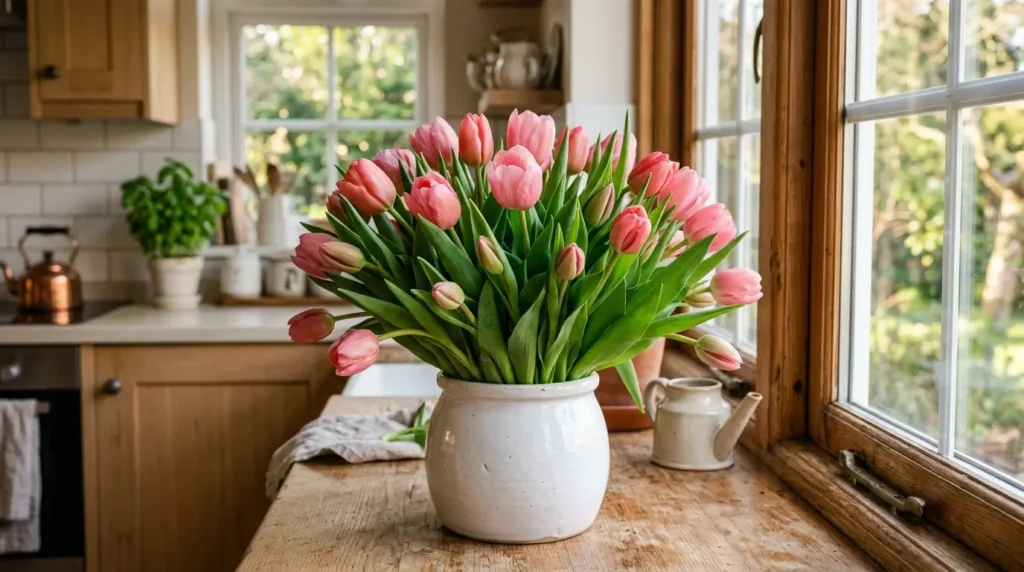
Pink tulips (Tulipa spp.) are spring’s most cheerful gift. Their smooth, cup-shaped blooms range from soft blush to vivid magenta. Native to Central Asia and Turkey, these beloved flowers are surprisingly beginner-friendly. Whether planting bulbs outdoors or keeping a potted bunch indoors, pink tulips reward minimal effort beautifully.
Plant Care Card
| Detail | Info |
|---|---|
| Common Name | Pink Tulip |
| Botanical Name | Tulipa spp. |
| Family | Liliaceae |
| Plant Type | Perennial bulb |
| Mature Size | 10–24 inches tall, 3–6 inches wide |
| Sun Exposure | Full sun to bright indirect light |
| Soil Type | Well-draining, sandy or loamy soil |
| Soil pH | 6.0–7.0 |
| Hardiness Zones | USDA Zones 3–8 |
| Native Area | Central Asia, Turkey, Southern Europe |
| Toxicity | Toxic to cats, dogs, and horses |
Pink Tulips Care
Pink tulips are easy to grow and make a great choice for beginner gardeners. The sections below cover everything from light and watering to propagating and common problems. You’ve totally got this even if this is your first bulb garden!
Light
Pink tulips love full sun. Ideally, aim for at least 6 hours of direct sunlight per day during their blooming season in spring. A south- or west-facing garden bed is perfect.
Too little light leads to weak, floppy stems and fewer blooms. Too much harsh afternoon sun in warmer climates can cause the petals to fade faster. If you’re growing them indoors in a pot, place them near your brightest window a south-facing sill works great.
Soil
Good drainage is everything with pink tulips. They hate sitting in soggy soil, which quickly leads to bulb rot. A sandy or loamy mix works best. If your garden soil is heavy clay, mix in some perlite or coarse sand to loosen it up.
A simple DIY mix of 2 parts garden soil, 1 part perlite, and 1 part coarse sand does the trick beautifully. According to Penn State Extension’s guide on soil drainage, well-draining soil is one of the most important factors in preventing root rot in bulb plants.
Water
Water pink tulip bulbs right after planting in fall, then let rainfall do the work. During active spring growth, water once a week if there’s been less than an inch of rain. Check that the top 2–3 inches of soil feel dry before watering again.
Overwatering is the #1 tulip mistake. Signs include mushy stems or yellowing foliage before bloom time. Underwatering, on the other hand, shows up as limp, wilted leaves.
Reduce watering significantly once flowers fade and foliage yellows. This mimics the dry summer dormancy tulips naturally experience. Similar seasonal watering adjustments apply to iris flowers, which also go dormant after blooming.
Temperature and Humidity
Pink tulips need a cold dormancy period to bloom well. They thrive where winter temperatures drop below 40°F (4°C) for at least 12–14 weeks. During spring blooming, they prefer 50–65°F (10–18°C).
Humidity isn’t a major concern outdoors, but avoid planting in spots with poor air circulation. Indoors, keep potted tulips away from heating vents and drafts sudden temperature swings can cause premature bloom drop.
Fertilizer
Feed pink tulips with a balanced bulb fertilizer (10-10-10) at planting time in fall and again when shoots appear in spring. Once every season is plenty don’t over-fertilize, as excess nitrogen encourages leafy growth at the expense of flowers. Skip feeding entirely after blooms fade. According to University of Minnesota Extension’s fertilization guidelines, slow-release fertilizers work best for spring bulbs.
Types of Pink Tulips
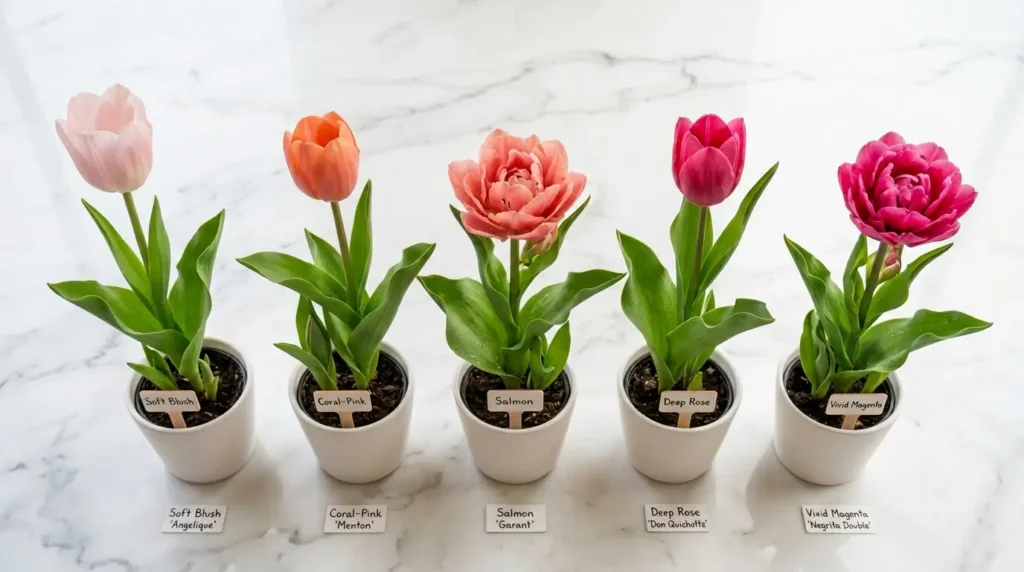
There are dozens of gorgeous pink tulip varieties to choose from. Here are some favorites:
- ‘Angelique’ (Tulipa ‘Angelique’) A classic double tulip with layers of soft pink petals that look almost like peonies. Blooms mid-to-late spring and is great for cutting.
- ‘Apricot Beauty’ (Tulipa ‘Apricot Beauty’) Soft salmon-pink blooms with a warm peachy center. An early-season single bloom that’s extremely popular in cottage gardens.
- ‘Dynasty’ (Tulipa ‘Dynasty’) Deep rose-pink with a bright white base inside. A Darwin Hybrid variety known for large blooms and strong stems.
- ‘Pink Impression’ (Tulipa ‘Pink Impression’) Vivid rose-pink blooms on tall, sturdy stems. One of the most reliable perennial pink tulips available.
- ‘Foxtrot’ (Tulipa ‘Foxtrot’) A double early tulip in soft blush-pink. Compact and great for containers or front-of-border planting.
Propagating Pink Tulips
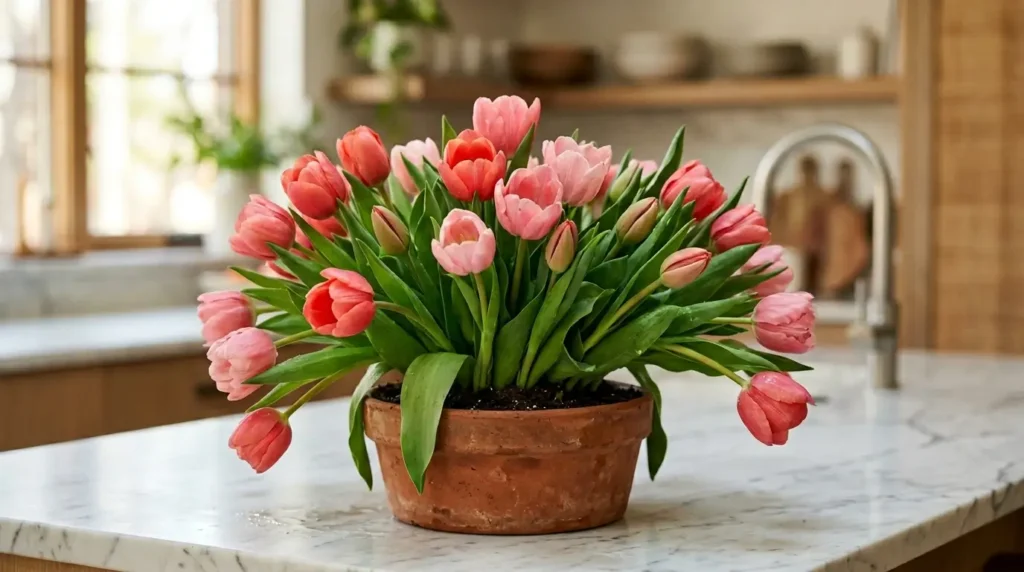
The best time to propagate pink tulips is in late summer or early fall, right before replanting season. The most reliable method is by dividing offsets the small “daughter” bulbs that form around the mother bulb each year.
Propagating by Division
This is the most common and easiest way to multiply your pink tulips. It works best after bulbs have been in the ground for 2–3 years. Similar division methods work great for crocus flowers, which also multiply via corms and offsets.
Materials needed:
- Garden fork or trowel
- Clean, dry storage area
- Well-draining potting mix or garden bed
- Bulb fertilizer
Steps:
- Step 1: After foliage dies back completely in early summer, gently dig up the entire bulb cluster using a garden fork. Be careful not to slice through the bulbs.
- Step 2: Brush off excess soil and separate the small offset bulbs from the main mother bulb. Only keep offsets that are firm and have no soft spots or mold.
- Step 3: Allow the bulbs to dry in a cool, airy space for 2–3 weeks. Store them in a mesh bag or paper bag in a cool, dry location (around 60–65°F) until fall planting time.
- Step 4: In fall (before the first hard frost), replant all bulbs large and small pointed end up, at a depth of 2–3 times the bulb’s height. Smaller offsets may take 1–2 years to reach blooming size.
Expect full blooms from divided offset bulbs within 1–2 growing seasons.
Potting and Repotting Pink Tulips
Pink tulips grow beautifully in containers just make sure your pot has drainage holes at the bottom. A pot that’s at least 8–10 inches deep gives bulbs enough room to establish.
Plant bulbs in fall, water well, and move the pot to a cold location (like an unheated garage) for their chilling period. Refresh the soil each fall when you replant. Since tulip bulbs decline in performance after a few years, it’s best to replace potted bulbs annually for the best blooms. If you enjoy container bulb gardening, ranunculus flowers are another stunning option that thrives in pots with very similar care.
Common Pests and Diseases
Like most garden bulbs, pink tulips can occasionally deal with a few unwanted visitors. Here’s what to watch for:
Aphids
Look for clusters of tiny green or black insects on stems and leaves. Treat with a strong stream of water or spray with insecticidal soap.
Spider Mites
Tiny webbing under leaves is a key sign. Treat with neem oil spray or increase air circulation around plants.
Slugs and Snails
Look for ragged holes in leaves and a silvery slime trail. Use copper tape around pots or iron phosphate bait near plants.
Botrytis (Gray Mold)
Gray, fuzzy mold on petals or foliage signals botrytis. Remove affected parts immediately and improve air circulation. According to University of California IPM guidelines, good spacing between plants significantly reduces fungal disease risk.
Common Problems with Pink Tulips
Here’s how to troubleshoot common issues:
Yellow Leaves / Yellowing Leaves
Yellow leaves on pink tulips are actually normal after blooming that’s just the plant going dormant. However, yellowing during the bloom period usually signals overwatering or bulb rot. Check the soil drainage and reduce watering immediately. A nutrient deficiency can also cause pale yellow leaves early in the season; a light feed of balanced fertilizer often fixes this. For similar yellowing issues, see our calla lily care guide.
Brown Leaves / Brown Leaf Tips
Brown leaf tips usually mean low humidity, inconsistent watering, or fluoride in tap water. Try using filtered water or letting tap water sit overnight before using. Brown patches on petals often signal fungal issues remove affected blooms quickly.
Drooping or Wilting Leaves
Drooping is usually a watering issue either too much or too little. Check soil moisture first. If soil is soggy, hold off watering and improve drainage. If dry, give a deep drink. Drooping in warm weather can also just mean the plant is naturally declining after peak bloom. Similar wilting issues appear in gerbera daisies when watering goes off track.
Leggy Growth / Sparse Foliage
Long, spindly stems with few leaves usually mean the plant isn’t getting enough light. Move container tulips to a sunnier spot. Outdoors, make sure tulips aren’t shaded by taller plants or structures during their spring growth period. Unfortunately, leggy growth can’t really be reversed mid-season plan for a sunnier spot next fall.
FAQ
What do pink tulips symbolize?
Pink tulips symbolize affection, care, and good wishes. They are often given to express love that is gentle and heartfelt, not overly romantic.
Can you use Miracle-Gro on tulips?
Yes, Miracle-Gro works well on tulips. Use it at half-strength during spring growth. Avoid over-fertilizing, as it can reduce blooms.
What does 🌷 mean in texting?
The 🌷 emoji usually represents love, spring, or beauty. People also use it to express affection or admiration in a sweet, lighthearted way.
What flower was worth more than gold?
Tulips were once worth more than gold during “Tulip Mania” in 1630s Holland. Single bulbs sold for prices equivalent to a house at peak speculation.