
In This Article
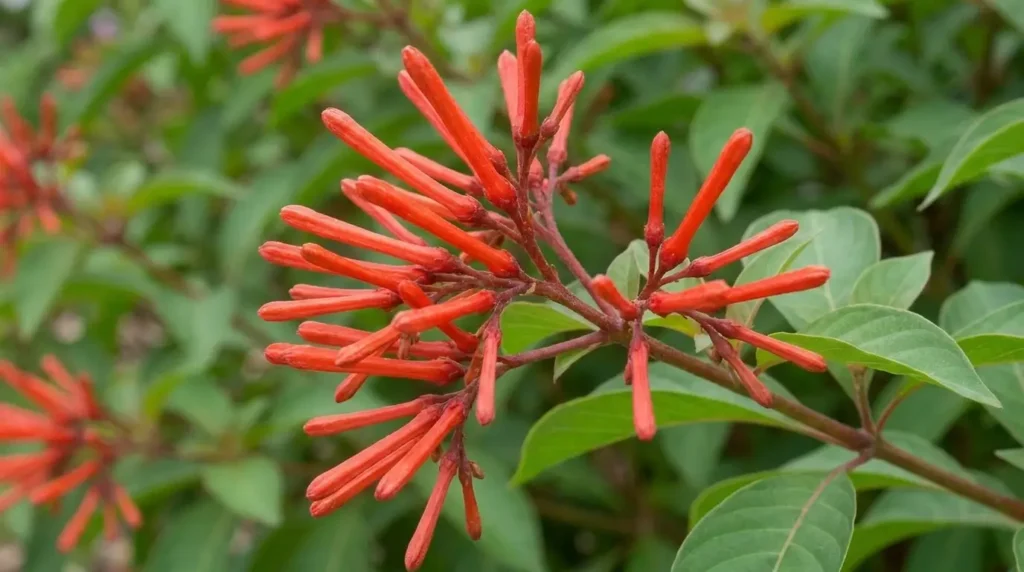
Firebush (Hamelia patens) dazzles with tubular orange-red flower clusters from spring through fall. Native to the Americas, this heat-loving shrub grows as a perennial in USDA zones 8–11 and as an annual in cooler climates. Honestly, beginner or expert this plant is genuinely hard to mess up.
Plant Care Card
| Detail | Info |
|---|---|
| Common Name | Firebush, Scarlet Bush |
| Botanical Name | Hamelia patens |
| Family | Rubiaceae |
| Plant Type | Perennial shrub (annual in cooler zones) |
| Mature Size | 5–10 ft tall x 4–6 ft wide |
| Sun Exposure | Full sun to partial shade |
| Soil Type | Well-draining, sandy or loamy |
| Soil pH | 5.5–7.0 (slightly acidic to neutral) |
| Hardiness Zones | 8–11 (USDA) |
| Native Area | Florida, Texas, Central & South America |
| Bloom Time | Spring through fall |
| Toxicity | Non-toxic to humans and pets |
Firebush Care
Honestly, firebush is one of the most rewarding shrubs you can grow in a warm-climate garden. Here’s what you need to know about sun, soil, water, and ongoing maintenance. With the right placement, this plant practically takes care of itself.
Light
Firebush thrives in full sun at least 6–8 hours daily. Like red salvias, it rewards a sunny spot with near-constant blooms. In partial shade, expect leggy growth and fewer flowers. A south- or west-facing bed works best; in desert climates, light afternoon shade protects foliage.
Soil
Firebush needs good drainage above all else. Sandy or loamy soils work best avoid heavy clay or amend it well. A pH of 5.5–7.0 is ideal. For dense soil, mix sand, compost, and native soil at 1:1:2. According to University of Florida IFAS Extension, firebush adapts well to sandy, low-fertility soils.
Water
Water new firebush once or twice a week until established. Check moisture 2 inches deep if dry, water. Once rooted, it’s drought-tolerant; scale back to every 7–14 days. In summer heat, increase slightly if wilting appears. Yellow leaves and soft stems signal overwatering — good drainage is your best defense.
Temperature and Humidity
Firebush loves heat, performing best above 60°F much like the dragon’s breath plant, it wilts fast in cold. In zones 8–9, light frost knocks back tops but roots often resprout. Apply a 2–4 inch mulch layer for winter protection. In zone 7 and below, treat it as an annual.
Fertilizer
Feed firebush with a balanced slow-release fertilizer (like a 10-10-10 formula) once in early spring as new growth begins. A second application in midsummer can keep blooms coming strong through the season. Skip fertilizing in fall and winter when the plant is winding down excess feeding during dormancy does more harm than good.
Types of Firebush
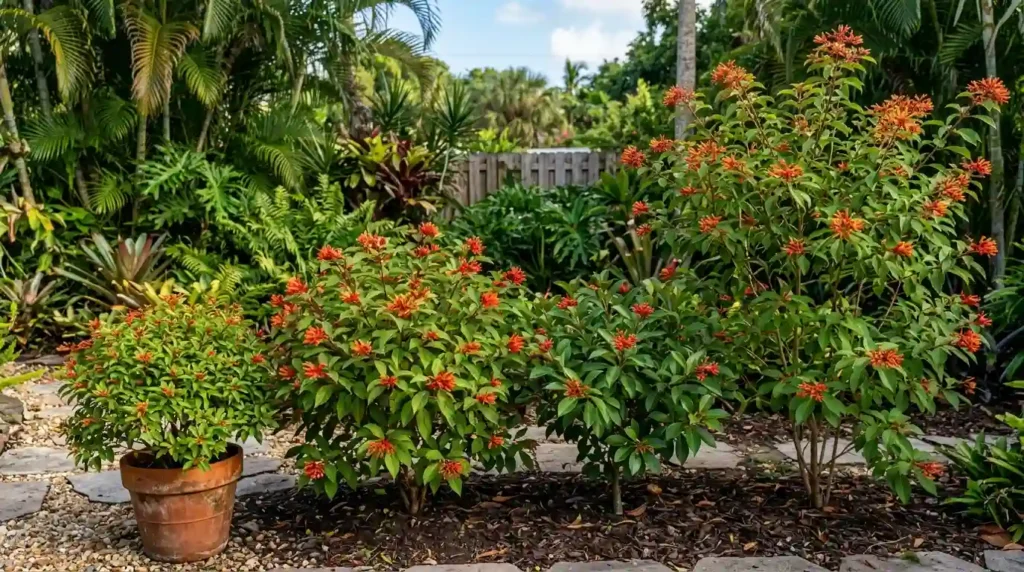
There are several varieties worth knowing about, each with slightly different growth habits and visual characteristics.
- Hamelia patens ‘Compacta’ A dwarf form reaching just 3–4 feet tall. Perfect for smaller gardens or container growing, with the same prolific blooms on a tighter frame.
- Hamelia patens ‘Tropic Fire’ A popular cultivar selected for extra-vivid orange-red flowers and a slightly more compact habit than the straight species.
- Hamelia patens var. glabra A smooth-leaved variation native to parts of Florida and the Caribbean. It tends to be slightly smaller and less cold-hardy than the standard species.
- Mexican Firebush (Hamelia patens) The straight species, sometimes labeled “Mexican firebush” in nurseries, grows vigorously to 8–10 feet in ideal conditions.
Pruning
The best time to prune firebush is in late winter or early spring, just before new growth kicks in. If you’re in a frost-prone area, wait until after the last frost date to cut back any cold-damaged stems. You can also do light shaping throughout the growing season to maintain a tidy look.
Cut stems back by about one-third to one-half of the plant’s height to encourage dense, bushy regrowth. Use clean, sharp pruning shears and make cuts just above a leaf node or branching point. Removing spent flower clusters (deadheading) throughout summer and fall encourages the plant to keep producing new blooms rather than redirecting energy toward seed production. A bougainvillea benefits from similar hard annual cutbacks, and firebush responds just as enthusiastically.
Propagating Firebush
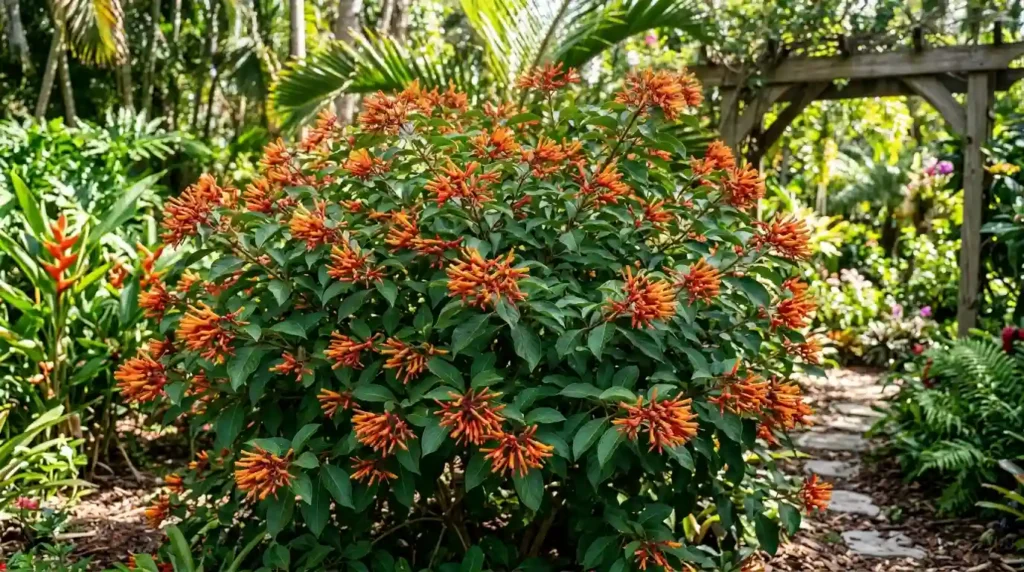
The best time to propagate this plant is in late spring or early summer, when the plant is actively growing and stems are full of energy.
Propagating by Stem Cuttings
Stem cuttings are the most reliable and fastest method. You’ll have a rooted new plant in just a few weeks.
Materials needed:
- Sharp, clean pruning shears or scissors
- 4-inch pots with drainage holes
- Well-draining potting mix (or a mix of perlite and potting soil, 50:50)
- Rooting hormone powder (optional but helpful)
- Clear plastic bag or humidity dome
Steps:
Step 1: Select a healthy, non-flowering stem about 4–6 inches long. Cut just below a leaf node at a 45-degree angle.
Step 2: Strip the leaves from the bottom 2 inches of the cutting, leaving 2–3 leaves at the top. Dip the cut end in rooting hormone powder if you have it.
Step 3: Push the cutting about 2 inches deep into your moist potting mix. Firm the soil gently around the base so the cutting stands upright.
Step 4: Cover the pot loosely with a plastic bag or humidity dome to hold moisture. Place in bright, indirect light not direct sun, which will stress the unrooted cutting.
Roots typically form within 3–5 weeks. Gently tug the stem to feel for resistance before transplanting to a larger container or into the garden.
Propagating from Seeds
Firebush also grows from seeds, though it’s slower than cuttings. Collect seeds from ripe, dark berries in fall. According to USDA plant propagation resources, tropical shrubs like firebush germinate best with warm soil temperatures of 70–80°F.
Step 1: Sow seeds on the surface of a moist seed-starting mix. Press lightly to make contact don’t bury them deeply.
Step 2: Keep the tray warm and moist. Germination typically takes 2–4 weeks.
Step 3: Once seedlings have 2–3 true leaves, transplant into individual pots. Harden off before moving outdoors.
Starting from seed works well if you want to grow several new firebush plants at once for a hedge or mass planting.
Planting and Transplanting Firebush
Plant firebush in spring after the last frost, when soil has warmed and nighttime temperatures stay reliably above 50°F. Fall planting works in zones 9–11 where winters stay mild. Space plants 4–6 feet apart to give each one room to reach its mature spread without crowding.
Dig a hole twice as wide as the root ball but no deeper than its current container. Set the plant so the top of the root ball sits level with the surrounding soil. Backfill with native soil, water in deeply, and apply a 2-inch layer of mulch around the base (keep mulch a few inches away from the stem).
Transplant established firebush in early spring before new growth begins. It tolerates being moved but may sulk briefly. Water consistently for the first few weeks after transplanting to reduce shock. The night-blooming jasmine and other tropical shrubs follow similar transplanting timing guidelines.
Common Pests and Diseases
Like most garden plants, firebush can occasionally face pest or disease challenges, though serious problems are uncommon when it’s well-sited. For a full list of integrated pest management strategies, the University of Florida IFAS IPM program is an excellent reference.
Aphids
Look for small, clustered insects on new growth and flower buds. A strong spray of water or neem oil solution handles most aphid infestations quickly and effectively.
Spider Mites
Tiny webbing on leaf undersides is your clue. Spider mites thrive in hot, dry conditions. Increase humidity around the plant and treat with insecticidal soap.
Powdery Mildew
A white powdery coating on leaves signals this fungal issue, usually triggered by poor air circulation. Remove affected growth and treat with a diluted baking soda spray or copper fungicide.
Root Rot
Yellowing leaves and mushy stems point to root rot from overwatering or poor drainage. The fix is improving drainage and cutting back on water prevention is far easier than treatment.
Common Problems with Firebush
Poor or No Blooms
Usually not enough sun is the culprit firebush needs 6+ hours daily. Heavy shade, excess nitrogen fertilizer, or pruning too late in spring all kill blooms. Prune in late winter to protect the current season’s flower buds.
Yellow or Browning Leaves
Overwatering or poor drainage is usually to blame roots suffocate in wet soil. Iron deficiency in alkaline soils causes yellowing between veins; chelated iron fixes this fast. Browning leaf edges point to drought stress or salt buildup instead.
Wilting or Drooping
Sudden wilting in the morning usually means the plant is underwatered. Water deeply and check again in a few hours firebush bounces back quickly. Wilting that persists despite watering can signal transplant shock or root rot. Similar wilting behavior is common in esperanza, another heat-loving tropical shrub, and the troubleshooting steps are nearly the same.
Leggy or Sparse Growth
Long, floppy stems with wide spaces between leaves almost always mean insufficient light. Move the plant to a sunnier spot if possible, or prune back hard in late winter to encourage dense, compact regrowth. Excess nitrogen fertilizer can also push rank, lanky growth cut back on feeding and let the plant firm up naturally.
Frost Damage
Blackened or mushy stems after a freeze look alarming but aren’t necessarily fatal. Don’t cut back frost-damaged wood immediately. Wait until spring, when you can clearly see where new growth is emerging, then prune the dead material back to healthy tissue. Mulching heavily over the root zone each winter gives the plant the best chance of resprouting from the base.
FAQ
Does firebush like sun or shade?
Firebush strongly prefers full sun at least 6 hours daily. It will grow in partial shade but blooms much less. Full sun equals the best flower show.
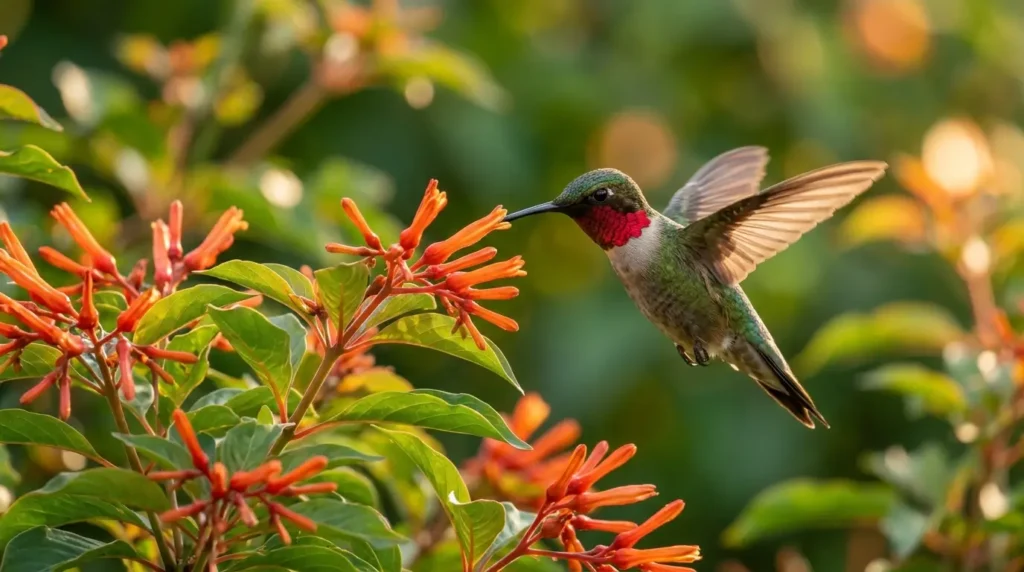
Do hummingbirds like the fire bush?
Yes, hummingbirds absolutely love firebush. The long tubular orange-red flowers are perfectly shaped for hummingbird bills and nectar feeding.
Will firebush survive a freeze?
In zones 9–11, roots often survive light frosts and resprout in spring. In zone 8, heavy mulching helps. Below zone 8, treat as an annual.
How tall will firebush grow?
In ideal conditions, firebush reaches 5–10 feet tall. The compact cultivar ‘Compacta’ stays around 3–4 feet, making it better for smaller spaces.