
In This Article
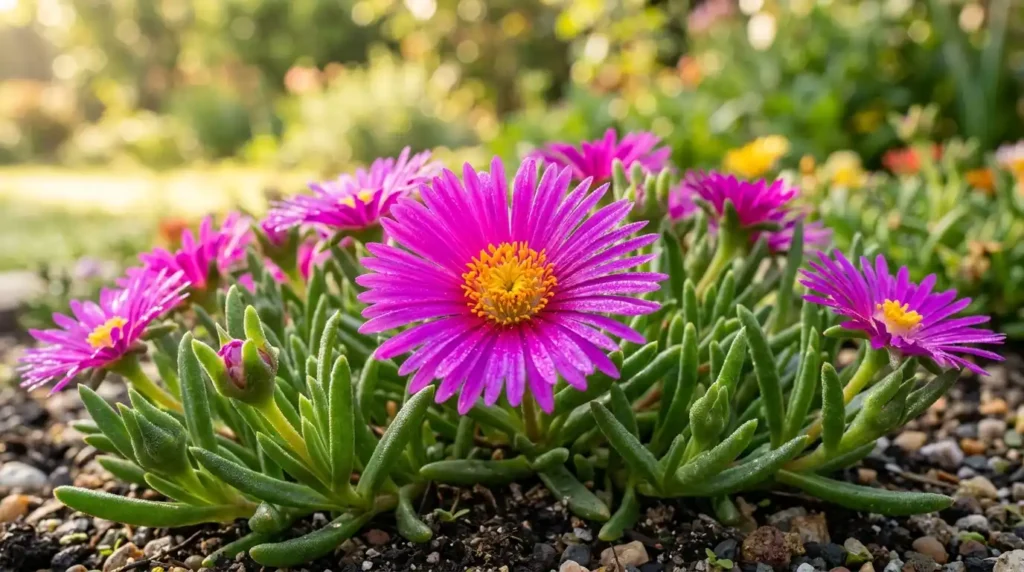
Ice plant (Delosperma spp.) is a South African succulent ground cover with vivid daisy-like blooms in purple, magenta, yellow, and pink. Its fleshy leaves glisten in the sun. Hardy in zones 5–10, this low-maintenance perennial thrives in hot, dry climates and rocky terrain.
Ice Plant Care Card
| Field | Details |
|---|---|
| Common Name | Ice plant |
| Botanical Name | Delosperma spp. |
| Family | Aizoaceae |
| Plant Type | Perennial succulent ground cover |
| Mature Size | 3–6 inches tall × 12–24 inches wide |
| Sun Exposure | Full sun |
| Soil Type | Sandy, rocky, well-draining |
| Soil pH | 6.0–7.5 (slightly acidic to neutral) |
| Hardiness Zones | USDA Zones 5–10 |
| Native Area | South Africa |
| Bloom Time | Spring through fall |
| Toxicity | Non-toxic to people and pets |
Ice Plant Care
This is genuinely one of the easiest perennials you can add to your garden. Here’s what you need to know about sun, soil, water, and basic maintenance. With the right placement from the start, it practically takes care of itself.
Light
Full sun is non-negotiable this perennial needs at least 6 to 8 hours of direct sunlight daily. Without enough light, expect fewer blooms and leggy stems. Plant in a south- or west-facing spot for best results. It’s perfect for slopes, rock gardens, and parking strips.
Soil
This perennial thrives in sandy, well-draining soil with a pH of 6.0–7.5. Soggy roots are the fastest way to kill it. According to the University of California Cooperative Extension, fast-draining soils are critical for South African succulents. If your soil is clay, amend it with coarse sand and gravel.
Water
Once established, water deeply every 2–3 weeks and let the soil dry completely between sessions. New plants need watering every 7–10 days for the first 4–6 weeks. Overwatering causes far more damage than drought. Similar to creeping myrtle, this ground cover resents waterlogged conditions.
Temperature and Humidity
Ice plant handles heat well, thriving between 60–90°F and tolerating down to -10°F in zones 5–6. Cold and wet together are far more dangerous than cold alone. In colder zones, apply gravel mulch in late fall to protect roots from freeze-thaw cycles without trapping moisture.
Fertilizer
Ice plant doesn’t need much feeding. Apply a balanced, slow-release fertilizer (10-10-10) once in early spring to support the growing season. Skip fertilizing in fall and winter when the plant is dormant. Over-fertilizing leads to lush foliage but fewer flowers and fewer flowers defeats the whole purpose.
Types of Ice Plant
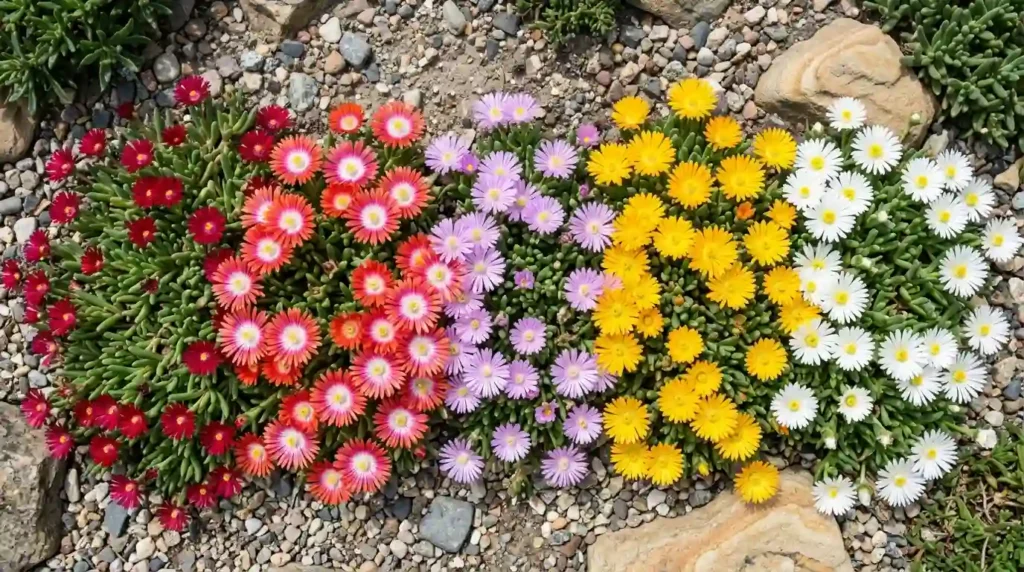
Several outstanding Delosperma varieties are worth growing. Here’s a quick look at some popular options:
- ‘Jewel of Desert Garnet’ (D. cooperi hybrid): Deep magenta-red flowers with a white center. Extremely heat-tolerant and one of the showiest varieties for hot, dry gardens.
- ‘Fire Spinner’ (D. ‘Fire Spinner’): Stunning tricolor blooms in orange, pink, and white. Zones 4–9; one of the most cold-hardy options available.
- ‘Lavender Ice’ (D. floribundum): Soft lilac-pink flowers on a very low mat. Great for rock gardens and cascading over walls.
- Yellow Ice Plant (D. nubigenum): Bright golden-yellow blooms and exceptional cold hardiness down to Zone 4. Visit our yellow yucca plant guide for more ideas on drought-tolerant color.
- ‘Table Mountain’ (D. basuticum): White blooms with a yellow center. Compact habit and excellent resistance to both cold and heat.
Pruning
The best time to prune is late winter or early spring, just before new growth begins. Cut back any dead or winter-damaged stems to where you see healthy green tissue. For plants that have started to look woody and sparse at the center, a harder cutback helps stimulate fresh, dense regrowth.
During the growing season, light deadheading of spent blooms can encourage additional flowering though this ground cover is good at self-cleaning in most climates. Use clean, sharp scissors or pruning shears. A once-yearly trim keeps the planting tidy, prevents it from overtaking neighboring plants, and extends its overall lifespan significantly.
Propagating Ice Plant
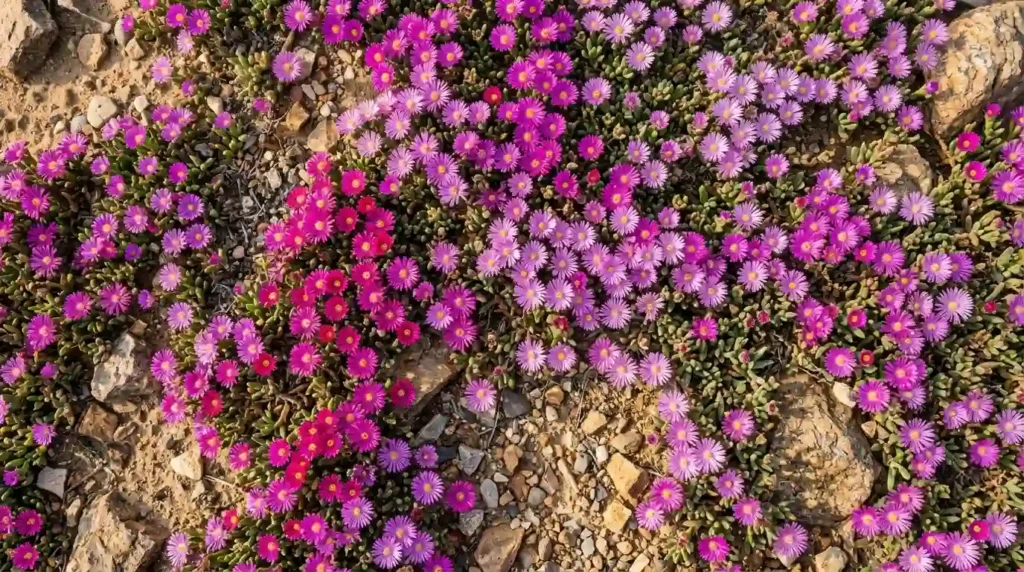
Late spring and early summer are the best times to propagate, when plants are actively growing. You can multiply Delosperma through stem cuttings or division both methods are easy and reliable.
Propagating by Stem Cuttings
Stem cuttings are the most common propagation method and produce results quickly. Here’s what you’ll need:
- Sharp, clean scissors or a knife
- Small pots or trays
- Coarse sand or cactus mix
- A warm, bright location
Step 1: Select a healthy stem 3–4 inches long with at least two sets of leaves. Cut just below a leaf node using clean scissors. The stems are firm and fleshy they snap cleanly.
Step 2: Set the cutting aside in a dry spot for 24–48 hours to let the cut end callous over. This reduces the risk of rot, which is especially important for succulent plants.
Step 3: Stick the calloused end about 1 inch deep into slightly moistened cactus mix or coarse sand. Don’t pack the soil roots need airflow around them.
Step 4: Place the pot in bright, indirect light. Water lightly once, then wait until the soil is completely dry before watering again. Roots typically develop within 2–4 weeks.
Once the cutting shows new growth, it’s ready to transplant outdoors. Space plants 12–18 inches apart for the best spreading coverage.
Propagating by Division
Division is the fastest way to multiply established ice plant clumps. In early spring, dig up a mature clump and use your hands or a sharp spade to separate it into sections, making sure each section has roots attached. Replant divisions immediately at the same depth they were growing. Water them in well and then treat like established plants. This method also helps refresh older clumps that have developed bare centers. For more ideas on dividing ground covers, see our guide on red creeping thyme.
Planting and Transplanting Ice Plant
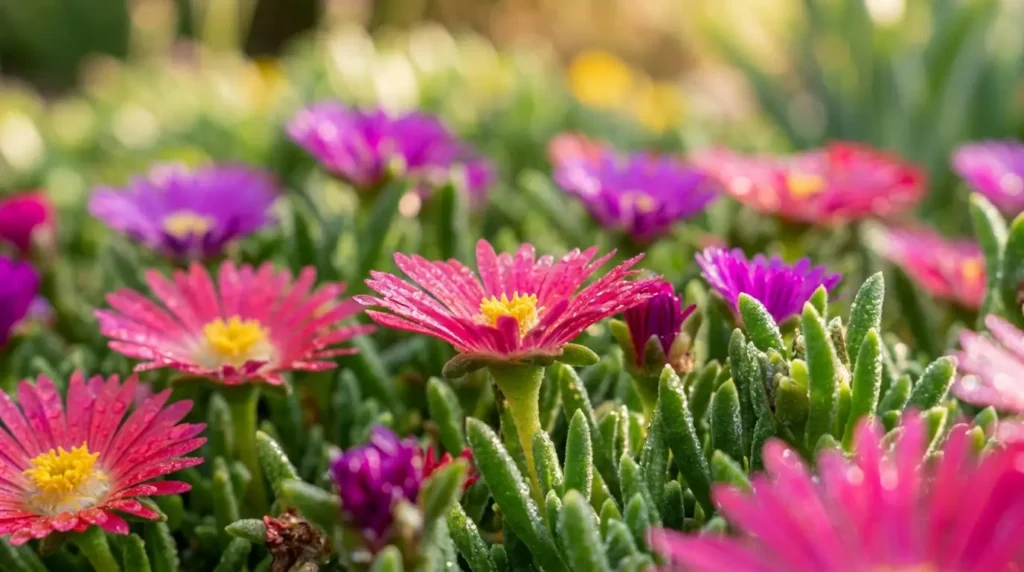
The best time to plant is spring, after the last frost date in your area. Fall planting works in mild climates (zones 7–10), but spring gives roots time to establish before winter. Space plants 12–18 inches apart they spread quickly and fill in gaps within a season or two.
Dig a hole only as deep as the root ball and twice as wide. Set the plant so the crown sits at or just above soil level. Backfill with your amended sandy mix and press gently to remove air pockets. Water well immediately after planting. According to USDA plant database resources, Delosperma species establish fastest when planted in spring with minimal irrigation after the first two weeks.
Transplanting is best done in early spring. Lift plants carefully with a garden fork, keeping the root ball intact, and move them promptly to their new location.
Common Pests and Diseases
Like most garden plants, this succulent perennial can occasionally face a few pest or disease issues though it’s generally quite resistant thanks to its succulent nature and dry growing conditions.
Aphids
Look for clusters of small soft-bodied insects on new growth. Treat with a strong stream of water or neem oil spray applied in the morning.
Spider Mites
Tiny webbing between leaves and stippled foliage are the telltale signs. Increase air circulation and treat with insecticidal soap or neem oil.
Powdery Mildew
White powdery patches on leaves indicate poor air circulation combined with humidity. Remove affected growth and avoid overhead watering. Check University of Florida IFAS Extension for integrated pest management guidance on succulent ground covers.
Root Rot
Mushy stems at the base and wilting despite moist soil signal root rot. Improve drainage immediately and remove affected plant sections. Prevention is far easier than treatment.
Common Problems with Ice Plant
Here’s how to troubleshoot common ice plant issues:
Poor or No Blooms
Lack of flowers is frustrating, but the cause is almost always fixable. Too little sun is the most common culprit at least 6 full hours of direct sun are needed to bloom well. Over-fertilizing is another major cause; too much nitrogen pushes leafy growth at the expense of flowers. Finally, improper pruning timing can remove developing flower buds. Move plants to a sunnier spot, skip fertilizing mid-season, and prune only in late winter or early spring.
Yellow or Browning Leaves
Yellow leaves usually point to overwatering or poor drainage the soil is staying wet too long between waterings. Browning leaf tips can indicate underwatering or salt buildup from fertilizer. Check soil moisture before watering: if the top 2 inches are still damp, wait. If you suspect drainage is the issue, consider amending with extra grit. Similar moisture issues can occur in gerbera daisies and other sun-loving perennials.
Wilting or Drooping
Surprisingly, wilting usually means underwatering, especially during a heat wave. Give the plant a deep, thorough soaking and it typically perks back up within hours. Transplant shock can also cause temporary drooping keep newly moved plants shaded for a day or two and water them in well.
Leggy or Sparse Growth
Leggy, stretched stems with gaps at the center almost always indicate insufficient light. This ground cover compensates for low light by stretching toward the sun, which thins out the mat. Relocate to a sunnier position and prune the leggy growth back hard in early spring to encourage dense, compact regrowth.
Frost Damage
Blackened, mushy stems after a hard freeze are a sign of frost damage. Don’t panic and cut everything back immediately wait until spring, when you can see which stems are still viable. In colder zones, a light gravel mulch over the root zone going into winter helps prevent this. Hardy varieties like Dianthus and this ground cover both benefit from this approach.
FAQ
Will ice plants come back every year?
Yes, this perennial returns in USDA zones 5–10. It dies back slightly in cold winters but regrows reliably each spring from established roots.
Does an ice plant like sun or shade?
Full sun is a must at least 6 to 8 hours daily. It will not bloom well and tends to get leggy in shaded conditions.
Does an ice plant spread quickly?
Yes, it spreads fairly quickly once established, reaching 12–24 inches wide in one season. It’s an excellent fast-covering ground cover for dry areas.
Is the ice plant a perennial or annual?
It’s a perennial in most growing zones. In very cold climates above Zone 5, it may be grown as an annual.