
In This Article
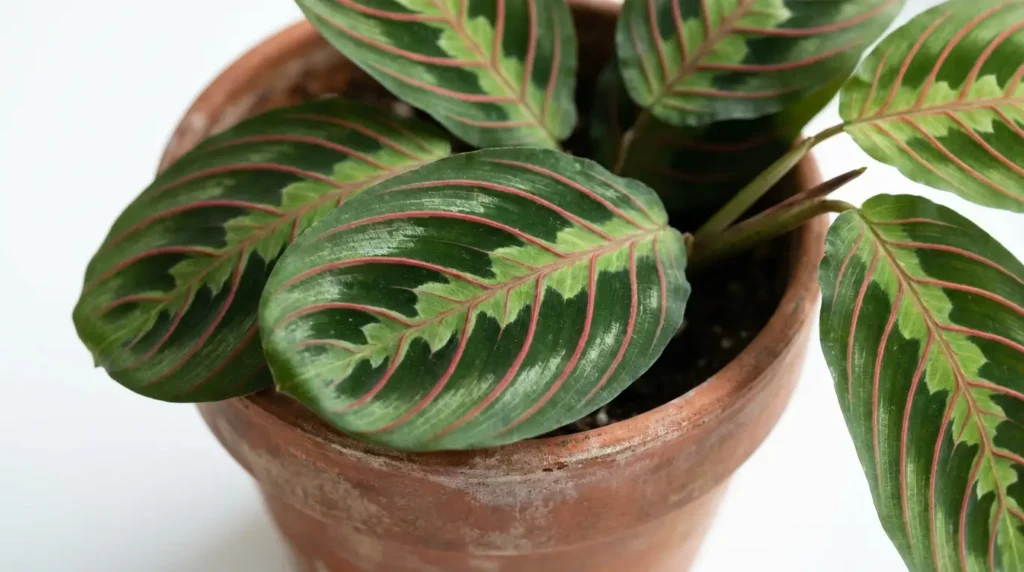
Meet the maranta plant (Maranta leuconeura) the prayer plant that literally folds its leaves at night. Those dark green leaves with red veins and silvery blotches look almost hand-painted. Native to Brazil’s rainforests, it’s a moderate-care tropical houseplant that even beginners can keep thriving.
Plant Care Card
| Detail | Information |
|---|---|
| Common Name | Prayer Plant |
| Botanical Name | Maranta leuconeura |
| Family | Marantaceae |
| Plant Type | Tropical perennial |
| Mature Size | 6–12 inches tall × 12–18 inches wide |
| Sun Exposure | Bright indirect light |
| Soil Type | Well-draining, moisture-retentive potting mix |
| Soil pH | 5.5–6.0 (slightly acidic) |
| Hardiness Zones | USDA 11–12 (houseplant elsewhere) |
| Native Area | Brazil |
| Toxicity | Non-toxic to pets and humans |
Maranta Plant Care
The maranta plant is considered moderate in terms of care not a total pushover, but nothing you can’t handle. The sections below cover everything from light and watering to propagation and common issues. You’ve got this it’s more forgiving than it looks!
Light
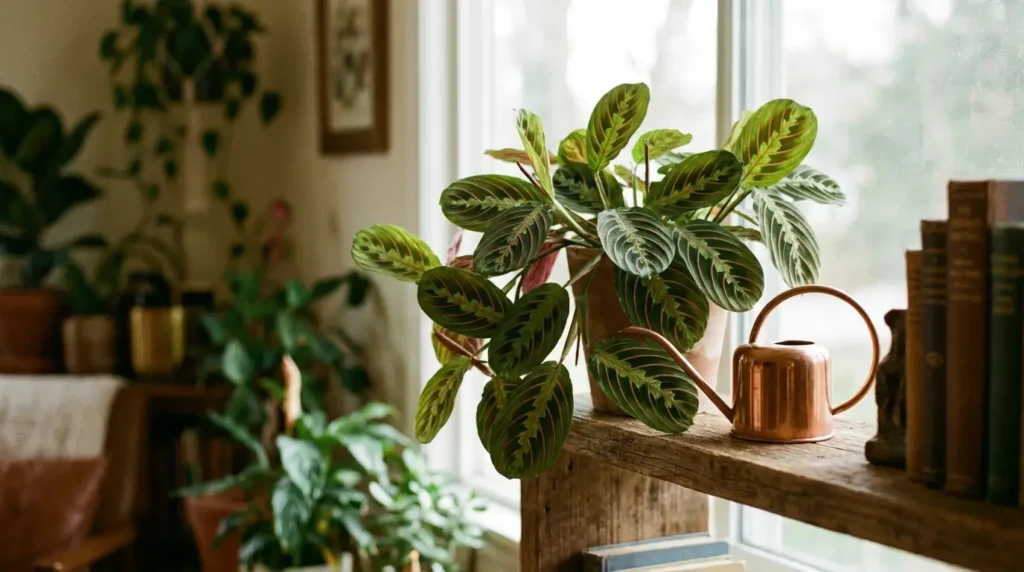
The maranta plant loves bright indirect light. Think of it as a rainforest understory plant it’s used to dappled sunlight filtering through a leafy canopy above, not direct sun beating down on it.
A north or east-facing window is ideal. Too much direct sun will bleach or scorch those gorgeous patterned leaves. On the flip side, too little light causes the colors to fade and the plant to stretch out looking sparse and sad. If your space is dark, a grow light works well as a backup.
Soil
The maranta does best in a well-draining yet moisture-retentive potting mix. Good drainage is critical sitting in soggy soil is a fast track to root rot.
A simple DIY mix works great: try 2 parts regular potting soil, 1 part perlite, and 1 part peat moss. This keeps things airy while holding just enough moisture between waterings. According to University of Florida IFAS Extension’s guide on indoor plant soil requirements, well-draining mixes with organic matter are ideal for tropical houseplants like this one.
Water
Watering is where most people trip up with the maranta plant. You want to keep the soil consistently moist but never waterlogged. Let the top 1–2 inches of soil dry out before watering again stick your finger in to check.
Overwatering shows up as yellow leaves and mushy stems. Underwatering leads to crispy leaf edges and drooping. Both are fixable just adjust your routine! Similar watering needs apply to the oxalis love plant, another moisture-loving tropical that hates drought and soggy roots equally.
During fall and winter, pull back on watering since the plant’s growth slows down. Room-temperature, filtered water is best maranta can be sensitive to fluoride in tap water.
Temperature and Humidity
The maranta prefers temperatures between 65–80°F (18–27°C) basically, if you’re comfortable, it’s comfortable. Keep it away from cold drafts, air conditioning vents, and radiators. Temperatures below 55°F (13°C) can cause leaf damage.
As for humidity, high humidity (50–60%) is where this tropical plant truly thrives. In dry homes, try a pebble tray with water, a small humidifier, or group it with other houseplants. Regular misting helps too, though it’s not a complete fix.
Fertilizer
Feed your maranta with a balanced liquid fertilizer (10-10-10) diluted to half strength every 2–4 weeks during spring and summer. Reduce feeding to once a month in fall and stop entirely in winter. As noted in NC State Extension’s guide to fertilizing houseplants, over-fertilizing causes salt buildup that damages roots, so less is more here.
Types of Maranta Plant
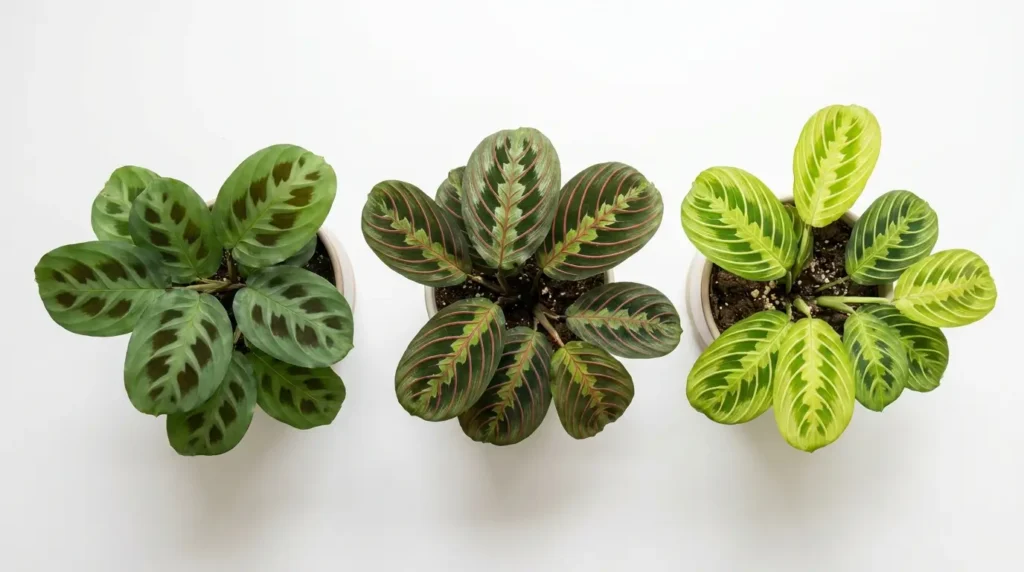
The maranta family has a few standout varieties worth knowing. Here’s a quick look at the most popular ones:
- Maranta leuconeura var. kerchoveana (Green Prayer Plant) The classic. Deep green leaves with dark brown spots arranged symmetrically on either side of the midrib. Very beginner-friendly and widely available.
- Maranta leuconeura var. erythroneura (Red Prayer Plant) Arguably the most stunning variety. Those vivid red veins against dark green leaves with silver-green patches make it look like a tropical painting. Slightly more humidity-sensitive than the kerchoveana.
- Maranta leuconeura ‘Lemon Lime’ A cheerful cultivar with bright yellow-green and lime striping on the leaves. Rarer to find but worth the hunt if you love a pop of color.
Propagating Maranta Plant
The best time to propagate is during spring or early summer when the plant is actively growing. The maranta plant roots easily, making propagation a fun weekend project.
Propagating by Stem Cuttings
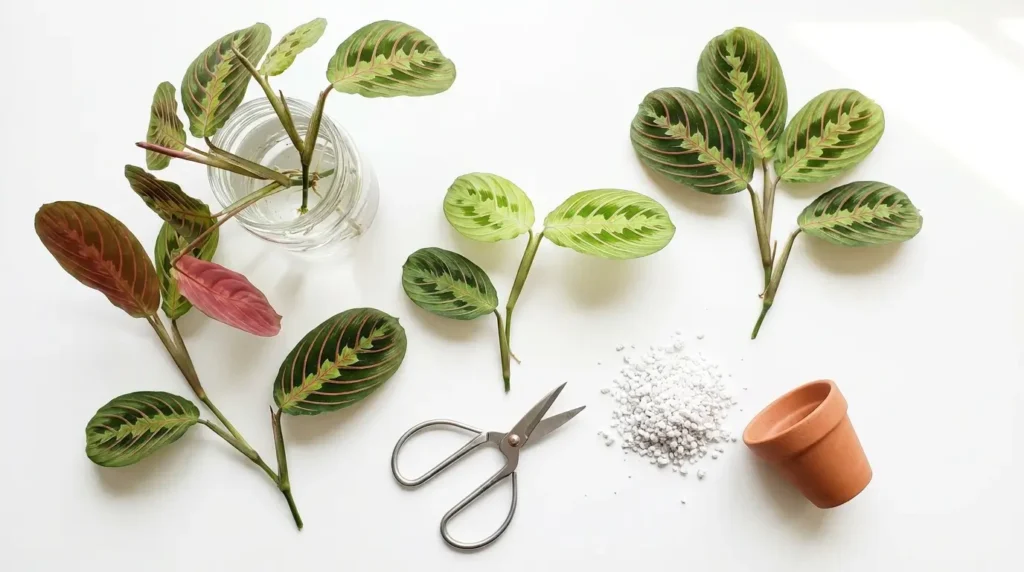
Stem cuttings are the most reliable method for propagating maranta plants. You’ll need just a few basic supplies.
Materials needed:
- Sharp, clean scissors or pruning shears
- Small pot with drainage holes
- Well-draining potting mix or perlite
- Optional: rooting hormone powder
Steps:
- Step 1: Choose a healthy stem with at least 2–3 leaves and a visible node (the small bump where the leaf meets the stem). Cut just below the node.
- Step 2: Remove the bottom leaves so only 1–2 leaves remain at the top. Dip the cut end in rooting hormone if you have it not required, but it speeds things up.
- Step 3: Plant the cutting in moist potting mix or perlite. Place the pot in a warm spot with bright indirect light and cover loosely with a plastic bag to retain humidity.
- Step 4: Check for roots in 3–5 weeks by giving the cutting a gentle tug. Once rooted, remove the bag and care for it as a mature maranta plant.
Roots typically appear within 4–6 weeks. Don’t give up if it takes a bit longer!
Propagating by Division
Division is the quickest way to get a new plant and you’re doing it at repotting time anyway, so it’s efficient. This method works equally well for the oyster plant (Tradescantia spathacea), another clumping tropical that divides easily.
- Step 1: Gently remove the mother maranta plant from its pot and shake off excess soil.
- Step 2: Identify natural separation points where stems and root clusters divide. Use clean scissors or your hands to separate them carefully.
- Step 3: Pot each division in fresh, well-draining mix and water lightly. Keep in bright indirect light and expect a week or two of adjustment before new growth appears.
Potting and Repotting Maranta Plant
Repot your maranta plant every 1–2 years or when you see roots peeking out of the drainage holes. A pot that’s too small restricts growth; too large leads to soggy soil issues.
Move up 1–2 pot sizes each time don’t jump to a huge pot all at once. Choose a pot with drainage holes (non-negotiable). Terracotta works well since it allows airflow to the roots. The same repotting schedule works great for the oxalis love plant, which also appreciates fresh soil every couple of years.
To repot, gently remove the plant, shake off old soil, check for any mushy roots and trim them, then place in fresh potting mix. Water lightly and let it settle in its new home.
Common Pests and Diseases
Like most houseplants, the maranta plant can occasionally attract pests especially in dry conditions. Check the leaves regularly and catch problems early.
Spider Mites
Look for fine webbing on the undersides of leaves and stippled, pale foliage. Treat with a strong water spray or neem oil applied weekly until resolved.
Mealybugs
White cottony clusters appear in leaf joints and along stems. Wipe them off with a cotton swab dipped in rubbing alcohol, then spray with insecticidal soap.
Scale Insects
Tiny brown bumps stuck to stems that don’t move that’s scale. Scrape them off manually, then treat with neem oil or horticultural oil spray.
Aphids
Soft, pear-shaped insects clustered on new growth. Blast them off with water, then follow up with insecticidal soap every few days.
Fungus Gnats
Tiny flies hovering around the soil signal overwatering. Let the soil dry out more between waterings and use sticky yellow traps to catch the adults. According to Penn State Extension’s integrated pest management guide, consistent monitoring is the best defense against common houseplant pests.
Common Problems with Maranta Plant
Here’s how to troubleshoot common issues:
Yellow Leaves
Yellow leaves are the maranta’s way of saying something’s off. Overwatering is the most common cause soggy soil suffocates roots, leading to yellowing. Nutrient deficiency can also trigger yellowing, especially if you haven’t fertilized in months. Sometimes it’s simply natural leaf aging older lower leaves yellow and drop, which is totally normal. Adjust watering first, then consider a light feed. These same issues pop up with the china doll plant when care conditions aren’t quite right.
Brown Leaf Tips
Brown, crispy tips are almost always a humidity problem. Dry indoor air, especially in winter with the heat running, pulls moisture right out of those delicate leaves. Water quality matters too fluoride and chlorine in tap water can cause tip burn over time. Switch to filtered or rainwater and boost humidity to see improvement.
Drooping or Wilting Leaves
Drooping usually comes down to watering either too much or too little. Check the soil immediately. If it’s soggy, hold off on water and let it dry. If it’s bone dry, give it a thorough drink and it’ll perk back up within hours. This quick-fix approach works just the same for the licorice plant when it starts to wilt from inconsistent watering.
Leggy Growth / Sparse Foliage
If your maranta is producing long, stretched stems with small leaves spaced far apart, it’s reaching for more light. Move it to a brighter spot with indirect light. You can also trim back leggy stems to encourage fuller, bushier growth closer to the base.
FAQ
Does Maranta like sun or shade?
The maranta plant prefers bright indirect light. Direct sun scorches its leaves. A shaded east or north window is perfect for healthy, vibrant foliage.
What is the difference between Calathea and Maranta?
Both are prayer plants with similar patterned leaves. Calathea belongs to a different genus and is generally more finicky about humidity and care than maranta.
Where is the best place to put a prayer plant?
Place it near an east or north-facing window with bright indirect light, away from drafts, heating vents, and direct afternoon sun.
Are prayer plants hard to keep alive?
Not really! The maranta plant is moderately easy. Consistent humidity and proper watering are the main keys. Beginners can absolutely succeed with it.
2 thoughts on “How to Grow and Care for Maranta Plant”
Comments are closed.