

In This Article
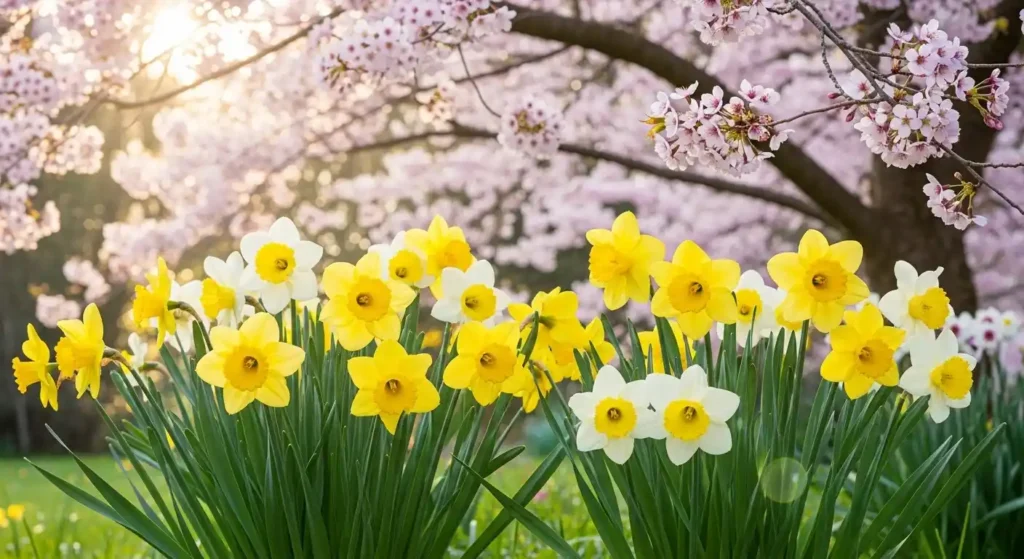
The March birth flower celebrates two stunning blooms: daffodils (Narcissus) with trumpet-shaped flowers in yellows, whites, and oranges, and cherry blossoms (Prunus serrulata) featuring delicate pink or white petals. Both symbolize renewal and spring’s arrival, making them perfect birthday flowers.
Plant Care Card
| Characteristic | Daffodil | Cherry Blossom |
|---|---|---|
| Common Name | Daffodil, Narcissus | Cherry Blossom, Japanese Cherry |
| Botanical Name | Narcissus spp. | Prunus serrulata |
| Family | Amaryllidaceae | Rosaceae |
| Plant Type | Perennial bulb | Deciduous tree |
| Mature Size | 6-24 inches tall | 15-25 feet tall, 15-20 feet wide |
| Sun Exposure | Full sun to partial shade | Full sun |
| Soil Type | Well-draining, moderately fertile | Well-draining, loamy |
| Soil pH | 6.0-7.0 (slightly acidic to neutral) | 6.0-7.5 (slightly acidic to neutral) |
| Hardiness Zones | 3-9 | 5-8 |
| Native Area | Europe, North Africa, Mediterranean | Japan, Korea, China |
| Bloom Time | Early to mid-spring | Early to mid-spring |
| Toxicity | Toxic to pets and humans | Non-toxic |
March Birth Flower Care
Growing the March birth flower successfully rewards gardeners with stunning spring displays when given proper conditions. Daffodils naturalize easily and return year after year, while cherry blossoms create breathtaking canopy shows. Here’s what you need to know about sun, soil, water, and maintenance for these spring beauties.
Light
Daffodils need 6 hours of direct sunlight daily for strong stems and vibrant blooms. Plant in south-facing beds or under deciduous trees for early spring sun. Cherry blossoms require 6-8 hours of full sun for abundant buds. Position away from structures and evergreen trees that create shade.
Soil
Daffodils thrive in well-draining, moderately fertile soil with pH 6.0-7.0. According to NC State Extension, adding compost improves drainage and nutrients. Avoid heavy clay; use slopes or raised beds. Cherry blossoms prefer loamy, well-draining soil.
Water
Water daffodil bulbs thoroughly after fall planting, then rely on rainfall. During spring, provide 1 inch weekly if needed. Check moisture 2 inches deep. Reduce watering when foliage yellows. Overwatering causes rot; underwatering stunts flowers. Cherry blossoms need consistent moisture for two years, then become drought-tolerant.
Temperature and Humidity
Daffodils need 12-16 weeks of cold (35-45°F) to bloom and tolerate frost in zones 3-9, though late freezes may damage buds. Cherry blossoms withstand -20°F when dormant but are vulnerable once flowering begins. Both prefer temperate climates with cold winters, mild springs, and average humidity.
Fertilizer
Feed daffodils in early fall when planting bulbs and again in early spring as shoots emerge. Use a balanced 10-10-10 fertilizer or bulb-specific formula applied according to package directions. Alternatively, topdress with compost each fall for slow-release nutrition. Stop fertilizing once flowers fade and foliage begins yellowing.
Types of March Birth Flower
March celebrates two distinct birth flowers, each representing different aspects of spring’s arrival. Additionally, several daffodil varieties offer unique colors and forms.
Daffodil (Narcissus spp.): The primary March birth flower features trumpet-shaped blooms in yellows, whites, oranges, and bicolors. Classic varieties include ‘King Alfred’ with large golden trumpets and ‘Ice Follies’ with white petals and yellow cups. Daffodils symbolize rebirth and new beginnings.
Cherry Blossom (Prunus serrulata): Japan’s iconic blooms arrive in clouds of soft pink or white during early spring. Popular cultivars include ‘Yoshino’ with pale pink flowers and ‘Kwanzan’ featuring double pink blossoms. Cherry blossoms represent beauty, renewal, and life’s fleeting nature.
Miniature Daffodils (Narcissus ‘Tête-à-Tête’): Compact varieties grow just 6-8 inches tall with multiple golden-yellow flowers per stem. These dwarf selections work beautifully in rock gardens, containers, or front borders. They naturalize readily and bloom reliably year after year.
Paperwhite Narcissus (Narcissus papyraceus): Fragrant white clusters appear on 12-18 inch stems in late winter to early spring. Unlike other daffodils, paperwhites don’t require cold treatment in mild climates. Their intense perfume fills gardens with sweet scent.
Double Daffodils (Narcissus ‘Replete’): Ruffled, fully-double blooms in peachy-pink and white create rose-like flowers. These showy varieties reach 14-16 inches tall and make stunning cut flowers. They prefer slightly more shade than standard trumpet types.
Pruning
Deadhead daffodils after blooming but leave foliage for 6-8 weeks until yellow to replenish bulbs. Remove only when it pulls away easily. Prune cherry blossoms immediately after flowering, removing dead wood with clean, angled cuts above outward-facing buds to maintain shape.
When to Prune
Deadhead daffodils within a few days after petals drop, typically in mid to late spring. Remove yellowed foliage in early summer once it detaches easily from the bulb. Prune cherry blossom trees in late spring after flowers fade but before summer growth accelerates. Avoid fall or winter pruning, which removes next year’s flower buds.
How to Prune
For daffodils, snap off faded flower heads cleanly where they meet the stem. Leave all green foliage standing upright. When leaves yellow completely, grasp near the soil and pull gently they should release easily. For cherry blossoms, remove crossed branches, dead wood, and water sprouts using sterilized pruning tools. Make cuts at 45-degree angles just above healthy buds facing outward. This encourages open growth and prevents disease.
Propagating March Birth Flower
The best time for propagating the March birth flower is late summer after foliage dies back completely. Cherry blossom propagation works best in late spring through early summer when wood is semi-hardwood. Both methods produce new plants that bloom within 1-3 years.
Propagating Daffodils by Division
Division is the easiest method for multiplying daffodil bulbs. This technique separates offset bulbs that form naturally around the mother bulb.
Materials needed:
- Garden fork or spade
- Clean, sharp knife
- Compost or bulb fertilizer
- New planting location
Step 1: Wait until foliage yellows completely in late spring or early summer, then carefully dig around the bulb clump with a garden fork. Lift the entire mass, shaking off excess soil to expose individual bulbs and smaller offsets attached to the base.
Step 2: Gently separate offset bulbs from the mother bulb by hand, keeping any with their own roots intact. Use a clean knife to cut stubborn connections, ensuring each division has a firm base plate. Discard any soft, damaged, or diseased bulbs.
Step 3: Replant divisions immediately at the same depth as the original bulbs—typically 6 inches deep in well-draining soil. Space bulbs 3-6 inches apart in groups for natural-looking drifts. Water thoroughly after planting.
Step 4: Add compost or bulb fertilizer to the planting hole for nutrition. Smaller offsets may take 1-2 years to reach blooming size, while mature divisions often flower the following spring.
Propagating Cherry Blossoms by Softwood Cuttings
Softwood cuttings taken in late spring offer a simple propagation method for cherry blossom trees. This technique creates genetically identical trees that bloom in 3-4 years.
Materials needed:
- Clean, sharp pruning shears
- Rooting hormone powder
- Well-draining potting mix
- Small pots with drainage holes
Step 1: Select healthy, flexible shoots from current season’s growth in late May or early June. Cut 4-6 inch sections just below a leaf node, removing flowers or buds.
Step 2: Strip leaves from the bottom half of each cutting, dip the cut end in rooting hormone, and insert 2 inches deep in moist potting mix. Keep cuttings in bright, indirect light with consistent moisture.
Step 3: Maintain high humidity by covering pots with clear plastic bags, misting daily. Roots typically develop in 4-6 weeks. Transplant rooted cuttings to larger containers and grow for one year before planting outdoors.
Planting and Transplanting March Birth Flower
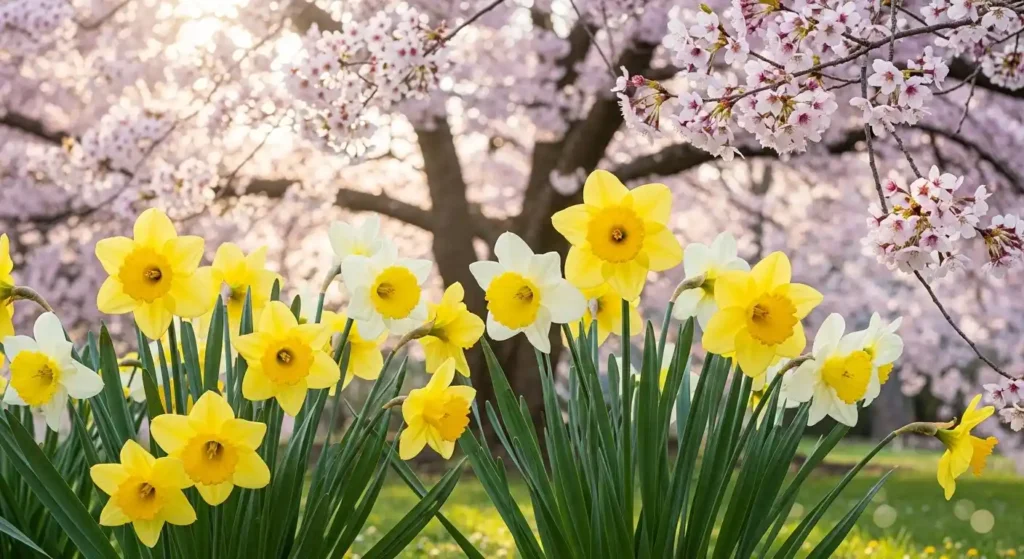
Plant daffodil bulbs in fall, 6-8 inches deep, 3-6 inches apart, pointed end up. Per USDA planting guidelines, proper depth prevents frost heaving. Transplant cherry blossoms when dormant, spacing 15-20 feet apart with trunk flare visible. Divide overcrowded daffodils every 5-7 years after foliage dies back.
Common Pests and Diseases
Like most garden plants, the March birth flower can occasionally face pest or disease issues. Early detection and prompt treatment prevent serious damage and keep plants healthy.
Narcissus Bulb Fly
Look for soft, squishy bulbs and poor growth in spring. Larvae tunnel into bulbs during summer, destroying them from inside. Remove and destroy affected bulbs immediately, and apply beneficial nematodes to soil in late spring.
Aphids
Small green or black insects cluster on new growth, flower buds, and undersides of leaves. Heavy infestations cause distorted growth and sticky honeydew residue. Spray with insecticidal soap or strong water jets, or introduce beneficial insects like ladybugs.
Botrytis Blight
Gray fuzzy mold appears on flowers, leaves, and stems during cool, wet spring weather. This fungal disease spreads rapidly in humid conditions. Remove infected plant parts immediately, improve air circulation, and avoid overhead watering.
Root Rot
Soft, mushy bulbs with foul odor indicate root rot from waterlogged soil. Research from University of Minnesota Extension recommends improving drainage immediately and avoiding overwatering. Dig up affected bulbs, discard those beyond saving, and replant healthy ones in well-draining soil.
Japanese Beetles
Metallic green beetles skeletonize cherry blossom leaves and damage flowers from June through August. Handpick beetles in early morning, drop them into soapy water, or use row covers during peak activity. Apply beneficial nematodes to lawn areas to control grubs.
Common Problems with March Birth Flower
Here’s how to troubleshoot common issues with the March birth flower:
Poor or No Blooms
Not seeing flowers can be frustrating, but several fixable causes exist. Insufficient sunlight is the most common culprit daffodils and cherry blossoms need at least 6 hours of direct sun daily. Similar to lipstick plant care, shaded locations produce lush foliage but few flowers. Overcrowding also reduces blooming, as competing bulbs or branches steal nutrients and light.
Yellow or Browning Leaves
Overwatering causes daffodil yellowing in poor-draining soil; underwatering browns cherry blossom leaf edges. Both need well-draining soil. Nitrogen or iron deficiency causes pale foliage. Natural daffodil yellowing 6-8 weeks post-bloom is normal dormancy, not stress.
Wilting or Drooping
Wilting indicates underwatering or stress. Check soil 2-3 inches deep; water thoroughly if dry. Transplant shock causes temporary drooping in cherry blossoms. Heat stress affects shallow-rooted daffodils during bloom provide shade and morning watering during heat waves. Plants recover once underlying causes are addressed.
Leggy or Sparse Growth
Insufficient light causes stretched, weak stems in daffodils and sparse cherry blossom blooms. Overfertilizing with nitrogen creates excessive leafy growth and weak stems. Use balanced fertilizers and reduce frequency. Prune leggy cherry blossom branches in late spring to promote bushier growth and stronger structure.
Frost Damage
Late spring freezes can damage emerging daffodil buds and open cherry blossoms despite their cold hardiness. Blackened, mushy flower petals and stems indicate frost injury. Unfortunately, damaged blooms won’t recover remove them to redirect plant energy. Cover emerging shoots with frost cloth or overturned buckets when unexpected freezes threaten. Similar to protecting pink peonies from cold snaps, cherry blossoms in frost-prone areas benefit from planting on north-facing slopes.
FAQ
What is the official March birth flower?
March has two official birth flowers: daffodils (Narcissus) and cherry blossoms (Prunus serrulata). Both symbolize spring’s renewal and new beginnings, blooming during this transitional month between winter and warmer weather.
Why does March have two birth flowers?
The March birth flower tradition celebrates two flowers because daffodils bloom in early to mid-spring across most regions, while cherry blossoms peak slightly later. This dual representation ensures everyone born in March connects with at least one actively blooming flower.
What is the official flower of the month of March?
The daffodil is traditionally considered the primary March birth flower in Western culture. However, cherry blossoms equally represent the March birth flower, especially in Japanese tradition where their brief, beautiful blooming symbolizes life’s precious, fleeting nature.
Is March flower daffodil or a cherry blossom?
The March birth flower includes both daffodils and cherry blossoms as co-equal representations. Daffodils offer cheerful yellow, white, and orange trumpet blooms, while cherry blossoms provide delicate pink or white petals in stunning displays.
2 thoughts on “How to Grow and Care for March Birth Flower”
Comments are closed.