
In This Article
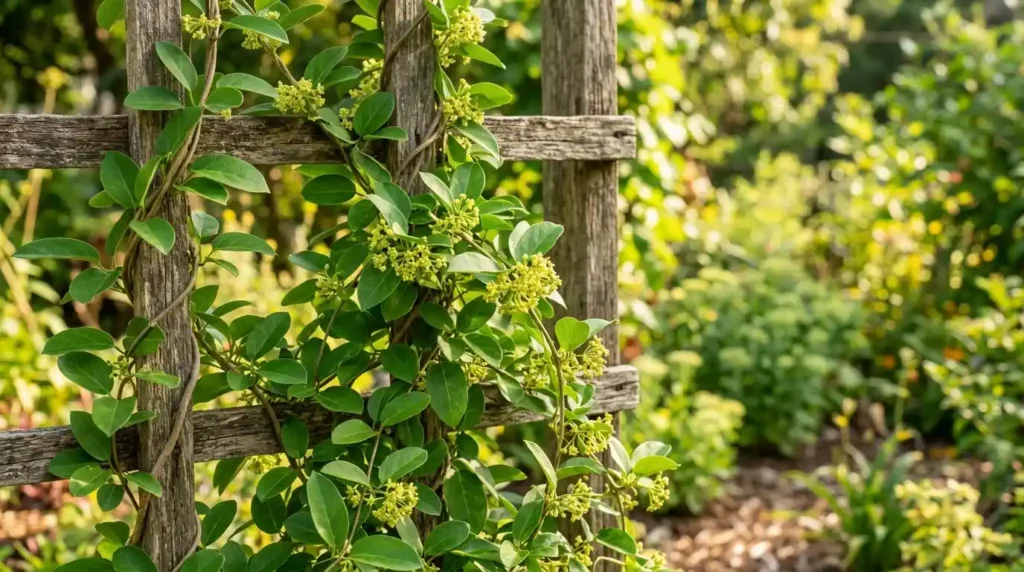
The meshashringi plant, also called Gudmar or Gymnema sylvestre, is a twining woody vine with small yellow flowers and oval leaves. Native to India’s tropical forests, this hardy meshashringi plant grows outdoors in USDA zones 9-11 and is refreshingly easy to care for.
| Category | Details |
|---|---|
| Common Name | Meshashringi, Gudmar, Gymnema |
| Botanical Name | Gymnema sylvestre |
| Family | Apocynaceae |
| Plant Type | Perennial woody climbing vine |
| Mature Size | 15-30 ft. long x 3-6 ft. wide (trained on support) |
| Sun Exposure | Full sun to partial shade |
| Soil Type | Loamy, sandy, well-draining |
| Soil pH | Neutral to slightly acidic (6.0-7.0) |
| Hardiness Zones | 9-11 (USDA) |
| Native Area | India, tropical Africa, Australia |
| Bloom Time | Late summer to fall |
| Toxicity | Generally non-toxic, though ingestion should be supervised |
Meshashringi Plant Care
The meshashringi plant thrives with minimal fuss once it settles into a warm, sunny spot. Here’s what you need to know about light, soil, water, temperature, and feeding. With the right care, this vigorous climber practically takes care of itself.
Light
Meshashringi plants want full sun to light partial shade at least six hours of direct light daily. Too little sun leads to leggy vines and fewer flowers. Plant along a south-facing fence, trellis, or sunny wall where the vine can climb and soak up warmth.
Soil
This vine prefers loose, well-draining soil with a neutral to slightly acidic pH. Sandy loam works best, and gardeners can review this well-drained soil guide for amendment tips. Avoid heavy clay, which holds too much water around the roots.
Water
Water deeply once the top inch of soil feels dry, roughly weekly in summer and less in cooler months. Like the drought-tolerant bougainvillea care routine, this vine tolerates short dry spells better than soggy roots. Yellow leaves often signal overwatering.
Temperature and Humidity
Meshashringi plants love warm, humid conditions between 65-85°F and struggle below 50°F. Frost will damage or kill unprotected vines, so gardeners outside its comfort range should check the USDA hardiness zone map before planting outdoors. Mulch roots heavily before winter.
Fertilizer
Feed monthly with a balanced, half-strength liquid fertilizer during spring and summer growth. A slow-release organic feed works too, if you prefer. Stop fertilizing in fall and winter, when the plant rests and needs far less nutrition.
Types of Meshashringi Plant
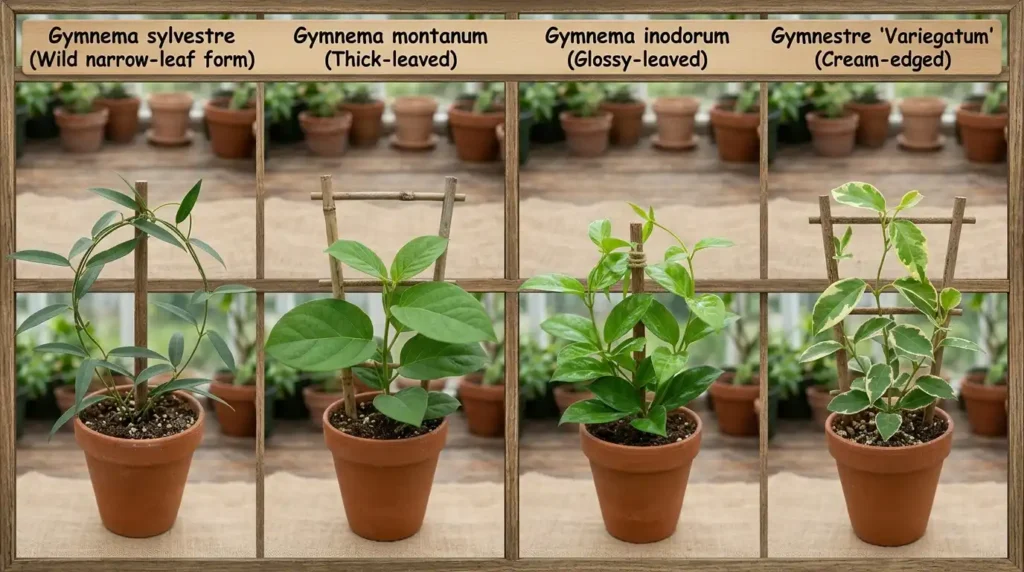
While true cultivars are limited, several related Gymnema species and regional forms give gardeners different growth habits, leaf textures, and uses worth exploring for a mixed herbal bed.
- Indian Gymnema sylvestre: The classic wild form, with narrow oval leaves and small greenish-yellow flowers; the most common form sold for traditional herbal gardens.
- Gymnema montanum: A South Indian relative with slightly thicker leaves and a more compact climbing habit, prized by collectors for similar folklore uses.
- Gymnema inodorum: Known in Thailand as “cha om plant,” this cousin has larger, glossier leaves and a milder taste, often grown as a culinary green.
- Variegated leaf form: An ornamental selection with cream-edged leaves, grown mainly for foliage interest along fences and arbors rather than traditional use.
- Dwarf potted form: A container-friendly selection that stays under four feet, ideal for gardeners who want a compact climber like the mandevilla plant on a small trellis.
- Sri Lankan variant: A slightly more drought-hardy regional form with smaller leaves, well suited to hot, exposed garden beds with minimal irrigation.
- East African form: A wilder, more sprawling type found across savanna edges, valued for its resilience in poor soils and long, wiry stems that scramble over fences.
- Compact trellis type: A tidier growth habit selected for smaller gardens, staying denser and easier to manage on a short obelisk or wall-mounted support.
Pruning
Prune your meshashringi plant in early spring before new growth flushes out, or right after flowering ends. Remove dead, damaged, or overly leggy stems, along with spent flower clusters to keep the vine tidy and encourage fresh growth.
Cut just above a leaf node using clean, sharp pruning shears, angling the cut slightly to shed water. Thin crowded interior growth so light and air can reach the center of the vine. Regular pruning keeps the plant compact and promotes more blooms.
A sharp bypass pruner and garden gloves are all you need. Honestly, a little yearly trim keeps your meshashringi plant vigorous instead of overgrown.
Propagating Meshashringi Plant
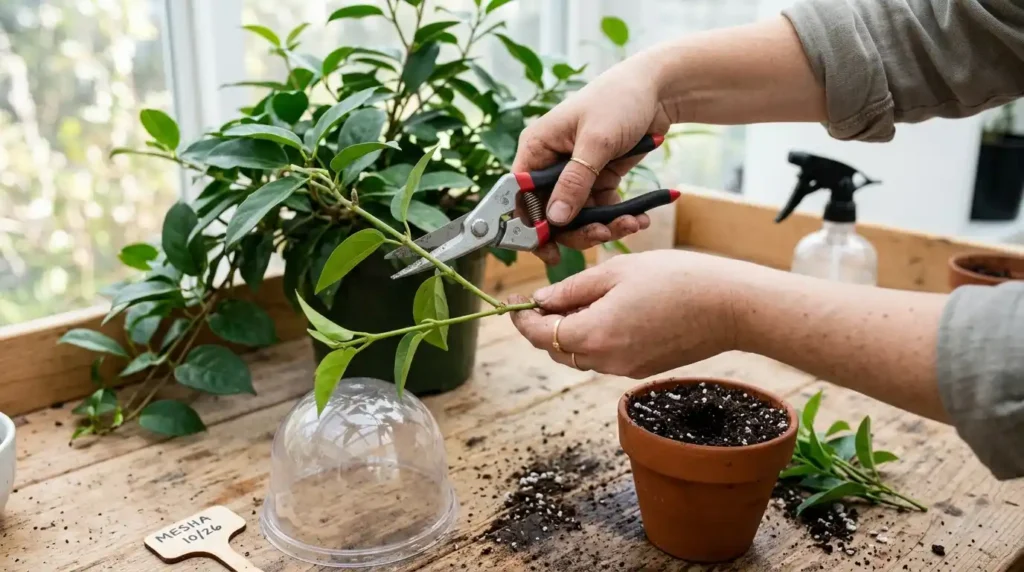
The best time to propagate your meshashringi plant is in spring or early summer, when warm weather speeds up rooting and germination.
Propagating by Stem Cuttings
This vigorous vine roots quickly from cuttings taken during warm weather, making it the fastest way to multiply your plants.
You’ll need:
- Sharp, clean pruning shears
- A 4-6 inch semi-hardwood cutting
- Rooting hormone powder (optional)
- Small pot with well-draining potting mix
- Clear plastic bag or humidity dome
- Snip a 4-6 inch cutting just below a leaf node, choosing a healthy, non-flowering section.
- Strip the lower leaves and dip the cut end in rooting hormone to speed root development.
- Insert the cutting about two inches deep into moist, well-draining potting mix.
- Cover with a plastic bag to hold humidity and set it in bright, indirect light.
- Keep the soil lightly moist and check weekly for gentle resistance, a sign roots have formed.
Roots typically develop within three to five weeks, and fresh leaf growth signals your meshashringi plant cutting is ready for transplanting. Keep the humidity dome on during the first two weeks, then gradually open it for short periods so the young cutting adjusts to normal air. Bright, indirect light works better than direct sun at this stage, since tender new roots can scorch easily in strong heat.
Propagating from Seeds
Growing meshashringi plant seeds takes more patience, but it rewards you with strong, genetically diverse vines for the garden.
You’ll need:
- Fresh seeds
- Seed-starting tray
- Light, well-draining seed mix
- Spray bottle for misting
- Soak seeds in warm water for 24 hours to soften the outer seed coat.
- Press seeds lightly into moist seed-starting mix and cover with a thin layer of soil.
- Keep the tray around 75°F, misting regularly to maintain consistent moisture.
- Watch for germination within two to three weeks, then thin out weaker seedlings.
- Transplant seedlings outdoors once they reach four to six inches tall, much like you would a young dipladenia plant after the danger of frost has passed.
Seed-grown vines take longer to reach flowering size than cuttings, often a full season or more. That said, growing from seed gives you a sturdier root system and a wider genetic mix, which can help your meshashringi plant adapt better to local growing conditions over time.
Planting and Transplanting Meshashringi Plant
Plant your meshashringi plant outdoors in spring after the last frost, once soil temperatures stay reliably warm. Space plants three to four feet apart along a fence, trellis, or arbor to give the climbing vines room to spread.
Dig a hole twice as wide as the root ball and just as deep, then backfill with amended, well-draining soil. Water thoroughly right after planting, the same way you’d settle in a newly planted aloe vera plant.
Established vines rarely need dividing, but transplant in early spring if roots outgrow their container. Water well the day before moving to reduce transplant shock, and expect a short adjustment period of drooping leaves before your meshashringi plant settles into its new spot.
Common Pests and Diseases
Like most garden plants, the meshashringi plant can occasionally face pest or disease issues, especially in humid or crowded conditions. Catching problems early, before an infestation spreads, keeps your vine healthy and thriving all season long.
Aphids
Look for clusters of small green or black insects clustered on new growth, buds, and the undersides of tender leaves. Treat with a strong water spray or insecticidal soap every few days until they’re gone.
Spider Mites
Look for fine webbing and tiny yellow speckles on leaf undersides, especially during hot, dry weather when populations build up fastest. Treat with neem oil or a forceful weekly water rinse.
Powdery Mildew
Look for a white, powdery coating on leaves and stems in humid, poorly ventilated spots. Treat with a sulfur-based fungicide and improve air circulation.
Root Rot
Look for mushy, blackened roots and wilting despite consistently moist soil. Treat by improving drainage and cutting back watering right away.
Caterpillars / Leaf Miners
Look for chewed leaf edges or winding tan trails inside the foliage. Treat by hand-picking pests or following this garden IPM approach for safer, lower-impact control.
Common Problems with Meshashringi Plant
Here’s how to troubleshoot common meshashringi plant issues:
Poor or No Blooms
If your meshashringi plant refuses to flower, insufficient sunlight is often the culprit this vine needs at least six hours of direct sun daily. Over-fertilizing with high-nitrogen feed can also push leafy growth over blooms, and improper pruning at the wrong time removes buds before they open. Fix it by relocating to a sunnier spot, switching to a bloom-boosting fertilizer, and pruning right after flowering ends.
Yellow or Browning Leaves
Yellowing leaves usually point to overwatering or poor drainage, which suffocates roots and starves them of oxygen. Nutrient deficiency, especially low nitrogen, can also cause pale, washed-out foliage. If you’ve noticed similar yellowing on a rubber plant, the fix is often the same: let soil dry out between waterings and feed lightly during the growing season.
Wilting or Drooping
Wilting despite moist soil often signals inconsistent watering, transplant shock after a recent move, or heat stress during peak summer heat waves. Water deeply and consistently, provide temporary afternoon shade, and avoid disturbing the roots until the plant recovers on its own.
Leggy or Sparse Growth
Leggy, sparse vines usually mean insufficient light or too much nitrogen fertilizer pushing soft, weak stems. Move the plant to a sunnier spot and prune back leggy growth to encourage denser, bushier regrowth.
Slow Growth
Slow growth often comes down to compacted soil, a root-bound container, or a fertilizer schedule that’s too light for the season. Loosen the soil, repot if needed, and resume regular feeding once temperatures warm up.
FAQ
What is meshashringi used for?
Meshashringi plant extracts are traditionally used in Ayurvedic practice to support healthy blood sugar levels and ease sugar cravings when taken as tea.
What does Gymnema sylvestre do for your body?
It’s traditionally believed to temporarily dull sweet taste perception and support balanced blood sugar, though it isn’t a substitute for medical treatment.
Are meshashringi and Gudmar the same?
Yes meshashringi and Gudmar are the same meshashringi plant, Gymnema sylvestre. Gudmar is simply the common Hindi name used across India.
What is the English name for meshashringi?
The English name is Gymnema, sometimes called “sugar destroyer,” a nod to its traditional use for curbing sweet cravings.