
In This Article
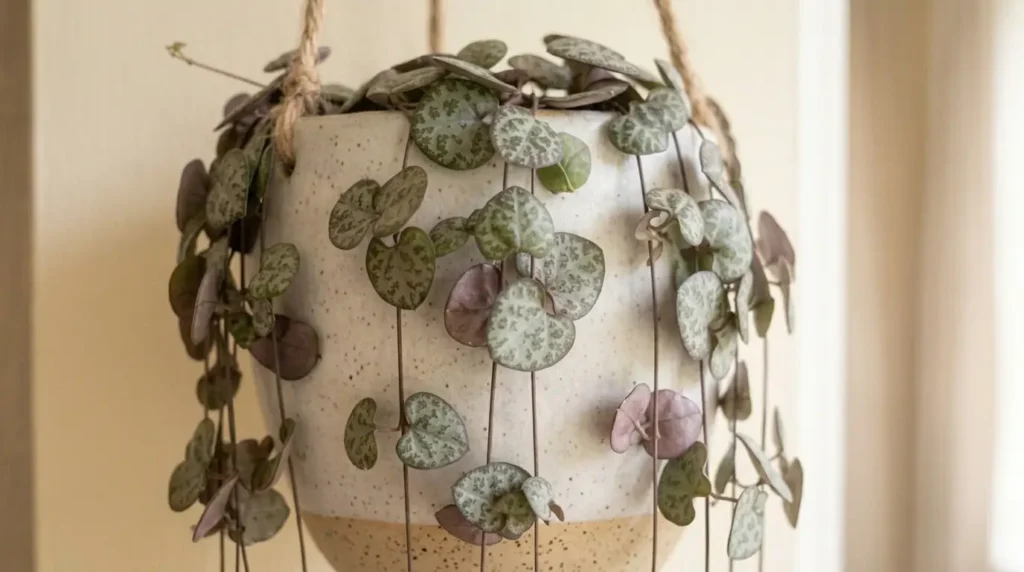
Meet the string of hearts plant (Ceropegia woodii), a trailing beauty with heart-shaped, marbled leaves. Native to South Africa and Zimbabwe, it’s honestly one of the easiest houseplants around. The vines can stretch several feet long, cascading beautifully from a hanging basket or high shelf. Let’s face it, if you love low-maintenance greenery that still looks like a showstopper, this one’s a total win.
Plant Care Card
| Attribute | Details |
|---|---|
| Common Name | String of Hearts, Rosary Vine, Chain of Hearts |
| Botanical Name | Ceropegia woodii |
| Family | Apocynaceae |
| Plant Type | Trailing succulent, tuberous perennial |
| Mature Size | 2–4 inches tall, vines trailing up to 12 feet |
| Sun Exposure | Bright, indirect light |
| Soil Type | Well-draining, sandy or succulent mix |
| Soil pH | 6.0–6.5 |
| Hardiness Zones | USDA 10–12 |
| Native Area | South Africa, Zimbabwe, Swaziland |
| Toxicity | Non-toxic to cats and dogs |
String of Hearts Plant Care
This string of hearts plant is considered easy-care, even for total beginners. Below, you’ll find everything on light, soil, water, temperature, and feeding, plus tips on propagating and troubleshooting. You’ll love how forgiving this little trailer really is, and honestly, a few missed waterings won’t ruin your day.
Light
Bright, indirect light keeps leaves compact and purple-pink marbling vivid on a healthy string of hearts plant. Too little light causes stretched, leggy vines with faded color, while too much direct sun scorches delicate leaves. A south or west-facing window works great, just keep it a few feet back from harsh sun.
Soil
A gritty, fast-draining mix is non-negotiable for a string of hearts plant, since its tuber is prone to rot in soggy soil. Think cactus or succulent soil, or make your own with 2:1 potting mix and perlite. Adding a handful of coarse sand or pumice can boost drainage even further, especially in a humid home. According to University of Missouri Extension, avoiding heavy garden soil helps prevent root rot in container plants. A terracotta pot also helps wick away extra moisture between waterings.
Water
Let the soil dry out almost completely between drinks for a string of hearts plant, checking that the top 2-3 inches feel dry. Overwatering shows up as mushy, yellowing leaves, while underwatering causes shriveled foliage. Water less in winter. Our guide to hoya kerrii care covers nearly identical watering habits.
Temperature and Humidity
Keep things between 65-80°F for happy, active growth. A string of hearts plant tolerates brief dips down to 50°F but won’t love it for long. Average household humidity is totally fine, no misting or humidifiers needed here. Just keep this plant away from cold drafts, heater vents, and AC units, since sudden temperature swings can cause leaf drop.
Fertilizer
Feed a string of hearts plant with a balanced liquid fertilizer diluted to half strength every 4 weeks during spring and summer. A fertilizer with a 10-10-10 or similar balanced ratio works well for steady, even growth. Skip feeding entirely once fall and winter roll around, since the plant is basically resting. Simply put, less is more with this one.
Types of String of Hearts Plant
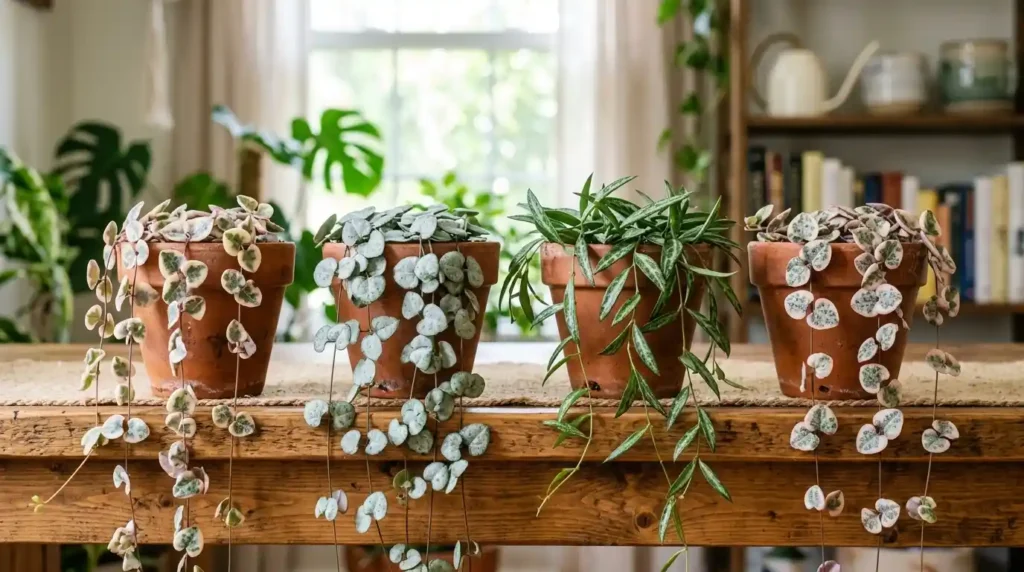
There are a handful of fun string of hearts plant cultivars beyond the classic variety, each with its own leaf pattern or color twist. Collectors often mix a few types together in one hanging basket for a layered, textured look. Here are some of the most popular ones to look for.
- Ceropegia woodii ‘Variegata’: Features cream, pink, and green splashed leaves. It’s slightly slower growing and needs a touch more light to keep its color vibrant.
- Silver Glory: Shows off nearly all-silver leaves with nothing but faint green veining. This one is especially prized by collectors for its striking, almost metallic look.
- String of Hearts ‘Rocket’: A more upright, compact cultivar with elongated, rocket-shaped leaves. It’s a fun option for anyone short on trailing space.
- Ceropegia woodii f. variegata ‘Silver Heart’: A heavily marbled variety with soft pastel tones. Give it slightly brighter light than the standard type to keep leaves from reverting green.
- Ceropegia linearis subsp. woodii ‘Pink Cloud’: A blush-toned cultivar with a soft pink wash across the leaf surface. It stays fairly compact and tends to grow a bit slower than the classic green-and-silver form.
Pruning
Trim your string of hearts plant in spring or summer to encourage fuller, bushier growth. Snip off any leggy, bare vines or dead, shriveled leaves back to a healthy node. Regular light trims every few months keep the plant looking dense rather than sparse. A clean, sharp pair of scissors or snips works best, so you don’t crush the delicate stems. Bonus: every cutting you snip can be turned into a brand-new plant, so nothing goes to waste.
Propagating String of Hearts Plant
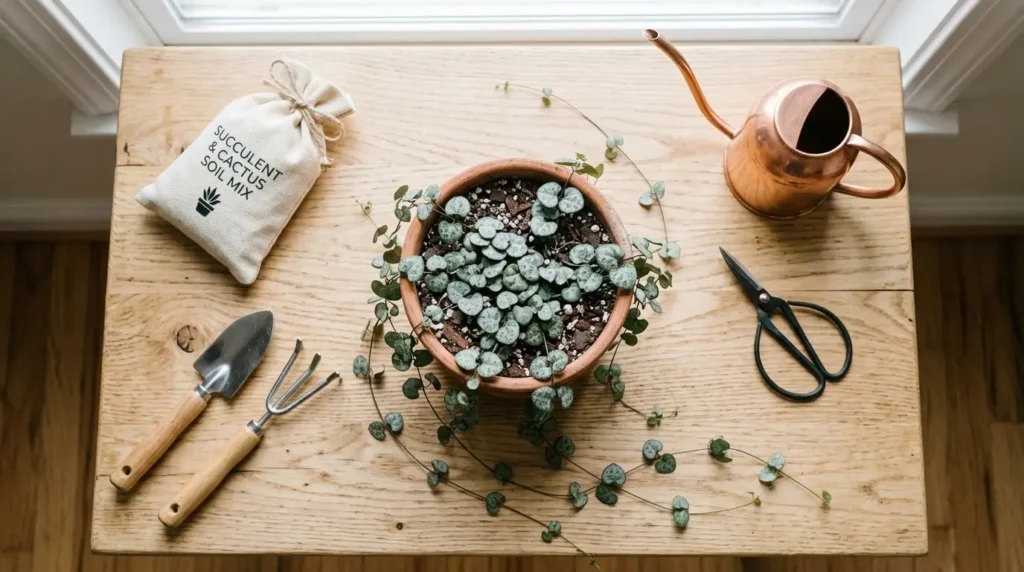
Spring and summer are the best time to propagate, when the vines are actively putting out new growth. A string of hearts plant roots quickly and reliably, which makes it a great pick for first-time propagators.
Propagating by Stem Cuttings
This is the easiest and most popular method for a string of hearts plant.
Materials needed:
- Sharp, clean scissors or shears
- Small pot with well-draining soil
- Rooting hormone (optional)
Steps:
- Snip a 4-6 inch section of vine just below a node, where leaves meet the stem.
- Let the cutting callous over for a day or two on a dry surface to reduce rot risk.
- Lay the cutting on top of soil, nodes touching down, and mist lightly to settle it in.
- Keep in bright, indirect light until roots form and new growth appears at the nodes.
Expect new roots within 2-4 weeks, with visible new growth soon after. This propagation method mirrors how many people root a neon pothos, another beginner favorite for cuttings. Once rooted, you can leave several cuttings in the same pot for a fuller look right away.
Water Propagation
For a shorter, more visual method of rooting a string of hearts plant, simply submerge a few nodes in a jar of water. Change the water every few days to prevent rot and bacteria buildup. Roots typically appear within 1-2 weeks, and then you can transfer to soil once they’re an inch long. Keep the jar in bright, indirect light and avoid direct sun, which can overheat the water and stress young roots.
Potting and Repotting String of Hearts Plant
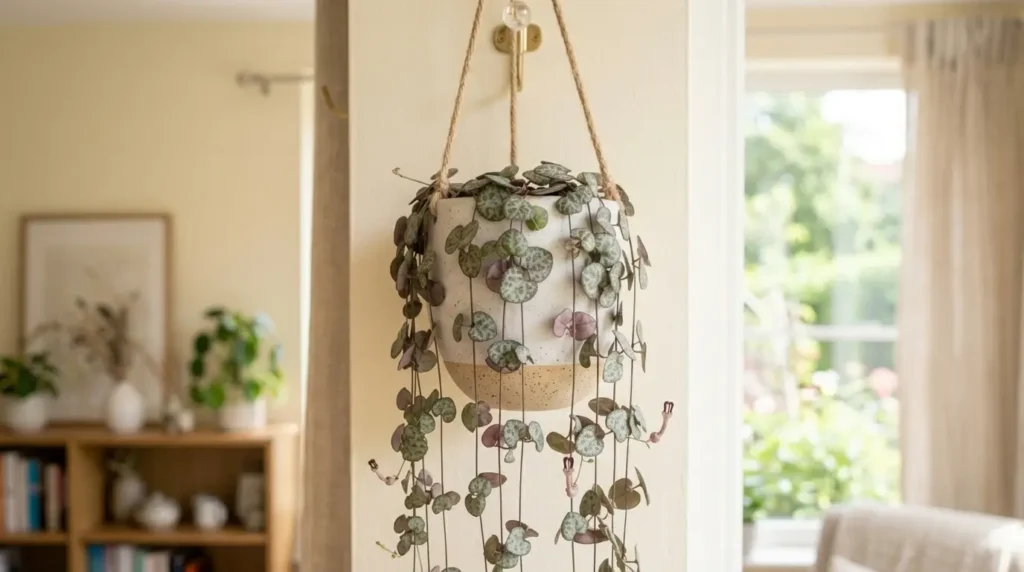
When to Repot: Look for roots poking from drainage holes or noticeably slowed growth. Most string of hearts plants only need repotting every 1-2 years, since they actually prefer being a little snug. Repotting too often can actually slow flowering and vine growth, so resist the urge to size up early.
How to Repot: Choose a pot just 1-2 inches larger than the current one, always with drainage holes. Gently loosen the tuber and roots, then set into fresh, gritty soil mix. Avoid burying the tuber too deep, as it likes to sit near the surface. Wait about a week before watering after repotting, giving any disturbed roots time to settle and heal.
Common Pests and Diseases
Like most houseplants, a string of hearts plant can occasionally attract a few unwanted visitors. Catching problems early makes treatment much easier and less stressful. A quick weekly check of leaves and stems goes a long way toward prevention.
Spider Mites
Look for fine webbing and tiny speckled spots on leaves. Treat with insecticidal soap or a strong rinse of water.
Mealybugs
Identify these by fuzzy, cotton-like clusters near stems and leaf joints. Dab them off with rubbing alcohol on a cotton swab.
Scale Insects
Watch for small, brown, shell-like bumps clinging to stems. Scrape off gently, then treat with neem oil weekly.
Aphids
Spot clusters of tiny green or black bugs on new growth. Rinse them off with water or spray with insecticidal soap.
Fungus Gnats
Look for tiny flies hovering near the soil surface after watering. Let the soil dry out fully between waterings to break their breeding cycle.
The EPA’s integrated pest management guidelines recommend catching infestations early to avoid heavier chemical treatments later. Isolating any newly infested plant also helps stop pests from spreading to your other greenery.
Common Problems with String of Hearts Plant
Here’s how to troubleshoot the most common issues with a string of hearts plant. Most problems trace back to light, water, or temperature, so a quick check of those three usually points you toward the fix.
Yellow Leaves
Yellowing usually points to overwatering, since soggy roots can’t breathe properly. It can also mean a nutrient deficiency from going too long without feeding. Occasionally, it’s just natural aging on older leaves. Cut back on watering and check drainage first. If you’re seeing similar symptoms elsewhere, our wandering jew plant care guide covers the same overwatering signs.
Brown Leaf Tips
Brown tips often come from low humidity or a buildup of minerals in tap water. Underwatering can also cause crispy, dry edges on leaves. Try filtered water and a slightly more consistent watering routine.
Drooping or Wilting Leaves
Wilting almost always signals a watering issue, either too much or too little. Check the soil moisture first before deciding which direction to adjust. Similar to Swedish ivy, this plant bounces back fast once watering is corrected.
Leggy Growth
Sparse, stretched-out vines usually mean the plant isn’t getting enough light. Move it closer to a bright window and trim back leggy sections to encourage bushier new growth.
Slow Growth or No New Growth
Stalled growth is often just seasonal, since this plant naturally rests through fall and winter. It can also mean the pot is too large, since string of hearts actually grows better a little root-bound. Try moving it to brighter light and holding off on repotting until spring.
FAQ
How do you care for a string of hearts plant?
Give it bright, indirect light, well-draining soil, and let it dry out between waterings. It’s genuinely low-maintenance once settled in.
Is String of Hearts toxic to pets?
No, this plant is considered non-toxic to cats and dogs. That said, it’s always smart to discourage pets from chewing on any houseplant.
Where is the best place to put a string of hearts plant?
A bright window with indirect light, like east or west-facing, works best. Hanging baskets let those trailing vines really shine.
Do strings of hearts like to climb or hang?
They naturally trail downward, making them perfect for hanging baskets or shelves. Some growers also train vines onto small trellises for a climbing look.