
In This Article
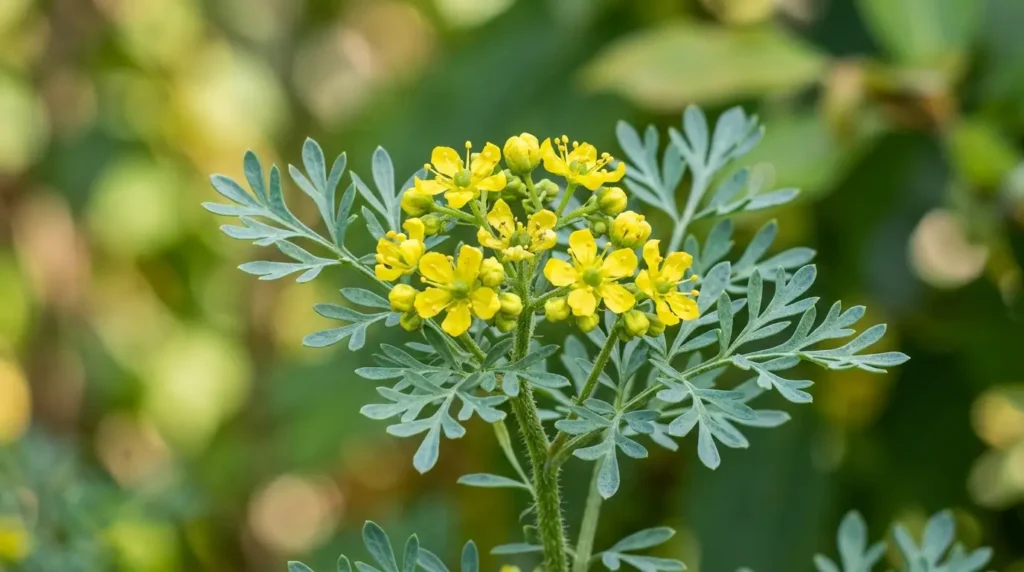
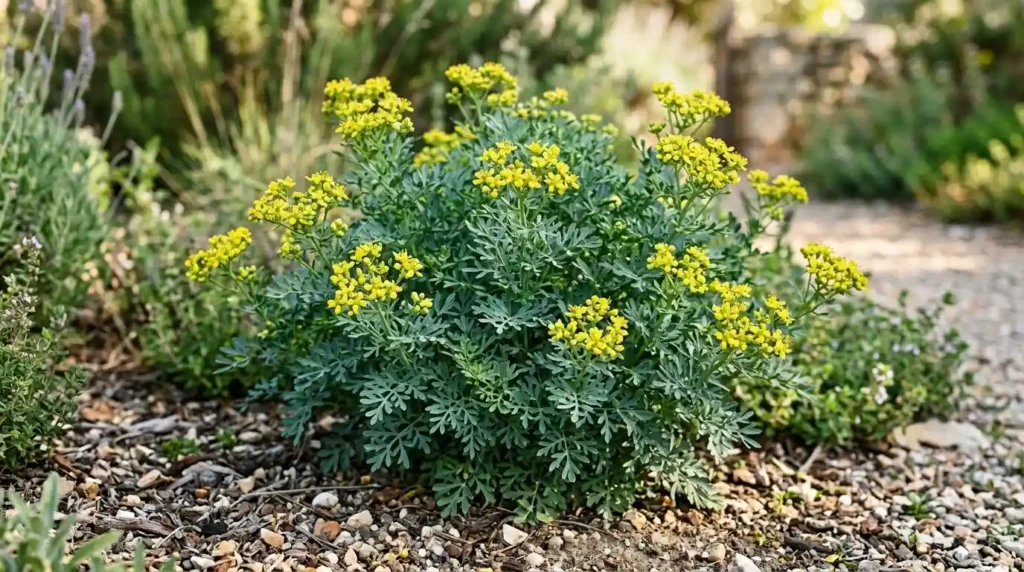
The rue plant (Ruta graveolens) is a tough little perennial with blue-green, lacy foliage and clusters of small yellow flowers. Also called herb-of-grace, this shrubby herb has a mounding growth habit and a strong, musky scent that some gardeners love and others avoid.
Native to the Balkan Peninsula, rue has been grown in gardens for centuries, both as an ornamental and a traditional herb. It thrives in USDA hardiness zones 4-9, where it comes back reliably year after year.
Honestly, the rue plant is one of the easier perennials you can grow. It handles poor soil, drought, and neglect without much fuss, which makes it a great pick for beginner gardeners .
Rue Plant Care Card
| Category | Details |
|---|---|
| Common Name | Rue, herb-of-grace, common rue |
| Botanical Name | Ruta graveolens |
| Family | Rutaceae |
| Plant Type | Perennial herb, subshrub |
| Mature Size | 2-3 ft. tall x 2-3 ft. wide |
| Sun Exposure | Full sun |
| Soil Type | Well-draining, sandy or rocky |
| Soil pH | Neutral to slightly alkaline (6.0-7.5) |
| Hardiness Zones | 4-9 (USDA) |
| Native Area | Balkan Peninsula, southeastern Europe |
| Bloom Time | Summer |
| Toxicity | Toxic to humans and pets; can cause skin irritation |
Rue Plant Care
The rue plant thrives with very little care once it settles into the right spot. Here’s what you need to know about sun, soil, water, and maintenance. With proper placement, this plant practically takes care of itself.
Light
The rue plant wants full sun to look its best. Aim for at least six hours of direct light every day for compact growth and steady blooms. In fact, more sun usually means bushier foliage and better flowering.
Without enough light, rue tends to get leggy and produces fewer flowers. A south-facing bed or border works well, though this plant also tolerates a little afternoon shade in especially hot climates.
Soil
This herb prefers well-draining soil and honestly doesn’t ask for much else. Sandy or rocky soil that mimics its native Mediterranean-style habitat is ideal, and rich, heavy soil can actually cause more harm than good.
A neutral to slightly alkaline pH between 6.0 and 7.5 works best. If your soil holds too much water, mix in some coarse sand or fine gravel, and avoid dense clay or compacted ground at all costs.
Water
Once established, the rue plant is drought-tolerant and only needs watering every 10-14 days. Check the soil first; if the top two inches feel dry, it’s time to water again.
During the growing season, you may water slightly more often, especially in extreme heat. In winter, cut back significantly since the plant is mostly dormant and needs far less moisture.
Overwatering shows up as yellowing leaves or root rot, while underwatering causes wilting. Newly planted rue needs more frequent watering for the first few weeks.
Temperature and Humidity
Rue plants prefer moderate to warm temperatures between 60-75°F and handle heat exceptionally well. This plant is also fairly cold-hardy, tolerating brief dips down to around 20°F once established.
Humidity isn’t a major concern for this Mediterranean native. In colder zones, a layer of mulch around the base helps protect the roots through winter freezes.
Fertilizer
Rue rarely needs fertilizer, and honestly, too much can backfire. A single light application of balanced, slow-release fertilizer in early spring is plenty. Skip feeding entirely once the plant enters dormancy in fall, since excess nutrients can reduce blooming and weaken stems.
Pruning
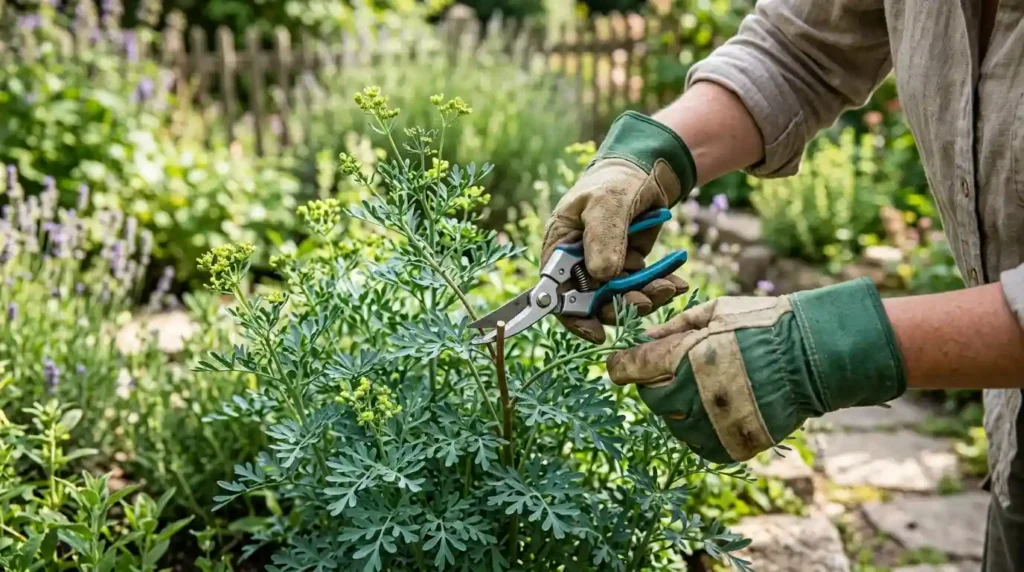
Prune the rue plant in early spring, just before new growth begins, to remove any dead or winter-damaged stems. You can also trim lightly after flowering to keep the shape tidy and encourage denser growth.
Use clean, sharp pruning shears and cut back about one-third of the plant’s height. Regular pruning keeps rue from getting woody and sparse over time, and it also helps maintain that neat, mounded look gardeners love.
Propagating Rue Plant
Spring and early summer are the best times to propagate rue, when the plant is actively putting out new growth.
Propagating by Stem Cuttings
This is the fastest and most reliable way to get new rue plants. Here’s what you’ll need:
- Sharp, clean scissors or pruning shears
- A 4-6 inch stem cutting from healthy new growth
- Rooting hormone (optional but helpful)
- A small pot with well-draining potting mix
Start by snipping a 4-6 inch stem just below a leaf node, and strip the lower leaves off. Next, dip the cut end in rooting hormone if you’re using it. Then insert the cutting about two inches deep into moist, well-draining potting mix. Keep the soil lightly damp and place the pot somewhere with bright, indirect light.
Roots typically form within three to four weeks, and you’ll know it worked when you feel gentle resistance while tugging the stem.
Propagating from Seeds
Growing rue plants from seed takes more patience but costs less. Sow seeds indoors about eight weeks before your last frost date. Press them lightly into the soil surface since they need light to germinate. Keep the soil consistently moist and warm, around 70°F.
Germination usually takes two to three weeks. Once seedlings have a few true leaves, harden them off before moving them outdoors.
Planting and Transplanting Rue Plant
The best time to plant rue outdoors is in spring, after the last frost has passed. Space plants about 18-24 inches apart to allow room for their mature, mounding shape.
Dig a hole roughly the same depth as the root ball and slightly wider. Backfill with soil, water thoroughly, and add a light layer of mulch to help retain moisture while roots establish.
Rue rarely needs dividing, but if a plant becomes overly woody, transplant in early spring for the best results.
Common Pests and Diseases
Like most garden herbs, the rue plant can occasionally face pest or disease issues, though it’s fairly resistant overall thanks to its strong scent.
Aphids
Look for clusters of tiny green or black insects on new growth and stem tips. Treat with a strong water spray or insecticidal soap applied weekly.
Spider Mites
Fine webbing and stippled, yellowing leaves are the telltale signs of spider mites. Increase humidity around the plant and treat with neem oil if the infestation spreads.
Powdery Mildew
A white, powdery coating on leaves usually appears in humid, crowded conditions. Improve airflow by spacing plants out, and apply a fungicide if needed.
Root Rot
Mushy, dark roots and wilting foliage point to root rot from soggy soil. Cut back watering immediately and improve drainage around the base.
Common Problems with Rue Plant
Here’s how to troubleshoot common issues:
Poor or No Blooms
Not seeing flowers on your rue plant? This is usually caused by insufficient sun, since fewer than six hours a day limits bud formation. Over-fertilizing is another common culprit, pushing leafy growth instead of blooms. Improper pruning at the wrong time of year can also remove developing flower buds. Move the plant to a sunnier spot, ease up on feeding, and prune only in early spring.
Yellow or Browning Leaves
Yellowing leaves typically point to overwatering or poor drainage, which suffocates the roots over time. Nutrient deficiency, though less common, can also cause pale, discolored foliage. Cut back on watering, check that your soil drains well, and consider a light feeding if growth still looks weak.
Wilting or Drooping
Underwatering is the most frequent cause of wilting, especially in hot weather. Transplant shock can also cause temporary drooping after moving the plant. Heat stress during extreme temperatures adds to the problem. Water deeply and provide light afternoon shade during heat waves.
Leggy or Sparse Growth
Leggy rue plants almost always need more light, since shade encourages stems to stretch. Over-fertilizing can also cause weak, floppy growth. Move the plant to a sunnier location and prune back to encourage bushier regrowth.
For comparison, a similarly low-maintenance herb worth exploring is tarragon, which shares rue’s preference for well-draining soil and minimal feeding. Gardeners drawn to Mediterranean herbs may also enjoy our guide to ruda plant care, a closely related favorite in many home gardens.
If you’re troubleshooting soil drainage issues, our sage identification guide covers similar well-draining soil needs. Gardeners in warmer regions might also like Texas sage, another drought-tolerant shrub that thrives on neglect. And if scent is part of what draws you to herbs like rue, check out the licorice plant for another fragrant, easy-care option.
According to guidance from the North Carolina State Extension, well-draining, sandy soil is essential for preventing root rot in Mediterranean-origin herbs like rue. The USDA Plants Database confirms this species performs best in hardiness zones 4 through 9. For pest management, the Clemson Cooperative Extension recommends insecticidal soap as a low-impact first treatment for aphids and spider mites on garden herbs.
FAQ
What is a rue plant used for?
Rue has traditionally been used as an ornamental garden plant and companion herb. It’s grown mainly for its blue-green foliage and pest-deterrent qualities in gardens.
Can you touch rue plant?
Handle rue carefully with gloves, since its sap contains compounds that cause skin irritation in sunlight. Reactions range from mild redness to blistering for some people.
What is a rue allergy?
A rue allergy involves skin sensitivity to compounds called furanocoumarins in the sap. Combined with sunlight, contact can cause burns, rashes, or blistering reactions.
Is rue plant toxic to cats?
Yes, rue is toxic to cats if ingested, causing vomiting, drooling, or skin irritation. Keep it out of reach and contact your vet if symptoms appear.
4 thoughts on “How to Grow and Care for Rue Plant”
Comments are closed.