
In This Article
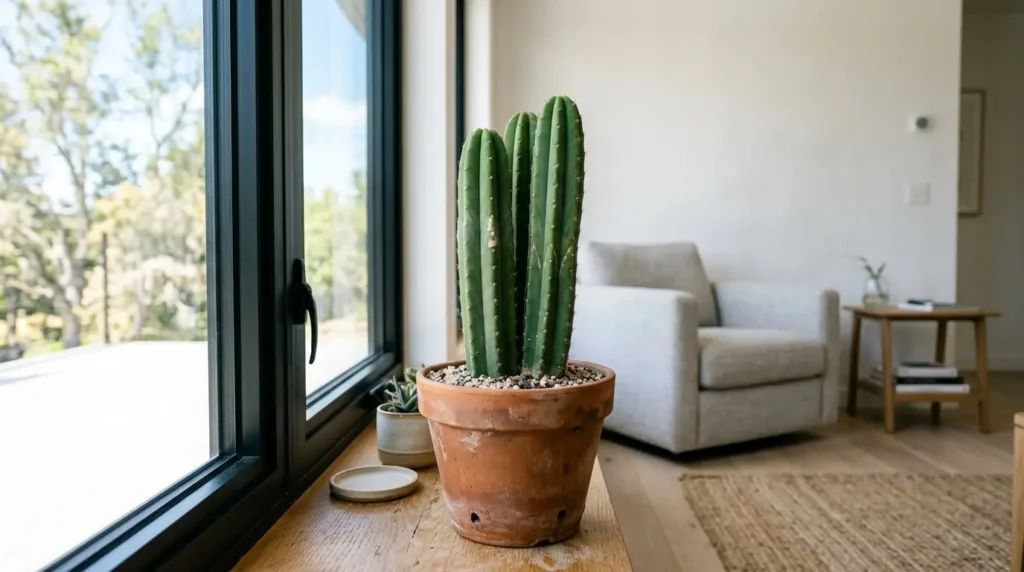
Kaktus san pedro (Echinopsis pachanoi) is a fast-growing columnar cactus native to the Andes Mountains of South America. Tall, ribbed, and blue-green, it produces stunning white night-blooming flowers. Hardy in USDA zones 8–11, this beginner-friendly statement plant thrives in warm climates with minimal effort.
Plant Care Card
| Detail | Info |
|---|---|
| Common Name | San Pedro Cactus |
| Botanical Name | Echinopsis pachanoi |
| Family | Cactaceae |
| Plant Type | Perennial cactus |
| Mature Size | 10–20 ft tall, 3–6 ft wide |
| Sun Exposure | Full sun |
| Soil Type | Sandy, well-draining |
| Soil pH | 6.0–7.5 (slightly acidic to neutral) |
| Hardiness Zones | USDA 8–11 |
| Native Area | Andes Mountains, South America |
| Bloom Time | Summer (night-blooming) |
| Toxicity | Non-toxic to humans; mildly toxic to pets |
Kaktus San Pedro Care
Kaktus san pedro is surprisingly easy to grow once placed in the right environment. Here’s what you need to know about sun, soil, water, and maintenance. With the right placement, this plant practically takes care of itself.
Light
Kaktus san pedro needs 6 to 8 hours of full sun daily. Without enough light, columns grow thin, pale, and leggy. A south-facing garden spot is ideal. Established plants handle blazing sun effortlessly, though young plants appreciate light afternoon shade in areas with intense summer heat.
Soil
Sandy, well-draining soil is essential for kaktus san pedro soggy roots cause rot fast. Aim for a pH of 6.0–7.5. A good DIY mix is 60% coarse sand, 30% perlite, 10% loamy soil. According to the USDA Natural Resources Conservation Service, proper drainage is critical for cactus success.
Water
Water kaktus san pedro every 2 to 3 weeks during the growing season, only when the top 2 inches of soil are bone dry. Reduce to monthly in winter. Yellowing skin signals overwatering; wrinkled columns mean thirst. For similar drought-tolerant care, see our agave plants guide.
Temperature and Humidity
Kaktus san pedro thrives between 60°F and 100°F, tolerating brief dips to 20°F when established. High humidity is the real enemy, encouraging fungal issues. In zones 8–9, protect young plants during hard frosts with burlap or frost cloth. Established in-ground plants in zone 9 and above need no winter protection.
Fertilizer
Feed kaktus san pedro with a low-nitrogen, slow-release cactus fertilizer once in early spring and once in midsummer. A balanced option like 10-10-10 diluted to half strength also works well. Stop fertilizing completely in fall and winter when the plant enters dormancy. Over-fertilizing pushes weak, soft growth that’s prone to pest damage.
Types of Kaktus San Pedro
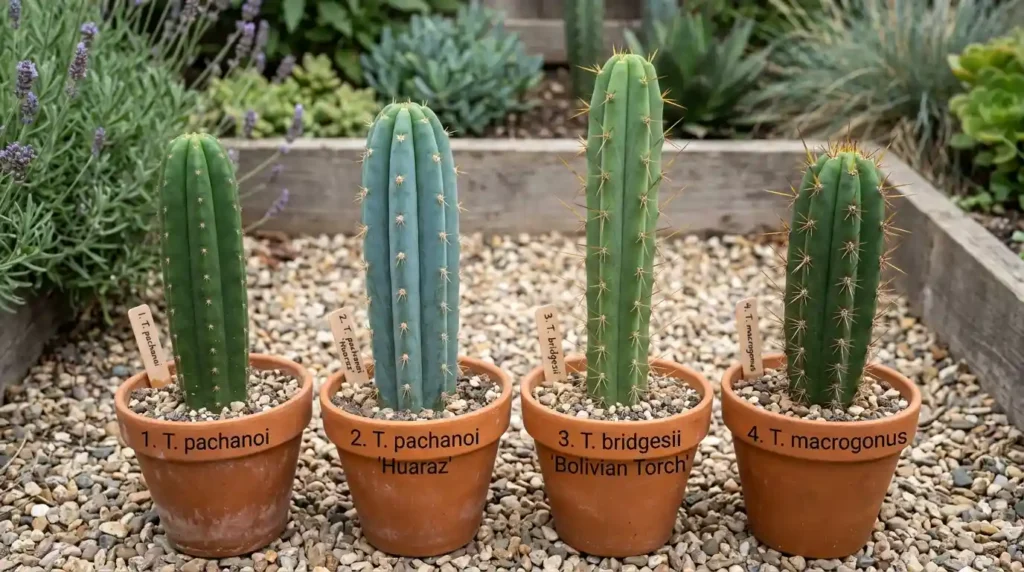
San Pedro has several popular cultivars and closely related species worth knowing about:
- Echinopsis pachanoi ‘Monstrose’ A rare mutation with irregular, lumpy growth instead of smooth columns. Highly sought by collectors.
- Echinopsis peruvianus (Peruvian Torch) A close relative with slightly more pronounced spines and a bluer tinge. Grows similarly but is a bit slower. See our full ice plant care guide for comparison with other drought-tolerant favorites.
- Echinopsis pachanoi ‘Short Form’ A more compact cultivar that stays under 6 feet. Great for smaller gardens or container growing.
- Trichocereus bridgesii (Bolivian Torch) Related species with deeper ribs and longer spines. Hardy and fast-growing, similar to the classic kaktus san pedro.
Pruning
The best time to prune kaktus san pedro is in late spring or early summer, just as the growing season gets going. Remove any damaged, diseased, or frost-burnt sections using a sharp, clean knife or pruning saw. Cut at an angle to discourage water pooling on the cut surface.
After cutting, let the cut end callous over in a dry, shaded spot for at least 2 weeks before any contact with soil or moisture. This prevents rot at the wound site. Pruning also gives you cuttings ready for propagation a win-win. Sharp tools and clean cuts make all the difference here.
Propagating Kaktus San Pedro
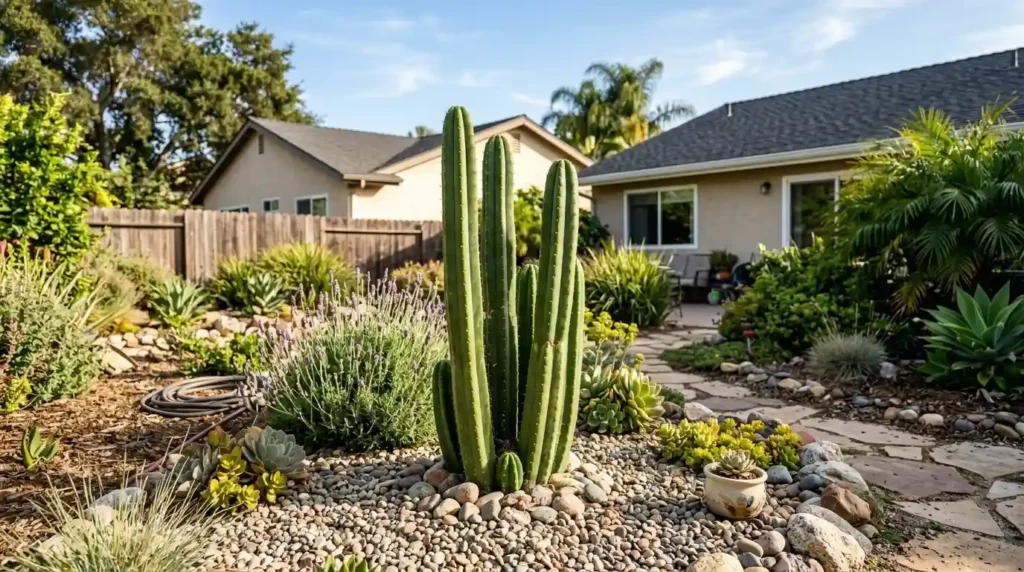
The best time to propagate kaktus san pedro is in spring or early summer, when the plant is actively growing. You have a couple of reliable methods to choose from.
Propagating by Stem Cuttings
This is by far the most popular and reliable method for kaktus san pedro. Cuttings root quickly and produce true-to-parent plants every time.
Materials needed:
- Sharp, clean knife or pruning saw
- Rubbing alcohol (to sterilize the blade)
- Dry, shaded area for callusing
- Sandy cactus potting mix
- A container or garden bed with excellent drainage
Steps:
Step 1: Use a clean knife to cut a section of kaktus san pedro at least 6–12 inches long. Make a clean, horizontal cut. Wipe the blade with alcohol before cutting.
Step 2: Set the cutting in a dry, shaded spot not in soil yet. Let the cut end form a hard callous over 2 to 4 weeks. This step is non-negotiable; skipping it almost always causes rot.
Step 3: Once callused, plant the cutting 2 to 3 inches deep in a dry, sandy cactus mix. Do not water for the first week. Place in a warm, bright spot with indirect light initially.
Step 4: After one week, give the cutting a small drink of water. Move it gradually into full sun over the next 2 weeks. Roots typically develop within 4 to 8 weeks.
The University of California Cooperative Extension recommends the callusing step as essential for all succulent and cactus propagation it really does make the difference.
Propagating from Seeds
Growing kaktus san pedro from seed is slower but rewarding. Sow seeds in a moist cactus mix, barely covering them. Keep the container warm (around 70°F) and lightly misted until germination, which takes 2 to 4 weeks. Seedlings grow slowly at first don’t rush them into full sun.
Planting and Transplanting Kaktus San Pedro
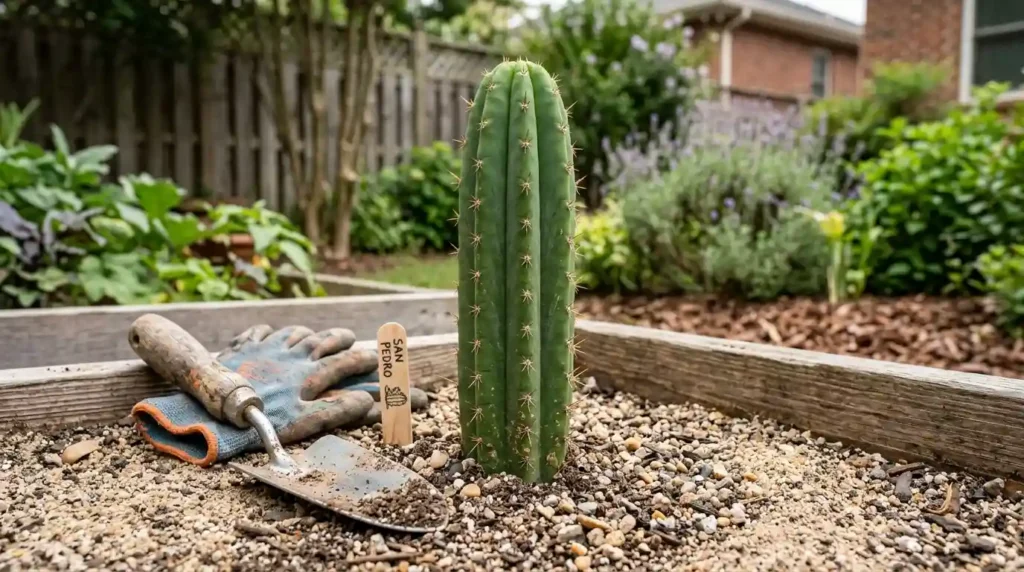
Plant kaktus san pedro in spring after the last frost date in your area. Space multiple plants at least 3 to 4 feet apart they’ll get wide over the years. Dig a hole slightly wider than the root ball and no deeper than needed. Set the plant at the same level it was previously growing.
Backfill with your amended sandy mix and tamp gently. Do not water for the first 5 to 7 days after planting this encourages roots to reach outward searching for moisture. After that, water lightly once, then follow the normal schedule. The University of Arizona Cooperative Extension advises that proper spacing prevents competition and allows adequate air circulation around cacti.
Transplant or divide established plants every 3 to 5 years if they’ve outgrown their space. Spring is the best window. Handle with thick gloves the spines are deceptively sharp.
Common Pests and Diseases
Like most garden cacti, kaktus san pedro can occasionally face a few pest or disease problems. Here’s what to watch for.
Mealybugs
Look for white, cottony clusters at the base of ribs or near the root zone. Treat with 70% isopropyl alcohol applied with a cotton swab, or spray with neem oil.
Scale Insects
Tan or brown shell-like bumps on the column surface are the telltale sign. Scrape off manually and follow up with a neem oil spray. Repeated treatment every two weeks clears most infestations.
Root Rot
Mushy, discolored tissue at the base usually brown or black indicates root rot from overwatering or poor drainage. Remove affected tissue with a clean knife, let the wound callous, and replant in fresh, dry soil. Similar drainage issues affect moon cactus too the fix is always the same.
Powdery Mildew
White powdery coating on the skin, often in humid conditions. Improve air circulation and apply a diluted baking soda spray (1 tsp per quart of water) to affected areas. Check our guide on golden barrel cactus for more tips on cactus disease prevention.
Common Problems with Kaktus San Pedro
Here’s how to troubleshoot common issues with kaktus san pedro:
Poor or No Blooms
Kaktus san pedro is a night bloomer flowers only appear on mature plants that are at least 5 to 7 years old. If yours isn’t blooming, the most likely culprit is not enough sunlight move it to a brighter, more open spot. Over-fertilizing with nitrogen-heavy products also suppresses flowering by pushing vegetative growth. Additionally, a plant under stress from drought, root damage, or pest pressure won’t bloom. Address the stressor first, then give it a full growing season to recover.
Yellow or Brown Skin
Yellowing skin is most often a sign of overwatering or poor drainage the roots are sitting too wet. Check the base for soft spots. Browning with a crispy texture, on the other hand, points to sunscald on young plants moved too quickly into intense sun. Nutrient deficiencies can also cause dull, off-color skin. Repot or amend soil if drainage is the issue, and acclimate plants gradually to full sun.
Wilting or Leaning
A healthy kaktus san pedro stands upright on its own. Leaning or wilting is often transplant shock after being moved or repotted give it a few weeks to stabilize. Severe underwatering in summer heat also causes the column to soften and droop. In rare cases, root rot destroys the structural support entirely. Check the base, firm up the soil, and stake temporarily if needed.
Leggy or Thin Growth
Thin, pale columns reaching toward the light are a clear sign of insufficient sun. Kaktus san pedro that doesn’t get at least 6 hours of direct sun daily grows weak and spindly. Move the plant to a sunnier spot as soon as possible. Avoid the temptation to fertilize more that just makes the leggy growth worse. Consistent full sun is the only real fix. For contrast, check how bougainvillea handles the same full-sun conditions beautifully.
Frost Damage
Black, mushy tissue after a cold night means frost damage. Cut back to healthy, green tissue with a sterilized blade. Let the wound callous thoroughly before rain or irrigation touches it. In zones 8–9, protect plants next winter with frost cloth before temperatures drop below 25°F. More established plants in the ground recover faster than potted ones.
FAQ
How big does a San Pedro cactus get?
Kaktus san pedro can reach 10 to 20 feet tall outdoors in ideal conditions. Growth rate is typically 1 foot or more per year with good sun and water.
Is San Pedro cactus legal to grow in the US?
Yes, kaktus san pedro is completely legal to grow in the US as an ornamental plant. It’s widely available at nurseries and garden centers nationwide.
Is San Pedro cactus good for beginners?
Absolutely. Kaktus san pedro is one of the easiest cacti to grow. It’s fast-growing, drought-tolerant, and forgiving of occasional care mistakes when planted correctly.
Can kaktus san pedro grow in containers?
Yes, it grows well in large containers with excellent drainage holes. Choose a pot at least 12 inches wide and use a sandy cactus mix for best results.