
In This Article
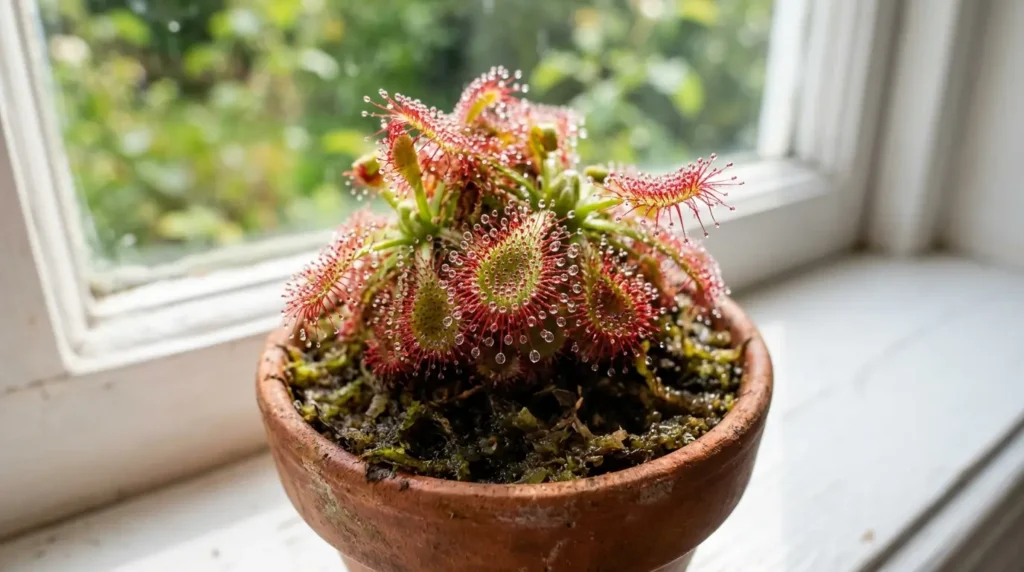
Meet the sundew plant (Drosera spp.) a jaw-dropping carnivorous houseplant covered in glistening, sticky tentacles. Native to boggy habitats worldwide, sundews catch insects to survive in nutrient-poor soil. With over 190 species and moderate care needs, they’re surprisingly rewarding once you nail the basics.
Plant Care Card
| Detail | Info |
|---|---|
| Common Name | Sundew |
| Botanical Name | Drosera spp. |
| Family | Droseraceae |
| Plant Type | Perennial carnivorous herb |
| Mature Size | 1–12 inches tall, 1–6 inches wide (varies by species) |
| Sun Exposure | Bright direct to bright indirect light |
| Soil Type | Poor, acidic, well-draining carnivorous mix |
| Soil pH | 4.5–5.5 |
| Hardiness Zones | USDA Zones 6–9 (varies by species) |
| Native Area | Worldwide — bogs and wetlands across six continents |
| Toxicity | Non-toxic to humans and pets |
Sundew Plant Care
Sundew plant care is moderate it’s not difficult, but it does require you to unlearn a few standard houseplant habits. The following sections cover everything from light and water to soil and feeding. You’ve got this, and once you nail the basics, your sundew will thrive beautifully.
Light
Sundews love 4–6 hours of bright, direct sun daily a south- or east-facing windowsill is ideal. Good light turns tentacles deep red, a sign of a happy plant. Too little light causes pale growth and lost stickiness. No sunny window? A grow light 6–8 inches above works perfectly.
Soil
Never use regular potting mix for a sundew plant nutrients will kill it. Sundews need poor, acidic, well-draining soil. A simple 1:1 sphagnum peat moss and perlite mix works perfectly. According to University of Vermont Extension, proper drainage is critical to prevent root rot in sensitive species.
Water
Watering a sundew plant is where most people go wrong but once you know the trick, it’s easy. Sundews need consistently moist soil, never dry but never waterlogged either.
The best method is the tray method: set the pot in a shallow tray with about 1 inch of distilled, rainwater, or reverse osmosis water at all times. Never use tap water the minerals will damage and eventually kill your plant. Similar to how butterwort plants prefer low-mineral water, sundews are extremely sensitive to water quality.
In winter, if your sundew goes dormant, reduce watering significantly. Let the tray dry out between refills but never let the soil go completely dry.
Temperature and Humidity
Most sundew species do well between 60°F and 85°F (16°C–29°C). They prefer humidity of 50% or higher, which is higher than most homes offer naturally. A humidity tray or small terrarium setup can help a lot.
Keep your sundew plant away from heating vents, air conditioning drafts, and cold windowpanes in winter. Sudden temperature swings stress the plant and can cause tentacle die-back. Temperate species like Drosera rotundifolia may need a winter dormancy period in cooler conditions.
Fertilizer
Sundews don’t need traditional fertilizer they get nutrients from insects they catch. If your sundew plant rarely catches bugs, you can mist the leaves lightly with a diluted, quarter-strength orchid fertilizer once a month during spring and summer only. According to Penn State Extension’s fertilization guidelines, less is always more with carnivorous plants. Stop completely in fall and winter.
Types of Sundew Plants
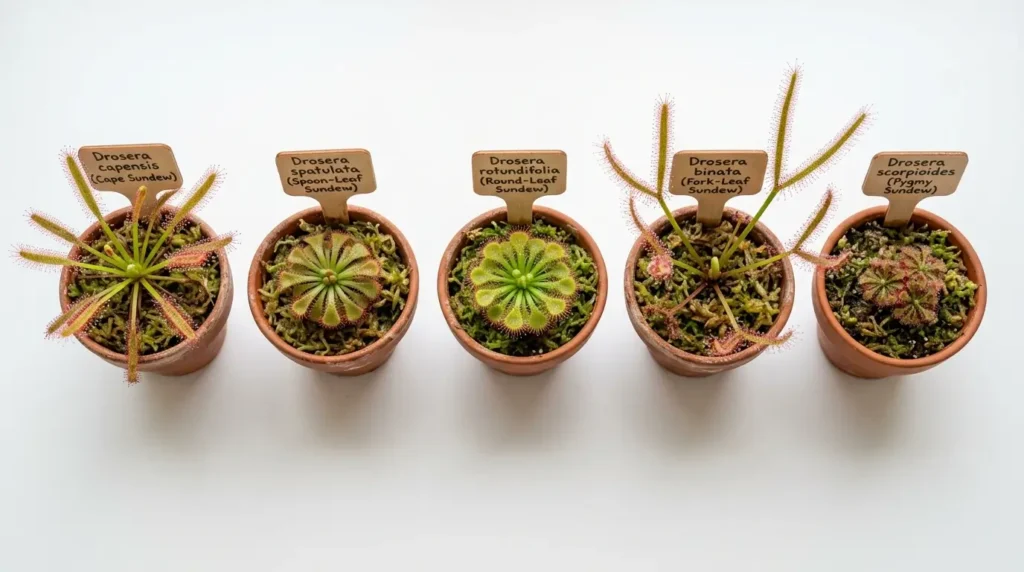
There are over 190 species of sundew plant, but a few are especially popular as houseplants:
- Cape Sundew (Drosera capensis) The most beginner-friendly species. It has long, strap-like leaves covered in bright red tentacles. Fast-growing and very forgiving.
- Spoon-Leaf Sundew (Drosera spathulata) A compact rosette with small rounded leaves. Great for terrariums and humid windowsills.
- Round-Leaf Sundew (Drosera rotundifolia) A native North American species with circular leaves. It requires winter dormancy and cooler temps.
- Fork-Leaf Sundew (Drosera binata) Has forked, Y-shaped leaves that can reach 12+ inches. It’s dramatic and fast-growing.
- Pygmy Sundew (Drosera pygmaea) Tiny and adorable, perfect for small pots. It produces gemmae (tiny plantlets) for easy propagation.
Propagating Sundew Plant
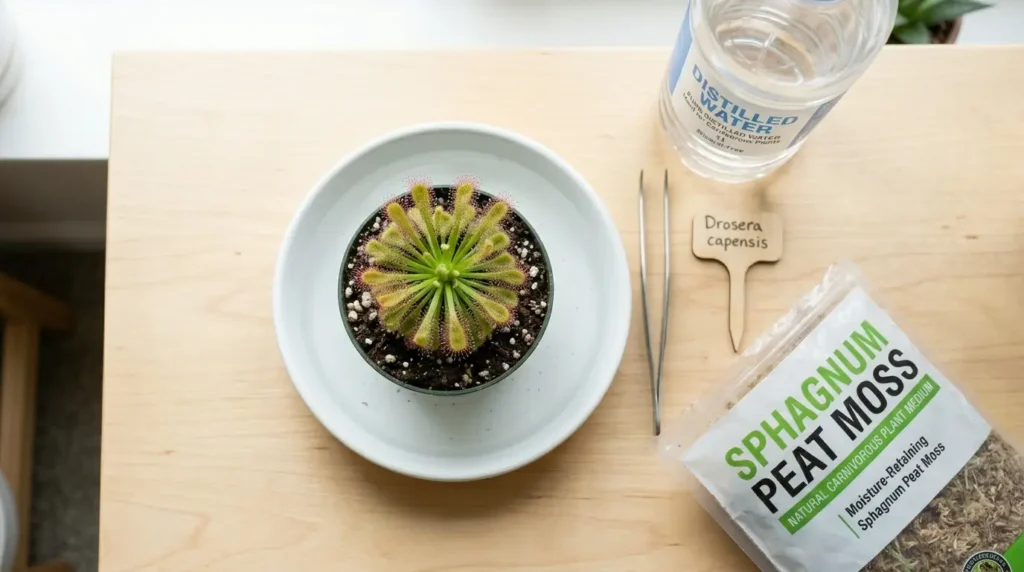
The best time to propagate your sundew plant is during spring and early summer when growth is most active.
Propagating by Leaf Pullings
Leaf pullings are the most reliable propagation method for sundew plant and work beautifully on most species.
Materials needed:
- Sharp sterile scissors or tweezers
- Small pot with sphagnum moss or carnivorous soil mix
- Distilled water
- Clear plastic bag or humidity dome
Steps:
- Step 1: Gently pull a healthy leaf near the base of the plant, pulling downward so a small bit of white stem tissue comes with it. Don’t cut pull slowly.
- Step 2: Lay the leaf flat on the surface of moistened sphagnum moss or your carnivorous mix. Press it lightly so it makes contact with the soil.
- Step 3: Place the pot inside a clear plastic bag or under a humidity dome to keep moisture levels high. Set it in bright indirect light not direct sun.
- Step 4: Wait 4–8 weeks. Tiny plantlets will sprout from the base of the leaf. Once they’re about ½ inch tall, you can carefully separate and pot them up.
Leaf pullings from Cape Sundew (Drosera capensis) are especially successful almost every pulling produces new plants.
Propagating by Division
Division works well for clumping species that produce offshoots or multiple crowns. Similar to pitcher plant propagation, dividing is cleanest in spring when roots are actively growing.
- Step 1: Remove the plant from its pot and gently tease apart separate crowns or offshoots by hand.
- Step 2: Pot each division individually in fresh carnivorous mix and place in a humid spot.
- Step 3: Keep consistently moist using the tray method until new growth appears, usually within 2–4 weeks.
Potting and Repotting
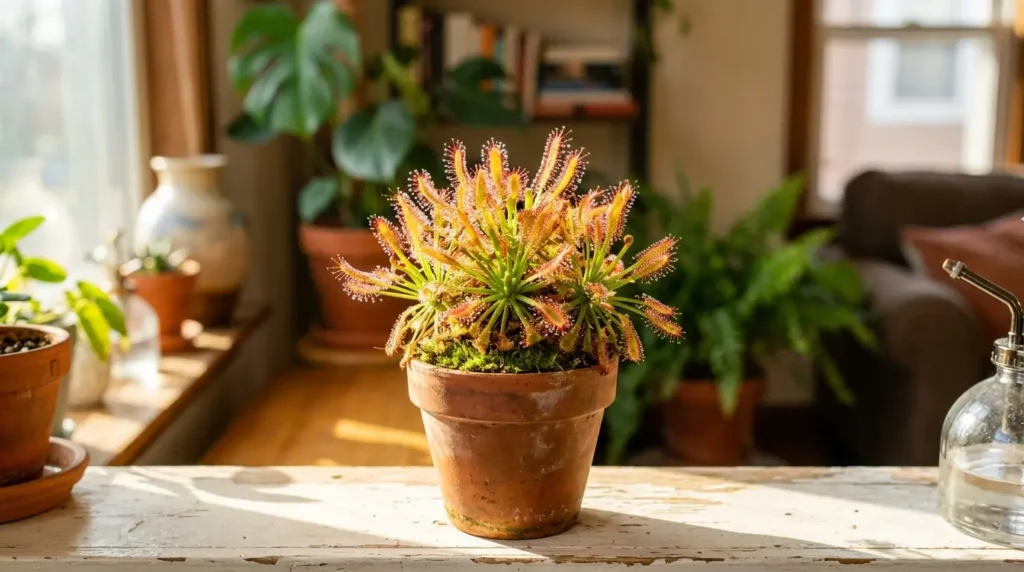
Repot your sundew plant every 1–2 years or when you notice roots circling the bottom of the pot or poking out of drainage holes. Spring is the best time for repotting.
Choose a pot only 1–2 inches larger than the current one. Too large a pot holds excess moisture and increases rot risk. Always use plastic or glazed ceramic pots terracotta dries out too fast and may leach minerals harmful to your sundew plant.
When repotting, handle the roots gently and use fresh carnivorous mix. Water thoroughly with distilled water after repotting and place in bright indirect light for a week to recover. This careful approach applies to other sensitive plants too check out how spider plants handle repotting for a similar gentle technique.
Common Pests and Diseases
Like most houseplants, the sundew plant can occasionally attract a few unwanted visitors. Keep an eye out for these common culprits.
Spider Mites
Look for fine webbing and stippled leaves. Treat with a gentle spray of distilled water or neem oil solution applied carefully to avoid the tentacles.
Mealybugs
White cottony clusters appear at leaf bases. Remove manually with tweezers or dab with rubbing alcohol on a cotton swab.
Aphids
Tiny green or black insects cluster on new growth. Rinse with a gentle stream of distilled water or apply insecticidal soap diluted to half strength.
Fungus Gnats
Larvae damage roots in overly wet soil. Allow the tray to dry slightly between refills. According to University of Florida IFAS Extension’s IPM guide, sticky yellow traps are effective for monitoring adult populations.
Common Problems
Here’s how to troubleshoot common sundew issues:
Yellow Leaves
Yellow leaves on a sundew plant are common and usually not a crisis. Overwatering or stagnant water in the tray can cause root stress and yellowing refresh tray water regularly. Using tap water is another big cause, as mineral buildup damages roots quickly. Natural aging of lower leaves also causes yellowing, which is perfectly normal. Remove yellow leaves at the base and switch to distilled water immediately. For comparison, similar yellowing in calathea plants is also often a water quality issue.
Brown Leaves or Brown Leaf Tips
Brown tips usually mean low humidity most homes run drier than the sundew plant prefers. Tap water causes the same browning over time as minerals accumulate. Underwatering can also lead to crispy, browning leaves quickly. Increase humidity with a tray of pebbles and water, switch to distilled water, and make sure the soil never fully dries out.
Drooping or Wilting Leaves
Drooping is almost always a watering issue. Underwatering causes tentacles to collapse and leaves to droop fast. Oddly, overwatering with stagnant water can do the same by suffocating roots. Refresh the water tray and check that roots look healthy and white, not brown or mushy. This mirrors similar wilting issues seen in nerve plants, where watering consistency is everything.
Leggy Growth or Sparse Foliage
Leggy, stretched growth with weak tentacles is almost always a light problem for your sundew plant. Move it to a brighter location immediately a sunny windowsill or under a grow light. You can also trim leggy stems to encourage bushier, more compact new growth.
FAQ
Are sundews hard to keep alive?
Sundews are moderate-care plants. They need specific water and soil conditions, but once set up correctly, they’re surprisingly low maintenance and resilient.
Is it safe to touch a sundew?
Yes, touching a sundew is safe for humans. The sticky mucilage is harmless to skin, though repeated touching weakens the tentacles over time.
How does a sundew eat insects?
Insects land on sticky tentacles, get trapped, and the leaf slowly curls around them. Enzymes digest the prey and absorb nutrients directly.
How do I know if my sundew is happy?
A happy sundew has deep red or orange tentacles covered in glistening droplets. Pale, green tentacles without stickiness signal it needs more light.