
In This Article
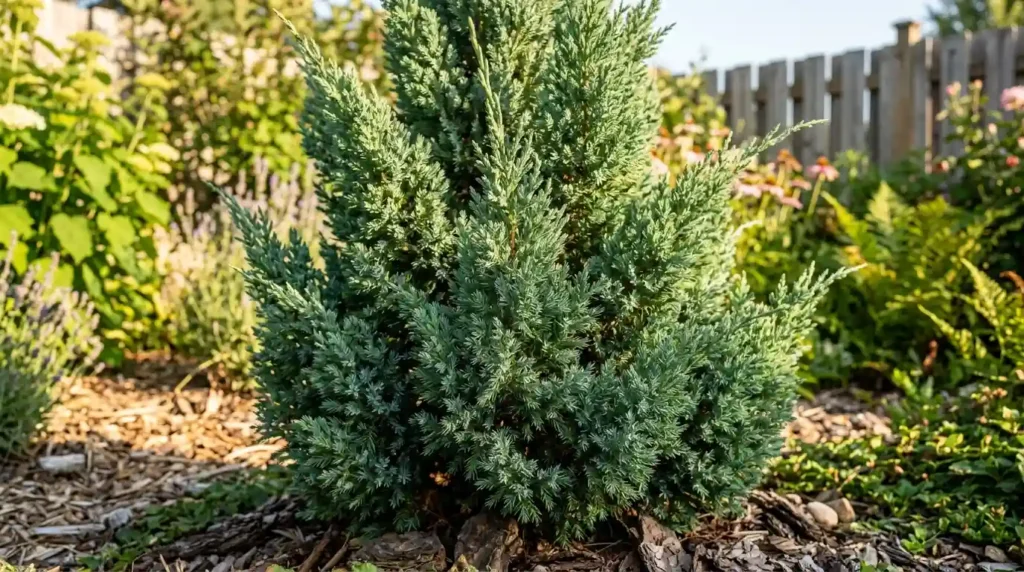
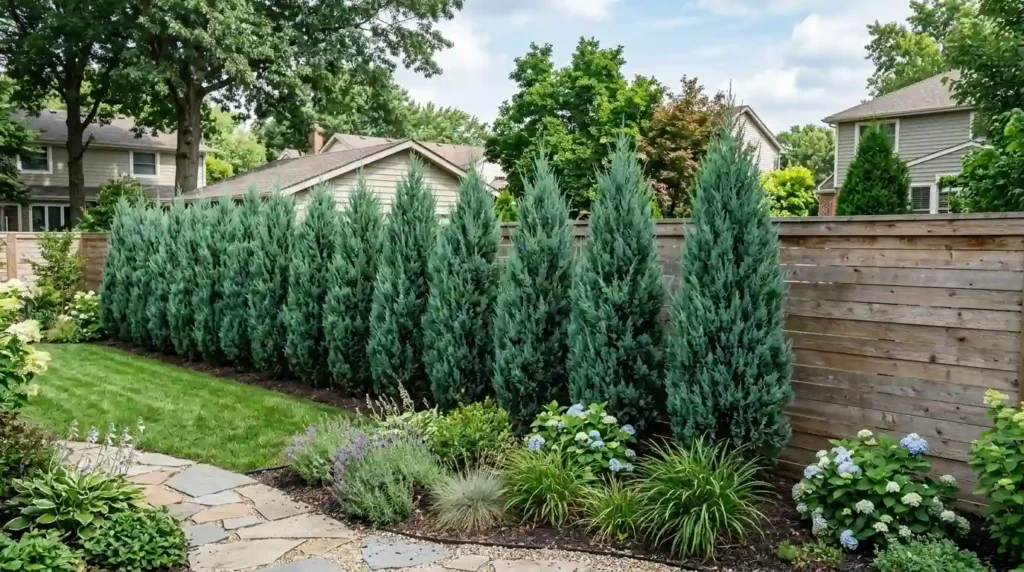
Honestly, the blue point juniper (Juniperus chinensis ‘Blue Point’) is a low-maintenance evergreen with year-round blue-green color and a tidy, pyramidal shape. Native to Asia, it thrives in USDA zones 4 through 9, handling heat, cold, and drought with ease. You’ll love it as a privacy screen or specimen plant.
Plant Care Card
| Detail | Info |
|---|---|
| Common Name | Blue Point Juniper |
| Botanical Name | Juniperus chinensis ‘Blue Point’ |
| Family | Cupressaceae |
| Plant Type | Evergreen shrub/tree |
| Mature Size | 10–15 ft. tall, 6–8 ft. wide |
| Sun Exposure | Full sun |
| Soil Type | Well-draining, sandy or loamy |
| Soil pH | Slightly acidic to slightly alkaline (5.5–7.5) |
| Hardiness Zones | 4–9 (USDA) |
| Native Area | Asia (China, Mongolia, Japan) |
| Bloom Time | Non-flowering; produces small cones |
| Toxicity | Mildly toxic to pets and humans if eaten in quantity |
Blue Point Juniper Care
This evergreen is about as low-maintenance as outdoor plants get, especially once it settles into the right spot in your yard. Here’s what you need to know about sun, soil, water, and basic upkeep. With proper placement, this plant practically cares for itself.
Light
Full sun is non-negotiable for blue point juniper give it at least six hours of direct sunlight daily for dense growth. Without enough light, branches stretch and foliage thins, losing that tight pyramid shape. A south- or west-facing spot works best, with light afternoon relief helping prevent excessive bronzing in hot climates.
Soil
This juniper isn’t picky about soil sandy, loamy, or rocky all work. Drainage matters most, since soggy soil causes most problems, and a pH of 5.5 to 7.5 works well. For heavy clay, mix in coarse sand, as NC State Extension’s plant database notes junipers struggle in compacted, wet ground.
Water
Water blue point juniper deeply once a week during its first year to help roots establish. Soak the soil to about 18 inches deep, then let it dry out before watering again these plants hate sitting in wet soil.
Once established, this juniper turns impressively drought-tolerant, often needing extra water only during long dry spells. Similar to Texas sage, it prefers to dry out between waterings rather than staying constantly moist.
Yellowing or browning needles paired with soggy soil usually point to overwatering, while crispy, dry tips mean it’s time to water again.
Temperature and Humidity
Blue point juniper is remarkably cold-hardy, surviving winter temperatures well below freezing across USDA zones 4 through 9 without protection. It also handles summer heat with ease, even in exposed spots where other evergreens struggle. Humidity generally doesn’t bother this tough plant.
In the coldest zones, a 2-3 inch layer of mulch around the base protects young roots through winter, especially for newly planted junipers.
Fertilizer
This juniper rarely needs fertilizer, but a light feeding can help young plants establish faster. Apply a balanced, slow-release fertilizer once in early spring as new growth begins. Skip fertilizing in fall and winter, since pushing new growth right before cold weather can leave it vulnerable to frost damage.
Types of Blue Point Juniper
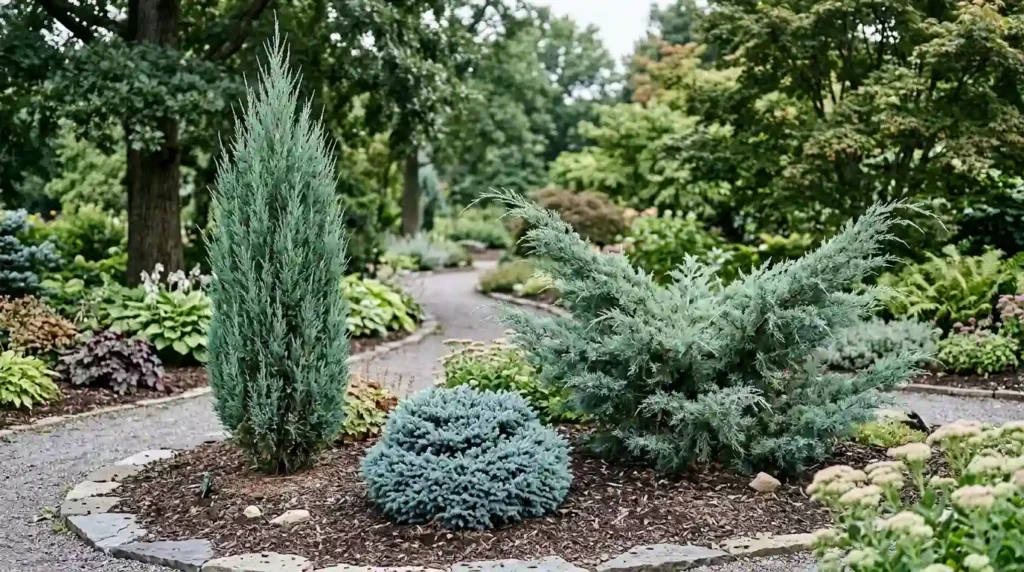
Blue point juniper belongs to a large group of Juniperus chinensis cultivars, many sharing its blue-green color and pyramidal shape but with their own size and growth habit.
- ‘Spartan’: This columnar cultivar grows narrower and taller than Blue Point, with rich green foliage. It suits tight spaces that need a vertical accent without much width.
- ‘Angelica Blue’: This compact cultivar offers similar blue foliage in a smaller package, reaching just a few feet tall, useful for foundation plantings.
- ‘Hetzii Columnaris’: A vigorous, spreading form with a looser habit and gray-green needles, often used as a large informal hedge or screen.
Pruning
Blue point juniper needs very little pruning to keep its natural pyramidal shape, but light shaping in late winter or early spring, before new growth starts, helps maintain a tidy look. Remove dead, damaged, or diseased branches as soon as you spot them, no matter the season.
Use sharp, clean bypass pruners or hedge shears, and always cut back into green growth junipers don’t regrow from bare, brown wood. Light, regular trimming keeps growth dense and prevents the open, leggy look that can develop over time.
Propagating Blue Point Juniper
Spring and summer, when blue point juniper is actively growing, is the best time to start new plants from cuttings.
Propagating Blue Point Juniper by Stem Cuttings
Stem cuttings are the easiest, most reliable way to propagate blue point juniper. You’ll need:
- Sharp, clean pruning shears
- Rooting hormone (powder or gel)
- A small pot with drainage holes
- A perlite-and-peat mix
Step 1: Snip a 4- to 6-inch piece from a healthy branch tip, choosing semi-hardwood growth that’s slightly green and flexible.
Step 2: Strip needles from the bottom third of the cutting, then dip the cut end into rooting hormone.
Step 3: Insert the cutting about 2 inches deep into the moist perlite-and-peat mix, then set the pot somewhere bright but out of direct sun.
Step 4: Keep the mix lightly moist and loosely cover the pot with plastic to hold in humidity while roots develop.
Rooting is slow for this juniper expect 6 to 12 weeks before you see new growth starting.
Propagating by Layering
Layering works well if your juniper has low, flexible branches near the ground. Bend a branch down, lightly wound the underside where it touches the soil, then pin it in place with a stake or rock and cover that spot with soil, similar to how French lavender can be layered. Keep the area consistently moist, and roots should form within a few months. Once rooted, cut the new plant free and transplant it to its own spot.
Planting and Transplanting
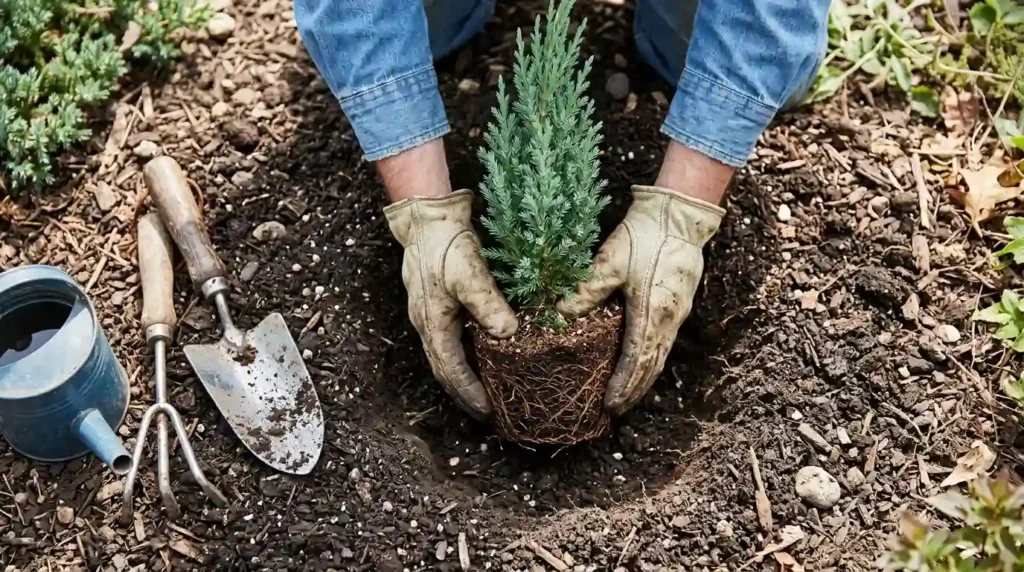
Plant blue point juniper in spring or fall when temperatures are mild, giving roots time to establish before extreme heat or cold arrives. If planting several as a hedge, much like other best privacy trees, leave 4 to 6 feet between each plant for good airflow.
Dig a hole twice as wide as the root ball but no deeper, set the plant so the top of the root ball sits level with the soil, then backfill and water thoroughly. Mulching afterward helps retain moisture, according to a University of Florida planting guide for this exact plant.
Established junipers resent being moved, so transplant only when necessary and expect a slow recovery.
Common Pests and Diseases
Like most garden plants, blue point juniper can occasionally face pest or disease issues, especially when it’s stressed by poor drainage, overcrowding, or too little sunlight.
Aphids
Look for sticky residue and clusters of tiny insects on new growth. Treat with a strong spray of water or insecticidal soap.
Spider Mites
Watch for fine webbing and bronze, stippled needles in hot, dry weather, a problem also common on emerald green arborvitae. Treat with horticultural oil or a strong spray of water.
Bagworms
Look for small, cone-shaped bags hanging from branches like tiny pinecones. Pick them off by hand in fall and winter, or treat young larvae with Bt spray.
Root Rot
Wilting, browning foliage, and a soft, mushy base point to root rot from soggy soil. According to Clemson’s Home & Garden Information Center, good drainage is the best prevention.
Common Problems
Here’s how to troubleshoot common issues with blue point juniper:
Browning or Bronze Foliage
Some bronzing in winter is normal for this juniper and not a cause for concern, since the green returns in spring. Persistent browning during the growing season, though, can signal drought stress, root rot from soggy soil, or fungal twig blight. Improve drainage, water consistently during dry spells, and prune away affected branches.
Dead or Discolored Patches
Brown, dead patches on one side of the plant often point to bagworm damage, twig blight, or branches damaged by snow or ice. Inspect closely for small bags or cankers. Prune out damaged wood well below the problem, since junipers won’t fill in bare spots on their own.
Wilting or Drooping Branches
Wilting usually means underwatering, especially in newly planted junipers still developing roots. Transplant shock can also cause temporary drooping after planting or moving the shrub. Give new plantings consistent water, and avoid moving established plants unless necessary.
Sparse or Leggy Growth
Thin, open growth with gaps between branches usually means your blue point juniper isn’t getting enough sun, or it’s been over-fertilized, encouraging weak growth. Move younger plants to a sunnier spot, and ease up on fertilizer. Pairing it with red creeping thyme as a groundcover can fill bare soil below.
FAQ
How Big Will a Blue Point Juniper Get?
Most reach 10 to 15 feet tall and 6 to 8 feet wide over many years, growing slowly, often just inches taller each year.
What Are the Downsides of Junipers?
Junipers can trigger allergies for some people, their needles feel prickly, and dense growth can trap moisture, inviting pests like spider mites or bagworms.
What Are the Common Problems With Blue Point Juniper?
The most common issues are root rot from poor drainage, bagworm or spider mite infestations, and winter bronzing, which is usually normal and temporary.
Are There Dwarf Blue Point Junipers?
Blue Point itself stays relatively compact for a juniper, but for truly dwarf options, look at ‘Angelica Blue’ or other compact Juniperus chinensis cultivars.