
In This Article
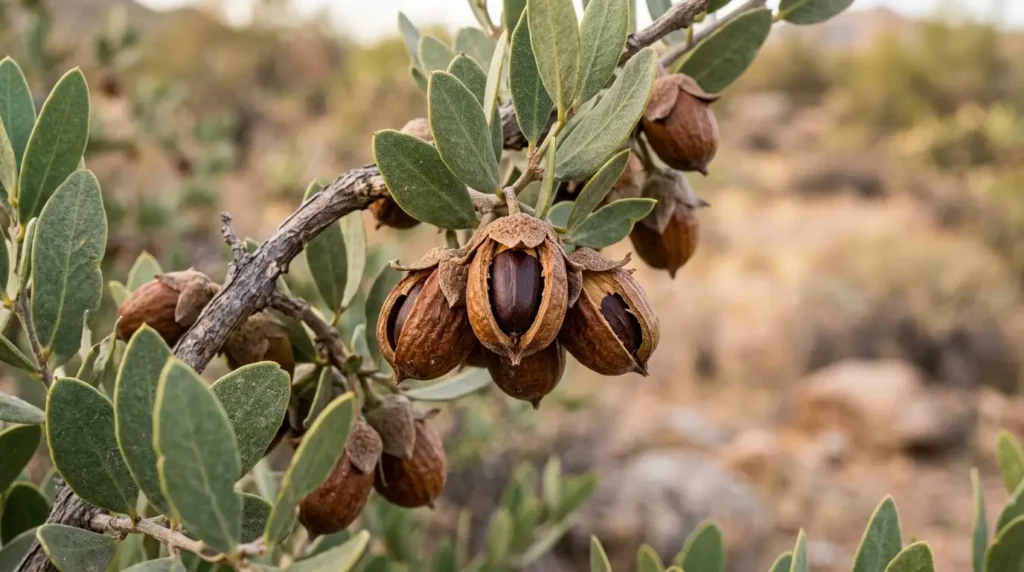
Simmondsia chinensis, or jojoba, is a hardy evergreen shrub native to the Sonoran Desert. It features leathery, gray-green leaves and a dense, rounded growth habit. Native to Arizona, California, and Baja California, this drought-tolerant beauty thrives in USDA zones 9–11. Care level is easy perfect for low-water gardens.
Plant Care Card
| Detail | Info |
|---|---|
| Common Name | Jojoba |
| Botanical Name | Simmondsia chinensis |
| Family | Simmondsiaceae |
| Plant Type | Evergreen shrub |
| Mature Size | 3–6 ft tall × 3–6 ft wide |
| Sun Exposure | Full sun |
| Soil Type | Sandy, rocky, well-draining |
| Soil pH | 6.0–8.0 (slightly acidic to alkaline) |
| Hardiness Zones | 9–11 (USDA) |
| Native Area | Sonoran Desert (USA, Mexico) |
| Bloom Time | Late winter to early spring |
| Toxicity | Seeds mildly toxic if ingested in large amounts |
Simmondsia Chinensis Care
Simmondsia jojoba is surprisingly easy to grow once you place it in the right spot. Here’s what you need to know about sun, soil, water, and maintenance. With proper placement, this desert shrub practically cares for itself.
Light
Simmondsia chinensis is a full-sun plant that needs at least 6–8 hours of direct sunlight daily. Shade causes leggy, weak growth and poor seed production. Place it on a south- or west-facing slope, away from trees or structures. According to the University of Arizona Cooperative Extension, full sun is critical for vigor and seed yield.
Soil
Simmondsia chinensis thrives in sandy, gravelly, or rocky soils with a pH of 6.0–8.0. Avoid clay or compacted soils they cause root rot fast. If drainage is poor, mix coarse sand or decomposed granite at a 50/50 ratio. Lean, poor soil actually suits this plant better than rich beds, just like golden barrel cactus.
Water
Newly planted Simmondsia chinensis needs watering once a week for the first season. Once established, water every 2–4 weeks in summer and even less in fall and winter. Always check soil moisture before watering if it’s still damp, wait. Yellow, mushy stems mean overwatering; crispy leaf tips mean thirst.
Temperature and Humidity
Simmondsia chinensis handles heat above 100°F with ease and tolerates cold down to 15°F (–9°C), suiting zones 9–11. It prefers dry air humidity is no issue. In borderline zone 8b, mulch young plants at the base for winter protection. Avoid low spots where cold air pools and frost damage is likely.
Fertilizer
Simmondsia chinensis is not a heavy feeder. Apply a balanced, slow-release fertilizer (10-10-10) once in early spring to support new growth. That’s really all it needs for the year. Skip feeding in fall and winter when the plant is resting extra nutrients during dormancy can cause weak, vulnerable growth.
Types of Simmondsia Chinensis
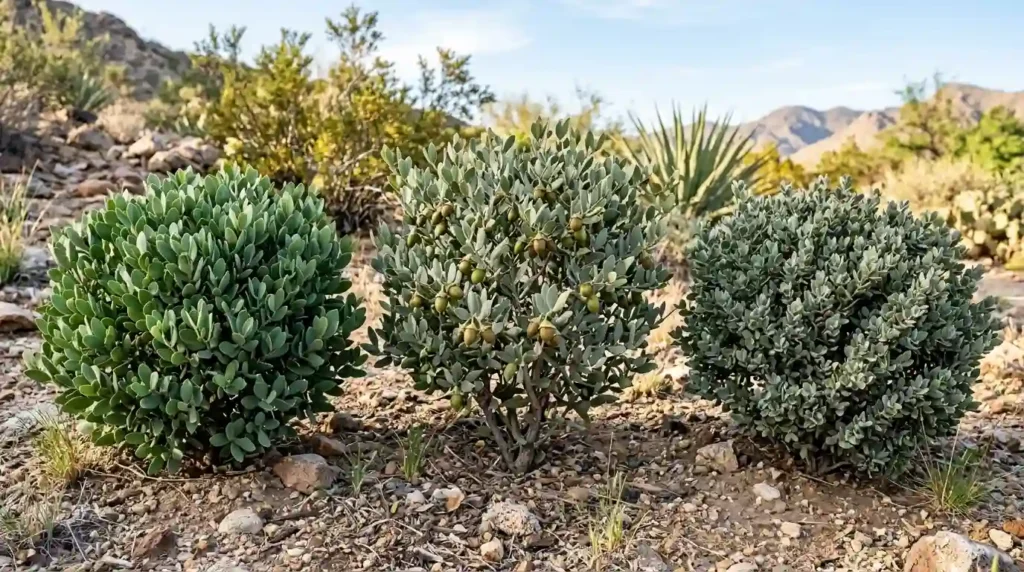
A few cultivated selections of simmondsia jojoba are worth knowing about, especially if you’re growing it for seed production or ornamental use.
- ‘Vista’ (Simmondsia chinensis ‘Vista’): A high-yielding female cultivar selected for commercial seed production. Compact form with dense, blue-green foliage.
- ‘Benbow’ (Simmondsia chinensis ‘Benbow’): Another popular commercial female variety known for large seeds and consistent annual crops. Often used in jojoba oil farming operations.
- ‘Arizona’ (Simmondsia chinensis ‘Arizona’): A heat-tolerant selection bred specifically for hot, arid climates in the American Southwest. Excellent drought resistance.
- Male pollinators: Unnamed male plants are typically paired with female cultivars at a ratio of about 1 male per 5–6 females to support pollination and seed set.
Pruning
Prune simmondsia jojoba in late winter or early spring, just before new growth begins. Focus on removing any dead, crossing, or damaged branches first. Light shaping at this time also helps maintain a tidy, rounded form. Avoid heavy pruning in fall it can stimulate tender new growth that frost may damage.
Use sharp, clean hand pruners for stems under ½ inch and loppers for thicker branches. Cut back to a healthy lateral branch or bud. Regular light pruning actually encourages denser foliage and better air circulation, which reduces disease risk. Similar to French lavender, jojoba responds well to annual light shaping rather than aggressive cutting.
Propagating Simmondsia Chinensis
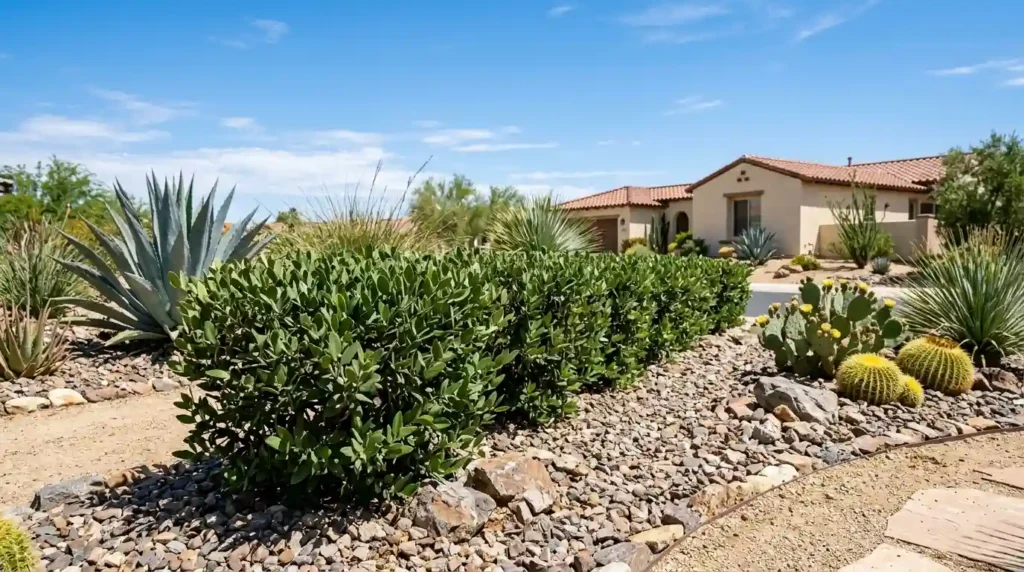
The best time to propagate Simmondsia chinensis is in spring or early summer when plants are actively growing. You can use stem cuttings, seeds, or layering all three methods work well with the right conditions.
Propagating by Stem Cuttings
Stem cuttings are the most reliable way to reproduce simmondsia jojoba, especially if you want to keep the sex (male or female) of the parent plant.
Materials needed:
- Sharp, sterilized pruning shears
- Rooting hormone powder or gel
- 4-inch pots filled with sandy, well-draining mix
- Clear plastic bags or a humidity dome
Steps:
Step 1: In late spring, select a healthy semi-hardwood stem about 4–6 inches long. Choose non-flowering stems with firm, mature growth at the base.
Step 2: Remove all leaves from the bottom half of the cutting. Dip the cut end in rooting hormone and tap off any excess powder.
Step 3: Insert the cutting about 2 inches deep into a pot filled with coarse sand and perlite. Water lightly and cover with a plastic bag to hold humidity.
Step 4: Place the pot in bright, indirect light. Check for moisture every few days and mist lightly if the mix feels dry. Roots typically form in 6–10 weeks.
Once roots are established and new growth appears, harden off the cutting gradually before planting outdoors.
Propagating from Seeds
Simmondsia jojoba seeds germinate readily when fresh. Sow seeds in late spring in a sandy seed-starting mix at a depth of ½ inch. Keep the soil lightly moist and warm around 75–85°F. Germination usually occurs within 2–4 weeks. Note that seedlings will be either male or female, which you won’t be able to determine until they flower.
Planting and Transplanting Simmondsia Chinensis
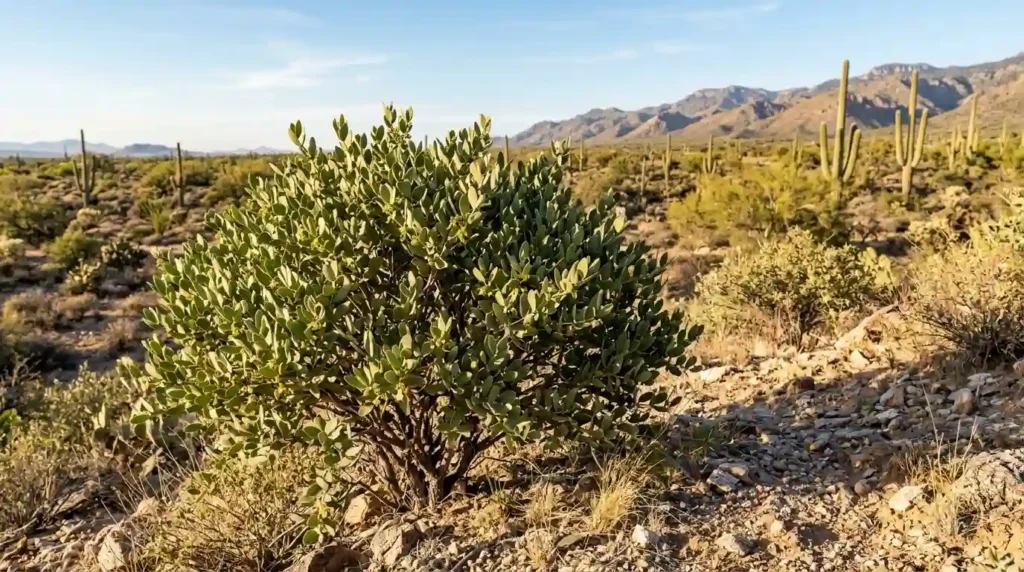
Plant simmondsia jojoba in spring or fall when temperatures are mild and roots can establish without heat stress. Space plants 4–6 feet apart for hedges or screens, or up to 8 feet apart for specimen plantings. If you’re looking for other great low-water options for privacy screening, check out our guide to the best privacy trees. This spacing allows good air circulation and room for mature spread.
Dig a hole twice as wide as the root ball but no deeper. Set the plant at the same level it was growing in its nursery container. Backfill with native soil no amendments needed. Water deeply after planting, then follow the new-plant watering schedule.
Transplanting established jojoba is tricky because of its deep taproot. Try to avoid moving plants older than two years. If necessary, transplant in fall and water consistently for the first season.
Common Pests and Diseases
Like most garden plants, simmondsia jojoba is fairly tough, but it can occasionally face pest or disease issues especially when stressed by poor drainage or over-watering.
Aphids
Look for clusters of small, soft-bodied insects on new growth. Treat with a strong spray of water or neem oil solution applied weekly until clear.
Spider Mites
Tiny webbing under leaves signals spider mites, especially during hot, dry weather. Treat with insecticidal soap or neem oil applied in the early morning.
Powdery Mildew
White, powdery coating on leaves indicates powdery mildew, usually triggered by poor air circulation. Treat with a diluted baking soda spray or a copper-based fungicide.
Root Rot
Yellowing, wilting stems paired with wet soil are telltale signs. Improve drainage immediately and reduce watering. Severe cases may require removing and discarding the plant. According to the UC IPM Program at UC Davis, root rot in desert shrubs is almost always caused by overwatering rather than soil pathogens.
Scale Insects
Look for small, shell-like bumps on stems. Treat with horticultural oil applied during the plant’s dormant period in late winter.
Common Problems with Simmondsia Chinensis
Here’s how to troubleshoot common issues with simmondsia jojoba:
Poor or No Seed Production
This is a common frustration with jojoba. First, check that you have both male and female plants simmondsia jojoba is dioecious, meaning you need both sexes for seed set. A single female plant won’t produce seeds without a nearby male pollinator. Second, insufficient sun reduces flowering significantly. Make sure the plant receives full sun all day. Finally, over-fertilizing with nitrogen promotes leafy growth at the expense of flowers and seeds. Cut back on feeding if this is an issue.
Yellow Leaves
Yellow foliage on simmondsia jojoba almost always comes down to three causes. Overwatering is the most common this plant hates wet feet. Reduce irrigation and let the soil dry out completely between waterings. Poor drainage can also cause the same symptoms even if you’re not watering much. Amend soil or move the plant to a raised bed. Less commonly, iron chlorosis in alkaline soils causes yellowing between the leaf veins; treat with chelated iron. Similar yellowing issues occur in other drought-adapted shrubs like agave plants.
Wilting or Drooping
Wilting in jojoba can mean two opposite things. Underwatering during establishment causes the whole plant to droop water deeply and the plant should recover within a day. Transplant shock causes temporary wilting in newly moved plants; keep roots moist and give them a few weeks to settle in. This is also common with other desert-adapted plants like yellow yucca after transplanting. In very intense heat above 110°F, even established plants may droop midday that’s normal and they’ll perk up by evening.
Leggy or Sparse Growth
Leggy, open growth almost always means insufficient light. Move the plant or remove any nearby shade sources. Over-fertilizing with nitrogen can also cause fast, weak, stretchy growth. Reduce feeding and prune back leggy stems by about one-third to encourage compact, bushy regrowth.
Frost Damage
If your jojoba suffers frost damage, wait until late spring before pruning out dead wood. Sometimes stems that look dead in winter will push new growth once temperatures warm. Mulch the root zone with 2–3 inches of gravel or bark to protect roots in borderline zones. For borderline hardiness situations, check the USDA Plant Hardiness Zone Map for your specific microclimate.
FAQ
Is Simmondsia chinensis the same as jojoba oil?
Simmondsia chinensis is the plant that produces jojoba oil. The oil is cold-pressed from its seeds, making it technically a liquid wax rather than a true oil.
What are the downsides of jojoba oil?
Jojoba oil can clog pores for some skin types, particularly acne-prone skin. It’s also relatively expensive compared to other plant-based oils on the market.
Is Simmondsia chinensis jojoba seed oil good for skin?
Yes, jojoba seed oil closely mimics the skin’s natural sebum. It’s widely used in moisturizers, serums, and hair care products for its nourishing properties.
What does Simmondsia chinensis smell like?
Jojoba oil has a very mild, neutral scent. The plant itself has almost no fragrance, which makes the oil popular as a carrier oil in perfumery.