
In This Article
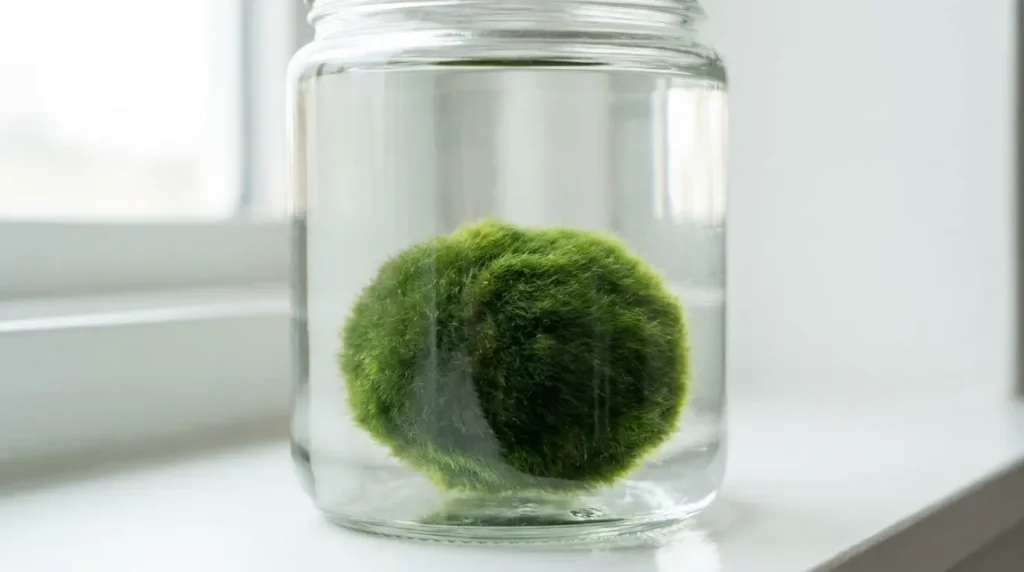
Meet the algae ball plant, also known as Marimo (Aegagropila linnaei) a rare green algae that naturally rolls into a perfect sphere. Native to Japan and Northern Europe, this algae ball plant is one of the most unique, low-maintenance aquatic houseplants you can own. Care difficulty? Easy.
Plant Care Card
| Detail | Info |
|---|---|
| Common Name | Marimo Moss Ball, Algae Ball, Japanese Moss Ball |
| Botanical Name | Aegagropila linnaei |
| Family | Pithophoraceae |
| Plant Type | Freshwater aquatic algae |
| Mature Size | 2–5 inches in diameter |
| Sun Exposure | Low to medium indirect light |
| Soil Type | No soil — lives in water |
| Soil pH | N/A (neutral pH ~7.0 preferred) |
| Hardiness Zones | USDA Zones 5–11 (indoor aquatic) |
| Native Area | Japan, Iceland, Scotland, Northern Europe |
| Toxicity | Non-toxic to pets and humans |
Algae Ball Plant Care
The algae ball plant is honestly one of the easiest aquatic plants you can keep indoors. The sections below cover everything from light and water to propagation and common problems. You’ve totally got this no green thumb required.
Light
Marimo prefer low to medium indirect light shady windowsill vibes only. Direct sunlight bleaches your algae ball plant fast, so avoid south-facing windows. A north- or east-facing spot works perfectly. Too little light slows growth; too much causes browning. A sheer curtain fixes strong light easily.
Soil
No soil needed the algae ball plant lives entirely in water. Use clean, dechlorinated tap water in a jar or bowl; let tap water sit 24 hours before use. According to University of Florida IFAS Extension, freshwater plants thrive in neutral pH water. Change water every 1–2 weeks.
Water
Watering an algae ball plant means changing the water every 1–2 weeks with fresh, dechlorinated water. Cloudy water, sliminess, or bad smell? Change it immediately. Summer may require more frequent changes. Similar routines work for the Maranta plant, which also thrives with consistent, clean moisture.
Temperature and Humidity
Marimo prefer cool to room-temperature water ideally between 50–77°F (10–25°C). They actually do best at the cooler end of that range. In hot summers, you can pop your algae ball plant in the fridge for a day or two as a refreshing reset.
Since they live in water, ambient humidity isn’t really a concern. However, keep them away from heating vents or drafts that could warm the water quickly. Stable, consistent temperatures keep them happiest.
Fertilizer
Marimo are very slow growers and need almost no feeding. You can add a small pinch of aquarium plant fertilizer every 1–2 months during spring and summer if you want to give growth a nudge. According to Penn State Extension’s guide on plant fertilization, less is always more for slow-growing aquatic species. Skip fertilizing entirely in fall and winter.
Types of Algae Ball Plant
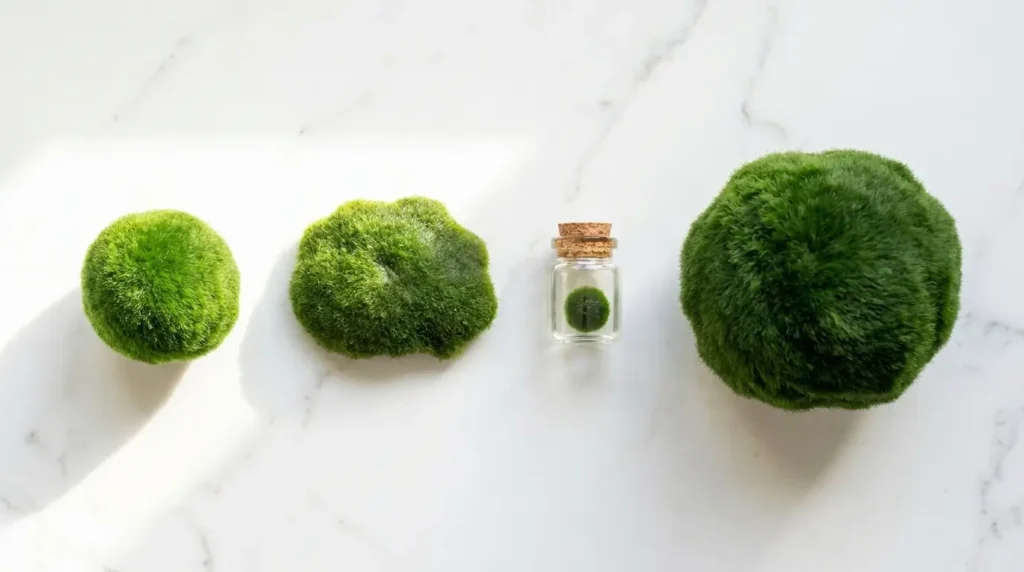
While Aegagropila linnaei is the classic algae ball plant, a few notable forms are worth knowing about:
- Classic Lake Akan Marimo — The authentic Japanese variety from Hokkaido’s Lake Akan. Perfect spherical shape, bright green, and considered a protected natural monument in Japan.
- Flat Marimo (Lake Mývatn type) — Found in Iceland. Forms flat cushion-like mats instead of spheres because calmer water doesn’t roll them. Same species, different shape.
- Mini Marimo — Small cultivated balls, typically 1–2 inches. Great for tiny jars or desktop terrariums. Made by separating portions of a larger ball.
- Giant Marimo — Older specimens reaching 4–5+ inches. Extremely rare in nature but achievable at home with decades of patience or by buying a specialty specimen.
Propagating Algae Ball Plant
The best time to propagate your algae ball plant is during spring and summer when growth is most active. It’s surprisingly simple no rooting hormone, no special tools needed.
Propagating by Division
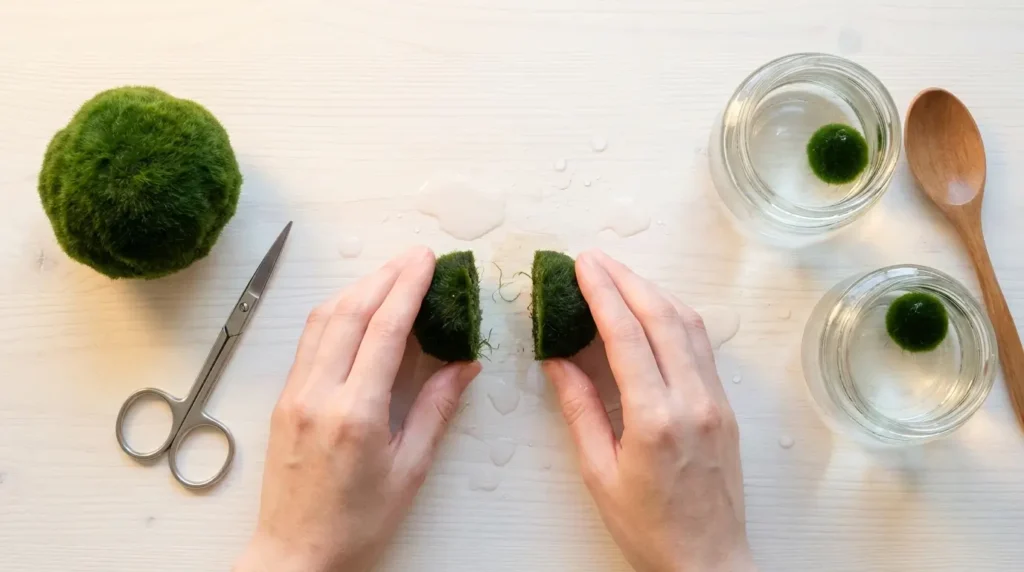
Division is the most reliable method and works on any algae ball plant that’s grown to at least 2 inches wide.
Materials needed:
- A healthy Marimo at least 2 inches in diameter
- Clean hands
- Fresh dechlorinated water
- Two containers or jars
Step-by-step:
- Remove the algae ball plant from its container and hold it gently in your palm. Squeeze out excess water lightly don’t crush it.
- Pull the ball apart into two roughly equal halves using your fingers. Tearing is gentler than cutting and keeps the algae fibers intact.
- Roll each half between your palms with light, even pressure to reform a round shape. This helps the new balls start re-forming their natural spherical structure.
- Place each new ball in its own container with fresh water. They’ll round out further over the next few weeks on their own.
New growth picks up within a few weeks. Patience is the game here. This same gentle division approach works well for slow-growing plants like the Howea plant, which also benefits from careful, unhurried handling during division.
Propagating in Water
If your algae ball plant is small or fragile, passive water propagation is the way to go. Simply leave it in clean water near indirect light. Small fragments that naturally break off will slowly form new mini Marimo over time. This method is totally hands-off. Change the water regularly and watch tiny new balls appear it’s genuinely one of the most satisfying things to witness.
Potting and Repotting Algae Ball Plant
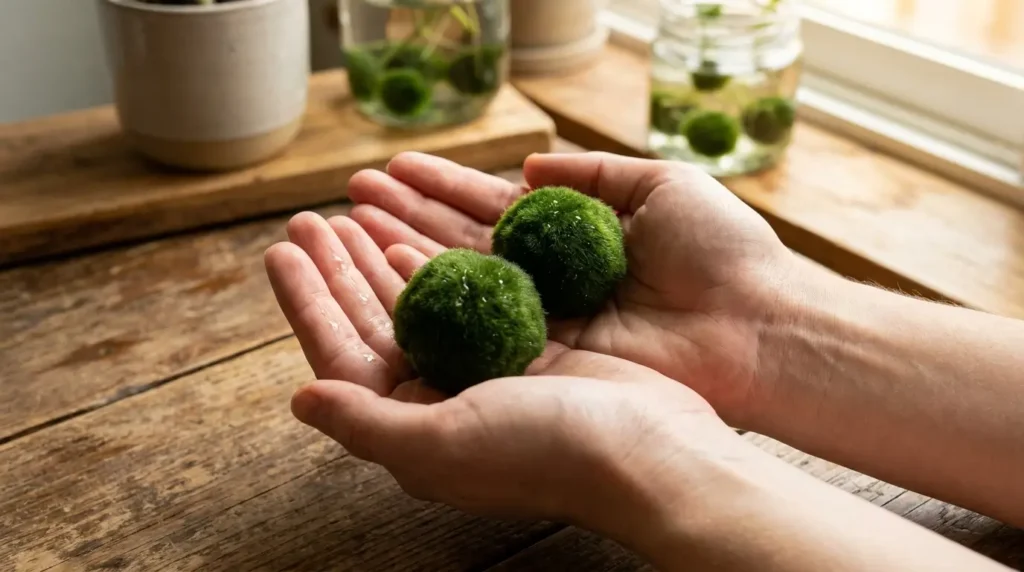
Since the algae ball plant lives in water, “repotting” means upgrading their container. Do this when the ball has grown noticeably or when the jar looks too cramped roughly every 1–2 years.
Signs it’s time to upgrade: the ball is touching the sides of the container, has flattened on one side, or the water gets murky much faster than usual. Choose a new container that’s at least 2–3 times the diameter of your Marimo so it has room to move and stay round.
When switching containers, simply transfer the algae ball plant to fresh water in the new vessel. Glass bowls, mason jars, and small aquariums all work beautifully. No substrate or soil needed ever.
Common Pests and Diseases
Like most houseplants, the algae ball plant can occasionally run into issues mostly caused by water quality rather than true pests. Here’s what to watch for:
Algae Overgrowth
Look for a green slimy film coating the glass or discoloring the water. Treat with a full water change and rinse the container thoroughly. Reduce light exposure to slow competing algae.
Bacterial Bloom
Cloudy or milky water signals bacterial growth. This is usually caused by infrequent water changes or overfeeding. Change the water immediately and skip fertilizer for a few weeks.
Snail Infestation
Tiny snails occasionally hitchhike in via tap water or plants. Remove them manually and do a full water change. Check any new additions to the container carefully.
Mold or White Fuzz
White fuzzy patches on the Marimo mean mold from stagnant water. Rinse the ball gently under cool water, clean the container, and increase water change frequency. According to University of Minnesota Extension’s integrated pest management guidelines, addressing root causes (in this case, water quality) is always the most effective first step.
Common Problems with Algae Ball Plant
Here’s how to troubleshoot common algae ball issues:
Yellowing or Pale Green Color
Pale or yellow color almost always means too much light or water that’s too warm. Direct sun bleaches your algae ball plant surprisingly fast. Move it to a shadier spot immediately and check the water temperature. If it’s above 77°F, do a cool water change right away. For similar light-and-temperature stress issues, check out how the Maranta plant responds to the same conditions the fixes overlap a lot.
Brown Patches or Brown Spots
Brown discoloration points to too much direct light or poor water quality. First, gently remove any visibly brown sections with your fingers. Then move the container away from direct sun and do a full water change. If browning continues after two weeks, try a cooler, darker location.
Falling Apart or Losing Shape
If your algae ball plant is unraveling, it’s usually due to rough handling, strong water flow, or the ball simply getting too large. Roll it gently in your palms to reform the shape. If it keeps falling apart, try dividing it into two smaller balls. Similar stress-related structural issues can appear in sensitive indoor plants like the Dipladenia plant when growing conditions suddenly shift.
Not Growing / Very Slow Growth
Honestly, all algae ball plants grow slowly about 5mm per year is completely normal. However, if growth has completely stalled, check water temperature, light levels, and water change frequency. Adding a tiny amount of aquarium fertilizer in spring can help. Sometimes just rotating the ball so all sides receive equal light is enough to kickstart even growth again. The China Doll plant faces similar slow-growth frustrations when conditions aren’t quite right consistency is the fix in both cases.
FAQ
Are Marimo Moss Balls Illegal in the US?
Some states have banned Marimo due to invasive species concerns. Always check your local state regulations before purchasing. Most reputable sellers now provide certified, safe varieties.
How to Care for an Algae Ball?
Keep your algae ball in cool indirect light, change the water every 1–2 weeks, and roll it gently to maintain its round shape.
How Long Do Algae Balls Live?
Marimo can live over 100 years in the wild. With good home care, your algae ball can last for decades practically a forever plant.
Is a Marimo Moss Ball a Pet?
Many owners treat them exactly like pets naming them, talking to them, the works. They’re alive and they respond to care. No judgment here at all.