
In This Article
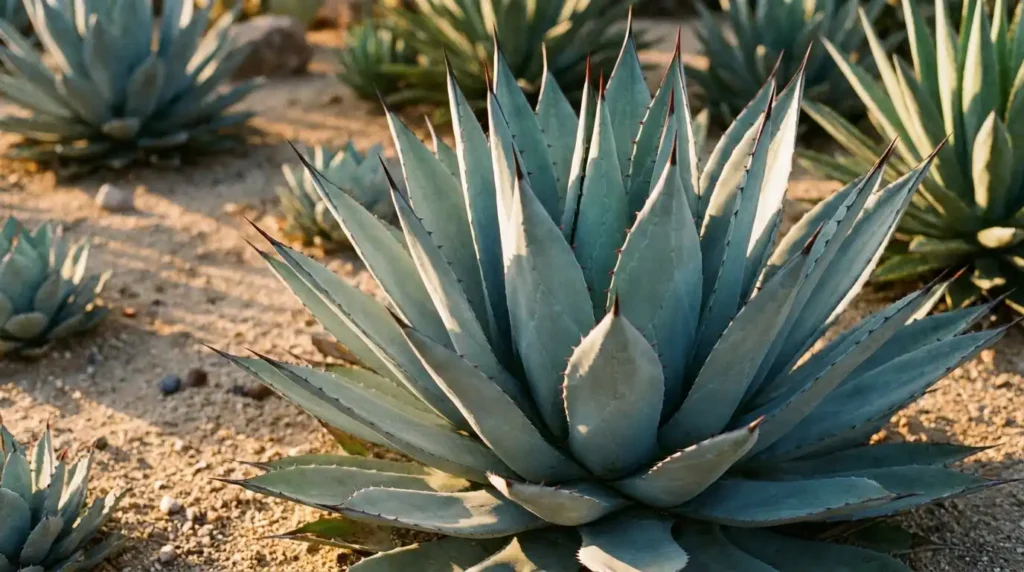
Agave plants (Agave spp.) are bold, architectural succulents with thick, sword-shaped leaves forming dramatic rosettes. Native to Mexico and the southwestern United States, they thrive in USDA zones 5–11. Honestly, if you’ve struggled with other outdoor plants, agave plants might be your perfect match care difficulty is easy to moderate.
Plant Care Card
| Detail | Info |
|---|---|
| Common Name | Agave, Century Plant |
| Botanical Name | Agave spp. |
| Family | Asparagaceae |
| Plant Type | Perennial succulent |
| Mature Size | 1–12 ft tall x 1–15 ft wide (varies by species) |
| Sun Exposure | Full sun |
| Soil Type | Sandy, rocky, or loamy; well-draining |
| Soil pH | 6.0–8.0 (slightly acidic to alkaline) |
| Hardiness Zones | USDA Zones 5–11 (species-dependent) |
| Native Area | Mexico, southwestern United States, Caribbean |
| Bloom Time | Varies; once in plant’s lifetime (monocarpic) |
| Toxicity | Mildly toxic to pets and humans; sap can cause skin irritation |
Agave Plants Care
Agave plants are genuinely one of the most forgiving outdoor plants you can grow. Once established in the right spot, they need very little from you. Here’s what you need to know about sun, soil, water, temperature, and maintenance. With the right placement, these plants practically run themselves.
Light
Agave plants need at least 6–8 hours of full sun daily for the best color and compact form. Insufficient light causes stretched, floppy growth. A south- or west-facing bed works perfectly. Avoid shaded spots near trees or buildings mature plants handle full sun without issue.
Soil
Well-draining soil is non-negotiable for agave plants. They thrive in sandy, rocky, or gritty loam soggy clay leads directly to root rot. Keep pH between 6.0 and 8.0. According to the University of Arizona Cooperative Extension planting guide, well-draining sandy soil is essential for desert succulents like agave.
Water
Water newly planted agave every 7–10 days during the first season. Once established, watering every 2–4 weeks in summer is plenty. Overwatering is far more dangerous than underwatering mushy lower leaves mean too much water, while wrinkled leaves mean the plant is thirsty.
Temperature and Humidity
Agave plants prefer 50°F–90°F, though many tolerate wider ranges. As noted in the Oregon State University landscape plants database, Agave parryi survives down to zone 5 in well-drained sites. In colder zones, mulch the base in late fall most established plants bounce back from light frost easily.
Fertilizer
Agave plants are light feeders and don’t need much. Apply a balanced, slow-release fertilizer (10-10-10) once in early spring when active growth begins. That’s really all they need for the year. Skip fertilizing in fall and winter when the plant is dormant overfeeding encourages soft, weak growth that’s more susceptible to cold and pests.
Types of Agave Plants
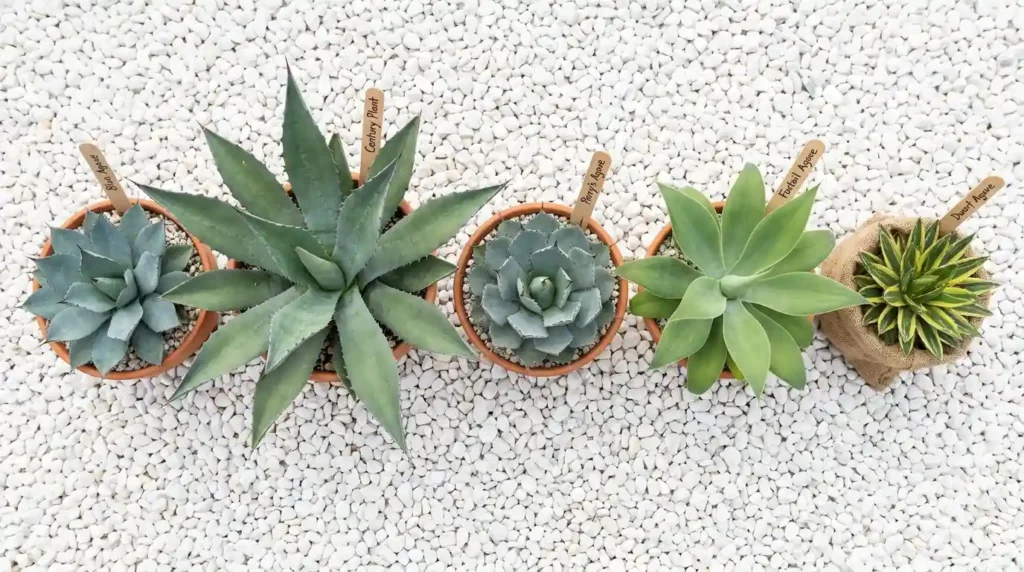
There are hundreds of agave species, but a handful stand out as top garden picks:
- Blue Agave (Agave tequilana): The famous source of tequila, with striking blue-gray leaves and a bold, upright form. Best in zones 9–11.
- Century Plant (Agave americana): One of the largest species, reaching 6–10 feet tall with wide, blue-green leaves edged in serrated spines. Hardy to zone 8.
- Parry’s Agave (Agave parryi): A compact, cold-hardy variety with beautiful gray-blue rosettes, perfect for zone 5–9 gardens.
- Foxtail Agave (Agave attenuata): A softer, spineless option that’s ideal for family gardens or high-traffic areas. Grows well in zones 9–11.
- Dwarf Agave (Agave desmettiana ‘Variegata’): A smaller cultivar with yellow-edged leaves, great for containers or borders in zones 9–11.
Pruning
The best time to prune agave plants is in late winter or early spring, just before new growth kicks in. Focus on removing dead or damaged outer leaves, which naturally dry out and turn brown as the plant matures. You’ll also want to cut away any pups (offsets) that are crowding the main rosette, especially if you want a cleaner look.
Use thick gloves and long-handled pruning shears those leaf spines are no joke. Cut dead leaves as close to the base as possible without nicking the healthy tissue beneath. Removing old outer leaves keeps the rosette looking tidy and reduces hiding spots for pests. For similar drought-tolerant outdoor plants, check out the red salvias plant care guide for more pruning tips that apply to low-water garden perennials.
Propagating Agave Plants
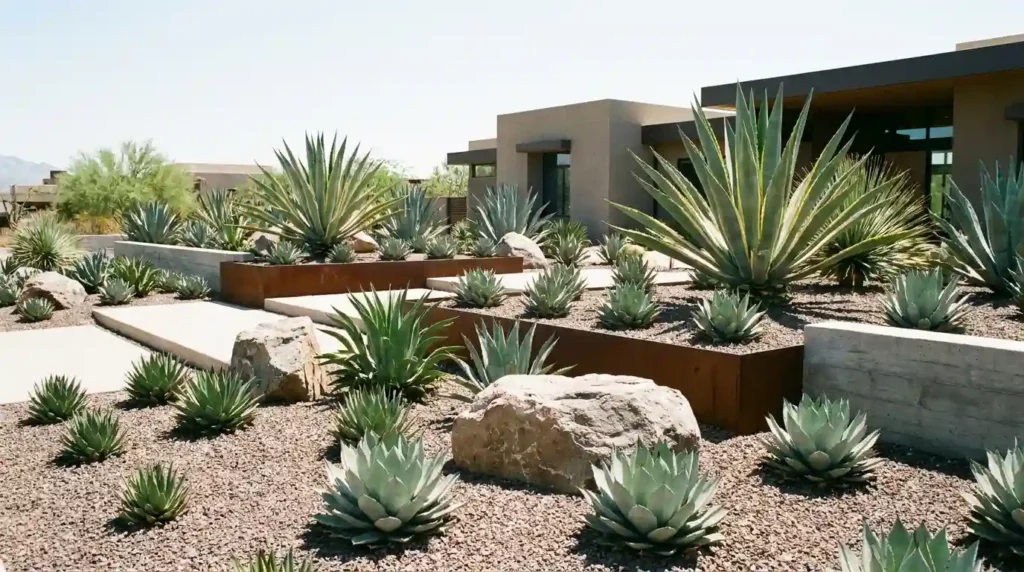
The best time to propagate agave plants is in spring or early summer when they’re actively growing and temperatures are warm. You have two main options: pups (offsets) and bulbils.
Propagating by Pups (Offsets)
This is by far the easiest and most reliable method. Agave plants naturally produce small offsets called pups around the base of the mother plant.
Materials needed:
- Sharp, clean garden spade or knife
- Thick gloves
- Well-draining potting mix or sandy garden soil
- Rooting hormone (optional)
Steps:
Step 1: Wait until pups are at least 4–6 inches tall and have begun forming their own small rosette. This means they’ve started developing roots.
Step 2: Use a clean, sharp spade to sever the connection between the pup and the mother plant. Cut as close to the base as possible without damaging either plant.
Step 3: Let the cut end of the pup dry out (callous over) for 2–3 days in a shaded, dry spot. This step is key planting a fresh cut leads to rot.
Step 4: Plant the calloused pup in well-draining soil at the same depth it was growing originally. Water lightly and keep it in a warm, sunny spot. Roots typically establish within 4–8 weeks.
Propagating by Bulbils
Some agave species particularly those in bloom produce tiny plantlets called bulbils along the flower stalk. These are essentially free agave plants waiting to happen.
Steps:
Step 1: Wait until bulbils are at least 1–2 inches long and have visible leaf structure. They’re ready when they detach easily from the stalk.
Step 2: Remove bulbils by hand or with clean scissors, then let them callous for 2–3 days, just like pups.
Step 3: Plant in sandy, well-draining mix in small pots or directly in the garden. Keep lightly moist until roots appear in 3–6 weeks.
For more on propagating drought-tolerant garden plants, the arbequina olive tree guide covers similar propagation concepts for warm-climate outdoor plants.
Planting and Transplanting Agave Plants
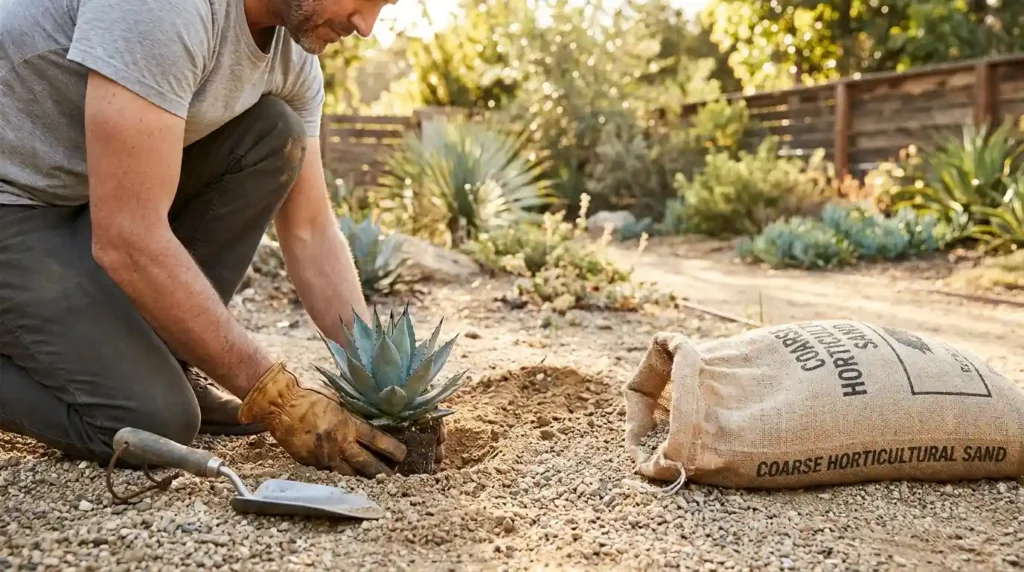
Spring is the ideal time to plant agave plants outdoors, once the risk of frost has passed and soil temperatures have warmed. Space plants according to their mature spread large species like Agave americana need 8–10 feet between plants, while compact varieties can be spaced 2–3 feet apart. Crowded agave doesn’t perform well and is harder to manage safely.
Dig a hole slightly wider than the root ball and no deeper than it was originally growing. Set the plant in place, backfill with well-draining soil, and firm it down gently. Water once after planting, then follow the normal drought-tolerant watering schedule going forward. The lychee tree care guide has helpful tips on post-planting establishment that apply to many outdoor plants including agave.
Transplanting established agave is doable but best avoided unless necessary. If you must move a plant, do it in spring and be prepared for a few weeks of transplant stress.
Common Pests and Diseases
Like most garden plants, agave can occasionally face pest or disease issues though it’s more resistant than most. Here’s what to watch for:
Agave Snout Weevil
Look for a plant suddenly collapsing at the base; the larvae eat through the core. Unfortunately, there’s no cure once the weevil is inside remove and dispose of infected plants to prevent spreading.
Aphids
Look for clusters of small, soft-bodied insects on new growth or flower stalks. Treat with a strong blast of water or insecticidal soap spray applied weekly until gone.
Scale Insects
Look for brown, waxy bumps along the leaves. Treat with neem oil or rubbing alcohol applied directly with a cotton swab; repeat every 7–10 days.
Root Rot
Look for mushy, discolored tissue at the base and yellowing outer leaves. Treat by removing affected roots, letting the plant dry out, and replanting in fresh, well-draining soil. The UC IPM agave pest management guide confirms that prevention through proper drainage is far more effective than any treatment.
Fungal Leaf Spots
Look for dark, water-soaked spots spreading on the leaves. Treat with a copper-based fungicide and improve air circulation around the plant.
Common Problems with Agave Plants
Here’s how to troubleshoot common issues:
Poor or No Blooms
Agave plants bloom once in their lifetime most take 10–30 years to flower, so no blooms is completely normal. Insufficient sun and over-fertilizing with nitrogen are the most common culprits for stunted growth. Avoid pruning the central rosette that’s where the bloom stalk emerges.
Yellow or Browning Leaves
Yellow outer leaves are completely normal that’s just agave shedding old tissue. If yellowing spreads to inner leaves, overwatering is the likely cause. Poor drainage makes it worse fast. Brown, dry leaf tips are usually cosmetic caused by sun scorch or low humidity.
Wilting or Drooping
A wilting agave is almost always a watering issue. Underwatering causes the leaves to become wrinkled and limp a deep soak usually revives the plant within a day or two. Transplant shock is another cause; newly moved plants may droop for 1–2 weeks before re-establishing. In extreme summer heat, even well-watered plants can droop temporarily during the hottest part of the day. Similar heat stress issues can affect other drought-tolerant plants like the nectarine tree adequate watering during heat waves helps all of them.
Leggy or Sparse Growth
Leggy, stretched growth almost always means the plant isn’t getting enough sun. Move it to a sunnier position as soon as possible. Additionally, over-fertilizing with nitrogen pushes soft, rapid growth that looks weak and floppy. Cut back on feeding and give the plant time to firm up in better light. For similar issues with other sun-loving outdoor plants, the dipladenia plant guide covers comparable light-related growth problems.
Frost Damage
Frost-damaged leaves turn soft, mushy, and black at the tips. Don’t prune immediately wait until the threat of frost has fully passed, then remove the damaged tissue. The plant may look rough for a season but typically recovers well if the core rosette is intact. Hardy species like Agave parryi bounce back even from significant frost.
FAQ
What is the common name for agave plant?
The most widely used common name is “agave,” though many species go by “century plant” due to the long wait before flowering. Some varieties have specific nicknames.
Can agave help a sore throat?
Agave nectar has mild anti-inflammatory properties, and some people use it in teas for soothing a sore throat. However, it is not a medical treatment.
Are agave plants hard to take care of?
Agave plants are among the easiest outdoor plants to grow. They need full sun, fast-draining soil, and minimal watering. Beginners do great with them.
What is the agave plant used for?
Agave is used for producing tequila, mezcal, and agave syrup. Fibers from the leaves have also been used historically for rope, clothing, and paper.
4 thoughts on “How to Grow and Care for Agave Plants”
Comments are closed.