
In This Article
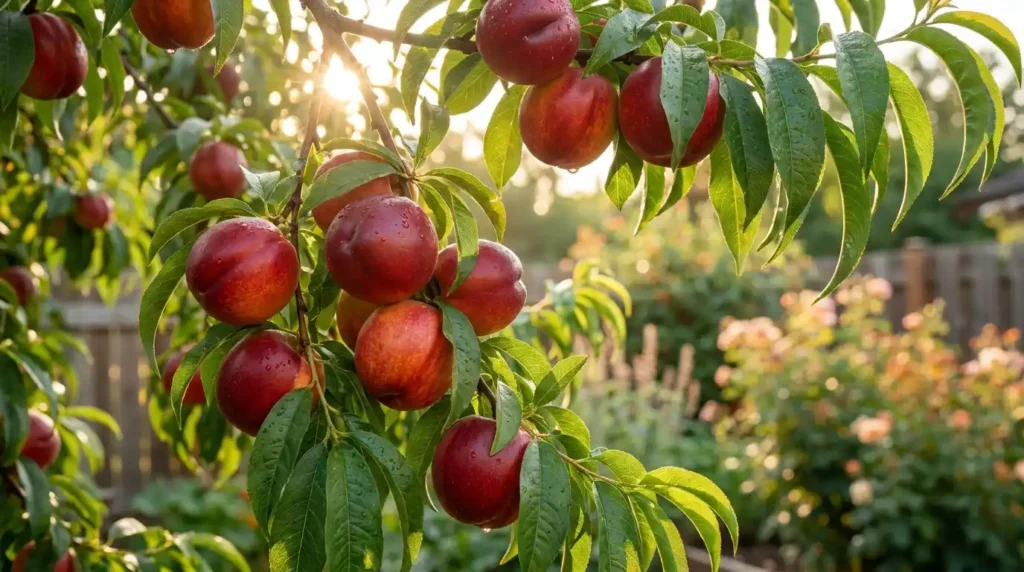
The nectarine tree (Prunus persica var. nucipersica) is a rewarding backyard fruit tree with smooth, fuzz-free fruit in red, orange, and yellow. Native to China, it blooms with fragrant pink blossoms each spring. It thrives in USDA zones 5–9 and requires moderate, seasonal care.
Plant Care Card
| Feature | Details |
|---|---|
| Common Name | Nectarine tree |
| Botanical Name | Prunus persica var. nucipersica |
| Family | Rosaceae |
| Plant Type | Deciduous fruit tree |
| Mature Size | 15–25 ft tall, 15–20 ft wide (standard); 5–8 ft (dwarf) |
| Sun Exposure | Full sun |
| Soil Type | Well-draining, loamy or sandy loam |
| Soil pH | 6.0–7.0 (slightly acidic to neutral) |
| Hardiness Zones | USDA 5–9 |
| Native Area | China (originally); widely cultivated in temperate regions |
| Bloom Time | Early spring (before leaf emergence) |
| Toxicity | Fruit is non-toxic; leaves, bark, and pits contain trace cyanogenic compounds — keep away from pets |
Nectarine Tree Care
A nectarine tree is a moderate-maintenance fruit tree that rewards consistent seasonal attention with generous summer harvests. Here’s what you need to know about sun, soil, water, pruning, and feeding. With the right conditions from the start, this tree practically runs on autopilot for most of the year.
Light
Nectarine trees need full sun at least 6 to 8 hours daily. Less light means poor fruit set and weak growth. Plant in the sunniest spot in your yard, ideally south- or west-facing and sheltered from wind. In cooler zones, a south-facing wall adds valuable warmth.
Soil
Nectarine trees thrive in well-draining, loamy or sandy loam soil with a pH of 6.0–7.0. According to the University of California Cooperative Extension, heavy clay soils cause root problems in stone fruit trees. If your soil is compacted, mix in sand and compost before planting.
Water
Water newly planted nectarine trees every 1–2 weeks to establish roots. Once established, water every 2–3 weeks in spring and summer. Reduce watering significantly in fall and winter during dormancy. Check soil moisture 2–3 inches deep before watering. Yellowing leaves signal overwatering; wilting signals underwatering.
Temperature and Humidity
Nectarine trees grow best between 60°F and 90°F and need 600–900 chill hours to bloom properly. Check the USDA Plant Hardiness Zone Map for your local chill hours. Protect blossoms from frost below 28°F with frost cloth. Low to moderate humidity prevents fungal disease.
Fertilizer
Feed your nectarine tree with a balanced slow-release fertilizer (10-10-10 or similar) in early spring, just as new growth begins. Apply a second light feeding in early summer if growth seems slow. Avoid fertilizing after midsummer late feeding pushes tender new growth that’s vulnerable to frost damage heading into fall.
Types of Nectarine Tree
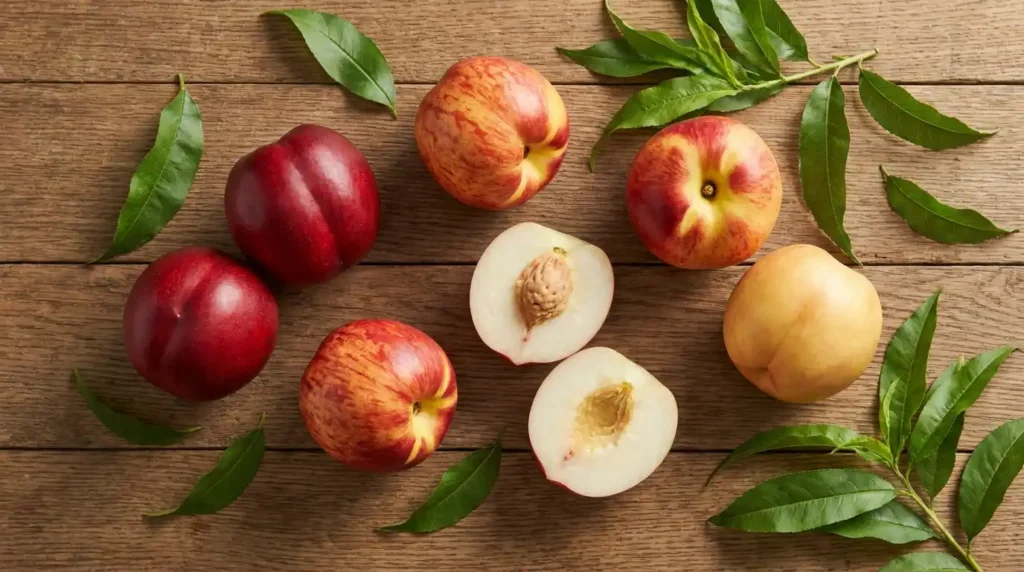
There are many excellent varieties to choose from, ranging from classic freestone types to low-chill options for warmer gardens.
- ‘Hardired’ A mid-season freestone variety with bright red skin and sweet, firm yellow flesh. Excellent cold hardiness for zones 5–8.
- ‘Flavortop’ A popular yellow-fleshed freestone with vibrant red skin and exceptional flavor. Ripens in midsummer and is widely loved for fresh eating.
- ‘Arctic Star’ A low-chill white-fleshed nectarine with incredibly sweet flavor. Great for zones 8–9 where winter temperatures stay mild.
- ‘Fantasia’ A large, freestone nectarine with red-over-yellow skin. Heavy producer with rich, aromatic fruit. Ideal for zones 6–9.
- ‘Sunraycer’ An ultra-low-chill variety needing only 200 chill hours. Perfect for warm-winter climates in zones 9–10.
- ‘Independence’ Semi-freestone with deep red skin and excellent flavor. A reliable producer for home gardens in zones 6–9.
Pruning
Prune your nectarine tree in late winter or early spring, just before buds begin to swell typically February through March depending on your climate. This is also the best time to remove any dead, diseased, or crossing branches you spot after the winter. Annual pruning keeps your tree productive and manageable. Without it, nectarines quickly become dense and tangled, reducing light penetration and overall fruit quality.
Aim for an open-center (vase-shaped) structure with 3–5 main scaffold branches radiating outward. Use sharp, clean bypass pruners for small branches and a pruning saw for anything thicker than an inch. Remove about 30–40% of last year’s growth each season this sounds like a lot, but nectarines fruit on one-year-old wood, so regular pruning directly drives next year’s harvest. Similar to a dwarf cherry tree, a well-pruned nectarine is far easier to manage and harvest than one left to grow wild.
Propagating Nectarine Tree
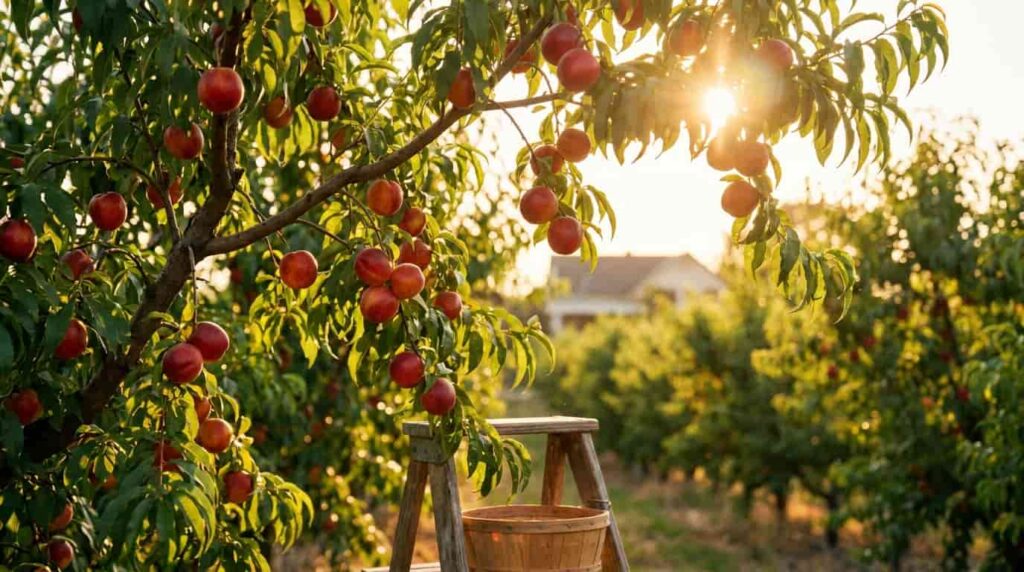
The best time to propagate a nectarine tree is in late spring to early summer when the tree is actively growing and stem wood is firm but not yet fully hardened.
Propagating by Stem Cuttings
Stem cuttings are the most accessible propagation method for home gardeners.
Materials needed:
- Sharp bypass pruners or a clean knife
- Rooting hormone powder or gel
- Small pots filled with well-draining propagation mix (perlite and potting soil, 1:1)
- Plastic bag or humidity dome
Steps:
- Select a healthy, semi-hardwood stem about 6–8 inches long with at least 2–3 leaf nodes. Cut just below a node at a 45-degree angle.
- Remove all leaves from the lower half of the cutting, leaving only 2–3 leaves at the tip. This reduces moisture loss while roots develop.
- Dip the cut end into rooting hormone, tap off the excess, and insert the cutting 2–3 inches deep into your prepared pot of propagation mix.
- Water gently and cover the pot with a plastic bag or humidity dome to maintain moisture. Place in a bright, warm spot around 65–75°F out of direct sun.
Expect roots to develop within 4–8 weeks. Once you see new top growth, remove the humidity cover gradually and begin acclimatizing the nectarine tree cutting to normal conditions.
Propagating by Grafting
Grafting is the method used commercially and produces the truest-to-variety results. It involves joining a scion (a bud or short stem from your desired nectarine tree variety) onto a compatible rootstock typically a seedling peach or plum. The cleft graft or T-bud method works well for nectarines. This takes practice, but once mastered, grafted trees establish faster and fruit sooner than cuttings. Check resources from your local university extension service for detailed grafting guides specific to stone fruits in your region.
Planting and Transplanting Nectarine Tree
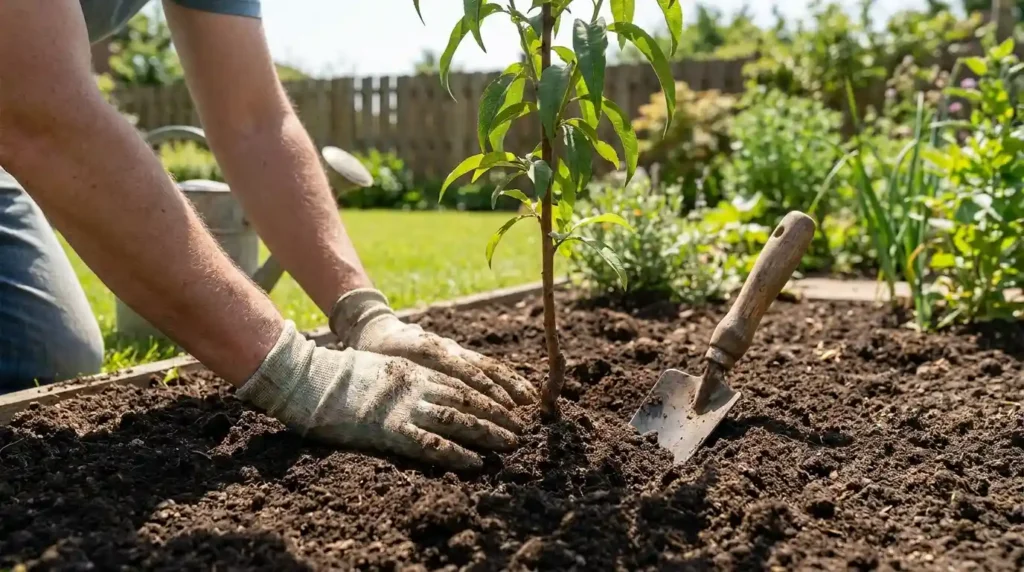
Plant your nectarine tree in early spring after the last frost date, or in fall at least 6 weeks before the ground freezes. Spring planting gives young trees the entire growing season to establish roots before facing summer heat or winter cold. Space standard trees 15–20 feet apart and dwarf varieties 8–10 feet apart to allow for good airflow and full canopy development. Like a lychee tree or grapefruit tree, nectarines need generous spacing to produce their best fruit.
Dig a hole twice as wide and the same depth as the root ball. Set the tree so the graft union sits 2–3 inches above soil level. Backfill with the native soil (no amendments needed in the planting hole), tamp gently, and water deeply.
Transplanting established nectarine trees is best done in late winter while the tree is still dormant. Minimize root disturbance and water thoroughly after moving.
Common Pests and Diseases
Like most stone fruit trees, the nectarine tree can occasionally face pest or disease pressure especially during warm, humid periods.
Aphids
Look for clusters of small soft-bodied insects on new shoots and the undersides of young leaves. Treat with a strong blast of water or neem oil spray applied every 7–10 days.
Peach Twig Borer
This common stone-fruit pest causes wilting shoot tips and tunneling damage in ripening fruit. Treat with spinosad or pheromone traps in early spring before bloom.
Brown Rot
A fungal disease that causes fruit to turn brown and shrivel, especially in wet weather near harvest time. Remove infected fruit immediately and apply a copper-based fungicide preventatively during bloom. This same disease also affects other backyard fruit trees like the brown turkey fig tree, so good garden hygiene matters across the board.
Powdery Mildew
Look for a white powdery coating on young leaves and shoots. Treat with a sulfur-based spray or potassium bicarbonate solution. Improve airflow by pruning dense interior branches.
Root Rot (Phytophthora spp.)
Caused by consistently waterlogged soil. Leaves yellow and the tree declines rapidly. Improve drainage and avoid overwatering prevention is far easier than cure.
Common Problems with Nectarine Tree
Here’s how to troubleshoot common nectarine tree issues:
Poor or No Fruit Production
Poor fruit usually comes down to insufficient chill hours, late frost killing open blossoms, or over-fertilizing with high nitrogen. Match your variety to your local chill-hour profile, protect blossoms with frost cloth, and switch to a low-nitrogen fertilizer in late spring.
Yellow or Browning Leaves
Yellowing leaves usually signal overwatering or poor drainage. Interveinal yellowing points to iron or manganese deficiency from high soil pH. Browning edges suggest heat scorch or salt stress. Check watering habits first, then test pH. Similar issues affect bartlett pear trees in clay-heavy soils.
Wilting or Drooping
Sudden wilting usually signals underwatering or transplant shock give the tree a deep, slow soak and mulch the root zone to retain moisture. However, wilting combined with yellowing and slow decline can indicate root rot from waterlogged soil. Check drainage immediately. Heat stress during extreme summer temperatures can also cause temporary midday wilting that resolves on its own by evening.
Leggy or Sparse Growth
If your nectarine tree is putting out long, spindly shoots with widely spaced leaves, it’s almost certainly not getting enough sun. Nectarines need a true full-sun location. Additionally, excessive nitrogen fertilization pushes lots of vegetative growth but produces few flowering buds. Prune back leggy growth in late winter and move the tree if necessary or remove competing shade sources nearby.
Frost Damage
Late spring frosts that hit after bloom begins can blacken and kill flower petals, leaving nothing to set fruit. You’ll notice browned centers in otherwise intact blooms. Cover the canopy overnight with frost cloth when temperatures below 28°F are forecast during bloom. In consistently frost-prone areas, consider planting a late-blooming nectarine variety that flowers after your average last frost date.
FAQ
How long does it take for a nectarine tree to bear fruit?
Most nectarine trees begin producing fruit within 2–4 years of planting. Grafted trees tend to fruit sooner than seed-grown trees.
Where do nectarine trees grow best?
Nectarine trees grow best in USDA zones 5–9 with full sun, well-drained soil, and sufficient winter chill hours for the chosen variety.
Can a single nectarine tree produce fruit?
Yes most nectarine varieties are self-fertile, meaning a single tree can pollinate itself and produce a full crop without a second tree.
What is a nectarine tree called?
A nectarine tree is botanically known as Prunus persica var. nucipersica, a smooth-skinned variety of the common peach species.